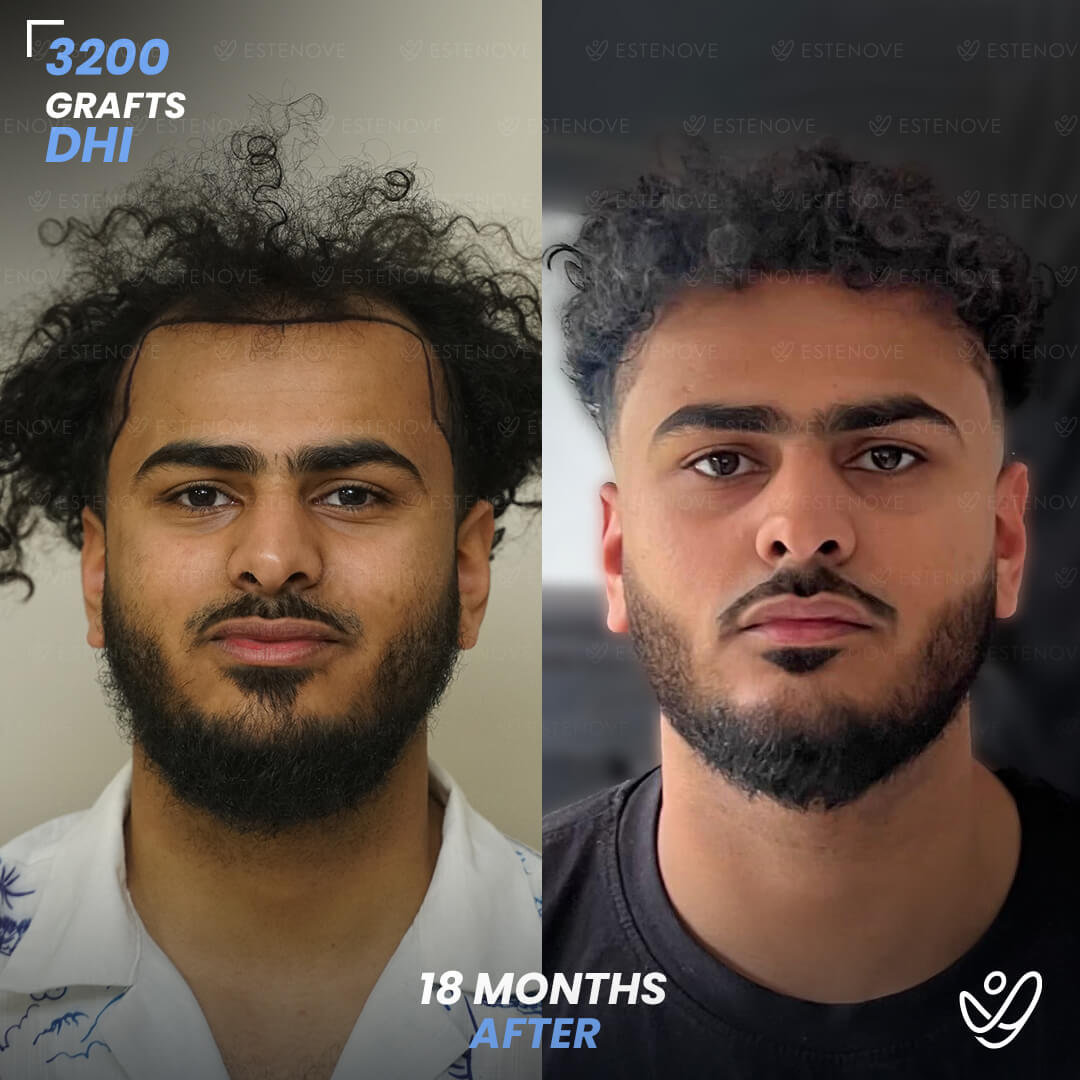
Undergoing a hair restoration procedure involving a massive graft count requires extensive surgical planning, significant financial investment, and realistic expectations regarding donor site limitations. A 9000 grafts hair transplant sits at the extreme end of surgical hair restoration, designed primarily for individuals with advanced Norwood scale hair loss who possess exceptionally high-density donor areas. While modern techniques like Follicular Unit Extraction (FUE) and Follicular Unit Transplantation (STRIP/FUT) have advanced significantly, transplanting nine thousand individual follicular units—often translating to over 18,000 to 22,000 individual hairs—cannot be safely or effectively performed in a single session. This comprehensive guide examines the technical realities, financial implications, multi-stage procedural requirements, and expected visual outcomes associated with ultra-high graft count hair restoration.
Anatomical Limits and Donor Area Assessment
The foundational requirement for any large-scale hair transplant is the capacity of the donor area, typically located at the back and sides of the scalp. Hair follicles in these regions are genetically resistant to dihydrotestosterone (DHT), the hormone responsible for androgenetic alopecia. However, human scalps possess a finite number of safe donor hairs. Harvesting 9000 grafts from a single donor region is anatomically impossible for the vast majority of patients without causing visible over-harvesting, moth-eaten scarring, and localized tissue destruction.
To approach or achieve a cumulative total of 9000 grafts, ethical surgical teams must look beyond the scalp. Advanced mega-sessions often require a combination of scalp harvesting and Body Hair Transplantation (BHT). Body hair—sourced from the beard, chest, or shoulders—can supplement scalp donor supplies, though these hairs possess distinct growth cycles, textures, and curl patterns. Beard hair, in particular, provides a thick, robust caliber that works well for adding density to the mid-scalp and crown, whereas chest hair is generally finer and better suited for transitional zones.
Surgeons evaluate donor capacity using strict mathematical formulas that measure donor density (grafts per square centimeter) and scalp laxity. Over-harvesting the scalp leads to ischemia (lack of blood flow), necrosis, and chronic scarring that compromises both aesthetic outcomes and future skin health. Therefore, patients requiring this volume of hair must undergo comprehensive scalp mapping to determine their lifetime donor reserve before a single incision is made.
Multi-Stage Surgical Strategy and Timeline
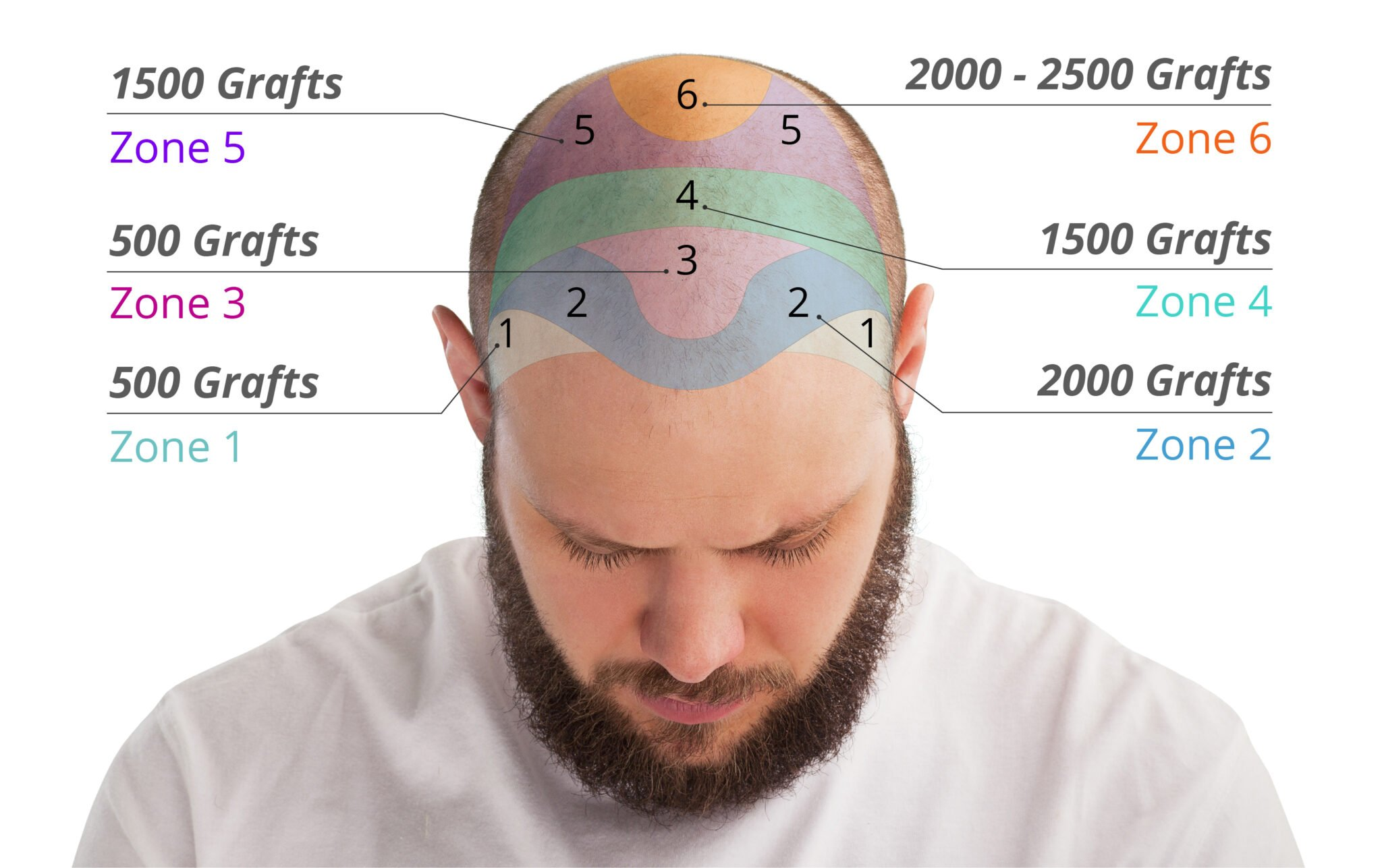
Because extracting 9000 grafts in a single procedure would compromise blood supply to both the recipient and donor sites, medical protocols dictate a staged surgical approach. A single mega-session rarely exceeds 3,500 to 4,000 grafts via FUE or FUT to ensure high graft survival rates and minimize patient trauma. Consequently, achieving a 9000-graft transformation necessitates two or three distinct surgical sessions spaced months apart.
| Stage | Estimated Graft Count | Primary Focus Area | Healing Interval |
|---|---|---|---|
| Stage 1 | 3,000 – 4,000 Grafts | Hairline restoration and frontal third | 8 to 12 Months |
| Stage 2 | 3,000 – 3,500 Grafts | Mid-scalp and transition zone | 8 to 12 Months |
| Stage 3 | 1,500 – 2,000 Grafts | Crown (vertex) and final density refinement | N/A |
This timeline ensures that the vascular network of the scalp recovers fully between operations. The first stage establishes the framing and density of the frontal third, which dictates facial framing. Subsequent stages move progressively backward toward the vertex. Attempting to blanket the entire scalp in a single intervention often results in poor graft survival due to tissue overcrowding and compromised vascularity.
Financial Investment and Global Cost Variations
The financial commitment for a 9000 grafts hair transplant varies dramatically based on geographic location, the pricing model of the clinic (per-graft versus flat-fee packages), and the expertise of the surgical team. In Western Europe and North America, where clinics frequently price procedures per graft—ranging from $3 to $8 per graft—a total intervention of this magnitude can easily exceed $30,000 to $60,000.
Conversely, medical tourism hubs such as Turkey, Mexico, and Thailand often market all-inclusive package deals. While these packages can lower the nominal cost, patients must scrutinize whether the procedures are performed by board-certified plastic surgeons or dermatologists rather than unsupervised medical technicians.
| Region | Average Cost per Graft | Total Estimated Cost (9,000 Grafts) | Medical Oversight Standards |
|---|---|---|---|
| North America | $4.00 – $8.00 | $36,000 – $72,000 | Stringent medical board licensing |
| Western Europe | $3.00 – $6.00 | $27,000 – $54,000 | Rigorous national health regulations |
| Turkey / Eastern Europe | $1.00 – $2.50 | $9,000 – $22,500 | Variable; requires careful clinic vetting |
| Latin America | $1.50 – $3.00 | $13,500 – $27,000 | Varies by country and facility |
Beyond the baseline surgical fees, secondary expenses must be factored into the total budget. These include pre-operative blood panels, specialized post-operative shampoos, mandatory medications (such as finasteride or minoxidil to stabilize native hair loss), accommodation, and international travel if pursuing overseas options.
What to Expect from the Results and Growth Timeline
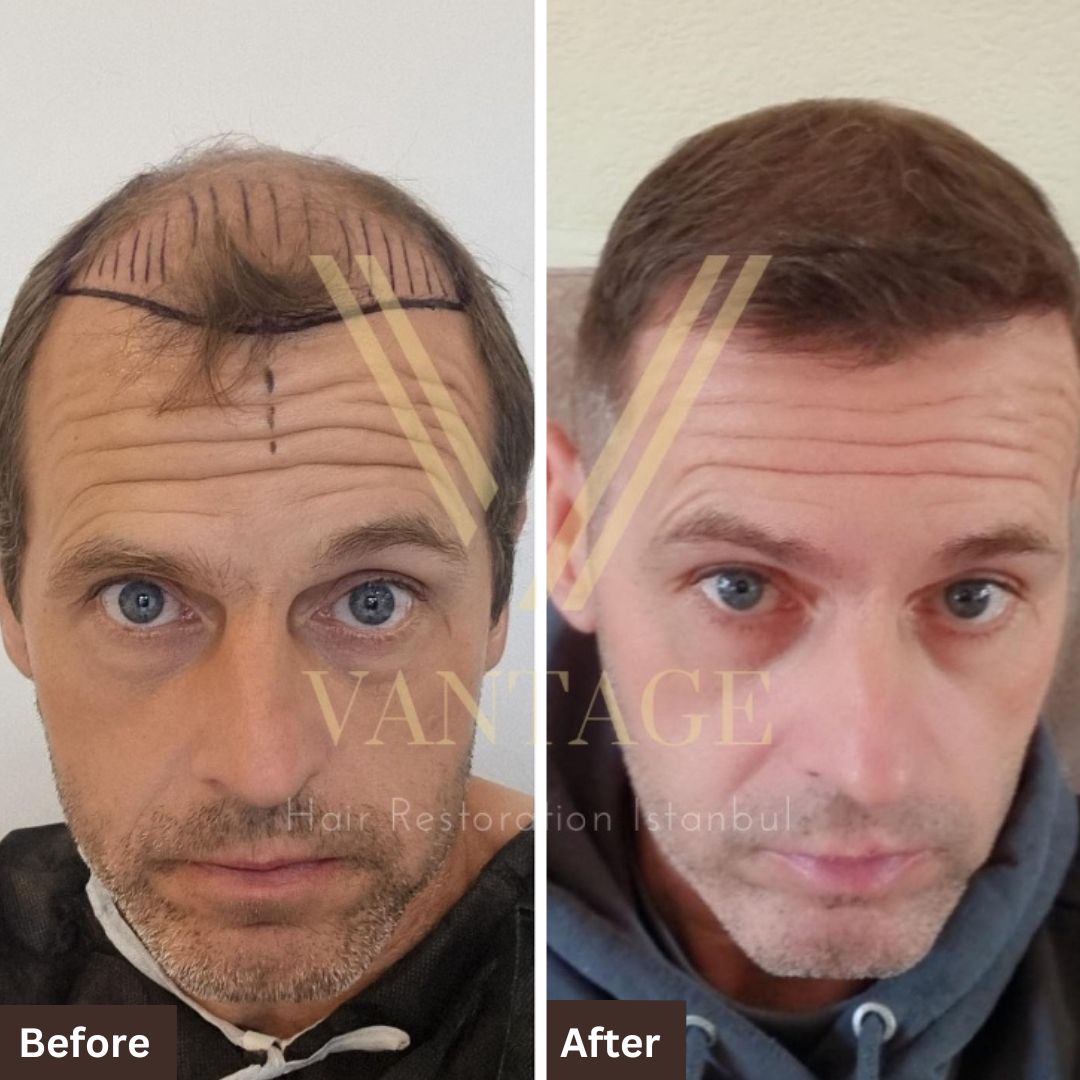
Managing expectations is crucial for individuals pursuing a 9000 grafts hair transplant. While 9000 grafts represent a massive volume of hair, distributing this quantity across an entirely bald scalp does not yield the high-density appearance of a natural, non-thinning head of hair. Hair density is spread out across a wide surface area, meaning the coverage provides the optical illusion of fullness rather than native-level thickness.
The growth timeline follows a standard biological trajectory, repeated for each stage of the multi-session process:
- Weeks 1–3 (Healing and Shedding): Grafts anchor into the recipient sites. Newly transplanted hairs typically enter a resting phase and shed within the first month. This temporary shedding phase (shock loss) also affects some native hairs surrounding the surgical zone.
- Months 3–4 (Initial Emergence): New, fine hair shafts begin breaking through the scalp surface. Growth is often patchy and uneven during this phase.
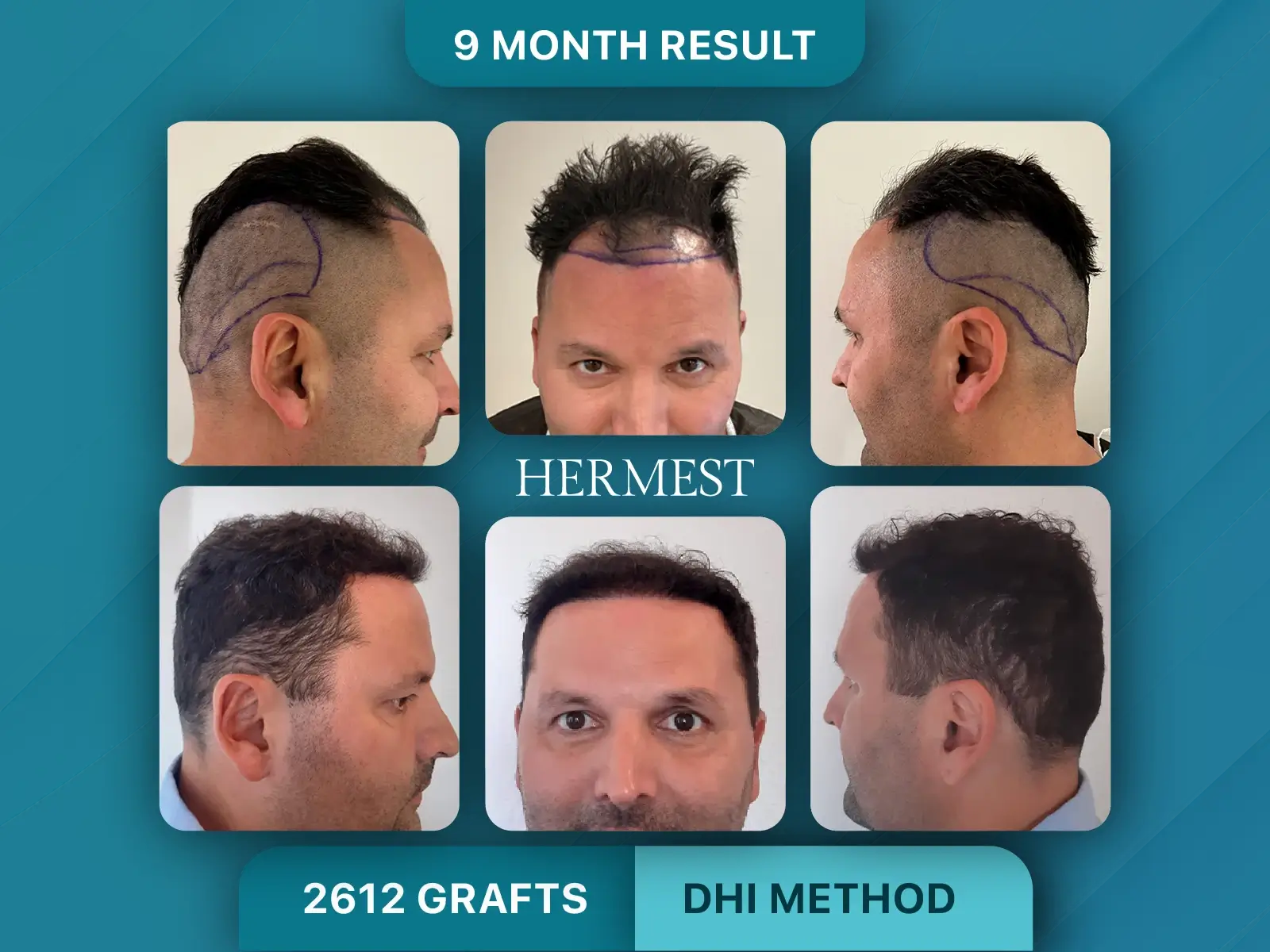
- Months 6–8 (Visible Transformation): Approximately 50% to 60% of the transplanted hair is visible. Shafts begin to thicken, and styling options start to expand.
- Months 12–18 (Final Maturity): The final results manifest fully. Hair texture, curl, and caliber reach their terminal state, and the structural integrity of the restored areas solidifies.
Managing Risks, Complications, and Limitations
Mega-sessions involving thousands of grafts carry elevated procedural risks that require careful medical management. The primary risk is donor site depletion, which can leave permanent, visible thinning or linear scarring at the back of the head, restricting the patient's ability to wear short hairstyles in the future.
Other medical considerations include:
- Folliculitis: Temporary inflammation or infection of the hair follicles during the initial months of growth.
- Shock Loss: Permanent or temporary loss of native, non-transplanted hair due to surgical trauma and local anesthesia.
- Numbness and Nerve Irritation: Temporary sensory loss or paresthesia in the donor and recipient areas, which typically resolves within several months.
Patients with aggressive, progressive hair loss must also account for future recession of native hair. If a 9000-graft procedure utilizes the entire lifetime supply of donor hair to cover existing bald spots, any subsequent hair loss in untreated or native zones cannot be corrected with further surgical interventions.
Frequently Asked Questions
Can 9000 grafts be done in one single hair transplant session?
No reputable, ethical surgeon will perform a 9000-graft extraction in a single session. Harvesting this volume of grafts at once exceeds safe time limits for graft survival outside the body, depletes local blood supply in the recipient area, and causes catastrophic trauma to the donor zone. These procedures require multiple stages separated by several months.
Where do surgeons get 9000 grafts if the scalp runs out?
When scalp donor reserves are exhausted, surgeons utilize Body Hair Transplantation (BHT). Follicles are harvested from secondary donor regions such as the beard, chest, and abdomen. Beard hair is particularly favored for its coarse texture and high survival rate when supplementing mid-scalp and crown coverage.
Does a 9000-graft hair transplant look completely natural?
The natural appearance depends heavily on the artistic skill of the surgeon, hairline design, and strategic graft distribution. While coverage will be significantly improved, 9000 grafts spread across an advanced baldness pattern will provide an illusion of density rather than the thick, youthful density found in individuals without hair loss.
How long does the entire multi-stage process take?
Because mega-sessions require healing intervals of 8 to 12 months between procedures to allow scalp vascularity to recover, completing a multi-stage restoration involving thousands of grafts typically spans a total timeframe of 18 to 24 months.
Are the results of a 9000-grafts hair transplant permanent?
Yes. The hair follicles harvested for transplantation are genetically resistant to DHT. Once these grafts successfully establish a blood supply in their new location, they continue to grow for a lifetime. However, native hair outside the transplanted zones may continue to thin naturally, requiring ongoing medical management.
Strategic Next Actions for Prospective Patients
Before committing to a high-capacity surgical plan, schedule thorough consultations with multiple board-certified hair restoration surgeons who specialize in advanced Norwood cases. Request a formal assessment of your donor density, scalp laxity, and lifetime donor reserve using microscopic trichoscopy analysis. Avoid clinics that promise unrealistic graft counts in a single day or pressure you into signing immediate contracts. Verify credentials through recognized medical boards, review verifiable, long-term patient case studies spanning more than two years, and ensure your medical history accounts for progressive hair loss management strategies.