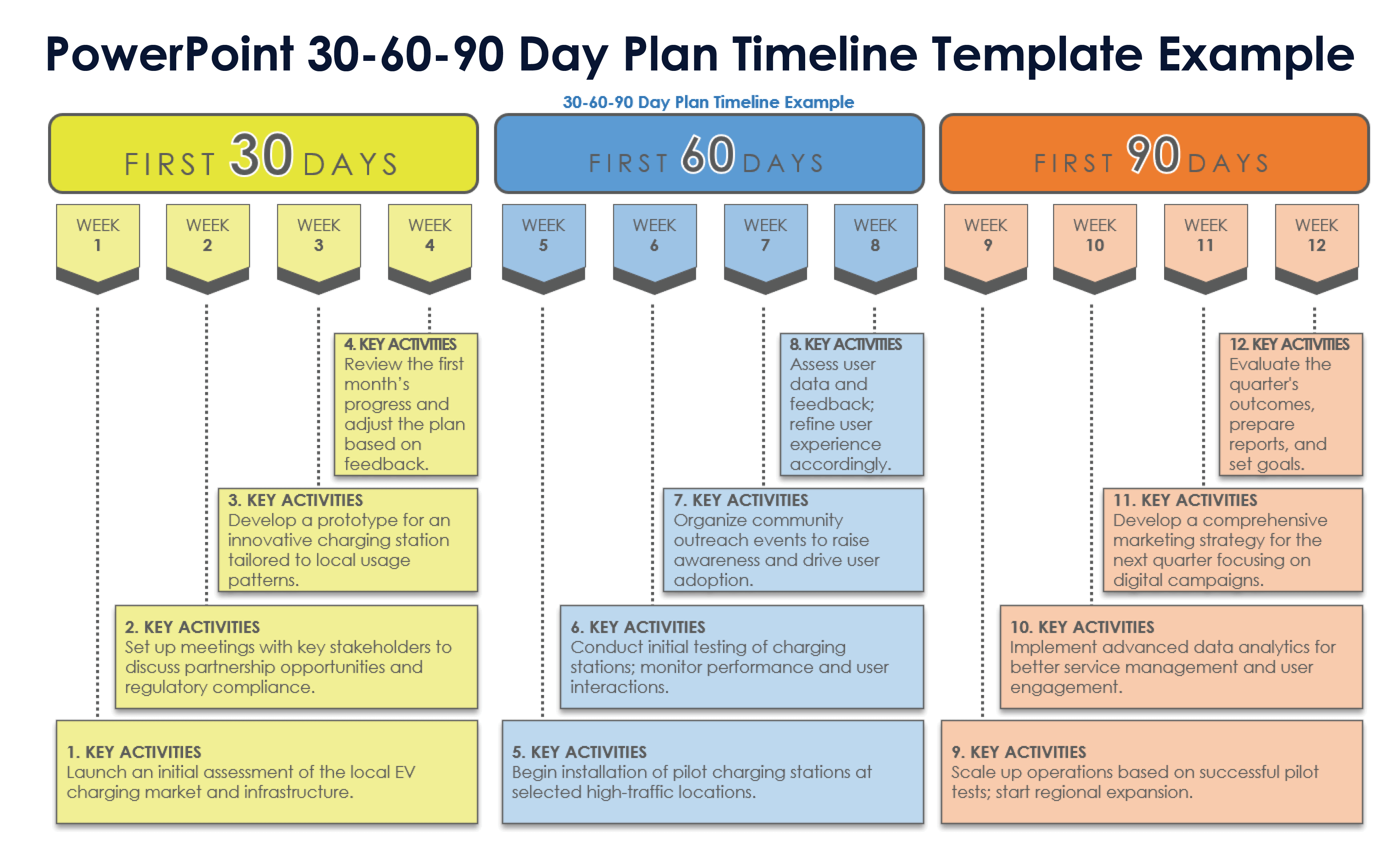
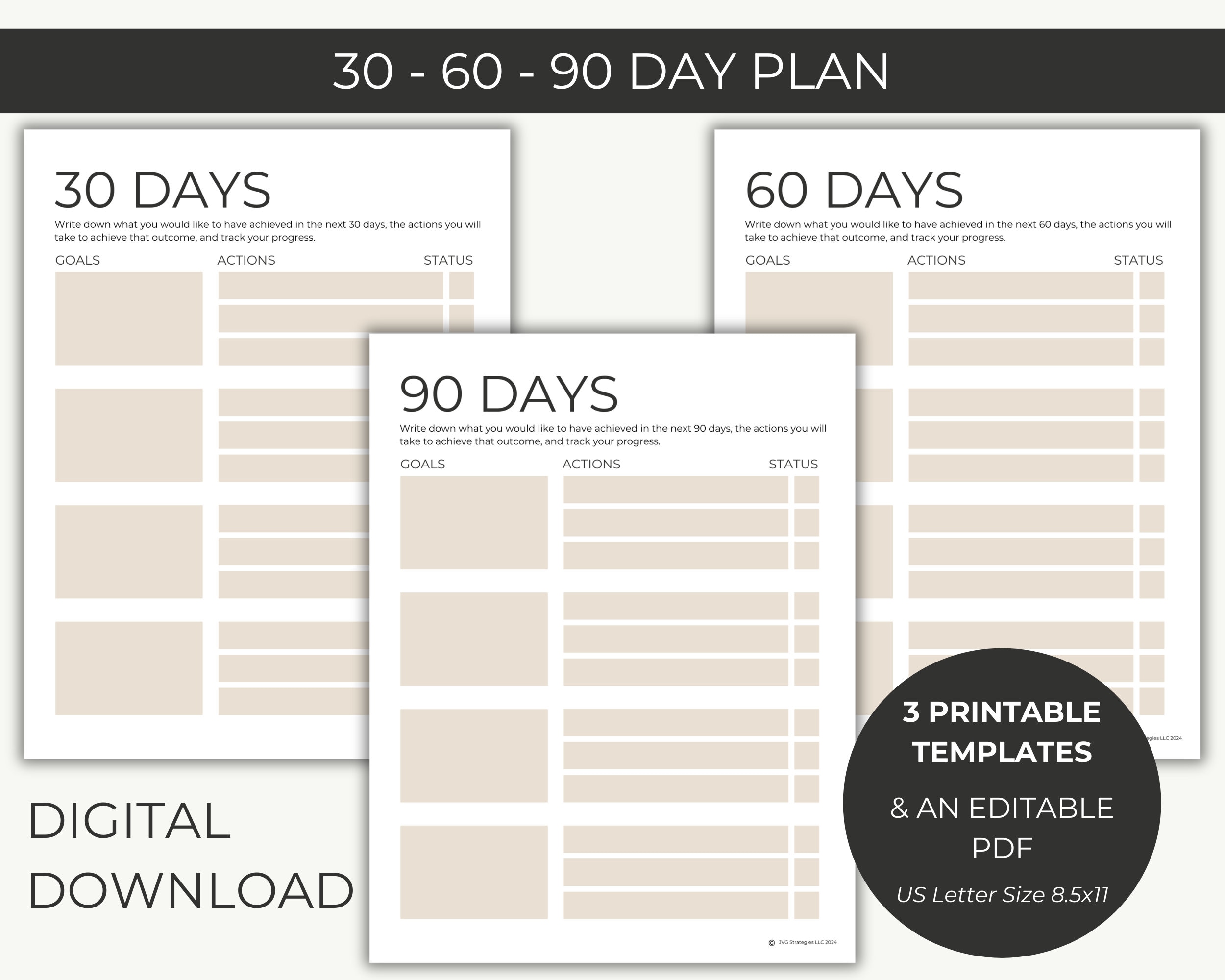
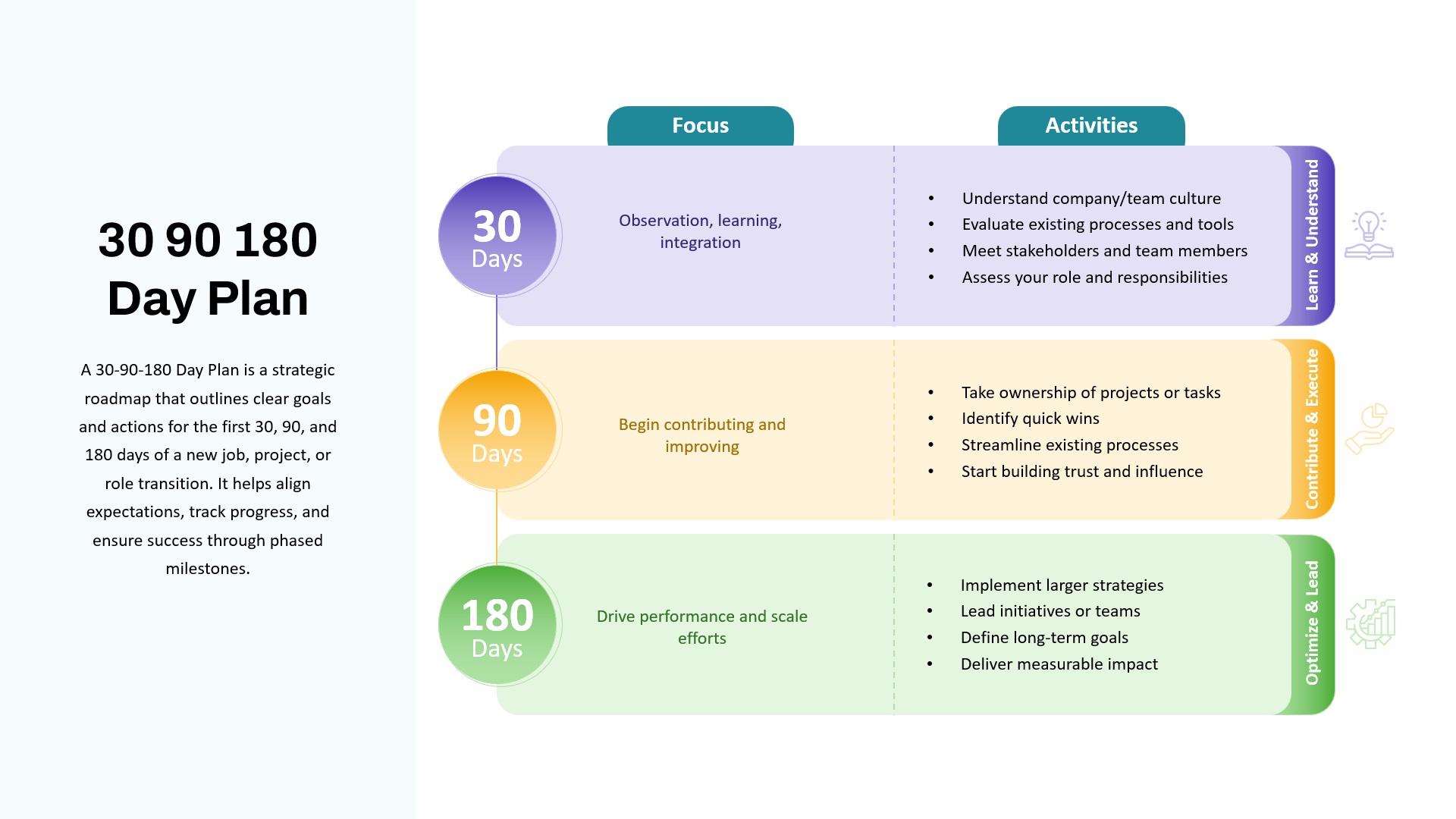
A 90 day timeline is a structured strategic planning framework that divides a single quarter into three distinct 30-day operational phases: assessment, initial execution, and optimization. By capping execution windows at 90 days, organizations and leaders maintain high operational urgency, align cross-functional teams around finite deliverables, and establish clear measurement criteria before strategic drift occurs.
Understanding the Core Architecture of a 90 Day Timeline
The 90-day timeframe represents a critical balance in strategic planning. In corporate environments, project management, and executive onboarding, 90 days provides sufficient headroom to complete complex tasks while keeping completion targets near enough to prevent loss of focus. Annual plans often fail because their distant deadlines encourage procrastination and mask emerging risks. Conversely, monthly cycles frequently lack the depth required to implement systemic changes or evaluate meaningful metrics.
At its core, a 90 day timeline functions as a quarterly bridge between multi-year strategic objectives and daily operational tasks. Management literature, including frameworks popularized by the Harvard Business Review, emphasizes that breaking long-term transformations into 90-day increments creates natural reflection points. These points allow teams to evaluate progress, recalibrate resources, and pivot without wasting significant budget or capital.
90-Day Strategic Execution Cycle:
- Days 1 – 30: Discovery & Alignment
- Days 31 – 60: Execution & Quick Wins
- Days 61 – 90: Optimization & Standardization
The architecture of a effective 90-day roadmap relies on progressive intent. Each 30-day block builds directly upon the outputs of the preceding phase:
- Days 1–30 (Discovery & Alignment): Focuses on gathering data, conducting stakeholder audits, mapping dependencies, and establishing baseline performance metrics.
- Days 31–60 (Execution & Early Wins): Focuses on launching core initiatives, executing targeted quick wins, running pilot operations, and refining workflows based on initial feedback.
- Days 61–90 (Optimization & Standardization): Focuses on scaling successful pilots, integrating new standard operating procedures (SOPs), measuring finalized key outcomes, and transitioning outcomes into long-term operations.
By maintaining this chronological discipline, teams prevent the common error of rushing into solution execution before fully diagnosing project constraints.
Phase 1 (Days 1–30): Assessment, Alignment, and Discovery
The first 30 days of a 90 day timeline focus entirely on establishing context, identifying organizational friction, and securing baseline data. Attempting to implement major structural changes during this initial phase frequently leads to friction, missed dependencies, and wasted capital.
Phase 1: Days 1–30 Focus Areas:
- Stakeholder & Resource Auditing
- Establishing Baseline Operational Metrics
- Dependency Mapping & Risk Identification
- Securing Cross-Functional Alignment
Conducting the Stakeholder and Resource Audit
During the initial 30 days, project leaders must map all key stakeholders, team competencies, and resource availability. This process involves interviewing cross-functional team members, reviewing historical project performance data, and auditing technical infrastructure. The objective is to identify existing operational bottlenecks and unstated organizational constraints.
Establishing Baseline Metrics
Without accurate baseline metrics, measuring the true impact of a 90-day initiative is impossible. During this phase, leaders define the primary Key Performance Indicators (KPIs) and Objective Key Results (OKRs) that will determine success at Day 90. Key activities include validating historical data accuracy, configuring tracking dashboards, and establishing benchmark operational speeds or revenue targets.
Mapping Dependencies and Risk Profiles
Every strategic project carries implicit risks and external dependencies. Phase 1 requires developing a formal risk matrix that categorizes potential blockers by impact and probability. Identifying critical path dependencies early—such as vendor lead times, regulatory compliance requirements, or internal budget sign-offs—prevents unexpected stops during the active execution phase.
Phase 2 (Days 31–60): Operationalization and Quick Wins
With a validated baseline and clear cross-functional alignment established in Phase 1, the second 30-day block shifts focus toward active implementation and securing measurable, early victories.
Phase 2: Days 31–60 Focus Areas:
- Rolling Out Targeted Quick Wins
- Executing Core Workstream Deliverables
- Conducting Mid-Point Operational Audits
- Iterating Workflows Based on Real-Time Data
Securing Strategic Quick Wins
Quick wins are high-impact, low-complexity deliverables executed early in Phase 2 to build momentum and demonstrate value to stakeholders. These early victories validate the project's strategic direction, secure executive buy-in, and boost team morale. Examples include automating a manual reporting process, resolving a high-friction customer touchpoint, or launching a targeted marketing pilot.
Launching Core Workstreams
Phase 2 marks the rollout of major project deliverables. Teams transition from planning to execution by deploying new software, initiating product builds, or restructuring operational workflows. Project managers must enforce strict change control procedures during this period to prevent scope creep from derailing scheduled launch dates.
Mid-Point Audits and Iteration
At Day 45, project leads should conduct a formal mid-point performance review. This milestone evaluates actual progress against the original schedule, identifies emerging bottlenecks, and reallocates resources as necessary. If a workstream is underperforming, the mid-point audit provides the structured opportunity to adjust tactics before the final 30-day sprint.
Phase 3 (Days 61–90): Optimization, Scaling, and Long-Term Integration
The final 30 days of the roadmap focus on transforming temporary project wins into permanent operational capabilities, evaluating overall return on investment (ROI), and preparing for sustainable handoff.
Phase 3: Days 61–90 Focus Areas:
- Scaling Successful Pilot Programs
- Formalizing Standard Operating Procedures (SOPs)
- Final Performance Evaluation & Metric Validation
- Handing Off Operations to Long-Term Owners
Scaling and Systematization
During Phase 3, successful pilot programs developed in Phase 2 are expanded across the broader organization. This process requires refining workflow automation, establishing formal documentation, and expanding user training. Systematization ensures that project performance remains stable once the intensive 90-day focus window closes.
Final Evaluation Against Baseline KPIs
As the timeline nears completion, project outcomes are formally measured against the baseline metrics recorded in Phase 1. This quantitative evaluation determines whether the strategic goals were met, provides objective reporting for executive leadership, and isolates the precise variables that drove success or failure.
Operational Handoff and Next-Cycle Planning
A strategic 90 day timeline must end with a clear transition plan. Project teams create formal Standard Operating Procedures (SOPs), transfer day-to-day management to permanent operational leads, and capture key takeaways. These insights then inform the priorities for the subsequent 90-day operational cycle.
Comparing 90 Day Timelines Across Core Business Contexts
The application of a 90 day timeline varies depending on organizational priorities, industry requirements, and functional disciplines. The table below outlines how the three-phase structure adapts across four major operational environments.
| Context | Phase 1 (Days 1–30): Discovery | Phase 2 (Days 31–60): Execution | Phase 3 (Days 61–90): Optimization | Primary Success Metric |
|---|---|---|---|---|
| Executive Onboarding | Stakeholder interviews, culture audit, process evaluation | Launch early quick-win initiatives, address urgent operational gaps | Present long-term strategy, solidify team leadership structure | Team performance index, target delivery rates |
| Product Launch | Market analysis, feature validation, launch plan alignment | Beta testing, campaign rollout, channel activation | Performance scaling, bug resolution, post-launch review | User adoption rate, customer acquisition cost (CAC) |
| Business Transformation | System audit, process mapping, change-management setup | Pilot new workflow tools, implement core operational changes | Organization-wide rollout, SOP standardization | Process efficiency gain, cost reduction percentage |
| Project Management | Scope definition, resource planning, risk assessment matrix | Active sprint execution, milestone delivery tracking | Final acceptance testing, client handoff, project retrospective | On-time delivery rate, budget variance |
Governance, Key Metrics, and Milestone Tracking
Executing a 90 day timeline effectively requires a disciplined governance structure. Without regular review cadences and objective metrics, projects quickly lose alignment and suffer from schedule slip.
| Daily Standups (15 Minutes) | Weekly Reviews (45 Minutes) | Monthly Gates (90 Minutes) |
|---|---|---|
| • Blocker triage | • KPI tracking | • Phase sign-off |
| • Task alignment | • Milestone audit | • Budget alignment |
Operational Governance Cadence
Maintaining alignment across a 90-day period requires structured review checkpoints at daily, weekly, and monthly intervals:
- Daily Standups (15 Minutes): Focused on immediate tactical blockers, daily task alignment, and short-term resource needs.
- Weekly Milestone Reviews (45 Minutes): Focused on measuring week-over-week progress against scheduled deliverables, tracking leading indicators, and managing cross-functional risks.
- Monthly Phase Gate Audits (90 Minutes): Formal reviews conducted at Days 30, 60, and 90 to evaluate phase completion criteria, secure executive sign-off, and approve budget expenditures for the subsequent phase.
Assigning Clear Ownership with RACI Matrices
To eliminate confusion over project responsibilities, every milestone within the 90 day timeline should be integrated into a RACI matrix (Responsible, Accountable, Consulted, Informed). Establishing a single Accountable owner for each deliverable ensures clear accountability and accelerates decision-making when roadblocks arise.
Tracking Leading vs. Lagging Indicators
Successful execution requires monitoring both leading and lagging indicators throughout the 90-day cycle:
- Leading Indicators: Forward-looking metrics that measure activity levels and operational velocity (e.g., number of user interviews completed, sprint velocity, code commit volume).
- Lagging Indicators: Outcome-oriented metrics measured at the conclusion of a phase or project (e.g., total quarterly revenue generated, customer churn reduction percentage, net promoter score).
Overcoming Structural Bottlenecks and Execution Pitfalls
Even well-designed 90 day timelines can run into implementation challenges. Understanding common failure modes enables project leaders to build defensive safeguards directly into their project plans.
| Pitfall | Strategic Remedy |
|---|---|
| Scope Creep | Strict Change-Control |
| Lack of Baseline Data | Mandatory 14-Day Audit |
| Early Over-Commitment | Phased Resource Model |
| Weak Handoff Governance | Formal SOP Sign-Off |
Managing Scope Creep
Scope creep is the unmanaged expansion of project goals without corresponding increases in time, budget, or resources. To protect a 90 day timeline from scope expansion, leaders must enforce a formal change-control process. Any proposed addition to the project scope must displace an existing deliverable of equal resource effort or extend the delivery date into a subsequent 90-day cycle.
Resolving Missing Baseline Data
Launching a 90 day timeline without baseline metrics creates severe measurement ambiguity at project completion. If historical data is missing during Phase 1, project teams should spend the first 14 days focused exclusively on data collection and audit setup before committing to target KPIs.
Preventing Burnout and Misaligned Capacity
Over-committing deliverables within the first 30 days is a common reason execution stalls in Phase 2. To avoid team fatigue and capacity bottlenecks, project resource planning should cap utilization at 80% of total team bandwidth. This buffer absorbs unexpected technical debt, operational disruptions, and mandatory administrative tasks without disrupting scheduled delivery dates.
Frequently Asked Questions
Why is a 90-day timeline more effective than an annual strategic plan?
A 90-day timeline creates urgency and adaptability by focusing teams on short-term, actionable goals. While annual plans are useful for establishing long-term vision, their extended deadlines often lead to delayed execution and poor responsiveness to market shifts. A 90-day operational cycle allows organizations to test hypotheses, analyze real-world results, and recalibrate strategy four times a year.
How do you adjust a 90-day timeline when priorities suddenly change?
When external market shifts or internal leadership decisions force a change in direction, project leads should conduct a formal mid-cycle strategic review. Rather than abandoning the entire framework, teams should re-evaluate Phase 1 baseline data, drop low-priority workstreams, and reassign resources to the new priorities. All adjustments must be documented through a formal change management process to keep all stakeholders aligned.
What is the difference between a 30-60-90 day plan and a 90-day project timeline?
A 30-60-90 day plan is primarily used for individual onboarding, career transitions, or personal performance management, focusing heavily on learning, integration, and individual output. A 90-day project timeline is a broader operational project management framework designed to govern cross-functional business initiatives, resource allocation, technical builds, and organizational performance outcomes.
How should metrics be divided across the three 30-day phases?
Phase 1 metrics should focus on operational discovery and diagnostic accuracy, such as completion of system audits or stakeholder interview coverage. Phase 2 metrics track execution velocity and early outputs, including sprint completion rates or pilot user sign-ups. Phase 3 metrics focus on quantitative business outcomes, scalability metrics, and long-term ROI validation against the Phase 1 baseline.
What tools are recommended for managing a 90-day implementation roadmap?
Enterprise team management tools like Jira, Asana, Monday.com, or Microsoft Project are ideal for tracking workstream deliverables and dependency graphs. For high-level executive dashboards and objective tracking, tools like WorkBoard or strategic planning spreadsheets help maintain clear visibility across daily, weekly, and monthly milestones.
Next Steps: Launching Your 90 Day Execution Strategy
To build an actionable, outcomes-focused 90 day timeline for your organization, follow this sequential setup checklist:
- Define the Core Strategic Objective: Identify the primary business problem or expansion goal that must be solved over the next quarter. Ensure the objective is measurable and supported by key executive stakeholders.
- Audit Baseline Data: Spend the initial days of your project auditing existing performance metrics, team capacity, and infrastructure readiness. Avoid committing to final performance targets until this baseline is validated.
- Draft the Three-Phase Blueprint: Segment your deliverables into clear 30-day tranches (Discovery, Execution, Optimization). Limit Phase 1 deliverables strictly to assessment, risk mapping, and initial quick-win setup.
- Establish Governance Cadences: Schedule your daily standups, weekly metric reviews, and monthly phase-gate audits. Assign clear ownership for each deliverable using a RACI matrix framework to ensure accountability across all workstreams.
- Finalize Change Management Protocols: Implement a formal change-control process to protect team capacity, prevent scope creep, and ensure the project lands on time and within budget by Day 90.