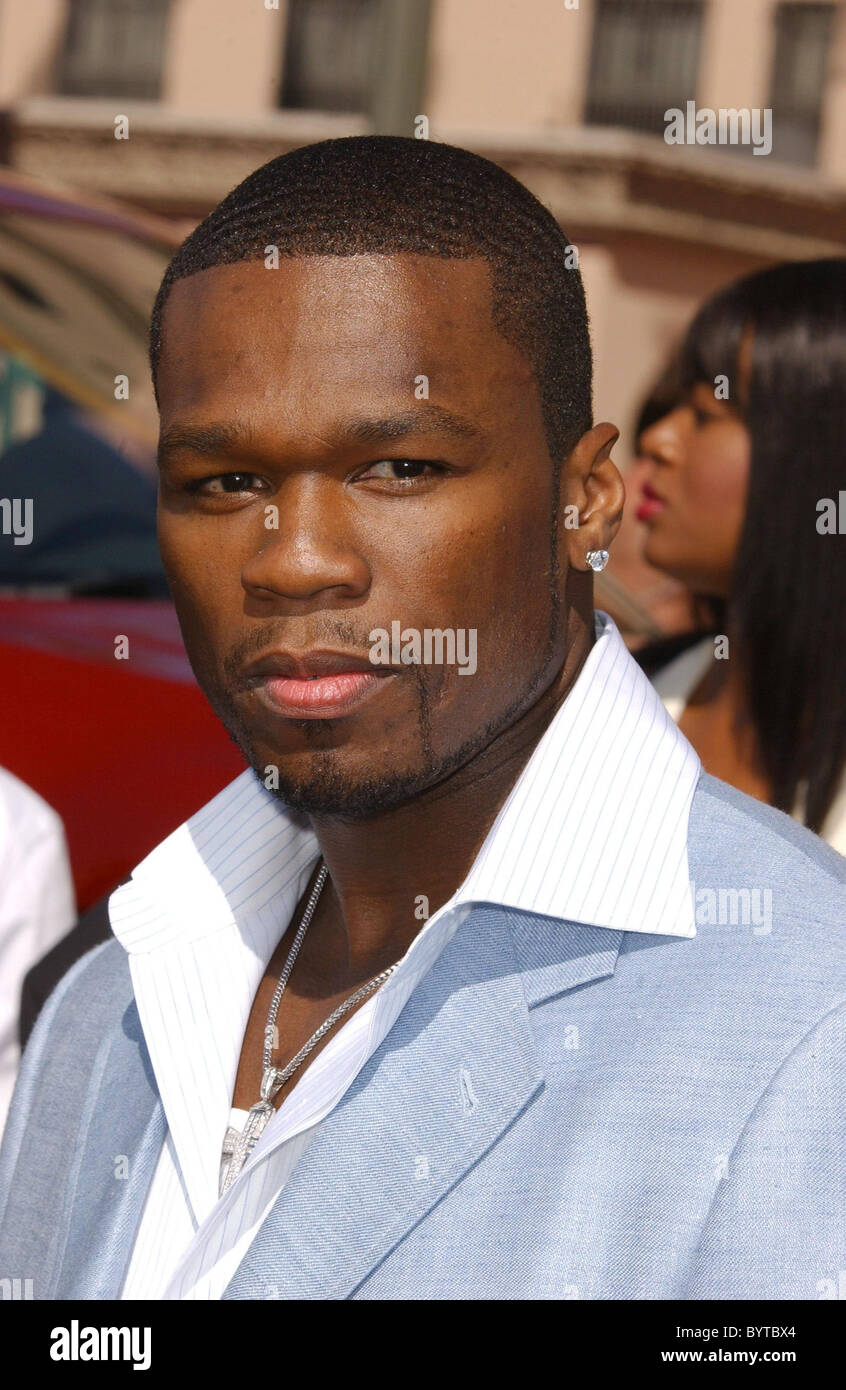
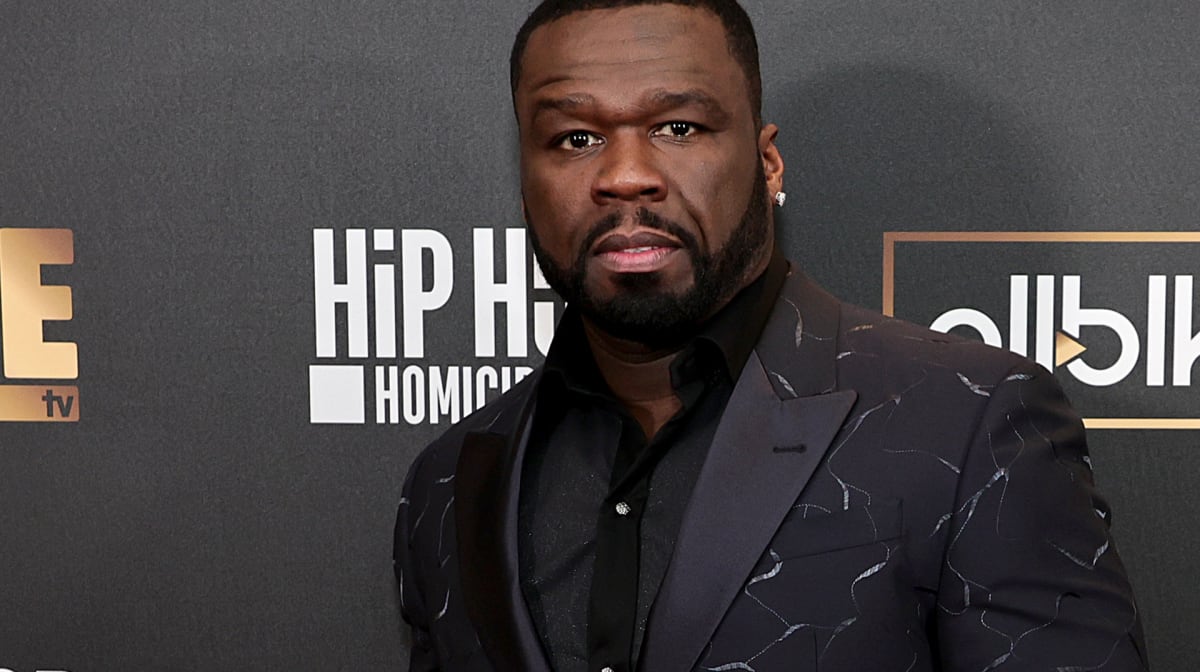
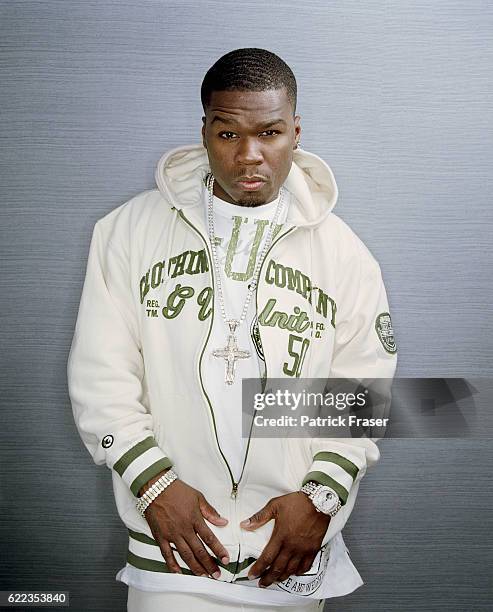
Curtis "50 Cent" Jackson III transformed from a street hustler in South Jamaica, Queens, into one of the most influential hip-hop artists, corporate strategists, and television executives of modern entertainment. After surviving a near-fatal shooting in 2000, Jackson leveraged underground mixtapes, strategic corporate equity deals, and executive production control to build a multi-industry media empire.
Early Life and the Crucible of South Jamaica, Queens (1975–1996)
Born on July 6, 1975, in South Jamaica, a neighborhood in the borough of Queens, New York, Curtis James Jackson III grew up during the height of the crack epidemic that reshaped urban American landscapes in the late 1970s and 1980s. Raised primarily by his mother, Sabrina, who was active in the illicit drug trade, Jackson experienced extreme volatility at an early age. His mother died in a residential fire under suspicious circumstances when Jackson was just eight years old. Following her death, Jackson was taken in by his grandmother, who raised him alongside eight aunts and uncles in a modest household.
By age twelve, Jackson entered the street economy himself, balancing school attendance with drug dealing in South Jamaica. During this period, he also discovered amateur boxing, training at the local Brooklyn Boys & Girls Club. The discipline and tactical focus required in the ring shaped his approach to competition, a mindset that would later define his strategy in the music industry and corporate boardrooms. He competed at the Junior Olympics level as a amateur boxer before shifting his focus entirely to hip-hop music in the mid-1990s.
Adopting the stage name "50 Cent"—a moniker inspired by Kelvin Martin, a 1980s Brooklyn robber known for taking whatever he wanted regardless of consequences—Jackson intended the name to signify a determination to survive and succeed by any legal or narrative means necessary. The name symbolized an unvarnished reality: a commitment to total transparency regarding the harsh economic incentives driving his choices.
Jam Master Jay, Columbia Records, and the 2000 Shooting
Jackson's formal entry into the music business began in 1996 when he was introduced to Jason Mizell, better known as Jam Master Jay of the legendary hip-hop group Run-DMC. Mizell owned a small record label and production company, providing Jackson with his first professional studio instruction, bar structure guidance, and chorus composition techniques. Although his contract with Mizell’s label produced limited commercial releases, it established the structural foundation of Jackson's aggressive, melody-driven songcraft.
In 1999, Jackson signed a recording contract with Columbia Records under the guidance of track masters and executive producers Trackmasters (Tone and Poke). While working on his debut studio album, Power of the Dollar, Jackson released the controversial underground single "How to Rob." The track humorously detailed explicit strategies to mug high-profile R&B and hip-hop stars, attracting widespread media attention, industry friction, and instant brand recognition.
The momentum surrounding his official debut came to a sudden halt on May 24, 2000. Outside his grandmother’s home on 161st Street in South Jamaica, an unidentified gunman fired nine shots at close range into Jackson while he sat in the backseat of a parked car. He suffered bullet wounds to his hand, arm, hip, both legs, chest, and face, including a bullet fragment lodged in his jaw that permanently altered his vocal cadence and tone into a signature, lower-register drawl.
Following the shooting, Columbia Records dropped Jackson from its roster and shelved Power of the Dollar. Blacklisted by major American record labels afraid of liability and street violence surrounding his image, Jackson faced physical rehabilitation and an industry exile that forced a complete pivot in his distribution strategy.
The Underground Mixtape Era and the Shady/Aftermath Signing (2002–2003)
Unable to secure a major U.S. recording contract, Jackson relocated temporarily to Canada with his close associate Sha Money XL. Instead of relying on traditional radio exposure, Jackson pioneered the commercial utility of the hip-hop mixtape. Along with his newly formed group G-Unit—consisting of childhood friends Lloyd Banks and Tony Yayo, and later Young Buck—Jackson began hijacking popular instrumental tracks from mainstream rap singles, rewriting original hooks, and releasing the material independently on street CD compilations like 50 Cent Is the Future, No Mercy, No Fear, and God's Son.
- Underground Street Mixtapes
- Eminem / Dr. Dre Acquisition
- Get Rich or Die Tryin' Debut (2003)
These projects functioned as proof of market demand. In 2002, Jackson released the independent compilation album Guess Who's Back?, which caught the attention of Detroit rapper Eminem. Impressed by Jackson’s instinct for melody and lyricism despite street-level delivery, Eminem flew Jackson to Los Angeles to meet Dr. Dre.
In mid-2002, Jackson signed a joint production deal valued at $1 million with Eminem’s Shady Records, Dr. Dre’s Aftermath Entertainment, and Interscope Records. The joint structure combined Dr. Dre’s studio production standards with Eminem’s global crossover reach and Interscope executive Jimmy Iovine’s distribution power.
In February 2003, Jackson released his major-label debut, Get Rich or Die Tryin'. Propelled by the lead single "In da Club," the album debuted at number one on the U.S. Billboard 200 chart, selling 872,000 copies in its first week. The album yielded multiple hit singles—including "21 Questions" and "P.I.M.P."—and went on to be certified 9x Platinum by the Recording Industry Association of America (RIAA). The project reshaped global hip-hop culture, cementing 50 Cent as a dominant commercial force in music.
Business Acumen: From Vitaminwater to G-Unit Enterprises
Jackson leveraged his music momentum to establish a sprawling corporate portfolio under the G-Unit brand umbrella. Rather than accepting basic celebrity endorsement checks, he insisted on equity stakes in early-stage products, establishing a blueprint for modern music entrepreneurs.
The Glacéau Vitaminwater Equity Deal
In 2004, Jackson partnered with Glacéau, the parent company of Vitaminwater, after noticing his personal affinity for the beverage during workouts. Negotiated by his then-manager Chris Lighty of Violator Management, Jackson acquired a minority equity stake (estimated at 2.5% to 10%) in exchange for endorsing the product and creating his custom flavor, Formula 50.
When The Coca-Cola Company acquired Glacéau in May 2007 for $4.1 billion in cash, Jackson's equity stake generated an estimated after-tax payout between $60 million and $100 million. The transaction remains one of the most lucrative corporate endorsement deals in hip-hop history.
Portfolio Diversification and Financial Restructuring
Beyond beverage equity, Jackson expanded G-Unit Enterprises into multiple retail and consumer sectors:
- G-Unit Clothing & Footwear: A joint venture with Reebok launched in 2003 that grossed tens of millions in footwear sales during its peak years.
- G-Unit Records: A sub-label distributed through Interscope that launched successful solo projects for Lloyd Banks, Young Buck, and The Game.
- Spirits and Beverages: Investments in Sire Spirits, featuring Branson Cognac and Le Chemin du Roi Champagne.
Jackson's corporate journey also navigated complex financial litigation. In July 2015, following a $7 million legal judgment involving civil invasion of privacy and ongoing disputes over business debt obligations, Jackson filed for Chapter 11 personal bankruptcy protection in the U.S. Bankruptcy Court for the District of Connecticut. Far from an absolute collapse, the legal restructuring allowed him to reorganize his corporate holdings, liquidate minor assets, and pay off over $22 million in total debt through a court-approved structured payout plan completed in February 2017.
Executive Producer Era: Reinventing Television with Power and Beyond
Recognizing shifts in digital media consumption, Jackson pivoted heavily toward film and television in the 2010s. In 2014, he partnered with creator Courtney A. Kemp and Starz Premium Network to produce Power, a crime drama series centered on James "Ghost" St. Patrick, a nightclub owner leading a double life as a drug kingpin.
Jackson served as an executive producer, directed key episodes, and starred as the ruthless antagonist Kanan Stark. Power became a flagship television franchise for Starz, driving subscriber growth and breaking network viewership records.
- Power (2014–2020)
- Power Book II: Ghost
- Power Book III: Raising Kanan
- Power Book IV: Force
The success of the flagship series led to an exclusive overall development agreement between Starz and G-Unit Film & Television, yielding a comprehensive narrative universe:
- Power Book II: Ghost: Focusing on the continuation of the St. Patrick family legacy.
- Power Book III: Raising Kanan: A prequel detailing the 1990s origin story of Jackson's character, Kanan Stark.
- Power Book IV: Force: Following fan-favorite character Tommy Egan in Chicago.
- BMF (Black Mafia Family): A non-scripted and dramatized biographical series chronicling Demetrius "Big Meech" Flenory and Terry "Southwest T" Flenory.
To support his growing production slate, Jackson launched G-Unit Studios in Shreveport, Louisiana, acquiring facility space to house physical production lots, sound stages, and post-production suites.
Milestone Career Comparison
The table below outlines key phases, signature projects, primary business models, and cultural contributions across Curtis Jackson’s career.
| Career Phase | Timeframe | Primary Focus / Key Projects | Commercial & Cultural Impact | Financial Model |
|---|---|---|---|---|
| Street & Early Recording | 1996–2001 | Jam Master Jay mentorship, Power of the Dollar (Columbia) | Built regional street reputation; "How to Rob" single created industry buzz | Traditional record label royalty model |
| Mixtape & Crossover | 2002–2003 | 50 Cent Is the Future, Guess Who's Back? | Revolutionized mixtape distribution; forced major labels to recognize street demand | Independent bootleg street sales & mixtape syndication |
| Mainstream Dominance | 2003–2007 | Get Rich or Die Tryin', The Massacre, G-Unit Records | Sold tens of millions of records globally; established G-Unit brand | Major label joint venture (Shady/Aftermath/Interscope) |
| Corporate Venture Capital | 2004–2015 | Glacéau (Vitaminwater), Reebok, Sire Spirits | Proved artists can secure equity stakes rather than basic endorsement fees | Equity acquisition, profit sharing, brand licensing |
| Television & Studio Mogul | 2014–2026 | Power Universe, BMF, G-Unit Studios Shreveport | Built a major cable television universe; generated network subscription surges | Executive producer fees, production facility ownership, backend syndication |
Key Lessons from Curtis Jackson's Career Strategy
Jackson’s trajectory offers distinct business and personal strategy insights:
- Turn Physical and Career Setbacks into Narrative Assets: Rather than hiding his near-fatal 2000 shooting, Jackson integrated the survival story directly into his music identity, giving his vocal cadence and lyrics authentic authority.
- Pioneer Alternative Distribution Channels: When traditional U.S. record labels refused to sign him in 2001, he bypassed gatekeepers by distributing high-quality mixtapes directly to DJs and fans.
- Prioritize Equity Over Quick Endorsement Cash: The Vitaminwater deal proved that long-term enterprise growth comes from retaining equity shares in high-potential consumer products rather than accepting short-term upfront pay.
- Utilize Legal Restructuring Intentionally: His 2015 Chapter 11 filing demonstrated how strategic legal frameworks can protect long-term intellectual property assets and reorganize debt obligations without halting business operations.
- Own the Production Infrastructure: With G-Unit Film & Television and G-Unit Studios, Jackson transitioned from performing talent to ownership of real estate, equipment, and master distribution licenses.
Frequently Asked Questions
What was 50 Cent’s breakthrough album?
50 Cent’s major-label breakthrough album was Get Rich or Die Tryin', released on February 6, 2003, through Shady Records, Aftermath Entertainment, and Interscope Records. The album debuted at number one on the Billboard 200 and contained world-renowned singles including "In da Club" and "21 Questions."
How did 50 Cent make money from Vitaminwater?
Instead of accepting a standard cash endorsement fee, 50 Cent secured a minority equity stake in Glacéau, the parent company of Vitaminwater, in 2004. He worked with the brand to create the "Formula 50" flavor. When The Coca-Cola Company purchased Glacéau in 2007 for $4.1 billion, Jackson’s equity payout was estimated at $60 million to $100 million.
Why was 50 Cent shot nine times in 2000?
On May 24, 2000, 50 Cent was shot outside his grandmother's house in South Jamaica, Queens, by an attacker linked to local street rivalries and disputes in his hometown. The shooting almost killed him, leaving him hospitalized for thirteen days, but his recovery and subsequent survival became a central element of his public persona.
What is the Power universe created by 50 Cent?
The Power universe is a media franchise that began with the Starz television drama Power (2014–2020), executive produced by Curtis Jackson and created by Courtney A. Kemp. Its success spawned several spin-off series produced by G-Unit Film & Television, including Power Book II: Ghost, Power Book III: Raising Kanan, and Power Book IV: Force.
Did 50 Cent actually go bankrupt in 2015?
Yes, Curtis Jackson filed for Chapter 11 personal bankruptcy protection in July 2015 to reorganize his personal and corporate finances after facing a $7 million legal judgment. Chapter 11 allows high-net-worth individuals to restructure debt while keeping business operations active. He successfully completed his court-ordered reorganization payment plan in February 2017, paying off over $22 million.
The Next Chapter: Curtis Jackson's Enduring Blueprint
Curtis Jackson’s trajectory from South Jamaica, Queens, to corporate executive boardrooms represents one of the most successful adaptations of street smarts into corporate strategy in modern media history. By recognizing early that content, personal brand, and physical infrastructure must be backed by true equity control, Jackson avoided the common financial traps that affect many entertainment figures.
As G-Unit Film & Television expands physical operations at G-Unit Studios and broadens its catalog of scripted and unscripted entertainment, Jackson's model remains essential study material for media creators. His career proves that physical resilience, aggressive distribution tactics, and disciplined corporate diversification can turn early-life survival into sustained, multi-industry ownership.