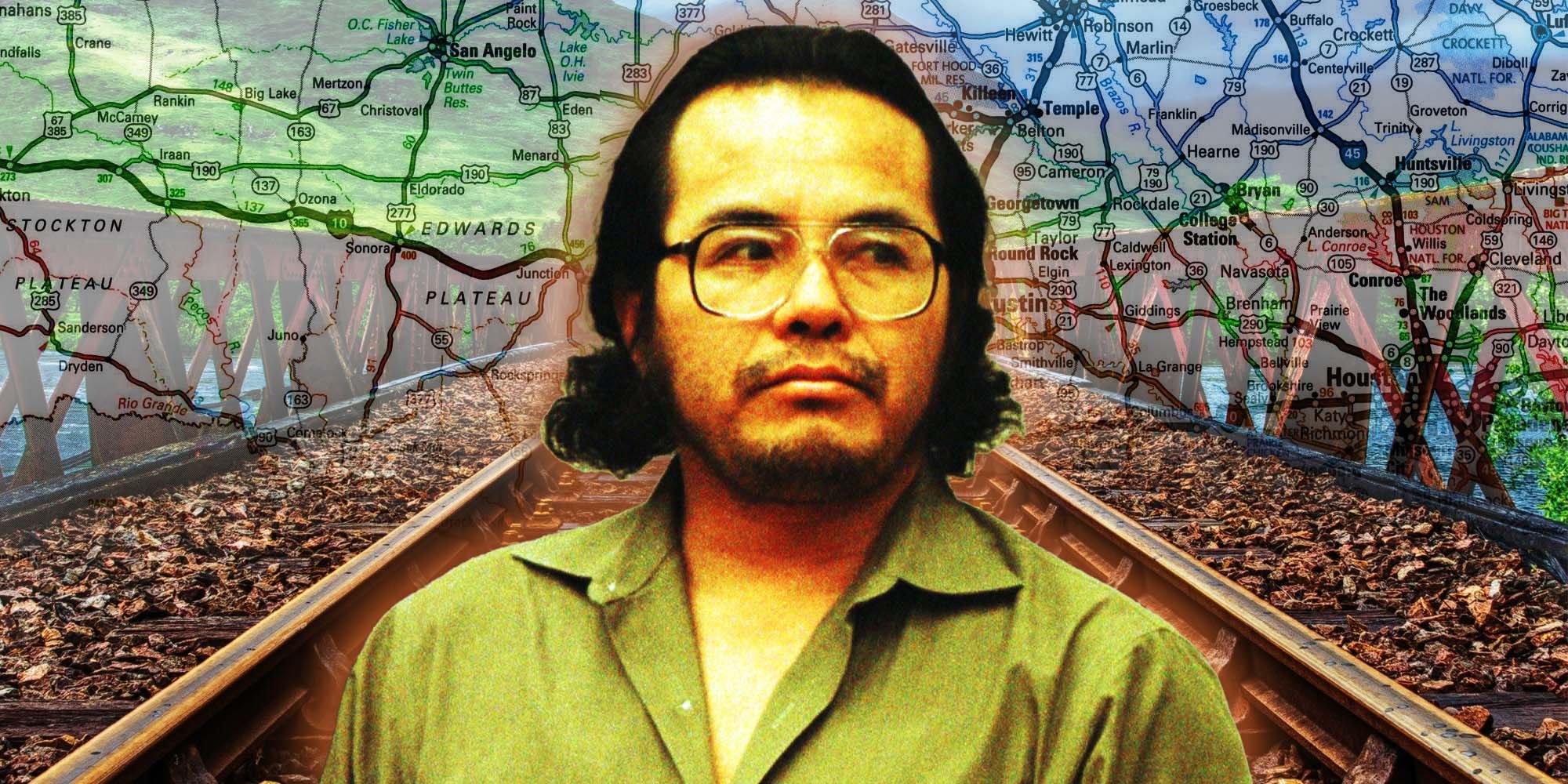
Angel Reséndiz, known as the "Railroad Killer," terrorized the United States during the 1990s by committing brutal murders near railway lines where he hitched freight trains. The chilling true story of his apprehension culminated in a high-stakes, tense negotiation led by Texas Ranger Javier Peña, who spent 48 hours bridging the gap between a religious family's pleas and a hardened serial killer's surrender, ultimately bringing a violent cross-country crime spree to a legal and methodical end.
The Origins of a Cross-Country Terror
The reign of terror associated with the Railroad Killer began well before law enforcement agencies recognized a pattern across state lines. Rafael Reséndiz Ramírez, who frequently used the alias Ángel Maturino Reséndiz, crossed the United States-Mexico border illegally numerous times, blending into the transient population of freight train riders. Unlike killers who targeted isolated areas out of convenience, Reséndiz utilized the national railway infrastructure as a mobile highway, moving swiftly between Texas, Kentucky, Illinois, and Florida.
Law enforcement agencies initially treated these homicides as localized crimes. Because the victims were often found near railway tracks in different jurisdictions, local police departments failed to connect early cases. The crimes were characterized by extreme violence, often involving blunt force trauma and sexual assault inside victims' homes, which were typically situated just feet away from active train tracks. The mobility provided by freight trains allowed Reséndiz to escape detection for years, leaving behind fragmented forensic clues that local agencies struggled to aggregate into a broader federal investigation.
Anatomy of an Investigation: Unifying the Task Force
As the body count rose through the late 1990s, the Federal Bureau of Investigation (FBI) and state law enforcement agencies realized they were hunting a single perpetrator. The breakthrough came when forensic evidence, including fingerprints and stolen property, linked a series of murders across multiple states. This cross-jurisdictional cooperation led to the creation of a specialized task force designed to track the movements of freight train riders and coordinate intelligence sharing between local sheriffs, state police, and federal investigators.
Texas Ranger Javier Peña became a central figure in tracking the suspect. Ranger Peña and his colleagues analyzed railway schedules, freight yard logs, and pawn shop transactions where Reséndiz had fenced items stolen from his victims. By establishing a profile of the killer's habits, law enforcement identified the suspect's sister, Manuela Ramos, who lived in Clute, Texas. This connection provided the crucial leverage needed to end the manhunt peacefully, setting the stage for the pivotal 48-hour negotiation period that would define the final phase of the case.
| Investigation Phase | Key Law Enforcement Action | Primary Objective |
|---|---|---|
| Early Response | Local police handling individual crime scenes | Documenting immediate forensic evidence |
| Cross-State Linking | FBI and state task force data aggregation | Connecting disparate murders via ballistics and DNA |
| Intelligence Gathering | Tracking freight routes and pawn shop records | Identifying the suspect's identity and travel patterns |
| Final Negotiation | Texas Rangers and family mediation | Securing a peaceful surrender without further casualties |
The 48-Hour Turning Point: Strategy and Surrender
The culmination of the manhunt hinged on a delicate psychological strategy executed over 48 hours in July 1999. Recognizing that a violent confrontation could lead to further loss of life, Texas Ranger Javier Peña enlisted the help of Manuela Ramos, Reséndiz's sister, and Prince Holman, a spiritual counselor. The objective was to convince Reséndiz that surrender was his only viable option and that he would be treated fairly within the judicial system.
During this intensive 48-hour window, Ranger Peña established direct telephonic communication with Reséndiz, who had crossed back into Mexico and then re-entered the United States via El Paso, Texas. Peña balanced authoritative law enforcement pressure with empathetic appeals mediated by Reséndiz's family. The killer expressed deep-seated fears and religious anxieties, which Peña and Holman systematically addressed to de-escalate the situation. On July 13, 1999, at the Paso del Norte International Bridge connecting Ciudad Juárez and El Paso, Reséndiz walked across the border and surrendered to the FBI and Texas Rangers, ending the tense standoff without a single shot fired.
Legal Proceedings and Judicial Accountability
Following his surrender, Reséndiz faced immediate prosecution for his crimes. The judicial process brought to light the full scope of his multi-state crime spree, with prosecutors in Texas securing indictments for capital murder. The trial underscored the importance of DNA profiling, ballistics matching, and cross-state task force cooperation in modern serial killer prosecutions.
In June 2000, a Texas jury convicted Reséndiz of the capital murder of Dr. Claudia Benton, a prominent Houston pediatrician. During the sentencing phase, prosecutors presented overwhelming evidence linking him to multiple other homicides across the country. The jury returned a death sentence, rejecting defense arguments regarding mental health impairments. Subsequent appeals by defense counsel challenged the voluntariness of his confession and various procedural aspects of the trial, but higher courts consistently upheld the conviction and sentence, affirming the legal framework used during his apprehension and prosecution.
Lasting Impacts on Law Enforcement and Border Security
The case of the Railroad Killer fundamentally transformed how law enforcement agencies handle cross-jurisdictional violent crime. Before this investigation, local police departments operated within strict geographical silos, hindering the detection of mobile offenders who crossed state and national boundaries. The collaboration between local, state, and federal agencies during the Reséndiz manhunt served as a blueprint for modern multi-agency task forces.
Furthermore, the case prompted significant policy reviews regarding freight train security, railway worker vigilance, and information sharing between U.S. and Mexican law enforcement agencies. Railroad companies implemented stricter protocols to monitor unauthorized riders on freight cars, while law enforcement databases were upgraded to streamline the exchange of fingerprint and DNA evidence across state lines. These systemic changes continue to influence how contemporary investigators track transient offenders who attempt to exploit transportation infrastructure to evade capture.
Frequently Asked Questions
Who was the Railroad Killer?
The Railroad Killer was Ángel Maturino Reséndiz, a transient Mexican national who committed a series of brutal murders across the United States during the 1990s by utilizing freight trains to travel undetected between crime scenes.
How was the Railroad Killer caught?
He was apprehended after a multi-agency task force linked forensic evidence to him and identified his sister living in Texas. Texas Ranger Javier Peña and spiritual counselor Prince Holman negotiated a peaceful surrender over a 48-hour period, leading to his arrest at the U.S.–Mexico border in July 1999.
Why did the killer target locations near railway tracks?
Reséndiz hitched rides on freight trains to move swiftly across the country. Targeting homes and individuals situated immediately adjacent to railway lines allowed him to commit his crimes and escape via the rail system before local authorities could respond.
What role did Texas Ranger Javier Peña play in the case?
Ranger Peña was instrumental in coordinating the tactical and psychological strategy during the final 48 hours of the manhunt, utilizing family mediation and direct communication to convince Reséndiz to surrender without further violence.
What was the legal outcome of the case?
Reséndiz was convicted of capital murder in Texas for the slaying of Dr. Claudia Benton and was sentenced to death. He was executed by lethal injection in Texas in June 2006 after exhausting his appeals.