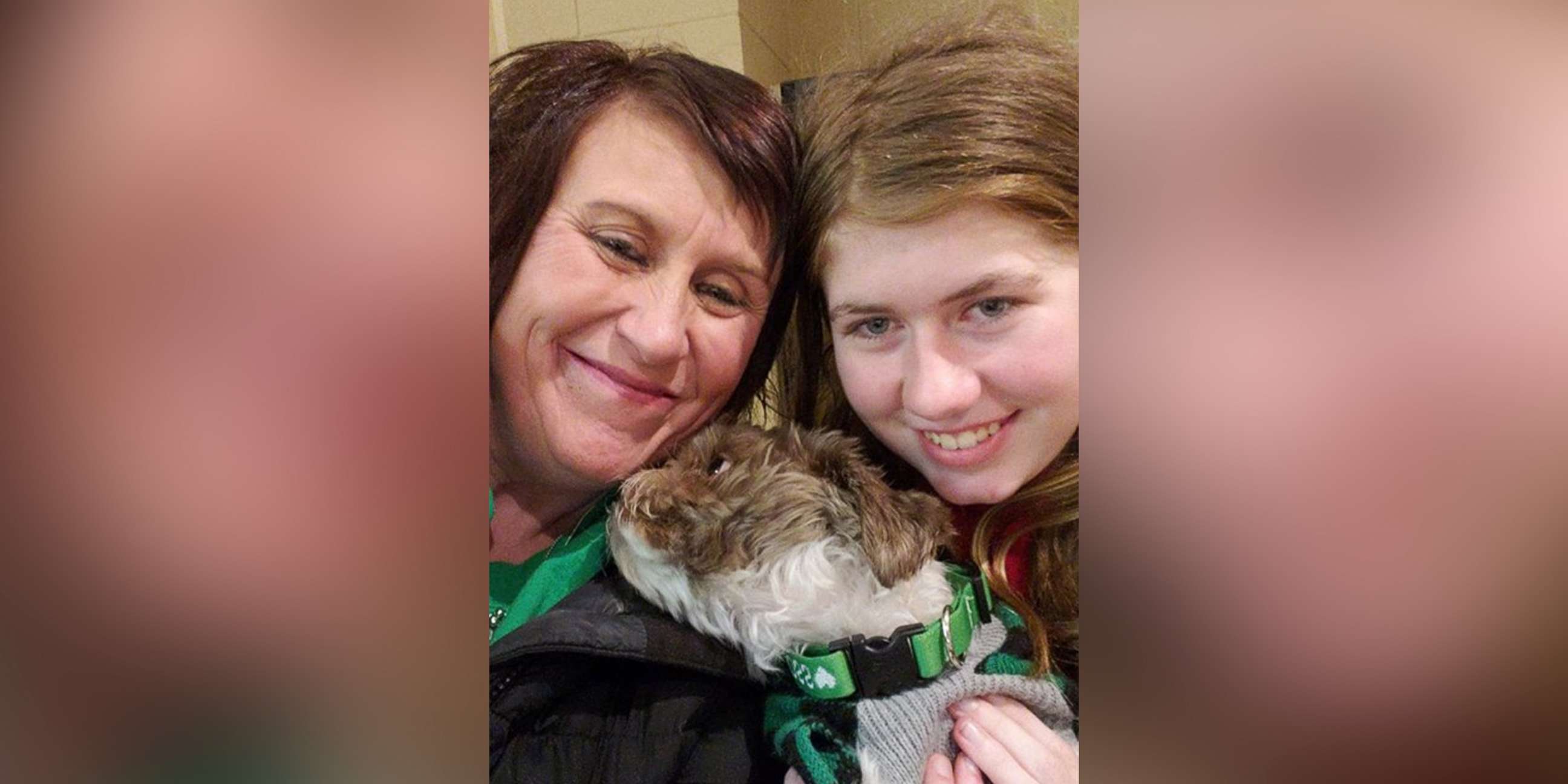
The 48 Hours investigation into the Jayme Closs case reveals a harrowing narrative of a 13-year-old girl’s abduction and her miraculous 88-day survival. After her parents were murdered in their Barron County home, Jayme was held captive by Jake Patterson in a remote cabin before staging a daring escape that captivated the world.
The Night That Changed Barron County Forever
On the night of October 15, 2018, a 911 call was placed from the home of James and Denise Closs in Barron, Wisconsin. Dispatchers heard no voice on the other end, only the sounds of a struggle and muffled screaming. When law enforcement arrived at the scene just minutes later, they discovered a grisly sight: both parents had been shot to death. Crucially, their 13-year-old daughter, Jayme Closs, was nowhere to be found.
The initial investigation was characterized by a desperate search for a motive. Investigators looked into the parents’ workplaces and personal lives, searching for a grudge or a connection that would explain such a targeted, violent act. However, the "shocking story behind the headlines" as explored by programs like 48 Hours eventually revealed a much more terrifying reality: the crime was committed by a total stranger who had targeted Jayme after seeing her board a school bus once.
This lack of a prior connection made the case an investigative nightmare. For 88 days, the FBI and local authorities followed thousands of leads, but Jayme’s whereabouts remained a complete mystery. The community of Barron was paralyzed by fear, realizing that a predator was capable of vanishing into the Northwoods without leaving a trace.
Inside the 88-Day Captivity
While the world searched for her, Jayme Closs was living a nightmare in Gordon, Wisconsin, approximately 70 miles north of her home. Her captor, 21-year-old Jake Thomas Patterson, had meticulously planned the abduction. He had visited the Closs home twice before the actual kidnapping but was deterred by seeing cars in the driveway or lights on.
The conditions of Jayme's captivity were psychologically and physically grueling. Patterson held her in a small cabin, frequently forcing her to hide under his twin-sized bed for hours at a time. To ensure she did not move, he surrounded the bed with heavy plastic bins and weights, threatening her with violence if she attempted to leave or make noise.
The 48 Hours coverage highlighted the psychological warfare Patterson used. He told Jayme that if she tried to escape, he would find her and kill more people. He isolated her from all media, though she occasionally heard her own name on the radio, a detail that served as a double-edged sword—it gave her hope that people were looking for her, but also increased the terror of being found by the "wrong" person while still under Patterson's control.
The Resilience of Jayme Closs and Her Daring Escape
The turning point of the "shocking story" occurred on January 10, 2019. Patterson informed Jayme he would be gone for a few hours. In a display of extraordinary courage and presence of mind, Jayme realized this was her window of opportunity. She pushed away the heavy bins, crawled out from under the bed, put on a pair of Patterson’s oversized sneakers, and ran into the freezing Wisconsin winter.
Jayme encountered Jeanne Nutter, a local woman walking her dog. Nutter immediately recognized the girl from the ubiquitous "Missing" posters. Nutter brought Jayme to the home of Peter and Kristen Kasinskas for safety while they called 911.
The immediate aftermath of her escape was as intense as the abduction itself. Within minutes of the 911 call, police stopped a vehicle matching Jayme's description of her captor’s car. Jake Patterson was taken into custody without incident. He reportedly told the arresting officers, "I know what this is about. I did it."
Legal Proceedings and the Sentencing of Jake Patterson
The legal resolution of the Jayme Closs case was unusually swift, largely because Patterson chose to plead guilty to avoid putting Jayme through the trauma of a trial. In March 2019, he pleaded guilty to two counts of first-degree intentional homicide and one count of kidnapping.
| Category | Details |
|---|---|
| Defendant | Jake Thomas Patterson |
| Primary Charges | 1st-Degree Intentional Homicide (2 counts), Kidnapping |
| Sentencing Date | May 24, 2019 |
| Sentence | Two consecutive life terms plus 40 years |
| Parole Eligibility | None (Life without the possibility of parole) |
| Location of Crime | Barron County and Douglas County, WI |
| Total Captivity | 88 Days |
During the sentencing hearing, the judge described Patterson as "the embodiment of evil" and "the most dangerous man to ever walk the planet." The defense attempted to paint a picture of a socially isolated young man who "snapped," but the prosecution successfully argued that the level of premeditation—shaving his head to avoid leaving DNA, stealing license plates, and modifying his shotgun—demonstrated a calculated, predatory mind.
Investigative Lessons and Media Impact
The 48 Hours episodes focusing on this case served as a critical post-mortem for law enforcement tactics. One of the primary takeaways was the difficulty of profiling a "random" offender. Patterson had no criminal record and no digital footprint that would have flagged him as a threat.
The media’s role in the case was also scrutinized. While the constant coverage kept Jayme’s face in the public eye—which arguably led to her being recognized so quickly after her escape—it also placed an immense burden on her family and the community. By 2026, the case remains a landmark study in how modern investigative journalism balances the need for public information with the privacy and recovery of a young survivor.
Furthermore, the Jayme Closs case prompted discussions regarding the Amber Alert system. Because the 911 call was so brief and the scene so chaotic, it took several hours to issue an alert. Analysts have used this case to advocate for faster, more streamlined notification processes in suspected abductions where a child is clearly missing from a violent crime scene.
Life After the Headlines
As of 2026, Jayme Closs has largely stayed out of the public eye, a choice that many child advocates and psychologists praise as essential for her long-term recovery. She has occasionally released statements through her family’s attorney, expressing gratitude for the support she received from across the country.
Her story is no longer just a "shocking headline" but a testament to human resilience. The "Jayme Closs Day" celebrated in Barron serves not as a reminder of the tragedy, but as a celebration of a young girl who saved herself. Organizations focusing on missing and exploited children continue to use her case as a "beacon of hope," proving that even in the most dire circumstances, survival and escape are possible.
FAQ: Understanding the Jayme Closs Case
Why was Jake Patterson never caught during the 88-day search?
Patterson was a "ghost" in the system; he had no prior criminal record, lived in a remote area, and took extreme precautions to avoid detection. He avoided social media and stayed away from local businesses where he might be recognized. The lack of a digital trail and his calculated decision to target a stranger made it nearly impossible for traditional investigative techniques to link him to the Closs family before Jayme’s escape.
How did Jayme Closs manage to escape the cabin?
Jayme waited until Patterson told her he would be away for several hours. Despite being threatened and physically weighed down by heavy bins while under a bed, she used her strength and adrenaline to move the weights and flee the house. Her ability to remain calm and wait for a specific moment of vulnerability in her captor's routine was the key to her survival.
What was the motive behind the kidnapping?
The motive was purely predatory and randomized. Patterson admitted to investigators that he saw Jayme getting on a school bus and "knew she was the girl he was going to take." He did not know her name, her family, or anything about her life prior to the abduction. This "random" element is what made the case particularly shocking to the public and difficult for law enforcement to solve.
Where is Jake Patterson now in 2026?
Jake Patterson is serving two consecutive life sentences without the possibility of parole at a maximum-security correctional facility. Due to the high-profile nature of his crime and the potential risk to his safety from other inmates, he has spent significant portions of his sentence in administrative or protective custody.
How did 48 Hours contribute to the story?
48 Hours provided an in-depth look at the forensic evidence and the psychological profile of the kidnapper that was not fully available during the initial news cycle. By interviewing neighbors, investigators, and family members, the program contextualized the "how" and "why" of the investigation's challenges, helping the public understand the complexities of solving stranger-originated crimes in rural areas.
Protecting the Vulnerable: Lessons for the Future
The legacy of the Jayme Closs story is one of vigilance and community strength. For families and law enforcement, the case underscores the importance of immediate, coordinated responses to missing persons reports. It also serves as a reminder of the vital role that ordinary citizens play in the safety of their communities; had Jeanne Nutter not been walking her dog or had she been less observant, the outcome might have been different.
For those looking to support causes related to this case, participating in local Child Advocacy Centers or supporting the National Center for Missing & Exploited Children (NCMEC) are practical next steps. These organizations provide the training and resources necessary to help find missing children and support survivors as they reintegrate into society after experiencing profound trauma.