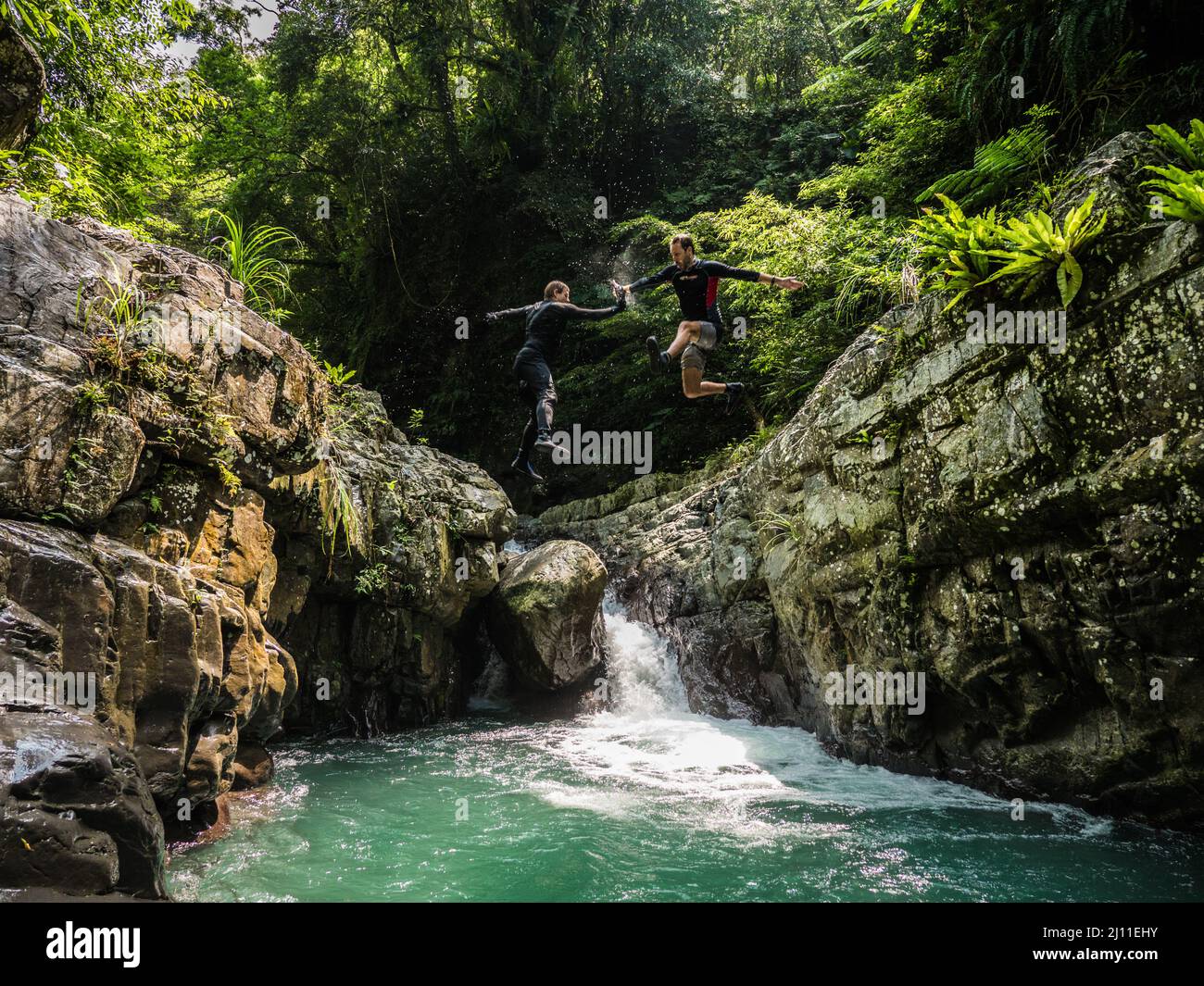
The "3 hikers jump into waterfall" viral video typically refers to the tragic 2018 incident at Shannon Falls in British Columbia, involving members of the "High on Life" travel collective, or various high-risk recreational jumps shared on social media. While these videos often capture breathtaking scenery, they document extreme hazards including unpredictable hydraulics, aerated water, and significant impact forces that frequently result in fatal outcomes.
The phenomenon of waterfall-related viral content has evolved significantly by 2026, transitioning from simple "daredevil" clips to a broader conversation regarding outdoor ethics, social media's influence on risk-taking, and the physical science of moving water. Understanding the context of these videos requires an analysis of the specific locations involved, the fluid dynamics that make waterfalls deceptively dangerous, and the legal consequences of performing such stunts in protected wilderness areas.
The Context Behind the Viral Footage: Shannon Falls and Beyond
When users search for "3 hikers jump into waterfall," the most prominent historical reference is the 2018 tragedy at Shannon Falls Provincial Park in Squamish, British Columbia. In this specific event, three experienced hikers and social media influencers—Ryker Gamble, Alexey Lyakh, and Megan Scraper—fell over the falls. The incident began when one individual slipped into the fast-moving water, and the others were swept away while attempting a rescue.
This video and the subsequent reporting became a touchstone for the "viral stunt" era. It highlighted the thin line between curated adventure content and life-threatening negligence. By 2026, this event remains a primary case study for park rangers and search and rescue (SAR) teams worldwide. It illustrates that even individuals with significant outdoor experience can succumb to the "slippery zone"—the area of smooth, moss-covered rock near the lip of a waterfall where traction is effectively zero.
Other "3 hiker" videos often circulate from locations like the Tavoro Waterfalls in Fiji or the "Devil’s Pool" at Victoria Falls. In these instances, the "jump" is often a planned, though still dangerous, recreational activity. However, the distinction between a planned jump and an accidental fall is often blurred in social media algorithms, leading to a dangerous normalization of waterfall proximity among amateur hikers.
The Hydrodynamic Hazards of Falling Water
One of the most misunderstood aspects of waterfall viral videos is the nature of the water itself. To a viewer, the pool at the bottom of a waterfall looks like a soft landing spot. In reality, the fluid dynamics involved—specifically aeration and recirculation—create a environment where survival is statistically unlikely.
Aerated Water and Buoyancy Loss
When water falls from a significant height, it mixes with air, creating "white water" or aerated water. This mixture is significantly less dense than still water. For a hiker jumping or falling into this zone, the primary danger is the loss of buoyancy. Life jackets and natural swimming ability are often insufficient because the body simply sinks through the air-water mixture. Furthermore, the bubbles make it nearly impossible to gain a "grip" on the water to swim upward, leading to rapid exhaustion and drowning.
The Recirculating Current (The "Washing Machine")
At the base of a waterfall, a "hydraulic jump" often forms a recirculating current, colloquially known as a "washing machine" or "boil." This current moves in a circular motion: the force of the waterfall pushes the person to the bottom, the current carries them along the floor, and then pulls them back toward the face of the fall. This cycle can trap even the strongest swimmers indefinitely. Viral videos rarely show the struggle beneath the surface, often cutting away before the full danger of the recirculation becomes apparent.
Biomechanics of High-Elevation Water Entry
The physics of jumping into water from heights exceeding 20 feet (approx. 6 meters) involves massive deceleration forces. For a hiker jumping into a waterfall pool, the impact is not just with the water surface but often with submerged debris or rock shelves that are invisible from above.
| Height of Jump (ft) | Impact Velocity (mph) | Impact Force / Risk Level |
|---|---|---|
| 10 ft | ~17 mph | Low; risk of shallow water injury |
| 30 ft | ~30 mph | Moderate; high risk of spinal compression |
| 50 ft | ~38 mph | High; internal organ trauma likely |
| 100 ft+ | ~54 mph | Extreme; terminal impact common |
As of 2026, medical data from wilderness trauma centers indicates that the most common injuries from waterfall jumps are T12-L1 spinal fractures. This occurs when a hiker hits the water in a "pencil" position but the force of the falling water above them adds a secondary downward load, compressing the vertebrae. Additionally, "disorientation trauma" occurs when the bubbles and turbulence prevent the hiker from identifying which way is up, leading to aspiration of water.
The Role of Social Media and the "Influencer Effect"
The "3 hikers jump into waterfall" video is a symptom of a larger trend often referred to as "clout-driven risk." In the pursuit of viral engagement, hikers frequently bypass safety barriers and warning signs.
By 2026, many national parks have implemented "Social Media Mitigation Zones." These are areas where high-profile accidents have occurred, and park authorities now monitor geo-tags and hashtags to identify individuals who are trespassing into dangerous "closed" sections of the park. The viral nature of these videos creates a false sense of security; viewers see a 15-second clip of a successful jump but do not see the hours of preparation or, more importantly, the dozens of failed attempts that result in injury or death.
The psychological phenomenon of "social proof" plays a role here. When a hiker sees a video of three people jumping into a waterfall, the perceived risk decreases. They assume that if others did it and became "famous" for it, the location must be safe. This ignores the variable nature of water levels; a pool that was 10 feet deep during a viral video shoot in June might only be 3 feet deep in August.
Legal and Financial Consequences of Waterfall Stunts
Performing jumps in regulated areas is rarely just a matter of personal safety; it is a legal and financial liability. In 2026, the cost of Search and Rescue (SAR) operations has reached record highs due to the technical complexity of waterfall extractions.
- Cost Recovery Statutes: Many jurisdictions in North America and Europe now exercise "negligence-based cost recovery." If a hiker ignores posted signs to film a waterfall video and requires rescue, they can be billed for the entire operation, which often exceeds $20,000 to $50,000.
- Federal Charges: In the United States, jumping from waterfalls in National Parks can result in charges of "creating a hazardous condition" or "disorderly conduct" under 36 CFR § 2.34.
- Permanent Bans: Repeated violations or high-profile viral stunts often lead to permanent bans from National Park Systems.
The legal system has caught up with the digital age. Courts now use viral videos as self-incriminating evidence. A video posted to a social platform of a hiker jumping into a waterfall is frequently used by prosecutors to prove intentional trespassing and reckless endangerment.
Survival and Safety Protocols for Waterfall Hiking
If you find yourself in a situation where you or a companion is near a waterfall, the priority is prevention and "shore-based" safety.
- The 15-Foot Rule: Never approach within 15 feet of the lip of a waterfall, regardless of how dry the rock appears. Spray from the falls creates a microscopic layer of moisture and algae that acts as a lubricant.
- Throw, Don't Go: If a hiker falls in, the instinct is to jump in after them. This is how "double" or "triple" tragedies occur. Instead, use a throw bag, a long branch, or a weighted rope.
- Feet-First Entry: If a fall is inevitable, the "feet-first" entry with arms crossed over the chest is the only way to protect the head and internal organs. However, in a waterfall, the downward force of the water will likely push the individual to the bottom regardless of entry style.
- Identify the "Boil Line": If trapped in a recirculating current at the base, the standard advice is to dive down and away from the waterfall. The current at the bottom of the pool moves downstream; the current at the surface moves back toward the falls.
FAQ: Common Questions About Waterfall Viral Videos
Did the hikers in the viral waterfall video survive?
In the most famous "3 hikers" video from Shannon Falls (2018), all three individuals tragically passed away. In other viral clips, such as those from Fiji or Hawaii, the jumpers are often professional cliff divers or locals who are intimately familiar with the pool depths, leading to successful but still high-risk outcomes.
Is jumping into a waterfall illegal?
In most National and Provincial parks, jumping from cliffs or waterfalls is strictly prohibited. These regulations are in place because underwater hazards (submerged logs, rocks) shift constantly with the current, making a spot that was "safe" yesterday potentially lethal today.
Why is the water at the bottom of a waterfall so dangerous?
The water is highly aerated, which means it contains a high percentage of air bubbles. This reduces the water's density, causing people and objects to sink much faster than they would in a swimming pool. Additionally, the force of the falling water creates "hydraulics" that can trap a person underwater.
Can a life jacket save you in a waterfall?
A standard life jacket (PFD) provides buoyancy based on the density of normal water. In the highly aerated "white water" at the base of a waterfall, the life jacket's effectiveness is significantly reduced. While it may help, it cannot overcome the massive downward force of thousands of gallons of falling water.
What should I do if I see someone jump or fall?
Immediately call emergency services and provide precise GPS coordinates. Do not enter the water. Look for "throwable" flotation devices or long objects to reach the person from a stable position on the shore. Note where the person went under to assist SAR teams.
Technical Recommendation for Outdoor Content Creators
As we navigate the landscape of 2026, the responsibility of hikers and content creators has shifted toward "ethical adventuring." If you are filming in waterfall environments, the most effective way to engage an audience without encouraging dangerous behavior is to highlight the technical beauty of the location from a safe distance.
Utilize telephoto lenses to capture the scale of the falls without needing to stand on the edge. Furthermore, the use of drones is often restricted in these areas specifically to prevent the distraction of hikers near ledges. The best "next action" for any hiker inspired by a viral video is to contact local guide services or park rangers to identify sanctioned swimming holes and jumping spots that are surveyed for safety and depth. Prioritizing physical safety over digital engagement ensures that the wilderness remains a place of recreation rather than a site of recurring tragedy.