Stevie Nicks' 2014 studio album, 24 Karat Gold: Songs from the Vault, serves as a meticulously curated retrospective of her unreleased songwriting history. Recorded in just three weeks in Nashville, the album features reimagined versions of demos written between 1969 and 1987, finally bridging the gap between her private archives and her public discography.
The Origins and Concept of the Vault
The genesis of 24 Karat Gold: Songs from the Vault was not a typical creative spark but rather a response to the digital age. For decades, a subculture of Stevie Nicks fans had traded low-quality bootlegs and demos of unreleased tracks on the internet. Nicks became aware that many of her most cherished, yet unfinished, compositions were circulating in degraded formats. As of 2026, this album remains the definitive answer to that "demo culture," providing fans with high-fidelity, polished versions of songs that had lived in the shadows for over forty years.
The title itself, "24 Karat Gold," refers to the perceived value of these "lost" songs. Nicks has often described her songs as her children, and the tracks on this record were those she felt had been unfairly left behind during the frantic pace of her years with Fleetwood Mac and her early solo superstardom. The project was not designed to be a "new" album in the sense of contemporary writing, but rather a historical document brought to life with modern production values.
Nicks collaborated with longtime friend and producer Dave Stewart (of Eurythmics) and her legendary guitarist Waddy Wachtel to helm the project. The goal was to maintain the soul of the original demos—many of which were written on piano in the early 1970s—while giving them the sonic weight of a major studio release.
Technical Production and the Nashville Sessions
One of the most remarkable facts about 24 Karat Gold is the speed at which it was recorded. Historically, Stevie Nicks is known for long, drawn-out recording processes; her debut solo album Bella Donna took months to perfect. However, for this project, the team relocated to Nashville, Tennessee, a city known for its "session shark" culture where musicians can learn and record a track in a matter of hours.
The album was tracked in approximately 15 to 21 days. This rapid-fire approach was intentional. Dave Stewart suggested Nashville specifically to harness the efficiency of the local session players. By using a core group of elite musicians, Nicks was able to record two tracks a day—a pace that would have been unthinkable during the Rumours or Tango in the Night eras.
The Role of Waddy Wachtel and Dave Stewart
Waddy Wachtel, who has been Nicks’ musical director and lead guitarist since her solo debut in 1981, served as the bridge between her classic sound and this new recording environment. His presence ensured that even though the musicians were new to the material, the "Stevie Nicks Sound"—characterized by driving rock rhythms and intricate guitar overlays—remained intact.
Dave Stewart acted as the catalyst and co-producer, pushing Nicks to revisit the "Gothic" and "Country-Rock" roots of her early career. The technical depth of the album is found in its organic arrangements. Unlike the synth-heavy production of her 1980s work like Rock a Little, 24 Karat Gold relies heavily on live instrumentation, Hammond B3 organs, and the natural resonance of the Nashville studio spaces.
Historical Timeline of the "Vault" Tracks
Every song on 24 Karat Gold has a specific "birth date" that predates the album by decades. To understand the album's history, one must look at where these songs were originally intended to land. Many were written during the height of Fleetwood Mac's fame but were cut due to time constraints or internal band politics.
| Song Title | Approximate Writing Year | Original Context / Era |
|---|---|---|
| Lady | 1970 | Written before Buckingham Nicks; her first piano-composed song. |
| The Dealer | 1979 | Originally demoed for Fleetwood Mac's Tusk. |
| Belle Fleur | 1980-1981 | Written during the Bella Donna sessions. |
| 24 Karat Gold | 1980 | A song about her relationship with Mick Fleetwood. |
| Starshine | 1980 | Recorded with Tom Petty and the Heartbreakers at Sound City. |
| Blue Water | 1978 | Features backup vocals from Lady A (added for the 2014 release). |
| Cathouse Blues | 1973 | A "jazz-style" track from the Buckingham Nicks era. |
| Mabel Normand | 1985 | Inspired by the silent film star; written during the Rock a Little era. |
| Watch Chain | 1977 | Written during the Rumours era about Lindsay Buckingham. |
The track "Lady" is perhaps the most significant historical piece on the album. Originally titled "Knockin' on my Door," it was the first song Nicks ever wrote on a piano. For years, it existed only as a bootleg. The 2014 version strips away the rock artifice, presenting it as a stark, emotional ballad that highlights her vocal evolution.
Visual Identity: The Polaroid Self-Portraits
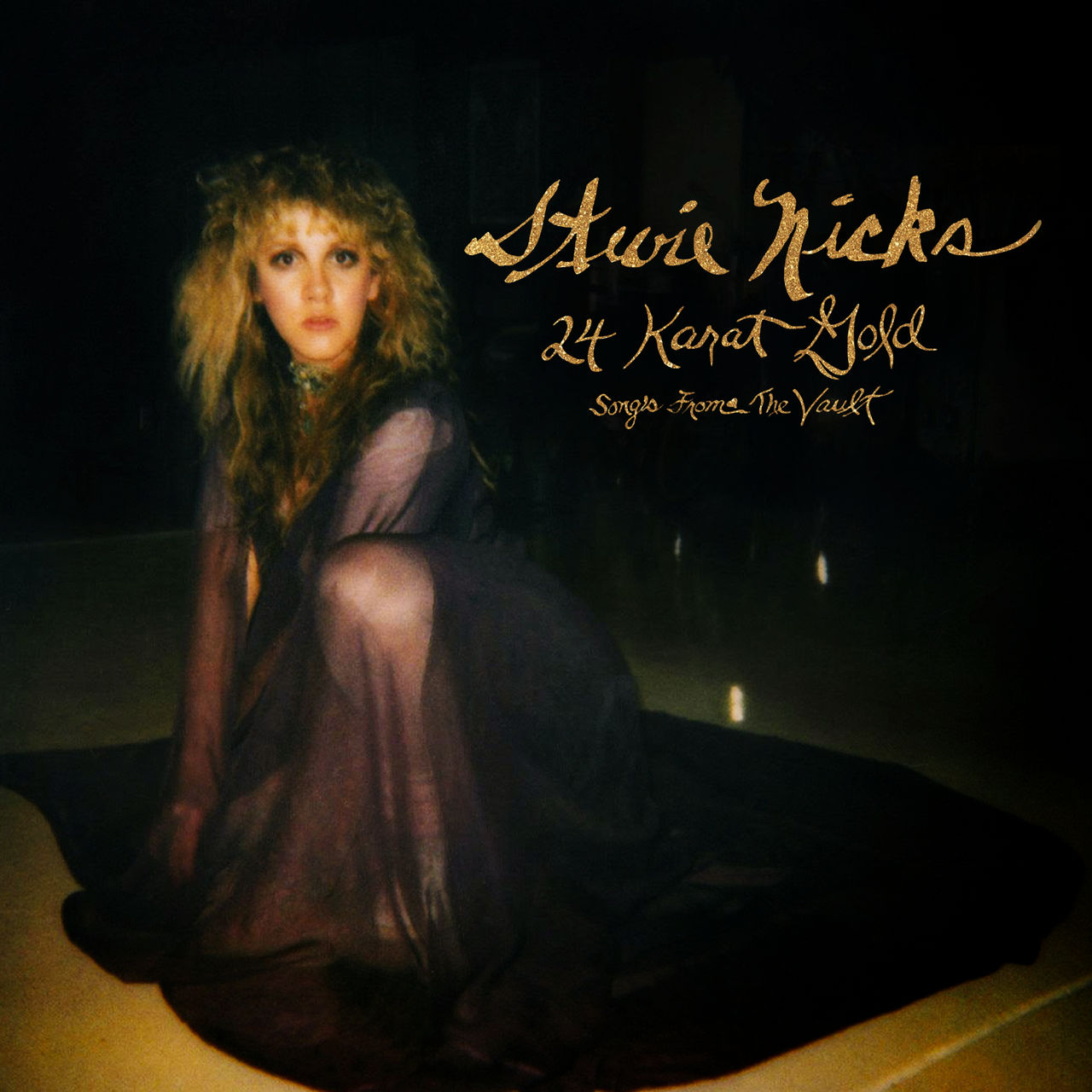
The marketing and visual aesthetic of 24 Karat Gold are just as historical as the music. Instead of hiring a contemporary photographer for a new shoot, Nicks reached back into her personal archives. The album cover and the accompanying lyric booklet are composed entirely of "selfies" Nicks took during the 1970s and 1980s.
Long before the invention of the smartphone, Nicks used a Polaroid camera to document her life, outfits, and moods. She would set up a tripod and a remote shutter in her hotel rooms or homes to capture these images. These photographs serve as a visual "vault," mirroring the musical vault of the songs. The use of these images was a deliberate move to authenticate the era from which the songs originated, giving fans a glimpse into her private world during her most iconic years.
Chart Performance and Critical Reception
Upon its release on October 7, 2014, by Reprise Records, the album was a commercial and critical success. It debuted at No. 7 on the Billboard 200, selling approximately 33,000 copies in its first week. This was a significant achievement for a legacy artist in the mid-2010s, proving that there was still a massive market for Nicks’ archival material.
Critics praised the album for its lack of modern "glitter." Unlike many legacy artists who try to adapt to current pop trends, Nicks stayed true to the classic rock and Americana styles that defined her career. Rolling Stone noted that the album felt "vibrant" and "lived-in," rather than a dusty collection of rejects. The album also reached the Top 10 in the UK and Australia, solidifying its international appeal.
The 24 Karat Gold Tour and Live Film
The history of the album extended into a massive world tour that began in 2016 and ran through 2017. The tour was unique because Nicks broke her standard "Greatest Hits" setlist to include these deep cuts. She would often stop the show to tell 10-minute stories about the origins of songs like "Belle Fleur" and "Wild Heart," turning the concerts into a "storytellers" style event.
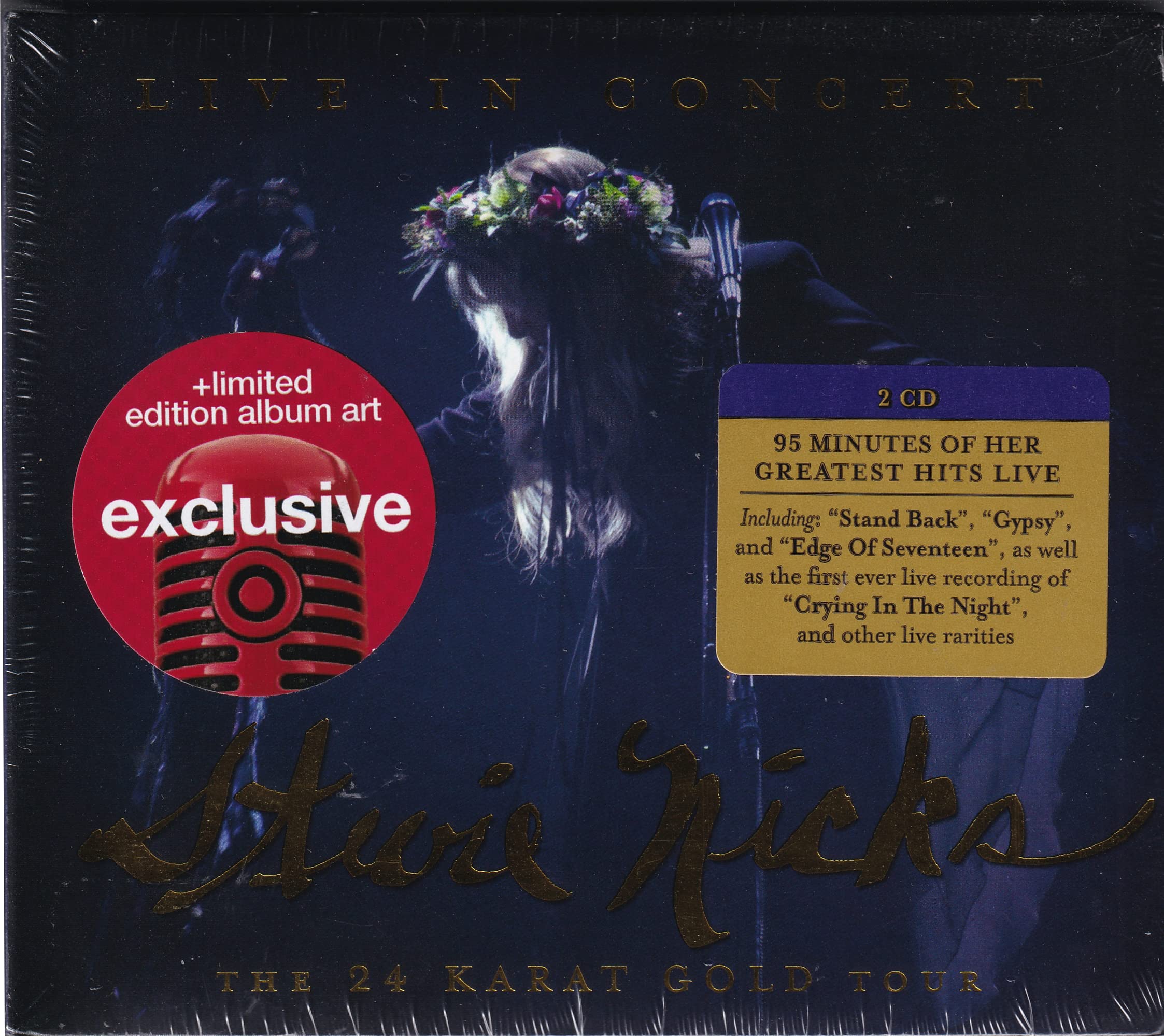
In 2020, Nicks released a concert film and live album titled Stevie Nicks 24 Karat Gold The Concert. Directed by Joe Thomas and filmed in Indianapolis and Pittsburgh, the film captured the essence of this era. By 2026, this film is regarded as one of the best documentations of her solo stage presence, showcasing her ability to weave narrative and music together.
Verified Facts and Production Trivia
- The "Blue Water" Connection: The song "Blue Water" features harmony vocals from the country group Lady A. Nicks has always had a strong affinity for the Nashville sound, and this collaboration was one of the few contemporary additions to the archival material.
- The "Tusk" Connection: "The Dealer" was originally intended for the 1979 Fleetwood Mac album Tusk. While it didn't make the cut then, Nicks often performed snippets of it during soundchecks for decades.
- Mabel Normand's Inspiration: The track "Mabel Normand" is a cautionary tale about the silent film actress who suffered from cocaine addiction. Nicks wrote it in the mid-80s as a reflection on her own struggles with substance abuse at the time.
- Vinyl Variations: The album was released as a double-LP on gold-colored vinyl, which has since become a highly sought-after collector's item.
Frequently Asked Questions
Why did Stevie Nicks wait so long to release these songs?
Stevie Nicks has stated that during the height of her career, she was constantly pressured to produce "hits." Many of these songs were considered too personal, too "country," or didn't fit the specific length requirements of vinyl records in the 70s and 80s. She waited until she had total creative control and the right production team to do them justice.
Are the versions on 24 Karat Gold the original demos?
No, the versions on this album are entirely new studio recordings. While the lyrics and melodies remain faithful to the original demos written decades ago, the instrumentation and vocals were recorded in 2014.
Who played on the album?
The album features Waddy Wachtel on guitar, Davey Johnstone (of Elton John’s band) on guitar, Benmont Tench (of Tom Petty and the Heartbreakers) on keyboards, and various top-tier Nashville session musicians.
Does 24 Karat Gold include any Fleetwood Mac songs?
The album consists of songs Nicks wrote herself. While some were demoed with Fleetwood Mac in the past (like "The Dealer" or "Watch Chain"), they are considered Stevie Nicks solo tracks for the purposes of this release.
What is the significance of the song "Lady"?
"Lady" is arguably the most important historical track on the record. It was the first song Stevie Nicks ever wrote on a piano, dating back to 1970 before she and Lindsey Buckingham joined Fleetwood Mac. Its inclusion on this album brought her career full circle.
Next Actions for Collectors and Fans
For those looking to explore the full depth of the 24 Karat Gold era in 2026, the best next step is to seek out the Deluxe Edition of the album, which contains bonus tracks such as "She Loves Him Still." Additionally, watching the 2020 concert film is essential for understanding the narrative context Stevie provides for each song. Collectors should also look for the original 2014 pressings of the Polaroid lyric book, which offers the most comprehensive look at the self-portraits that defined the album's visual identity.