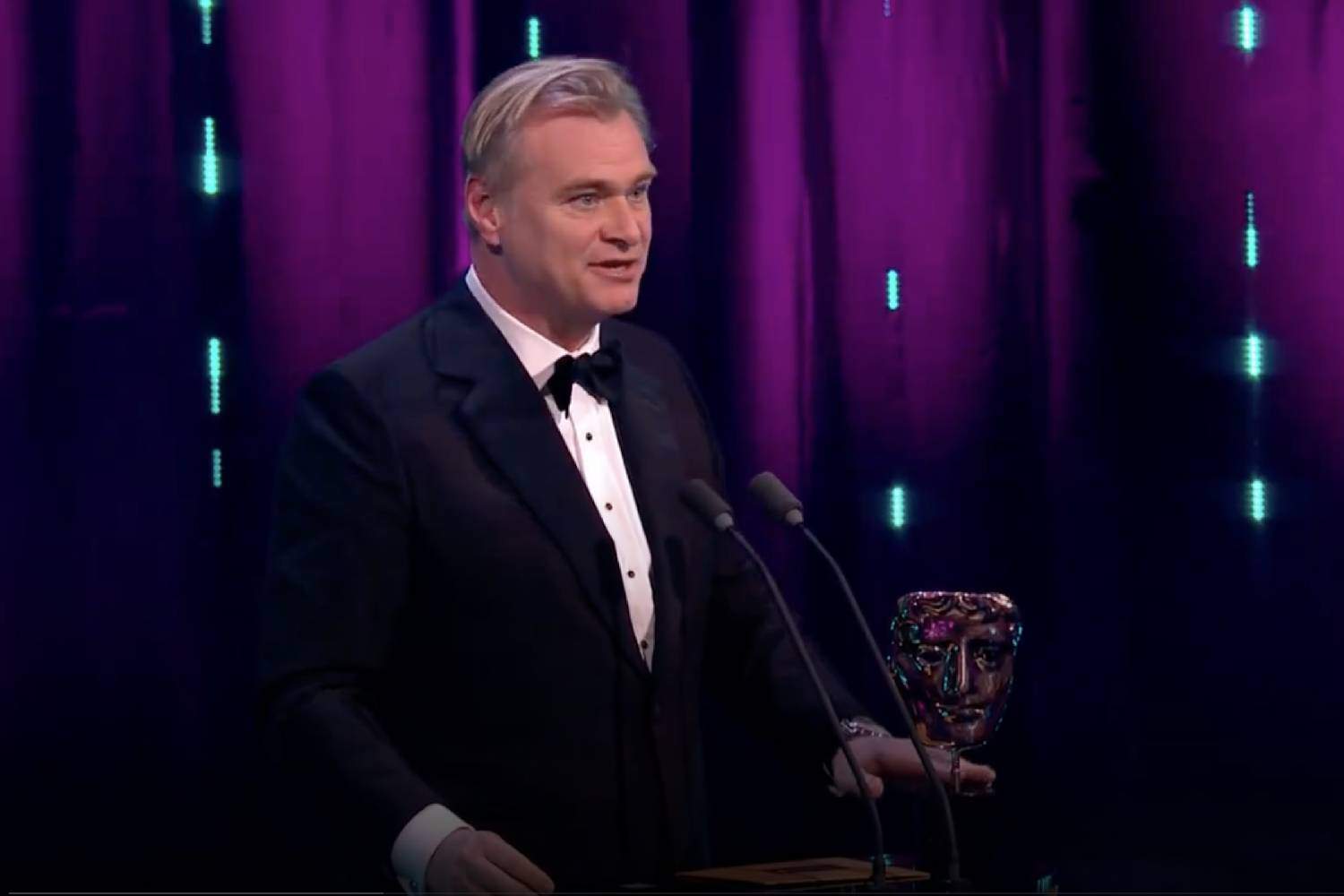
The 2024 BAFTA Film Awards were defined by the overwhelming dominance of Christopher Nolan’s Oppenheimer, which secured seven wins including Best Film and Best Director. However, the ceremony remains historically significant for its "snubs," specifically the total exclusion of Lily Gladstone from the Best Actress nominations and the lack of major hardware for the year's biggest cultural phenomenon, Barbie.
The 77th British Academy Film Awards, held on February 18, 2024, at the Royal Festival Hall in London, served as a definitive turning point in the awards season of that era. While the British Academy of Film and Television Arts (BAFTA) often aligns with the Academy Awards, the 2024 cycle highlighted a distinct divergence in taste and voting mechanics. Looking back from 2026, the 2024 BAFTAs are frequently cited as the year the "jury system" for nominations faced its most intense scrutiny, as several frontrunners in the global awards circuit were notably absent from the London stage.
The Oppenheimer Sweep: A Masterclass in Dominance
The narrative of the 2024 BAFTAs was undeniably written by Oppenheimer. Christopher Nolan, a filmmaker long celebrated by the British Academy but often overlooked for its top honors, finally claimed the Best Director trophy. The film’s success was not merely a result of its box-office prowess but reflected a deep appreciation for its technical complexity and historical weight.
Cillian Murphy’s win for Best Actor was a cornerstone of the evening. His portrayal of J. Robert Oppenheimer was praised for its internal intensity, a performance style that traditionally resonates with the British Academy’s preference for understated, psychologically driven acting. Robert Downey Jr. followed suit in the Best Supporting Actor category, completing a sweep of the major male acting categories. These wins were not necessarily "shocks" in terms of quality, but the sheer scale of the film's seven-trophy haul—including Cinematography, Editing, and Original Score—demonstrated a rare consensus among voters.
The film's dominance effectively silenced the "Atomic" side of the "Barbenheimer" rivalry, leaving little room for other contenders to make significant inroads in the major categories. For many industry observers in 2026, this remains the gold standard for how a biographical epic can sweep the British circuit.
The "Shocking" Best Actress Field and the Lily Gladstone Snub
The most discussed aspect of the 2024 BAFTA nominations was the omission of Lily Gladstone for her role in Killers of the Flower Moon. At the time, Gladstone was the frontrunner for the Academy Award and had already secured a Golden Globe. Her absence from the BAFTA Best Actress shortlist was a seismic shock to the industry.
The reason for this discrepancy lies in the BAFTA voting structure. The Academy uses a three-stage process involving a longlist, a nominating jury, and a final vote. In the acting categories, the top three performers in the initial member vote are automatically nominated, while the remaining slots are filled by a jury. The goal of this system is to ensure diversity and to prevent a "sweep" by a single popular film. However, in Gladstone’s case, the system failed to capture one of the most acclaimed performances of the decade.
This snub paved the way for Emma Stone to win her second BAFTA for Poor Things. Stone’s performance as Bella Baxter was undeniably transformative, but the win was colored by the conversation surrounding those who were missing from the room. Along with Gladstone, Greta Lee (Past Lives) was also a notable omission, leading to debates about whether the British Academy’s jury system inadvertently excludes the very performances it seeks to protect.
Barbie’s Difficult Night in London
If Oppenheimer was the night's victor, Barbie was its most high-profile casualty. Despite being a global phenomenon and receiving five nominations, Greta Gerwig’s film went home empty-handed. The "snubs" began with the nominations themselves, where Gerwig was excluded from the Best Director category—a move that mirrored her subsequent omission at the Oscars, though the BAFTA exclusion happened first.
The failure of Barbie to secure wins in categories like Production Design or Costume Design—where it was the heavy favorite—was particularly surprising. It lost those categories to Poor Things, a film that shared its vibrant, world-building aesthetic but offered a more surrealist, European sensibility that appeared to align more closely with BAFTA voters' tastes.
For the British Academy, Poor Things represented a home-grown success (produced by Film4 and Element Pictures), and its five wins suggested that when faced with two "maximalist" films, the Academy would lean toward the one with more traditional "auteur" credentials.
Winners and Major Nominees: A 2024 Comparative Overview
The following table outlines the key results from the 2024 BAFTAs, highlighting the tension between the expected frontrunners and the eventual victors.
| Category | Winner | Notable Snubs / Nominees |
|---|---|---|
| Best Film | Oppenheimer | Killers of the Flower Moon, Barbie (Not Nominated for Film) |
| Best Director | Christopher Nolan (Oppenheimer) | Greta Gerwig (Barbie - Not Nominated) |
| Best Actress | Emma Stone (Poor Things) | Lily Gladstone (Killers of the Flower Moon - Not Nominated) |
| Best Actor | Cillian Murphy (Oppenheimer) | Andrew Scott (All of Us Strangers - Not Nominated) |
| Best Supporting Actress | Da’Vine Joy Randolph (The Holdovers) | Julianne Moore (May December - Not Nominated) |
| Best Supporting Actor | Robert Downey Jr. (Oppenheimer) | Ryan Gosling (Barbie), Charles Melton (May December) |
| Outstanding British Film | The Zone of Interest | Napoleon, Wonka |
| Original Screenplay | Anatomy of a Fall | Barbie, The Holdovers |
The Zone of Interest and the Success of International Cinema
One of the most significant wins of the 2024 BAFTAs was The Zone of Interest winning Outstanding British Film. While Jonathan Glazer’s Holocaust drama is primarily in German and Polish, its status as a British co-production allowed it to compete in this category. Its victory over more "traditional" British fare like Wonka or Napoleon signaled a shift in the Academy’s identity.
The Zone of Interest also took home the award for Film Not in the English Language and Best Sound. These wins reflected the Academy's growing appreciation for challenging, experimental cinema. The sound design in Glazer's film was particularly pivotal, using off-screen audio to convey the horrors of Auschwitz while the onscreen action focused on the mundane lives of the camp commandant's family. By rewarding such a visceral and unconventional film, the BAFTAs reinforced their reputation for valuing artistic risk over commercial appeal.
Examining the Supporting Acting Categories
While the lead categories were mired in controversy, the supporting categories provided some of the night's most predictable—yet deserved—moments. Da’Vine Joy Randolph’s win for The Holdovers was a rare moment of consensus that spanned all major award bodies in 2024. Her performance as Mary Lamb, a grieving mother and school cook, was the emotional heart of Alexander Payne’s film.
In contrast, the Best Supporting Actor category was a battleground. While Robert Downey Jr. won, the nomination list itself was a source of debate. The exclusion of Charles Melton for May December was cited by many critics as a failure of the jury system to recognize breakout talent. Melton had swept many critics' circle awards, yet he failed to find purchase with the British Academy. This furthered the narrative that the 2024 BAFTAs were somewhat disconnected from the "on-the-ground" critical consensus of that year.
The Technical Prowess of Poor Things
Yorgos Lanthimos’s Poor Things was the only film capable of challenging the Oppenheimer juggernaut. With five wins, it dominated the craft categories. The film's aesthetic—a blend of Victorian steampunk and surrealist dreamscapes—was recognized for Production Design, Costume Design, and Makeup & Hair.
The technical wins for Poor Things were significant because they demonstrated that the British Academy does not always follow the "Best Film" winner into the technical categories. While Oppenheimer won Cinematography and Editing, the Academy clearly differentiated between the historical realism of Nolan’s film and the imaginative world-building of Lanthimos’s work. This separation allowed both films to coexist as the two "titans" of the 2024 ceremony.
FAQ: Understanding the 2024 BAFTA Controversies
Why was Lily Gladstone not nominated for a 2024 BAFTA?
Lily Gladstone’s omission was the result of the BAFTA nomination system, which combines a general membership vote with a small, specialized jury. While Gladstone likely ranked high in the initial vote, she did not land in the "top three" that receive automatic nominations, and the jury chose other performers to fill the remaining slots. This was widely considered the biggest snub of the 2024 awards season.
How many BAFTAs did Oppenheimer win in total?
Oppenheimer won a total of seven BAFTA Awards in 2024. These included Best Film, Best Director (Christopher Nolan), Best Actor (Cillian Murphy), Best Supporting Actor (Robert Downey Jr.), Best Cinematography, Best Editing, and Best Original Score.
Was Barbie completely shut out of the 2024 BAFTAs?
Yes, despite receiving five nominations—including Best Actress for Margot Robbie and Best Supporting Actor for Ryan Gosling—Barbie did not win any awards at the 2024 ceremony. It lost its technical nominations to Poor Things and its screenplay nomination to Anatomy of a Fall.
What film won the most awards after Oppenheimer?
Poor Things was the second-most successful film of the night, winning five BAFTAs. Its wins were primarily in the craft and technical categories, including Best Actress for Emma Stone.
Who hosted the 2024 BAFTA ceremony?
The 2024 EE BAFTA Film Awards were hosted by David Tennant. The Scottish actor, known for Doctor Who and Broadchurch, was praised for his lighthearted and professional handling of the evening, marking a departure from the more comedic or experimental hosting styles of previous years.
How does the BAFTA "Outstanding British Film" category work?
To qualify, a film must have significant creative involvement from British individuals or be a British co-production. In 2024, The Zone of Interest won this category despite being set in Poland and featuring German dialogue, because it was produced by British companies and directed by a British filmmaker (Jonathan Glazer).
Strategic Significance of the 2024 Results
The 2024 BAFTAs served as a crucial data point for understanding the evolving landscape of international cinema. For filmmakers and studios, the results emphasized that the British Academy is no longer a mere "Oscar bellwether" but a body with its own specific aesthetic and procedural quirks.
For those looking to navigate future awards seasons, the lessons of 2024 are clear: the jury system requires a different campaign strategy than the general membership vote. High-profile stars and box-office hits can no longer rely on momentum alone to secure nominations in London. Instead, the Academy has signaled a preference for technical innovation, auteur-led projects, and international co-productions. As we reflect on these events from the vantage point of 2026, the 2024 BAFTAs stand as a reminder that in the world of high-stakes cinema, the most "shocking" moments are often those where the system’s mechanics clash with public expectation.