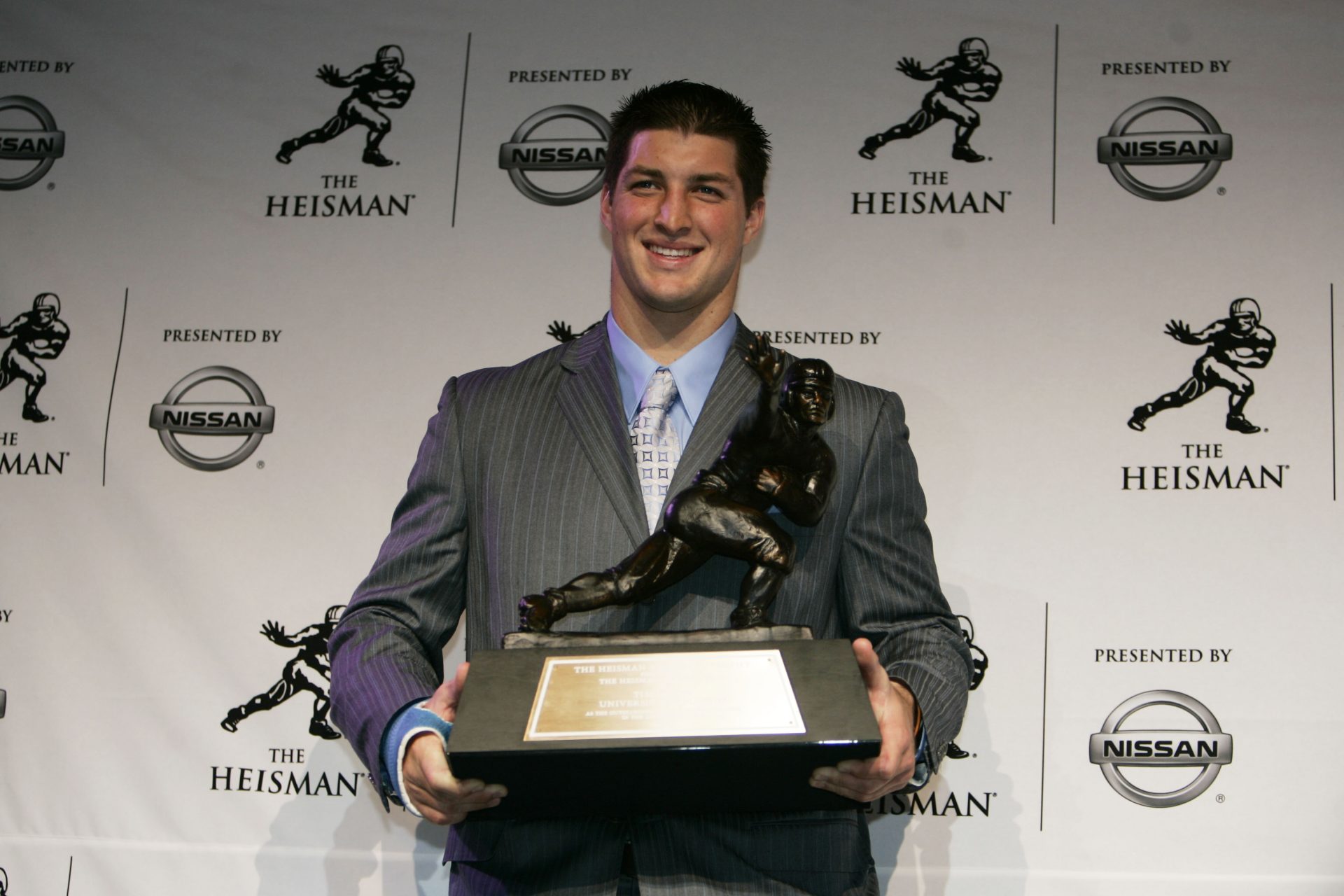
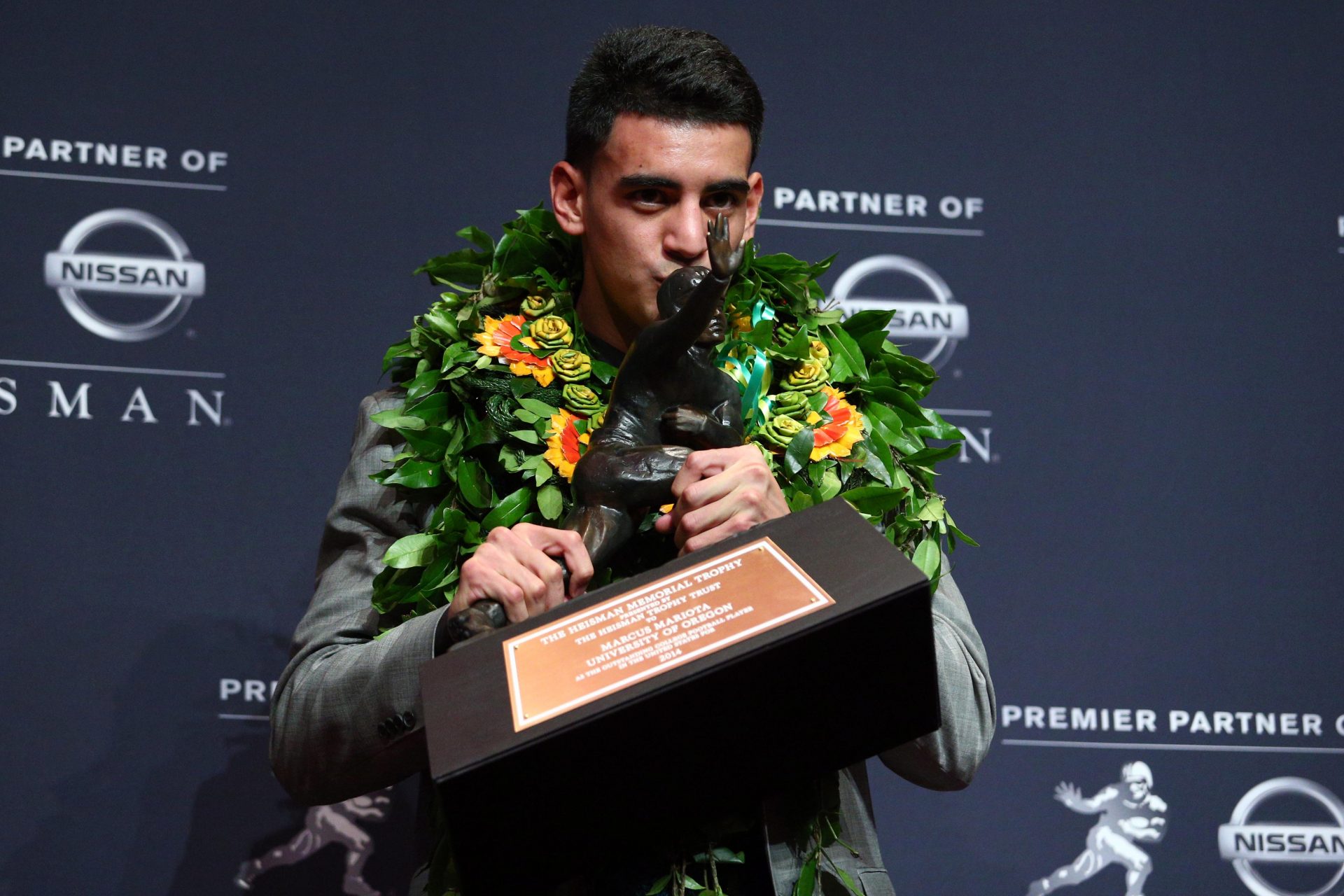
Bryce Young, the standout sophomore quarterback from the University of Alabama, was the winner of the 2021 Heisman Trophy. Young secured the award on December 11, 2021, after a record-breaking season where he threw for 4,872 yards and 47 touchdowns, becoming the first quarterback in Alabama's storied history to claim the honor.
The 2021 Heisman race was a definitive moment in college football history, marking a transition in how the award was perceived and distributed. While the University of Alabama had produced several winners in the preceding decade—including running backs Mark Ingram and Derrick Henry, and wide receiver DeVonta Smith—the quarterback position had remained elusive for the Crimson Tide until Bryce Young’s dominant campaign. His victory was not merely a result of statistical superiority but was forged through "Heisman moments" in high-pressure environments, most notably during the SEC Championship game against a historically dominant Georgia defense.
The Historical Significance of Bryce Young’s 2021 Victory
The 2021 Heisman Trophy ceremony was a return to tradition following the unconventional, pandemic-impacted season of 2020. Held at the Jazz at Lincoln Center’s Apple Room in New York City, the event highlighted a shift in the collegiate landscape. Bryce Young’s win was significant because it validated the "next man up" philosophy at Alabama. Following the departure of Mac Jones, who had led Alabama to a national championship in 2020, Young faced immense pressure to maintain the program's standard of excellence.
Young’s victory also underscored the increasing trend of underclassmen winning the award. As a sophomore, he demonstrated a level of poise and "point guard" style play that scouts and voters found irresistible. His ability to navigate the pocket, extend plays with his legs without necessarily being a "scrambling" quarterback, and deliver precise strikes under duress set him apart from his contemporaries. By the time the 2021 season concluded, Young had not only won the Heisman but had also swept the Maxwell Award and the Davey O'Brien Award, cementing his status as the premier player in the nation.
2021 Heisman Trophy Finalists and Voting Results
The 2021 voting cycle was notable for its diverse pool of finalists. While the quarterback position often dominates the conversation, the 2021 list included a defensive standout and representatives from programs that had not seen a finalist in years. The voting results showed a decisive victory for Young, though the battle for the second and third spots was closely contested among the other three finalists: Aidan Hutchinson, Kenny Pickett, and C.J. Stroud.
The following table provides the official breakdown of the 2021 Heisman Trophy finalists and their respective voting points:
| Rank | Player | School | Position | 1st Place Votes | Total Points |
|---|---|---|---|---|---|
| 1 | Bryce Young | Alabama | QB | 684 | 2,311 |
| 2 | Aidan Hutchinson | Michigan | DE | 78 | 954 |
| 3 | Kenny Pickett | Pitt | QB | 28 | 631 |
| 4 | C.J. Stroud | Ohio State | QB | 12 | 399 |
| 5 | Will Anderson Jr. | Alabama | LB | 31 | 325 |
| 6 | Kenneth Walker III | Michigan State | RB | 18 | 245 |
The inclusion of Aidan Hutchinson at the number two spot was a rare feat for a defensive player. Not since Manti Te'o in 2012 had a defensive player finished so high in the voting. This highlighted the sheer impact Hutchinson had on Michigan’s resurgence and their first-ever College Football Playoff appearance.
Key Performance Highlights of the 2021 Season
To understand why Bryce Young won the 2021 Heisman, one must look at the specific "Heisman moments" that defined his season. The award is often won in the final three weeks of the season, and Young’s performance during this stretch was nothing short of legendary.
The Iron Bowl Comeback
In the regular-season finale against Auburn, Alabama found themselves trailing 10-3 late in the fourth quarter. Starting at his own 3-yard line with just over 1:30 remaining and no timeouts, Young led a 97-yard drive that culminated in a game-tying touchdown pass. Alabama eventually won in quadruple overtime. This drive is cited by many voters as the moment Young clinched the trophy, demonstrating ice-cold composure in one of college football’s most hostile environments.
The SEC Championship Masterclass
The 2021 Georgia Bulldogs defense was widely considered one of the greatest in the history of college football, allowing only 6.9 points per game entering the SEC Championship. Bryce Young dismantled this unit, throwing for 421 yards and three touchdowns, while adding another score on the ground. This performance answered any lingering doubts about his ability to perform against elite, NFL-caliber competition.
Statistical Dominance
Young’s season-long statistics were a model of efficiency. He completed 66.9% of his passes, averaging nearly 9 yards per attempt. His 47:7 touchdown-to-interception ratio showcased his elite decision-making. Beyond the passing numbers, his ability to manage the pre-snap RPO (Run-Pass Option) elements of Bill O'Brien’s offense was the engine that powered Alabama to another SEC title.
Scouting the Competition: Why the Finalists Stayed in the Hunt
While Bryce Young was the clear frontrunner by December, the other finalists each had compelling narratives that enriched the 2021 season.
Aidan Hutchinson (Michigan): Hutchinson was the emotional and physical heart of a Michigan team that finally beat Ohio State and won the Big Ten Championship. He recorded 14 sacks and 16.5 tackles for loss. His 15 quarterback pressures in the game against Ohio State became a legendary stat line that propelled him to New York.
Kenny Pickett (Pitt): Pickett’s 2021 season was a classic "super senior" breakout. He opted to return for an extra year and proceeded to break Dan Marino’s school record for career touchdown passes. Pickett threw for 4,319 yards and 42 touchdowns, leading Pitt to an ACC Championship. He gained national notoriety for the "fake slide" touchdown in the ACC title game, a play so controversial it led to an immediate NCAA rule change.
C.J. Stroud (Ohio State): As a redshirt freshman, Stroud faced early criticism following a loss to Oregon. However, he finished the season with incredible momentum, leading the nation in several passing efficiency categories. Throwing to a wide receiver corps that included future NFL stars Garrett Wilson, Chris Olave, and Jaxon Smith-Njigba, Stroud proved he was the next great Buckeyes quarterback.
The Evolution of the Heisman Voting Process
The 2021 Heisman vote reflected several shifts in the collegiate landscape. First, it highlighted the power of the "Big Game" narrative. While Kenneth Walker III of Michigan State had a statistically magnificent year—including a five-touchdown performance against Michigan—his lack of production in a late-season blowout loss to Ohio State effectively removed him from the finalist pool. This reinforced the idea that a Heisman winner must perform when the lights are brightest.
Additionally, 2021 was one of the first years where the Name, Image, and Likeness (NIL) era began to intersect with the Heisman race. Bryce Young was famously mentioned by Nick Saban as having earned nearly a million dollars in NIL deals before ever starting a game. His victory proved that high-profile commercial success and high-level on-field performance could coexist without distraction, setting a precedent for future winners in the 2022-2026 window.
From Heisman Glory to Professional Career: 2021-2026 Perspective
Looking back from the vantage point of 2026, the 2021 Heisman class has had a profound impact on the professional ranks. Bryce Young’s victory served as a springboard for his selection as the No. 1 overall pick in the 2023 NFL Draft by the Carolina Panthers. His transition to the NFL was met with the same scrutiny regarding his size that he faced in college, but his 2021 season remains the blueprint for how a "smaller" quarterback can dominate through elite processing and pocket mobility.
Aidan Hutchinson similarly translated his 2021 success into a top-tier NFL career, becoming a cornerstone for the Detroit Lions. The 2021 Heisman race didn't just crown a winner for a single season; it identified a generation of talent that would define football for the first half of the 2020s.
FAQ
Who were the top 10 finishers in the 2021 Heisman voting?
The top 10 included Bryce Young (Alabama), Aidan Hutchinson (Michigan), Kenny Pickett (Pitt), C.J. Stroud (Ohio State), Will Anderson Jr. (Alabama), Kenneth Walker III (Michigan State), Matt Corral (Ole Miss), Desmond Ridder (Cincinnati), Jordan Davis (Georgia), and Breece Hall (Iowa State). This list was notable for featuring two Alabama players and two defensive players (Hutchinson and Davis) in the top 10.
Was Bryce Young the first Alabama quarterback to win the Heisman?
Yes, Bryce Young became the first-ever Alabama quarterback to win the award. Despite the program's immense success and multiple Heisman-winning running backs and wide receivers, legendary quarterbacks like Joe Namath, Ken Stabler, and AJ McCarron never took home the trophy. Young broke that "quarterback drought" for the Crimson Tide in 2021.
How many points did Bryce Young receive in the 2021 Heisman voting?
Bryce Young received 2,311 total points. He garnered 684 first-place votes, which was more than eight times the amount received by the runner-up, Aidan Hutchinson. This represented one of the more decisive victories in recent years, though not quite as large as the margins seen by Joe Burrow in 2019 or DeVonta Smith in 2020.
What were Bryce Young’s total stats in the 2021 regular season?
By the time the Heisman votes were cast, Young had completed 314 of 462 passes (68%) for 4,322 yards, 43 touchdowns, and only 4 interceptions. Including the postseason games played before the ceremony, his yardage total sat at 4,872 yards with 47 touchdowns, which remains one of the most prolific statistical seasons in SEC history.
Who won the Heisman the year before Bryce Young?
The 2020 Heisman Trophy was won by DeVonta Smith, a wide receiver also from the University of Alabama. This marked the first time since 1945-1946 (Army) that teammates from the same school won the award in consecutive years, although Smith and Young played different positions and Young was a backup during Smith's winning year.
Verifying Historical Heisman Records and Next Actions
For those looking to verify the official records or explore the full history of the Heisman Trophy, the official Heisman Trust website remains the primary source for archived voting data and ceremony footage. Researchers and fans should prioritize official collegiate athletic departments for verified game-by-game statistics, as third-party aggregators sometimes differ on "sack yardage" or "yards from scrimmage" calculations.
If you are interested in the trajectory of the 2021 Heisman finalists, the next logical step is to review the NFL Draft archives from 2022 and 2023. These records show how the collegiate success of players like Pickett, Hutchinson, and Young translated into professional evaluations. Observing the "Heisman curse" versus "Heisman success" in the NFL provides a deeper understanding of why Bryce Young's 2021 season is still studied by scouts and analysts today.