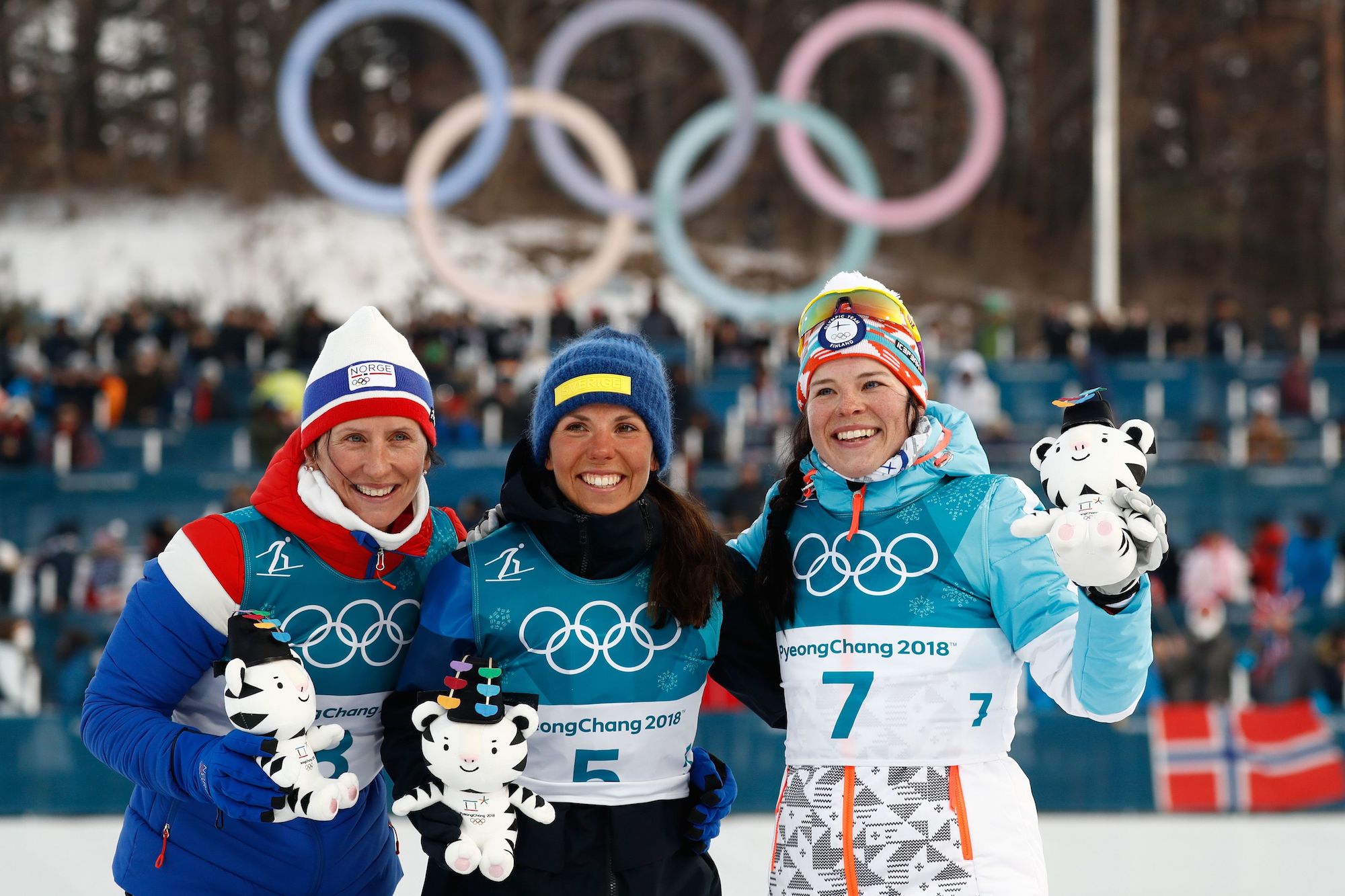
The 2018 Winter Olympics, officially known as the XXIII Olympic Winter Games and commonly referred to as PyeongChang 2018, took place from February 9 to February 25, 2018, in Gangwon Province, South Korea. The Games featured 102 events across 15 sports disciplines, hosting 2,914 athletes representing 92 National Olympic Committees.
Norway topped the official medal table with 39 total medals, setting a record for the highest number of medals won at a single Winter Olympics. Beyond the athletic accomplishments, PyeongChang 2018 served as a major venue for international diplomacy, highlighted by a unified Korean delegation marching together under the Korean Unification Flag during the Opening Ceremony and competing as a joint team in women's ice hockey.
Host Selection and Infrastructure Development
The International Olympic Committee (IOC) selected Pyeongchang as the host city on July 6, 2011, during the 123rd IOC Session in Durban, South Africa. Pyeongchang secured the hosting rights on its third consecutive bid, having previously lost close votes to Vancouver for the 2010 Games and Sochi for the 2014 Games. In the first round of voting, Pyeongchang won an absolute majority with 63 votes, surpassing Munich, Germany (25 votes), and Annecy, France (7 votes).
| Mountain Cluster (Pyeongchang) | Coastal Cluster (Gangneung) |
|---|---|
| • Alpensia Ski Jumping Centre | • Gangneung Hockey Centre |
| • Alpensia Biathlon Centre | • Gangneung Curling Centre |
| • Alpensia Cross-Country Centre | • Gangneung Ice Arena (Skating) |
| • Olympic Sliding Centre | • Gangneung Oval (Speed Skating) |
| • Yongpyong Alpine Centre | • Kwandong Hockey Centre |
| • Jeongseon Alpine Centre | |
| • Phoenix Snow Park |
To support the logistical demands of the Games, South Korea invested heavily in transport infrastructure and venue development. A key component was the construction of the Gyeonggang KTX high-speed rail line, which connected Seoul's Incheon International Airport directly to Pyeongchang and Gangneung, reducing travel times from over three hours to under 90 minutes.
The sporting venues were organized into two distinct physical hubs:
- The Alpensia Mountain Cluster: Centered in the township of Daegwalnyeong-myeon, this cluster hosted the outdoor snow events and sliding sports. Key venues included the Alpensia Ski Jumping Centre, the Alpensia Biathlon Centre, the Alpensia Cross-Country Skiing Centre, and the Olympic Sliding Centre for bobsleigh, luge, and skeleton. Downhill alpine skiing events took place at the nearby Jeongseon Alpine Centre, while technical alpine skiing occurred at the Yongpyong Alpine Centre. Freestyle skiing and snowboarding competitions were staged at Phoenix Snow Park.
- The Gangneung Coastal Cluster: Located in the adjacent coastal city of Gangneung, this cluster housed all indoor ice sports. Facilities were built in close proximity within the Gangneung Olympic Park, including the Gangneung Hockey Centre, the Kwandong Hockey Centre, the Gangneung Curling Centre, the Gangneung Oval (speed skating), and the Gangneung Ice Arena (figure skating and short track speed skating).
Major Sporting Achievements and Historic Performances
PyeongChang 2018 introduced six new event disciplines to the winter program, bringing the total number of gold medal events to 102. The new additions included big air snowboarding (men's and women's), mixed doubles curling, mass start speed skating (men's and women's), and the alpine skiing mixed team event. These additions reflected the IOC’s broader strategic move toward appealing to younger demographics and expanding mixed-gender competitions.
Ester Ledecká's Dual-Sport Gold Medals
Czech athlete Ester Ledecká delivered one of the most remarkable performances in Winter Olympic history by winning gold medals in two entirely separate sports during a single Games. Originally a world champion snowboarder, Ledecká entered the women's Alpine Skiing Super-G event using borrowed skis and started 26th in the field. She completed the course in 1 minute, 21.11 seconds, beating defending champion Anna Veith of Austria by 0.01 seconds. One week later, Ledecká competed in her primary sport, snowboarding, and won the gold medal in the Parallel Giant Slalom, becoming the first female athlete to achieve dual-sport gold at the same Winter Olympic Games.
Figure Skating and Snowboarding Milestones
In men's figure skating, Yuzuru Hanyu of Japan successfully defended his Olympic title, becoming the first male skater to win back-to-back gold medals in the singles event since Dick Button in 1948 and 1952. Hanyu achieved this despite suffering a severe ankle ligament injury three months prior to the Games.
In snowboarding, 17-year-old American Chloe Kim dominated the women's halfpipe competition, landing back-to-back 1080-degree spins to score 98.25 points on her final run. In the men's halfpipe, Shaun White secured his third career Olympic gold medal on his final run, executing back-to-back 1440s to earn a score of 97.75 points, marking the 100th overall Winter Olympic gold medal for the United States.
Cross-Country Skiing and Endurance Records
Norwegian cross-country skier Marit Bjørgen concluded her Olympic career by earning five medals at PyeongChang (two gold, one silver, and two bronze). Her victory in the women's 30-kilometer classical mass start on the final day of competition brought her total career medal count to 15 (8 gold, 4 silver, 3 bronze). This surpassed her compatriot Ole Einar Bjørndalen to make her the most decorated athlete in Winter Olympic history.
Top Multi-Medalists of PyeongChang 2018
| Athlete | Country | Sport | Gold | Silver | Bronze |
|---|---|---|---|---|---|
| Marit Bjørgen | Norway | X-C | 2 | 1 | 2 |
| Johannes Høsflot Klæbo | Norway | X-C | 3 | 0 | 0 |
| Martin Fourcade | France | Biath | 3 | 0 | 0 |
| Charlotte Kalla | Sweden | X-C | 1 | 3 | 0 |
| Simen Hegstad Krüger | Norway | X-C | 2 | 1 | 0 |
Geopolitical Context and National Delegations
The lead-up to the 2018 Games was shaped by significant international political dynamics, primarily involving North Korea and systemic doping sanctions applied to Russian athletics.
The Unified Korean Delegation
In January 2018, following high-level talks between North and South Korean officials, it was announced that North Korea would participate in the Games. At the Opening Ceremony, athletes from both nations marched together into the Pyeongchang Olympic Stadium under a single flag depicting the Korean Peninsula.
Furthermore, the two nations formed a combined women's ice hockey team, designated by the country code COR. The roster consisted of 23 South Korean and 12 North Korean players, managed by South Korean head coach Sarah Murray. Although the team finished in eighth place without winning a game, the joint initiative stood as a notable moment in modern Olympic political history.
Russian Doping Sanctions (Olympic Athletes from Russia)
On December 5, 2017, the IOC suspended the Russian Olympic Committee due to systemic, state-sponsored doping violations exposed following the 2014 Sochi Games. Russian athletes who met strict, independent drug-testing criteria were invited to compete under the neutral designation Olympic Athletes from Russia (OAR).
These athletes competed under the Olympic flag, and the Olympic hymn was played during victory ceremonies instead of the Russian national anthem. A total of 168 athletes competed under the OAR designation, claiming 17 overall medals, including gold in men's ice hockey and women's singles figure skating (Alina Zagitova).
Official Medal Tally and Standings
A total of 30 National Olympic Committees won at least one medal during the 2018 Games. Norway finished at the top of the standings in both total gold medals (tied with Germany at 14) and total overall medals (39). Hungary won its first-ever Winter Olympic gold medal in the men's 5,000-meter short track speed skating relay, while Liechtenstein won a bronze medal in women's Super-G, securing its first Winter Olympic medal since 1980.
The table below outlines the top ten participating delegations ranked by standard IOC protocol (gold medals prioritized, followed by silver and bronze).
| Rank | Delegation | Gold | Silver | Bronze | Total Medals |
|---|---|---|---|---|---|
| 1 | Norway (NOR) | 14 | 14 | 11 | 39 |
| 2 | Germany (GER) | 14 | 10 | 7 | 31 |
| 3 | Canada (CAN) | 11 | 8 | 10 | 29 |
| 4 | United States (USA) | 9 | 8 | 6 | 23 |
| 5 | Netherlands (NED) | 8 | 6 | 6 | 20 |
| 6 | Sweden (SWE) | 7 | 6 | 1 | 14 |
| 7 | South Korea (KOR)* | 5 | 8 | 4 | 17 |
| 8 | Switzerland (SUI) | 5 | 6 | 4 | 15 |
| 9 | France (FRA) | 5 | 4 | 6 | 15 |
| 10 | Austria (AUT) | 5 | 3 | 6 | 14 |
* Host Nation
Venue Operations, Post-Games Legacy, and Modern Status
Managing thermal profiles, transport logistics, and long-term facility usage presented distinct challenges for the PyeongChang Organizing Committee (POCOG).
Operational Challenges and Weather Conditions
The Games faced extreme sub-zero temperatures and high winds during the early days of competition. Sub-zero wind-chill factors during the Opening Ceremony required organizers to provide heated pads, blankets, and windbreaks for spectators in the temporary 35,000-seat Pyeongchang Olympic Stadium. Strong mountain winds repeatedly delayed alpine skiing events at the Jeongseon Alpine Centre, forcing event organizers to reschedule multiple technical and speed races into tight time windows.
Legacy and Reuse of Facilities
A primary concern post-2018 was avoiding the high maintenance costs associated with abandoned Olympic infrastructure. The temporary Pyeongchang Olympic Stadium was dismantled shortly after the conclusion of the 2018 Paralympic Games to avoid ongoing municipal upkeep costs. The land was repurposed into a public park and Olympic memorial exhibition.
The remaining specialized sports venues were integrated into national training frameworks or adapted for public usage:
- Gangneung Ice Arena & Oval: Transformed into multi-purpose public sports complexes and national training hubs.
- Alpensia Resort Venues: Continues to function as a premier domestic ski resort, holding regular international FIS World Cup and Asian competition dates.
- Gangwon 2024 Winter Youth Olympic Games: Pyeongchang and Gangneung successfully reused the existing 2018 venue footprint to host the 4th Winter Youth Olympic Games in January and February 2024. Venues such as the Gangneung Hockey Centre, Alpensia Sliding Centre, and Yongpyong Alpine Centre operated with minimal structural modifications, confirming the long-term utility of the 2018 investment.
Frequently Asked Questions
Which nation won the most medals at the 2018 Winter Olympics?
Norway won the most medals at PyeongChang 2018, securing 39 total medals (14 gold, 14 silver, and 11 bronze). This total broke the previous record of 37 medals set by the United States at the 2010 Winter Olympics in Vancouver.
Why did Russian athletes compete as "Olympic Athletes from Russia" (OAR)?
The International Olympic Committee suspended the Russian Olympic Committee in December 2017 following investigations into state-sponsored anti-doping violations at the 2014 Sochi Games. Clean Russian athletes who met strict testing requirements were permitted to compete under a neutral Olympic flag using the designation OAR.
What sports were added to the PyeongChang 2018 program?
The IOC introduced six new events across four sports for the 2018 Games: Big Air snowboarding (men's and women's), Mixed Doubles curling, Mass Start speed skating (men's and women's), and the Mixed Team Alpine skiing event.
How many nations participated in the 2018 Winter Olympics?
A total of 92 National Olympic Committees competed in the Games, in addition to the neutral Olympic Athletes from Russia team and the unified Korean team in women's ice hockey. Ecuador, Eritrea, Kosovo, Malaysia, Nigeria, and Singapore made their Winter Olympic debuts.
What happened to the main Pyeongchang Olympic Stadium after the Games?
The 35,000-seat Pyeongchang Olympic Stadium was designed as a temporary structure specifically to hold the Opening and Closing Ceremonies. It was dismantled immediately following the conclusion of the 2018 Paralympic Winter Games to mitigate ongoing maintenance costs, leaving the central venue footprint to be redeveloped into a public park and historical exhibition.
Accessing Official Records and Archival Data
For sports analysts, researchers, and sports historians seeking official primary data regarding event split times, scoring breakdowns, or anti-doping documentation, official records are preserved across accessible sports databases:
- IOC Historical Archives: The official website of the International Olympic Committee contains complete result books, digitizing final ranking sheets for all 102 medal events.
- International Sports Federations: Bodies such as the International Ski and Snowboard Federation (FIS), the International Skating Union (ISU), and the International Biathlon Union (IBU) maintain searchable career databases containing event-by-event performance logs for every participating athlete from PyeongChang 2018.
- PyeongChang 2018 Legacy Foundation: Established by the Ministry of Culture, Sports and Tourism of South Korea, this foundation provides public reporting on venue maintenance costs, secondary usage statistics, and ongoing winter sports development programs across Gangwon Province.