In 2010, the global economy entered a fragile period of stabilization following the Great Recession. While global GDP growth rebounded to approximately 5.4%, the recovery was characterized by a "jobless" expansion in developed nations, the eruption of the European Sovereign Debt Crisis, and the implementation of landmark financial regulations like the Dodd-Frank Act.
The year 2010 remains one of the most pivotal chapters in modern economic history. It served as the bridge between the immediate panic of the 2008 financial collapse and the long-term era of low interest rates and unconventional monetary policy that defined the following decade. From the perspective of 2026, looking back at 2010 reveals a landscape defined by deep structural shifts, where the balance of economic power began to tilt significantly toward emerging markets while traditional powers struggled with debt and stagnant labor markets.
Macroeconomic Overview: The Great Convalescence
The 2010 economy was defined by a sharp contrast between "V-shaped" recoveries in emerging nations and "U-shaped" or "L-shaped" recoveries in advanced economies. After the synchronized global contraction of 2009, 2010 saw the return of growth, but it was a period of high anxiety. Central banks, led by the U.S. Federal Reserve, continued to deploy unconventional tools to prevent a "double-dip" recession.
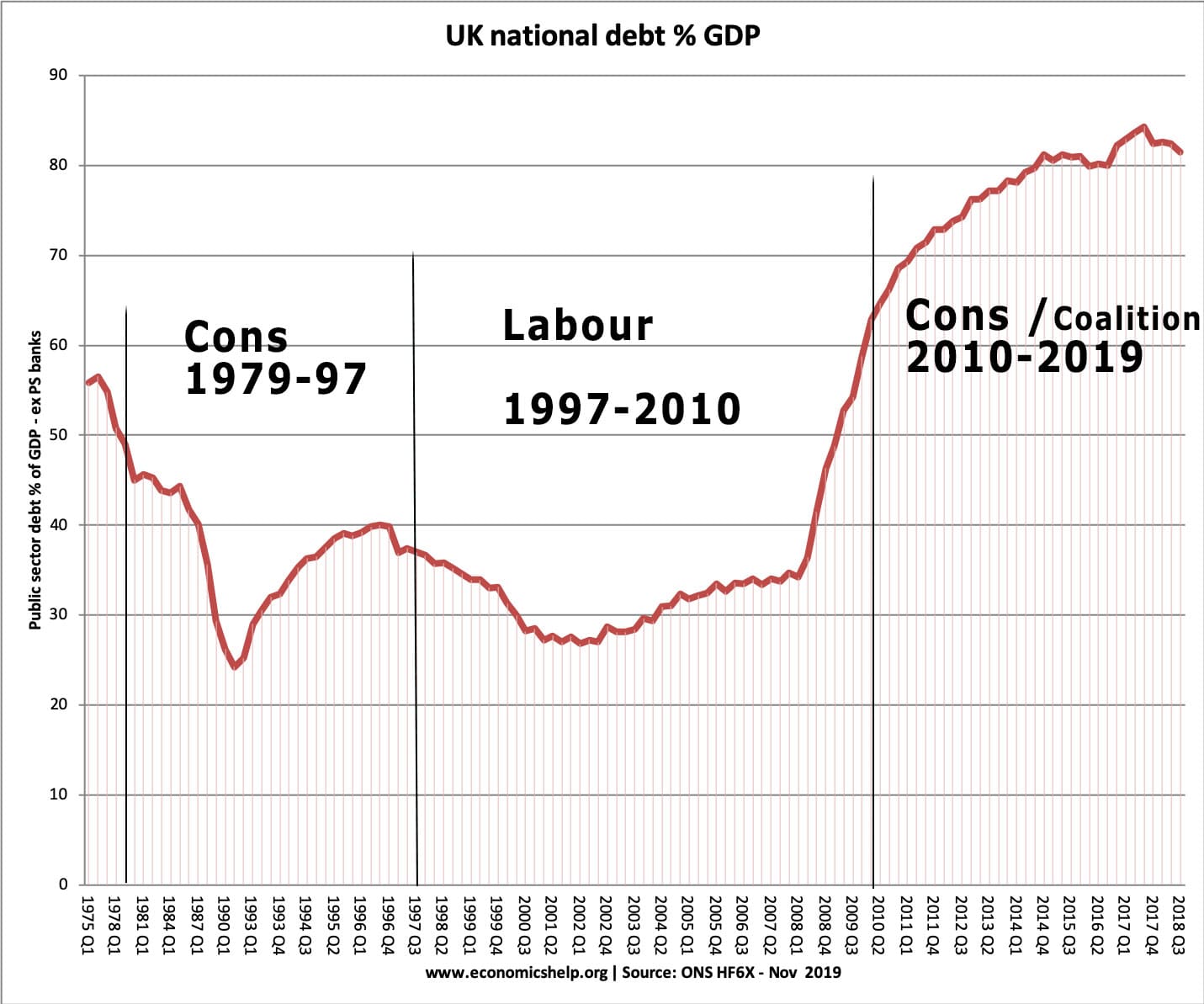
A primary theme of the year was the transition from private-sector deleveraging to public-sector debt concerns. As governments stepped in to bail out banks and stimulate their economies in 2008 and 2009, their balance sheets swelled. By 2010, the focus of the markets shifted from the solvency of financial institutions to the solvency of nation-states. This shift was most visible in the Eurozone, but it also fueled intense political debates in the United States regarding the federal deficit and the debt ceiling.
Inflation remained largely subdued in developed economies due to significant "slack" in the labor market—meaning there were many more workers than jobs, keeping wage growth low. Conversely, emerging markets like China and Brazil faced rising inflationary pressures, leading them to tighten credit conditions even as the West remained in an accommodative stance.
The United States: A Year of Policy and Stagnation
In the United States, 2010 was the first full year of recovery after the Great Recession officially ended in June 2009. However, for the average American, the "recovery" felt largely theoretical. The unemployment rate began the year at 9.8% and ended it at 9.3%, a painfully slow decline that led economists to label the period a "jobless recovery."
The Dodd-Frank Wall Street Reform Act
One of the most consequential events of 2010 was the signing of the Dodd-Frank Wall Street Reform and Consumer Protection Act in July. This massive piece of legislation sought to overhaul the financial regulatory system to prevent a repeat of the 2008 crisis. Key components included:
- The Volcker Rule: Restricting banks from making certain types of speculative investments with their own accounts.
- The Consumer Financial Protection Bureau (CFPB): A new agency designed to protect consumers from predatory lending practices in mortgages and credit cards.
- Derivative Regulation: Bringing the "shadow banking" world of over-the-counter derivatives into the light of regulated exchanges.
Fiscal and Monetary Policy
On the fiscal side, 2010 saw the continuation of the American Recovery and Reinvestment Act (ARRA) stimulus. Politically, the year was marked by the "Tea Party" movement, which focused on reducing government spending, leading to a contentious "Lame Duck" session of Congress that ultimately extended the Bush-era tax cuts.
On the monetary side, the Federal Reserve, led by Ben Bernanke, completed its first round of Quantitative Easing (QE1) in March 2010. However, by late summer, signs of a slowing economy prompted the Fed to announce a second round (QE2) in November, involving the purchase of $600 billion in long-term Treasury securities. This move was intended to lower long-term interest rates and spur investment, though it drew criticism for potentially devaluing the dollar.
The European Sovereign Debt Crisis: The Greek Contagion
While the U.S. was struggling with slow growth, Europe faced an existential threat. In early 2010, the "Greek Debt Crisis" transitioned from a local problem to a systemic risk for the Eurozone. It became clear that Greece had underreported its budget deficits, leading to a collapse in investor confidence and a spike in bond yields.
In May 2010, the International Monetary Fund (IMF) and the European Union agreed to a €110 billion bailout package for Greece. This was not just a rescue of a nation, but a desperate attempt to prevent "contagion" from spreading to other highly indebted nations like Ireland, Portugal, Spain, and Italy (often disparagingly referred to at the time as the PIIGS).
The crisis forced a shift toward "austerity"—a policy of sharp cuts in government spending and tax increases to reduce deficits. These measures were highly controversial, leading to widespread protests across Europe and sparking a debate that lasted for years: should a country spend its way out of a recession, or cut its way to stability? By late 2010, Ireland also required a bailout, signaling that the crisis was far from over.
Emerging Markets: The New Engines of Growth
In 2010, the divergence between the "Old World" and the "New World" was stark. While the West was mired in debt and low growth, emerging markets were booming. China, in particular, cemented its status as a global powerhouse.
In the second quarter of 2010, China officially overtook Japan as the world's second-largest economy. Driven by a massive 2009 stimulus package focused on infrastructure, China’s GDP grew by more than 10% in 2010. This growth acted as a vital "floor" for the global economy, as Chinese demand for commodities boosted the economies of exporters like Australia, Brazil, and Canada.
However, this rapid growth came with risks. By late 2010, the Chinese government began raising interest rates and bank reserve requirements to cool an overheating property market and combat rising food prices. This "decoupling"—where emerging markets grew independently of the U.S. and Europe—was a major theme for investors during the year.
Comparative Economic Indicators (2010)
The following table illustrates the disparity in economic performance across major regions during 2010. These figures reflect the uneven nature of the post-crisis stabilization.
| Region/Country | Real GDP Growth (%) | Unemployment Rate (Year-End) | Central Bank Policy Rate |
|---|---|---|---|
| United States | ~2.7% | 9.3% | 0.00% - 0.25% |
| Eurozone | ~1.9% | 10.2% | 1.00% |
| China | ~10.6% | 4.1% (Registered) | 5.81% (Lending Rate) |
| Japan | ~4.1% | 4.9% | 0.10% |
| United Kingdom | ~1.9% | 7.9% | 0.50% |
| Brazil | ~7.5% | 6.7% | 10.75% |
Data compiled from historical records of the World Bank and IMF.
Sector-Specific Performance and Disruptions
The 2010 economy was also shaped by specific industry shifts and unforeseen disasters that had lasting financial consequences.
The Rise of the App Economy
In June 2010, Apple released the iPhone 4, and the "App Store" ecosystem began to fundamentally change the tech sector. This year marked the transition of mobile technology from a luxury to a core economic driver. High-tech manufacturing and software development became the primary bright spots in the U.S. labor market, even as traditional manufacturing and construction remained depressed.
The BP Deepwater Horizon Disaster
On April 20, 2010, the Deepwater Horizon oil rig exploded in the Gulf of Mexico. Beyond the catastrophic environmental impact, the event had significant economic repercussions. BP saw its market value plummet, and the subsequent moratorium on offshore drilling affected thousands of jobs in the energy sector. The disaster also led to a massive $20 billion escrow fund for damages, representing one of the largest corporate liabilities in history.
The "Flash Crash"
On May 6, 2010, the U.S. stock market experienced the "Flash Crash," where the Dow Jones Industrial Average plunged nearly 1,000 points in minutes before recovering. While brief, this event exposed the vulnerabilities of high-frequency trading (HFT) and algorithmic finance, leading to the implementation of new "circuit breakers" on stock exchanges to prevent future cascades.
Frequently Asked Questions
Was 2010 considered a good year for the economy?
It was a year of recovery, but it was not considered "good" by most standards. While GDP growth returned, the high unemployment rates in the U.S. and Europe meant that the average household did not feel the recovery. It was a year of stabilization rather than prosperity.
What was the biggest threat to the global economy in 2010?
The European Sovereign Debt Crisis was the primary threat. There was significant fear that a Greek default could lead to the collapse of the Euro currency and trigger a second global banking crisis similar to the 2008 Lehman Brothers collapse.
Why did gold prices rise so much in 2010?
Gold reached record highs in 2010, surpassing $1,400 per ounce. Investors flocked to gold as a "safe haven" due to fears of currency devaluation from Quantitative Easing and uncertainty surrounding the stability of the Euro.
How did the 2010 economy impact housing?
In the United States, the housing market remained in a "trough." Foreclosure rates reached record highs in 2010, and home prices continued to languish as the market struggled to clear the massive inventory of distressed properties left over from the subprime mortgage crisis.
What was the impact of the Affordable Care Act (ACA) on the 2010 economy?
Signed in March 2010, the ACA began a multi-year transition of the healthcare sector, which accounts for nearly 18% of U.S. GDP. While many of its major provisions didn't kick in until 2014, the law immediately changed insurance regulations and prompted businesses to begin re-evaluating their long-term labor costs and benefit structures.
Assessing Long-Term Structural Changes
To understand the 2010 economy is to understand the birth of the "New Normal." This was the year when it became clear that interest rates would remain low for a long time and that government intervention in the markets would be a permanent fixture rather than a temporary emergency measure.
For investors and policymakers in 2026, 2010 serves as a reminder of how long it takes for a global economy to heal from a systemic financial shock. The lessons of 2010—the dangers of sovereign debt, the necessity of financial regulation, and the power of emerging markets—continue to influence global fiscal and monetary strategy today. If you are analyzing this period for historical context or investment modeling, the primary takeaway is the "divergence" factor: the era where the growth trajectories of the East and West became fundamentally decoupled.