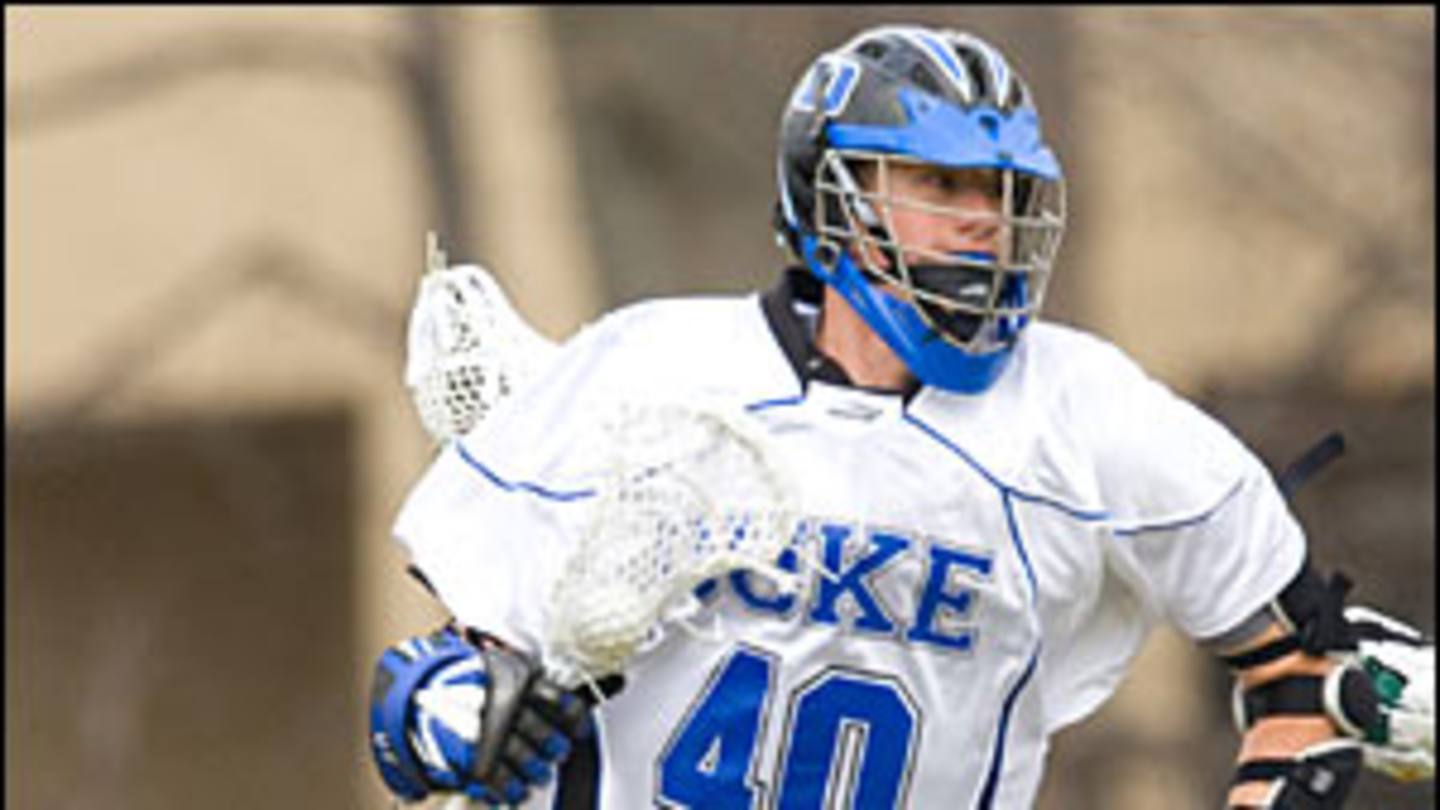
The 2006 Duke lacrosse scandal involved false rape accusations made by Crystal Mangum, a student and exotic dancer, against three members of the Duke University men’s lacrosse team. Following a year of intense media scrutiny and egregious prosecutorial misconduct by District Attorney Mike Nifong, the players were declared "innocent" by the North Carolina Attorney General in 2007.
The Night of March 13: Origins of the Controversy
The events that would spark a national firestorm began on the evening of March 13, 2006, at an off-campus house located at 610 North Buchanan Boulevard in Durham, North Carolina. Several members of the Duke University men’s lacrosse team had hired two exotic dancers, Crystal Mangum and Kim Roberts, to perform at a private party. The atmosphere was charged with the social complexities of Durham—a city where the elite, private Duke University often sat in stark contrast to the surrounding community.
During the performance, a verbal altercation occurred between the dancers and some of the attendees, allegedly involving racial slurs. The dancers left the residence, but later that night, Mangum claimed to a police officer that she had been pulled into a bathroom and raped, strangled, and sodomized by three white men at the party. Because Mangum was African American and the players were predominantly white and from affluent backgrounds, the case immediately transcended a local criminal investigation, becoming a lightning rod for discussions on race, class, and privilege in America.
The Durham Police Department’s initial investigation was marked by inconsistencies. While Mangum’s story shifted multiple times, the local District Attorney, Mike Nifong, seized upon the allegations with unprecedented fervor. As 2026 marks the 20th anniversary of these events, the case remains the primary example used in legal education to illustrate the dangers of "trial by media" and the necessity of prosecutorial ethics.
The Prosecutorial Misconduct of Mike Nifong
At the heart of the scandal was Mike Nifong, the Durham County District Attorney who was facing a difficult re-election campaign in 2006. Nifong’s handling of the case is now regarded as one of the most significant instances of prosecutorial overreach in modern legal history. He ignored several "red flags," including the fact that a medical examination of Mangum shortly after the alleged incident showed no physical evidence of sexual assault.
Nifong’s most egregious actions involved the suppression of evidence. He contracted a private lab, DNA Security Inc. (DNASI), to test DNA samples taken from Mangum. The tests revealed DNA from multiple men, but none of it matched any member of the Duke lacrosse team. Rather than disclosing these results to the defense—as required by the Brady v. Maryland ruling—Nifong and the lab director, Brian Meehan, conspired to omit the non-matching DNA results from the final report provided to the defense.
Furthermore, Nifong conducted a highly flawed identification process. He presented Mangum with a "photo lineup" consisting only of members of the Duke lacrosse team. Standard police procedure requires "fillers"—photos of individuals not suspected of the crime—to ensure the witness is not simply picking a face from a limited, biased pool. This misconduct eventually led to Nifong’s disbarment and a brief jail sentence for criminal contempt.
Media Influence and the "Rush to Judgment"
The media played a pivotal role in fueling the scandal. In the weeks following the allegations, national news outlets portrayed the Duke lacrosse players as "spoiled athletes" and symbols of systemic injustice. The narrative was nearly impossible to counter in the court of public opinion. Local and national commentators often assumed the players' guilt before any indictments were even issued.
Within the Duke University community, the reaction was equally polarized. A group of 88 faculty members, later known as the "Group of 88," signed an advertisement in the student newspaper that many interpreted as a condemnation of the players. The university administration, led by President Richard Brodhead, faced immense pressure to act. In an attempt to manage the crisis, the university suspended the lacrosse season and forced the resignation of longtime head coach Mike Pressler.
This environment created a "perfect storm" where the presumption of innocence was effectively discarded. The case serves as a cautionary tale for journalists and academic institutions regarding the speed at which a narrative can outpace the facts of a legal investigation.
Key Figures and Legal Outcomes
The following table summarizes the primary individuals involved in the 2006 scandal and the eventual resolution of their legal or professional standing.
| Individual | Role in Scandal | Primary Outcome/Legal Resolution |
|---|---|---|
| Reade Seligmann | Accused Player | All charges dropped; declared "innocent" by NC Attorney General. |
| Collin Finnerty | Accused Player | All charges dropped; declared "innocent" by NC Attorney General. |
| David Evans | Accused Player | All charges dropped; declared "innocent" by NC Attorney General. |
| Mike Nifong | District Attorney | Disbarred; convicted of criminal contempt; removed from office. |
| Crystal Mangum | Accuser | Allegations found baseless; later convicted of second-degree murder in an unrelated case. |
| Mike Pressler | Duke Head Coach | Forced to resign; later won a settlement from Duke University. |
| Roy Cooper | NC Attorney General | Took over the case in 2007 and officially cleared the players. |
The Intervention of North Carolina Attorney General Roy Cooper
The turning point for the case occurred in early 2007 when Mike Nifong, facing mounting evidence of misconduct and a grievance from the North Carolina State Bar, recused himself from the prosecution. The case was handed over to the North Carolina Department of Justice, led by then-Attorney General Roy Cooper.
On April 11, 2007, Cooper held a press conference that provided a definitive end to the criminal proceedings. His findings were far more than a simple dismissal of charges. Cooper stated that there was "no credible evidence" that an attack had occurred and that the "overreach of a nipped-at-the-heels prosecutor" had led to a tragic miscarriage of justice.
Critically, Cooper declared the three players—Reade Seligmann, Collin Finnerty, and David Evans—to be "innocent." This is a rare legal distinction. In most cases where charges are dropped, the defendants are simply found "not guilty" or the charges are dismissed for lack of evidence. By declaring them innocent, the State of North Carolina took the extraordinary step of affirming that the crime they were accused of never happened.
Long-Term Impacts on Legal Ethics and Discovery
The fallout from the Duke lacrosse scandal led to significant reforms in the North Carolina legal system. The most notable change was the strengthening of discovery laws. North Carolina implemented "open-file discovery," which mandates that prosecutors share their entire investigative file with the defense, reducing the likelihood that a prosecutor could hide exculpatory evidence as Nifong did.
The case also prompted a re-evaluation of how universities handle allegations of misconduct. Duke University eventually reached a settlement with the three falsely accused players, which was reported to be in the tens of millions of dollars. The university also settled with other members of the team who cited the school's failure to protect their rights during the investigation.
For the legal profession, the disbarment of a sitting District Attorney served as a stern warning regarding the ethical obligations of prosecutors. According to the North Carolina State Bar, the Nifong case remains a cornerstone of ethics training, emphasizing that a prosecutor's duty is to seek justice, not merely to secure a conviction.
Lessons in Due Process and Investigative Integrity
Twenty years later, in 2026, the Duke lacrosse case remains a vital case study for law enforcement, journalists, and the public. It highlights the fragility of due process when confronted with social and political pressure. The primary lessons derived from this scandal include:
- The Danger of Cognitive Bias: Investigators and prosecutors must be wary of "tunnel vision," where they ignore evidence that contradicts their initial theory of a crime.
- Scientific Integrity: DNA evidence must be presented in its entirety. Partial disclosure of forensic results is a form of scientific and legal fraud.
- Institutional Responsibility: Universities have a dual responsibility to take assault allegations seriously while simultaneously upholding the due process rights of their students.
- The Role of the Defense: The case proved the necessity of a vigorous, well-funded defense. Without the ability to hire experts to challenge Nifong's DNA "evidence," the outcome might have been a wrongful conviction.
FAQ
What happened to Crystal Mangum after the case?
Crystal Mangum faced no legal repercussions for the false accusations in the Duke case, as the North Carolina Attorney General chose not to prosecute her for perjury to avoid further prolonging the ordeal. However, her life remained tumultuous. In 2011, she was arrested for the stabbing death of her boyfriend, Reginald Daye. She was later convicted of second-degree murder and sentenced to a significant prison term.
Why was Mike Nifong disbarred?
The North Carolina State Bar disbarred Mike Nifong in 2007 after finding him guilty of "dishonesty, fraud, deceit, and misrepresentation." The specific grounds included making false statements to the court regarding the DNA evidence and making inflammatory public statements that prejudiced the defendants' right to a fair trial. He was the first sitting prosecutor in North Carolina history to be disbarred.
Did the Duke lacrosse players receive a settlement?
Yes. Although the exact terms were kept confidential, it is widely reported that Duke University paid a settlement in excess of $20 million to the three primary defendants. Additionally, the university settled with other players on the 2006 team who filed a lawsuit claiming the university's response to the scandal damaged their reputations and future prospects.
How did the scandal change Duke University?
Following the scandal, Duke University implemented several reforms regarding student conduct and its relationship with the Durham community. The university also worked to restore the reputation of its lacrosse program, which returned to national prominence, winning NCAA championships in 2010, 2013, and 2014. The school’s leadership underwent significant changes, and the "Group of 88" faculty members became a subject of long-term academic debate regarding faculty activism.
Navigating High-Profile Legal Allegations
For those researching or involved in high-profile legal cases, it is essential to prioritize verified court documents and official state bar findings over early media reports. As seen in the 2006 Duke lacrosse case, the initial public narrative often differs drastically from the facts established through the discovery process. Always look for "exculpatory evidence" (evidence that tends to excuse, justify, or absolve the fault of a defendant) as the standard for evaluating the strength of a prosecution's case.