The 1964 Mississippi killings refer to the abduction and murder of civil rights workers James Chaney, Andrew Goodman, and Michael Schwerner by the Ku Klux Klan in Neshoba County, Mississippi, during the pivotal Freedom Summer voter registration campaign. This racially motivated crime galvanized national outrage, accelerated the passage of landmark civil rights legislation, and exposed deep-seated collusion between local law enforcement and white supremacist organizations.
Historical Context of Freedom Summer and Civil Rights Activism
In the early 1960s, African Americans in Mississippi faced systemic disenfranchisement, extreme poverty, and institutionalized racial segregation. Despite the passage of the Fifteenth Amendment decades prior, fewer than seven percent of eligible Black residents in Mississippi were registered to vote due to discriminatory practices such as literacy tests, poll taxes, and violent intimidation.
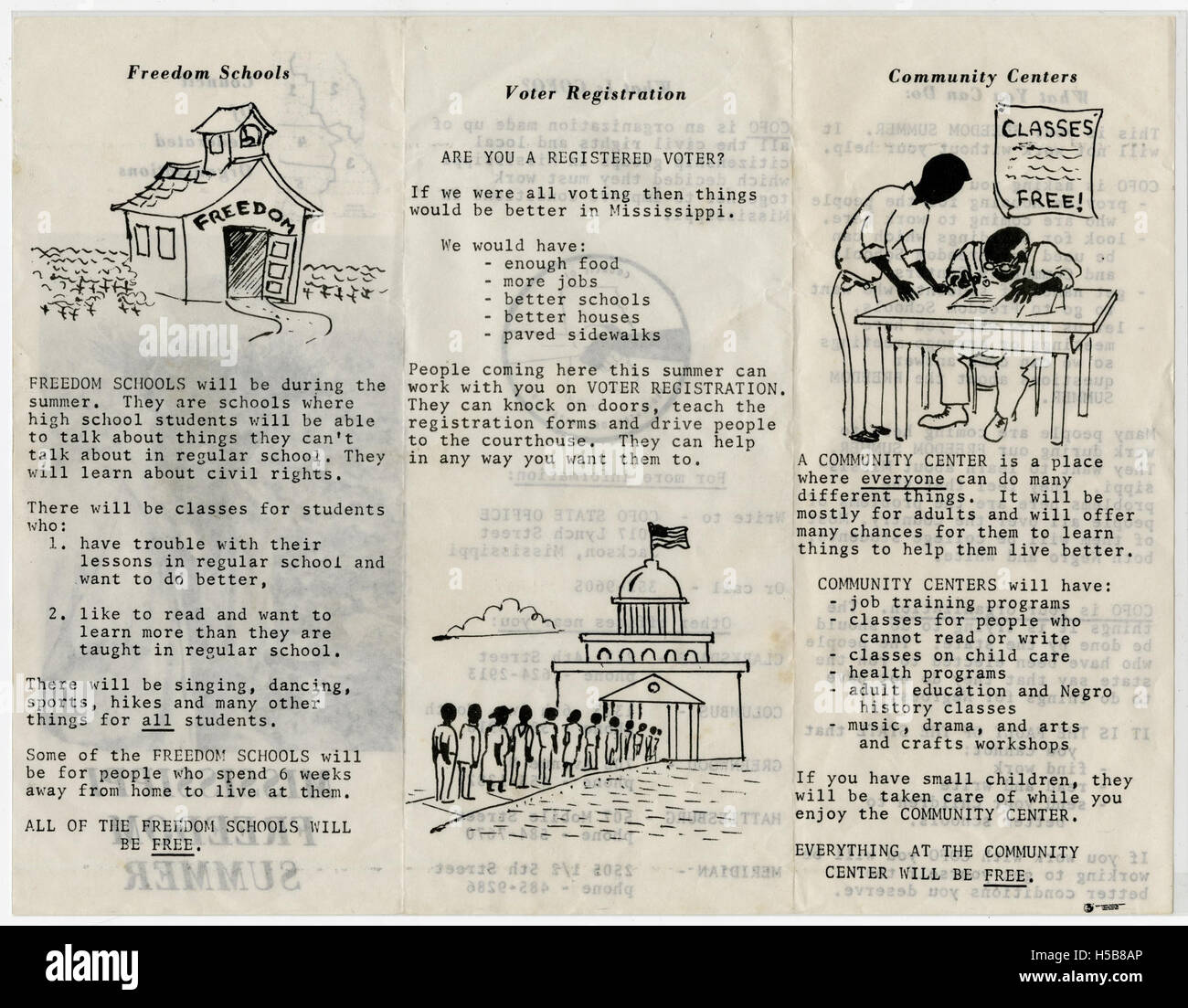
To challenge this inequality, a coalition of civil rights organizations—including the Congress of Racial Equality (CORE), the Student Nonviolent Coordinating Committee (SNCC), the National Association for the Advancement of Colored People (NAACP), and the Southern Christian Leadership Conference (SCLC)—formed the Council of Federated Organizations (COFO). Together, they organized Freedom Summer in 1964, a massive voter registration and educational initiative. Hundreds of student volunteers, primarily white northerners, traveled to Mississippi to work alongside local Black activists.
James Chaney, a young Black CORE field secretary from Meridian, Mississippi, joined forces with Andrew Goodman, a white anthropology student from Queens College in New York, and Michael Schwerner, a white CORE field secretary from Brooklyn. Schwerner and his wife Rita had already established a CORE office in Meridian and were actively investigating the recent bombing of Mount Zion Methodist Church in Longdale, Mississippi, a structure that had been used as a Freedom School.
The Abduction and Murders in Neshoba County
On June 21, 1964, Chaney, Goodman, and Schwerner traveled from Meridian to the Longdale community in Neshoba County to inspect the burned remains of the Mount Zion church and interview witnesses. After finishing their investigation, the three men began their drive back to Meridian in a CORE-owned Ford station wagon.
As they drove through Philadelphia, Mississippi, the county seat of Neshoba County, Deputy Sheriff Cecil Price pulled them over on a speeding charge. Price arrested the three men and detained them in the Neshoba County jail. They were held for several hours while Price contacted members of the local Ku Klux Klan to organize an ambush.
Around 10:30 p.m., the three men were released from custody. Deputy Price followed their station wagon in his patrol car until he intercepted them on an isolated gravel road outside town. Other armed Klansmen converged on the scene, forced the civil rights workers into another vehicle, and drove them to a remote earthen dam under construction.
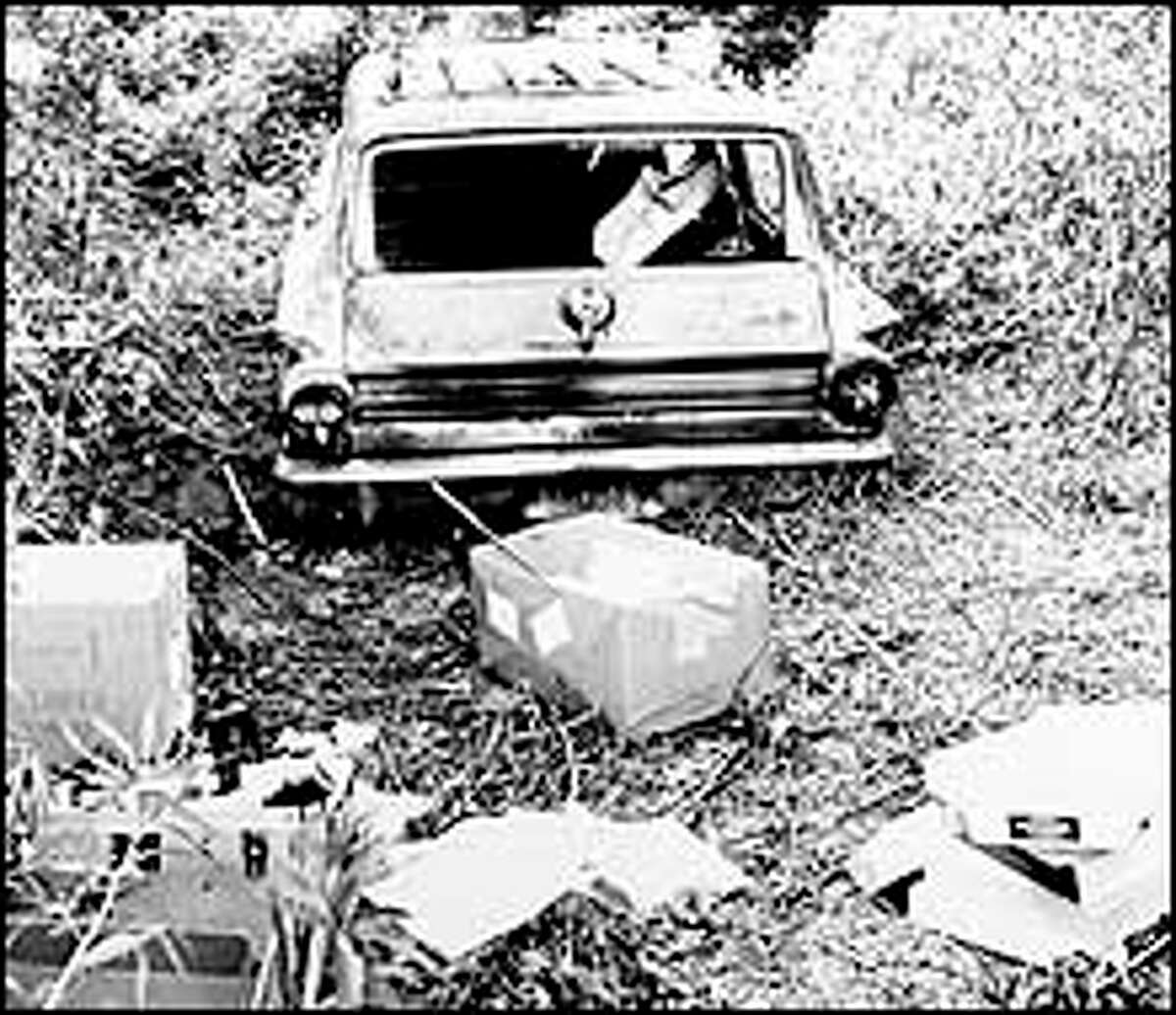
Chaney, Goodman, and Schwerner were shot execution-style. Chaney, as the local Black activist, was also brutally beaten before his death. The perpetrators buried the bodies deep inside the earthen dam using a bulldozer and hid the station wagon in a remote area near McComb, Mississippi, where it was later found burned and abandoned.
The National Search and Initial Investigation
When the three men failed to return to Meridian by the night of June 21, COFO organizers immediately raised the alarm. The disappearance of two white northerners and one Black southerner triggered an unprecedented national media frenzy and mobilized the federal government.
President Lyndon B. Johnson ordered the Federal Bureau of Investigation (FBI) to launch a massive investigation, designated as "MIBURN" (Mississippi Burning). Hundreds of FBI agents, accompanied by U.S. Navy sailors, scoured Neshoba County for weeks, searching swamps, woods, and private properties.
During the search, the bodies of several missing Black men whose disappearances had previously gone unnoticed by authorities—such as Henry Hezekiah Dee and Charles Eddie Moore—were discovered in the Mississippi River, highlighting the pervasive, unrecorded violence of the era. On August 4, 1964, acting on a tip provided by an informant, FBI agents used bulldozers to excavate the earthen dam where Chaney, Goodman, and Schwerner were buried. Autopsies confirmed that Goodman and Schwerner had died from single gunshot wounds to the chest, while Chaney had sustained severe trauma and multiple gunshots.
| Victim | Age | Role / Background | Affiliation |
|---|---|---|---|
| James Chaney | 21 | Local plasterer and activist | CORE Field Secretary |
| Andrew Goodman | 20 | Student volunteer from New York | COFO Volunteer |
| Michael Schwerner | 24 | Social worker and organizer | CORE Field Secretary |
The Federal and State Legal Battles
Despite overwhelming local evidence pointing to Ku Klux Klan involvement and collusion by the Neshoba County Sheriff's Office, local prosecutors refused to bring murder charges. State officials maintained that there was insufficient evidence to try anyone for homicide in a state court.
Recognizing that the local judicial system was unwilling to deliver justice, the U.S. Department of Justice bypassed state courts. In October 1964, federal prosecutors indicted 19 men—including Deputy Sheriff Cecil Price, Sheriff Lawrence Rainey, and Imperial Wizard Samuel Bowers—under the Enforcement Act of 1870, commonly known as the Ku Klux Klan Act. The federal charges focused on conspiracy to violate the civil rights of the victims under the color of law, rather than murder, because federal law at the time did not classify murder as a federal crime unless specific interstate commerce or civil rights statutes were violated.
The trial, United States v. Price, took place in federal district court in Meridian in October 1967 before Judge Harold Cox, a segregationist jurist who had previously disparaged civil rights workers. Despite these hostile judicial conditions, the jury convicted seven of the defendants on the conspiracy charges, including Cecil Price and Samuel Bowers. The remaining defendants were either acquitted or the jury failed to reach a verdict. The convicted individuals received sentences ranging from three to ten years in prison, but none served more than six years, and none were convicted of murder at the time.
Delayed Justice: The 2005 Edgar Ray Killen Trial
For decades, families of the victims and civil rights advocates pushed for accountability, noting that the primary organizers of the murders had walked free. In 2004, investigative journalist Jerry Mitchell of the Clarion-Ledger, alongside a multi-racial coalition known as the Philadelphia Coalition, uncovered new evidence and transcripts from the 1967 trial.
The investigation revealed that Edgar Ray Killen, a Southern Baptist preacher and local Klan organizer who had avoided conviction in 1967 because a lone juror refused to convict a preacher, was the mastermind who organized the lynch mob.
In January 2005, a Neshoba County grand jury indicted Killen on three counts of manslaughter. The trial commenced in June 2005, exactly 41 years after the murders. On June 21, 2005, a Mississippi state jury found Killen guilty of three counts of manslaughter, rejecting first-degree murder charges but holding him responsible for the deaths. Judge Jerry Lee sentenced Killen to 60 years in prison—20 years for each count, to be served consecutively. Killen died in prison in January 2018 at the age of 92, bringing a final, formal measure of state-level closure to one of the darkest chapters of the civil rights movement.
Frequently Asked Questions
What was the primary motivation behind the 1964 Mississippi killings?
The primary motivation was white supremacist opposition to Black voter registration and civil rights organizing during Freedom Summer. Local Ku Klux Klan members, operating with the active complicity of local law enforcement, targeted James Chaney, Andrew Goodman, and Michael Schwerner to intimidate civil rights workers and halt the integration of Mississippi's political landscape.
Why were the perpetrators tried in federal court rather than state court initially?
In 1964, local and state authorities in Mississippi refused to bring murder charges against the suspects. Consequently, the federal government intervened by prosecuting the conspirators under the Ku Klux Klan Act of 1870 for violating the civil rights of the victims, as federal law at the time did not establish murder as a federal offense.
How did the Mississippi killings impact the civil rights movement?
The disappearance and subsequent murder of the three activists focused intense national media attention on the brutal reality of Jim Crow segregation in the Deep South. This public outcry generated crucial political momentum that helped secure the passage of the Civil Rights Act of 1964 and the Voting Rights Act of 1965.
When were the bodies of Chaney, Goodman, and Schwerner found?
The bodies were discovered on August 4, 1964, buried beneath an earthen dam on a farm in Neshoba County, Mississippi, after an FBI informant provided precise details about their location to federal investigators.
Who was convicted in the 2005 reopening of the case?
Edgar Ray Killen, a local Ku Klux Klan organizer and Baptist preacher, was convicted of three counts of manslaughter in June 2005 and sentenced to 60 years in prison, where he remained until his death in 2018.
Historical Preservation and Commemoration
To preserve the historical memory of the 1964 Mississippi killings and educate future generations, descendants, historians, and civil rights organizations continue to support public memorials and educational archives. The site of the Mount Zion Methodist Church and the Neshoba County courthouse remain focal points for historical reflection and annual commemorative marches. Researchers examining civil rights history can consult primary documents housed within the National Archives, the FBI Freedom of Information Act (FOIA) reading room, and university special collections dedicated to the American civil rights movement.