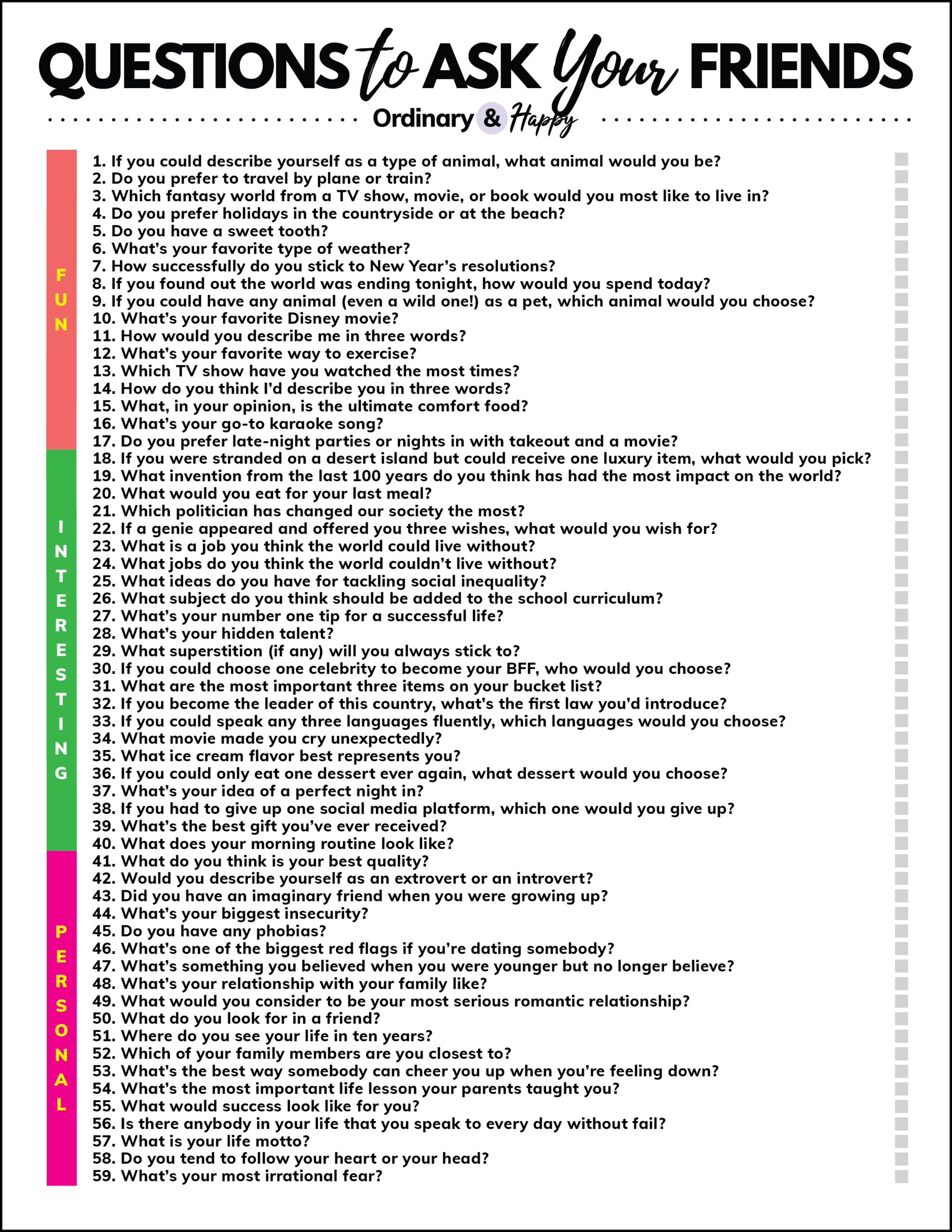
Engaging family members in meaningful dialogue often requires moving beyond routine status updates about work or school. By using curated, open-ended questions, you can bypass small talk to reveal hidden stories, personal values, and shared humor. These prompts help bridge generational gaps and create lasting emotional connections during reunions, holidays, or quiet Sunday dinners.
The Art of Conversational Inquiry
Building a deep connection with family members is rarely accidental. It requires a intentional transition from logistical exchanges—such as discussing schedules or chores—to explorative inquiries that invite vulnerability and reflection. When you ask a question that does not have a simple "yes" or "no" answer, you provide the other person with the agency to share as little or as much as they feel comfortable with, which is essential for maintaining psychological safety within a family unit.
Successful conversationalists practice active listening. This means that once a question is posed, the goal is not to prepare your own response but to fully absorb the narrative being shared. Often, the most memorable family stories surface as a secondary reaction to an initial prompt. By showing genuine curiosity about a relative's life experiences, you validate their identity, which strengthens the familial bond more effectively than any shared activity or event.
Categorizing Your Inquiries for Better Flow
To keep conversations dynamic, it is helpful to vary the tone of your questions. Mixing lighthearted, "silly" queries with more substantial, "reflective" ones ensures that the atmosphere remains balanced. Consider the following groups when preparing to facilitate a family discussion:
- Childhood Nostalgia: These questions help younger generations understand the environment in which their parents and grandparents were raised.
- Values and Beliefs: These provide insight into what drives a person’s decision-making and what they prioritize in life.
- Hypotheticals and Play: These act as effective "icebreakers" to lower defenses and induce laughter.
- Legacy and Future: These allow older generations to pass down wisdom and younger ones to express their aspirations.
Balancing Light and Heavy Topics
The following table outlines how different types of questions serve different social functions within a family setting. Selecting from various categories prevents the conversation from becoming either too somber or too superficial.
| Question Type | Primary Goal | Best Used During |
|---|---|---|
| Nostalgic | Preserving family history | Quiet evening chats |
| Hypothetical | Sparking creativity/humor | Dinner parties |
| Philosophical | Understanding character | Long car rides |
| Evaluative | Gaining life advice | Milestone celebrations |
101 Questions for Your Family
This curated list is designed to be pulled out whenever a lull in conversation occurs. Feel free to skip any that do not fit the current mood of your group.
Childhood and Origins
- What was the very first house you remember living in?
- Did you have a favorite childhood toy that you still think about?
- What is the most memorable school trip you ever took?
- Who was the friend you spent the most time with when you were ten?
- What was the "cool" thing to do in your neighborhood growing up?
- Were you ever a troublemaker in school?
- What was your favorite meal that your parents cooked?
- Did you ever have a secret hideout?
- What was the hardest subject for you to learn?
- What is one tradition from your childhood you wish we still did today?
- Did you have a pet that you were particularly close to?
- What was the first concert you ever attended?
- What did you want to be when you grew up?
- How did you feel on your first day of high school?
- What was your most embarrassing moment as a teenager?
- Did you have a specific collection as a child?
- What is a skill you learned as a child that you still use?
- Did you ever win an award you were proud of?
- What was your favorite season of the year?
- What is the biggest difference between your childhood and today’s world?
Values, Life Lessons, and Wisdom
- What is the best piece of advice you’ve ever received?
- How do you define a "successful" life?
- Is there a mistake you made that you are actually grateful for?
- What do you hope people say about you when you aren't in the room?
- How do you handle stress when things don't go to plan?
- What does it mean to be a "good" family member?
- Is there a value you hold that has changed significantly over time?
- What is the most courageous thing you have ever done?
- How do you decide what is truly important in life?
- What is a habit that has improved your life the most?
- What is something you’ve learned from the younger generation?
- How do you nurture your friendships?
- What is your favorite way to help someone in need?
- Do you believe in luck or hard work?
- How has your definition of happiness shifted over the years?
- What is the best way to resolve an argument?
- What do you think is the biggest challenge facing families today?
- What is the most important lesson you want to pass on?
- How do you stay optimistic during hard times?
- What would you do if you weren’t afraid of failing?
Hypothetical and Playful Scenarios
- If you could travel to any time period, where would you go?
- If you could have any superpower, what would it be?
- If you were forced to eat one meal for the rest of your life, what would it be?
- If you won the lottery tomorrow, what is the first thing you’d buy?
- If you could trade lives with any fictional character, who would it be?
- If you could instantly master any instrument, which one would you pick?
- If you could host a dinner party for any three people, living or dead, who would they be?
- If you had to move to a different country, where would you go?
- If you were a color, which one would represent your personality?
- If you could rename yourself, what name would you choose?
- If you could design your dream home, what is the one room it must have?
- If you could become an expert in any field overnight, what would it be?
- If you were a character in a book, what genre would it be?
- If you could speak any language fluently, which would it be?
- If you could have any animal as a house pet, which would you pick?
- If you could redo one day of your life, which one would it be?
- If you were a plant, what kind would you be?
- If you could own any business, what would it be?
- If you could ask a crystal ball one question about your future, what would you ask?
- If you had to survive on a deserted island, what three things would you bring?
Hopes, Dreams, and The Future
- What is one thing you still want to learn?
- Where is the one place you are dying to travel to?
- What is a goal you haven't achieved yet?
- How do you want to be remembered?
- What do you think the world will look like in 20 years?
- What is something you want to do with this family this year?
- What are you most looking forward to in the coming months?
- If you could start a charity, what cause would it support?
- What is your "bucket list" item?
- How do you envision your "perfect" retirement?
- What is one thing you want to try before you get too old?
- What is a project you have always wanted to start?
- How can we support each other better?
- What kind of legacy do you want to leave behind?
- What is the most exciting thing that happened to you this year?
- Are you planning to change any major habits soon?
- What is a passion you’ve always wanted to pursue?
- Do you think we will live in space one day?
- What do you hope changes for the better in the next decade?
- What is one small thing you can do to make life better today?
Fun and Random Connections
- What is your go-to karaoke song?
- What is the weirdest food combination you actually enjoy?
- What was your very first job, and did you like it?
- Do you believe in ghosts or aliens?
- What is the best movie you have seen in the last five years?
- Do you prefer mornings or nights?
- What is your favorite board game?
- If you could only use one app for the rest of your life, which would it be?
- What is a fashion trend you regret participating in?
- Are you a collector of anything?
- What is the best present you have ever received?
- Do you have a recurring dream?
- What is your favorite way to spend a rainy Saturday?
- If you could interview anyone, who would it be?
- Do you prefer reading books or watching movies?
- What is a secret talent you have?
- What is the worst advice you have ever been given?
- What is your favorite holiday tradition?
- Do you have a nickname that you actually like?
- What is one thing you always carry in your pockets/bag?
- What is a question you’ve always wanted to ask the rest of us?
Common Obstacles to Meaningful Conversation
Sometimes, even with the best questions, a conversation may feel forced. This often happens due to "conversational fatigue," where family members feel pressured to perform or where one person dominates the speaking time. To mitigate this, ensure that you allow for silences. In a family setting, a pause is not a sign of failure; it is often a sign of contemplation.
Another common mistake is the "fix-it" mentality. When a relative shares a struggle, the instinct is often to offer a solution. However, unless explicitly asked for advice, the most respectful approach is to practice empathetic validation. Phrases like "That sounds incredibly difficult" or "I can see why you feel that way" go much further than unsolicited coaching.
Navigating Sensitive Terrain
If a question leads to a topic that makes someone uncomfortable, do not persist. You can always shift the conversation by using a "reset" phrase. Examples include, "That’s a heavy topic for dinner—maybe we can save that for another time?" or simply pivoting to a lighter question from the list. The goal is to build rapport, not to conduct an interrogation. Respecting boundaries is a vital component of fostering long-term family trust.
Frequently Asked Questions
How do I introduce these questions without it feeling like an interview?
Avoid pulling out a physical list or going around the table in a rigid order. Instead, memorize two or three questions that interest you and weave them into the conversation naturally. If you are having dinner, wait for a natural lull to ask something light, such as, "I was just wondering, what was your favorite meal growing up?"
Should I ask the same question to everyone in the room?
Not necessarily. While "round-robin" style questions can be fun, they can also feel pressured. It is often more effective to ask one person a specific question that suits their personality. For example, ask your grandfather a nostalgic question about his youth, but ask your younger cousin a hypothetical question about the future.
What if my family members aren't talkative?
If your family is naturally quiet, focus on questions that require shorter, descriptive answers rather than philosophical ones. Start with easy, low-stakes questions about their day or a recent event. If they give a short answer, follow up with "What did you think of that?" rather than "Why?" to keep the pressure low.
Is there a "right time" to bring these up?
The best time is when everyone is already relaxed—typically after a meal or during a long activity like a road trip or a board game. Avoid starting deep conversations when people are rushed, hungry, or stressed about logistics.
Next Steps for Family Engagement
To turn these questions into a repeatable habit, consider establishing a "Question of the Week" or a "Dinner Table Topic." You might write these questions on slips of paper and place them in a jar on the table. Each time the family gathers, someone pulls a slip, and the group takes turns answering. This removes the social burden of having to "come up with something interesting to say" and creates a reliable, fun ritual that everyone can look forward to.