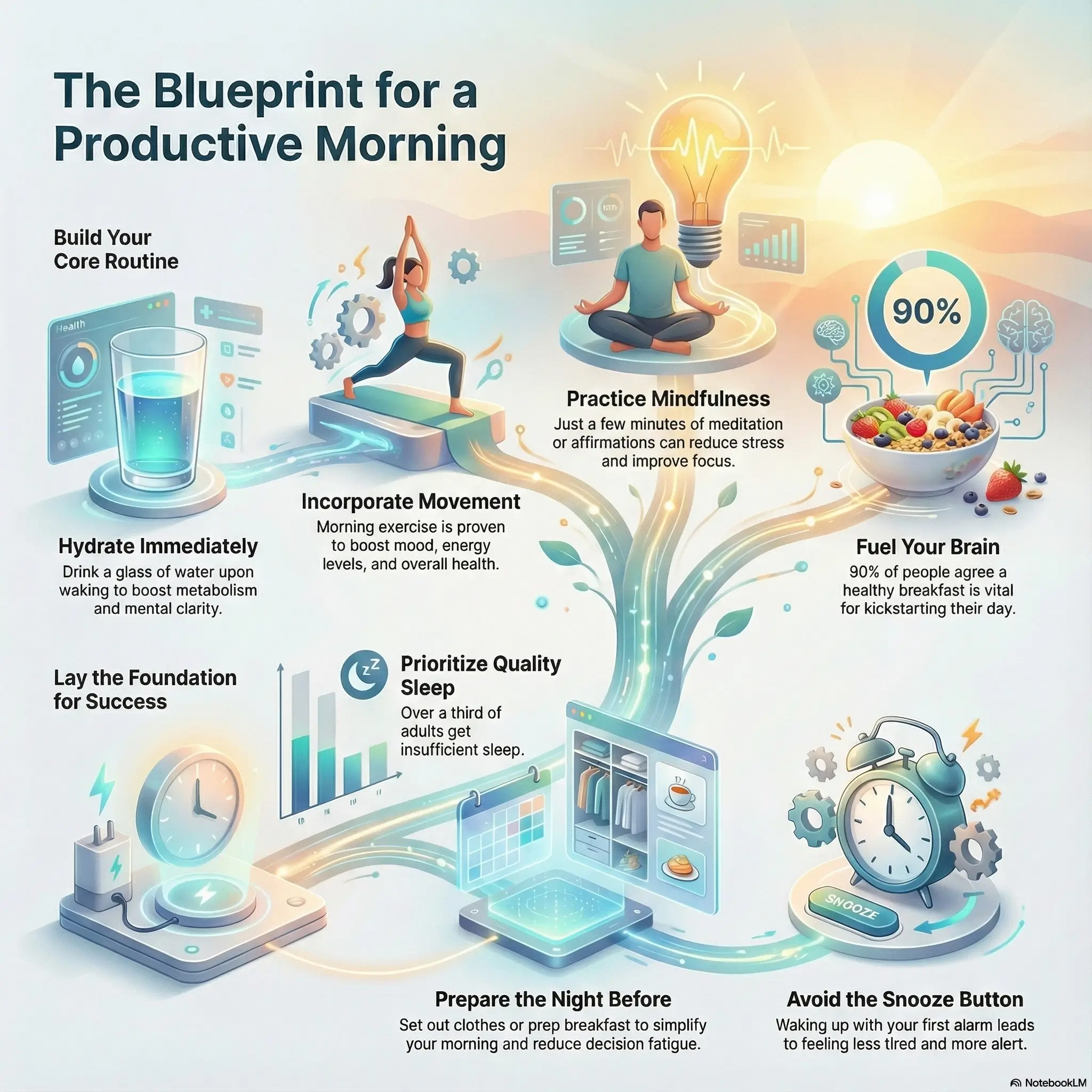
To boost your energy and productivity in 2026, start your morning with a structured routine that prioritizes physiological regulation and cognitive clarity. Key habits include early sunlight exposure, immediate hydration, delaying caffeine, and tackling high-intensity tasks first. These practices synchronize your circadian rhythm and optimize neurotransmitter levels for sustained daily performance.
The Science of Morning Momentum in 2026
By 2026, the focus on "bio-optimization" has moved from a niche interest to a standard professional requirement. Productivity is no longer viewed merely as time management but as energy management. The way you spend the first 60 to 90 minutes of your day dictates the chemical environment of your brain for the subsequent 16 hours. When you wake up, your body is transitioning from a state of repair (parasympathetic dominance) to a state of action (sympathetic activation).
The primary goal of a high-performance morning routine is to facilitate this transition efficiently. This involves managing the "cortisol awakening response" (CAR) and clearing "sleep inertia"—the grogginess caused by residual adenosine in the brain. If you disrupt this process—for example, by immediately checking a smartphone—you hijack your dopamine system and set a precedent for a reactive rather than a proactive day. Establishing these ten habits ensures that you leverage your biology rather than fight against it.
1. Immediate Hydration and Electrolyte Balance
After seven to nine hours of sleep, the human body is naturally dehydrated. Respiration and perspiration during the night deplete fluid levels, which can lead to cognitive fog and physical lethargy upon waking. Drinking 16 to 24 ounces of water immediately after rising is the most effective way to jumpstart your metabolic processes.
In 2026, nutritional science emphasizes that water alone is often insufficient. Adding a pinch of high-quality sea salt or a dedicated electrolyte mix can enhance cellular absorption. Sodium and magnesium are critical for nerve signaling and muscle function. By hydrating early, you increase blood volume, which improves oxygen delivery to the brain and vital organs, effectively "waking up" your internal systems before you even consider reaching for a stimulant.
2. Low-Angle Sunlight Exposure
One of the most powerful habits to start your morning and boost energy is getting natural light into your eyes within 30 minutes of waking. This is not about vitamin D; it is about the melanopsin-containing retinal ganglion cells in your eyes. These cells communicate directly with the suprachiasmatic nucleus (SCN) in the brain—your master biological clock.
Viewing sunlight early in the day triggers the timed release of cortisol, which acts as a "wake-up" signal for the entire body. Furthermore, this morning light exposure sets a timer for the release of melatonin approximately 12 to 14 hours later, ensuring better sleep quality the following night. If it is a cloudy day, you may need 10 to 20 minutes of exposure; on a clear day, 5 to 10 minutes is sufficient. The key is to step outside rather than look through a window, as glass filters out the specific blue-light wavelengths required for this biological trigger.
3. Delaying Caffeine Consumption
While it is tempting to drink coffee the moment you wake up, waiting 60 to 90 minutes is a more effective strategy for long-term productivity. When you wake up, your brain still has lingering adenosine—the chemical responsible for sleep pressure. Caffeine works by blocking adenosine receptors, but it does not remove the adenosine itself.
If you ingest caffeine while adenosine levels are still high, the caffeine blocks the receptors, but once it wears off, the accumulated adenosine floods back in, leading to the infamous "afternoon crash." By delaying your intake, you allow your body to naturally clear the adenosine through movement and light. This results in a cleaner, more sustainable energy boost that lasts through the workday without the need for constant re-dosing.
4. Cold Exposure Therapy
Controlled cold exposure, such as a 30-second to 2-minute cold shower, is a transformative habit for mental clarity. Cold water immersion triggers a significant release of norepinephrine and dopamine. Unlike the dopamine spike from social media, which is short-lived and followed by a crash, the dopamine increase from cold exposure is gradual and can last for several hours.
This habit also improves "vasovagal tone," helping your nervous system become more resilient to stress throughout the day. By voluntarily doing something difficult first thing in the morning, you build psychological "grit" and reduce the likelihood of being overwhelmed by work-related stressors later in the afternoon.
5. Movement and Lymphatic Drainage
You do not need a full 90-minute gym session to boost your morning energy. Even five to ten minutes of purposeful movement—such as yoga, air squats, or a brisk walk—can significantly impact your productivity. Physical activity increases circulation and helps the lymphatic system clear metabolic waste products that accumulated overnight.
Movement also raises your core body temperature. A rising core temperature is a primary biological signal to the brain that the day has begun. This thermal shift, combined with increased blood flow to the prefrontal cortex, enhances your ability to focus and engage in complex problem-solving.
6. High-Protein, Low-Glycemic Nutrition
If you choose to eat breakfast, the composition of that meal is critical for sustained energy. High-carb, sugary breakfasts (like cereals or pastries) cause a rapid spike in blood glucose, followed by an insulin surge and a subsequent energy dip. This fluctuation leads to "brain fog" and hunger cravings by mid-morning.
In 2026, the standard for a productive morning involves a breakfast rich in protein and healthy fats. Consuming 30 grams of protein—from sources like eggs, Greek yogurt, or plant-based alternatives—provides the amino acids necessary for neurotransmitter synthesis (specifically tyrosine for dopamine). Stable blood sugar ensures that your cognitive resources remain consistent, allowing for deep work sessions without the distraction of energy lulls.
7. The "No-Phone" Zone
The first hour of your day should be a "digital-free" period. When you check your phone immediately upon waking, you force your brain into a reactive state. You are responding to emails, news, and social media notifications, which overstimulates the dopamine system and fragments your attention span.
This reactivity makes it significantly harder to engage in "Deep Work" later in the day. By maintaining a digital detox for the first 60 minutes, you allow your brain to move from the groggy "theta" brainwave state into the productive "alpha" and "beta" states naturally. This preserves your "attentional capital," which is a finite resource you need for your most important tasks.
8. Mindfulness and Box Breathing
Productivity is as much about calm as it is about energy. Spending five minutes in meditation or practicing box breathing (inhale for 4, hold for 4, exhale for 4, hold for 4) regulates the autonomic nervous system. This practice lowers resting heart rate and reduces the "background noise" of anxiety.
Mindfulness trains the brain to return to the present moment when distracted. In the context of a 2026 work environment filled with AI-driven notifications and constant digital pings, the ability to refocus is a competitive advantage. Starting the day with a centered mind ensures that you approach your to-do list with intentionality rather than frantic energy.
9. Strategic Task Prioritization (Eat the Frog)
Productivity is often hindered by "decision fatigue." If you spend your morning wondering what to work on, you are wasting precious cognitive energy. A powerful habit is to identify your most difficult or important task—the "frog"—the night before and tackle it first thing in the morning.
The prefrontal cortex is most fresh in the morning. By completing your most demanding task early, you experience a "win" that builds momentum. This creates a positive feedback loop; the sense of accomplishment releases dopamine, which then fuels your motivation for the smaller, less demanding tasks that fill the rest of your day.
10. Environmental Optimization and Planning
The final habit is the act of physical and mental organization. This involves a quick review of your calendar and a cleanup of your immediate workspace. A cluttered environment leads to a cluttered mind, as the brain subconsciously processes all the visual stimuli in its field of vision.
Taking two minutes to clear your desk and five minutes to visualize your day's objectives provides a roadmap for your energy. When you know exactly what success looks like for the day, you are less likely to get sidetracked by low-value activities.
Comparison of Morning Habits and Their Impact
The following table summarizes the primary benefits and the biological mechanisms of the habits discussed.
| Habit | Primary Benefit | Biological Mechanism | Difficulty (1-5) |
|---|---|---|---|
| Hydration | Mental Clarity | Restores blood volume & electrolyte balance | 1 |
| Sunlight | Circadian Alignment | Triggers Cortisol; Sets Melatonin timer | 2 |
| Cold Shower | Energy & Resilience | Increases Norepinephrine & Dopamine | 5 |
| Protein Breakfast | Sustained Energy | Stabilizes Blood Glucose | 3 |
| No-Phone Zone | Focus & Intentionality | Prevents Dopamine Overload | 4 |
| Movement | Physical Wakefulness | Increases Core Temperature | 2 |
| Task Priority | High Productivity | Leverages peak Prefrontal Cortex function | 3 |
| Breathwork | Stress Reduction | Activates Parasympathetic Nervous System | 1 |
Common Pitfalls in Establishing a Morning Routine
Many individuals fail to maintain these habits because they attempt to implement all ten simultaneously. This leads to "habit fatigue." In 2026, the recommended approach is "habit stacking," where you attach a new habit to an existing one. For example, while your water is boiling, you practice two minutes of breathwork.
Another mistake is the "all-or-nothing" mentality. If you wake up late and cannot do the full routine, do not abandon it entirely. A shortened version—five minutes of light and a glass of water—is far better than reverting to old, reactive patterns. Consistency is the primary driver of biological adaptation.
How long does it take to see results from a new morning routine?
Most people notice an immediate improvement in alertness from hydration and sunlight. However, deeper changes in productivity and stress resilience typically take 14 to 21 days of consistent practice as your circadian rhythm and neurotransmitter levels stabilize.
Can I drink tea instead of water for morning hydration?
While tea provides hydration, it is best to start with plain water or water with electrolytes first. Tea contains tannins and, in many cases, caffeine, which can interfere with the natural clearance of adenosine if consumed too early. Drink 16 ounces of water before having any other beverage.
What if I work the night shift?
The principles remain the same, but the timing shifts. Use bright artificial light (light therapy lamps) to simulate sunlight when you wake up, and maintain a "no-phone" period during your "morning" to prevent reactive stress.
Is a high-protein breakfast necessary if I practice intermittent fasting?
No. If you practice intermittent fasting, you can skip breakfast, but ensure that your first meal of the day is still high in protein. The goal is to avoid a glucose-insulin spike that disrupts the focus you have cultivated throughout the morning.
Do I have to take a full cold shower?
No. You can start with a warm shower and turn the water to cold for the final 30 seconds. The "cold shock" response is what triggers the release of norepinephrine and dopamine, so even a short burst is effective.
Implementing Your 2026 Morning Strategy
To successfully integrate these habits, start by selecting the two most impactful changes for your current lifestyle—typically sunlight exposure and the no-phone rule. Focus on these for one week before adding a third habit. By 2026 standards, the most productive individuals are those who have automated their mornings to the point where they do not need to "decide" to be productive; their environment and biological rhythms do the work for them. Monitor your energy levels throughout the afternoon to see which habits provide the most significant "anti-crash" protection, and adjust your routine to suit your specific metabolic needs.