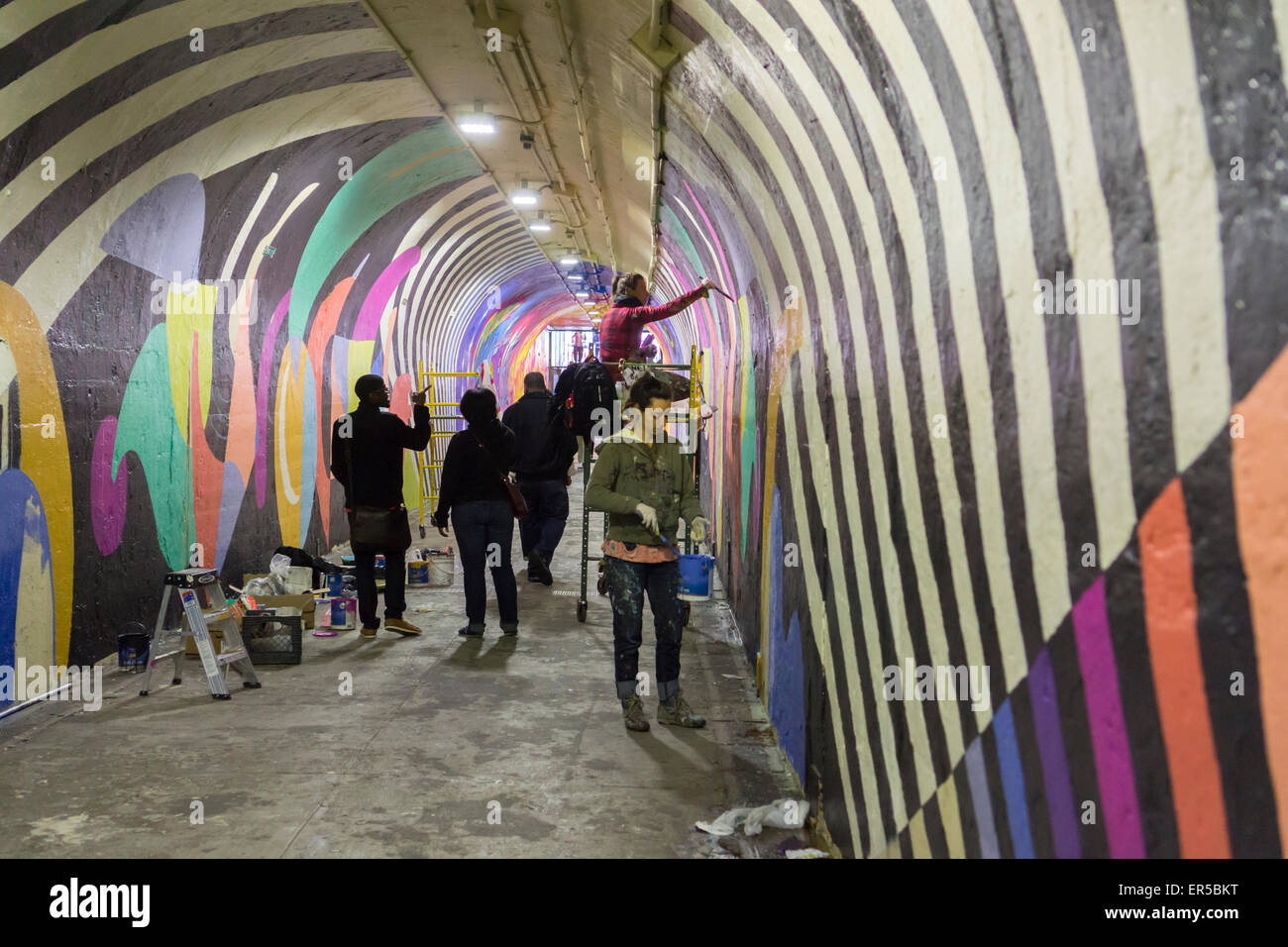
A 1-foot long miniature subway is a specialized scale model segment, typically representing a single transit car or a high-detail slice of a subterranean station. In 2026, these "micro-dioramas" have become the pinnacle of urban modeling, allowing enthusiasts to recreate hyper-realistic, grit-and-glamour underground environments within a compact, twelve-inch footprint perfect for bookshelf displays.
The Appeal of the Twelve-Inch Underground
The fascination with 1-foot long subway models stems from the "micro-layout" movement, which prioritizes extreme detail over expansive trackage. While traditional model railroading often requires entire basements, the 1-foot subway diorama focuses on the "underground wonder" of a singular moment in transit history. In the constrained space of 12 inches, a modeler can achieve a level of fidelity—from the flickering fluorescent lights of a 1970s R46 car to the specific placement of grime and graffiti—that would be impossible to maintain across a larger layout.
These miniature wonders serve as both artistic expressions and technical challenges. Because the viewer is looking at a cross-section of a tunnel or a single car, every square centimeter must be curated. The "1-foot" constraint acts as a frame, turning a piece of transit infrastructure into a desktop masterpiece. For collectors in 2026, these models represent a bridge between traditional railroading and modern urban art, capturing the industrial soul of cities like New York, London, or Tokyo in a manageable, high-impact format.
Determining Scale: How Much "Subway" Fits in a Foot?
When planning a 1-foot long subway project, the choice of scale is the most critical decision, as it dictates exactly how much of the "underground wonder" will fit within the twelve-inch limit. Each scale offers a different balance between spatial breadth and mechanical detail.
HO Scale (1:87)
In HO scale, a standard New York City subway car (typically 60 to 75 feet in real life) measures between 8 and 10 inches. This makes the 1-foot length the "sweet spot" for HO modelers. Within 12 inches, you can fit a single, fully realized car with approximately two inches of tunnel or platform on either side. This allows for a "cameo" appearance where the train seems to be emerging from or disappearing into the darkness of the tunnel.
O Scale (1:48)
O scale is significantly larger and is the preferred choice for those who prioritize interior detail and "street" realism. A standard subway car in O scale would exceed 15 inches, meaning a 1-foot display will only show a portion of a car. However, this scale is ideal for "cutaway" dioramas. A 1-foot O-scale segment can showcase a detailed door mechanism, passenger seating with miniature advertisements, and hyper-realistic third-rail assemblies.
N Scale (1:160)
For those who want to see the "wonder" of the environment rather than just the train, N scale is the answer. Within a 1-foot span, an N-scale modeler can recreate nearly 160 feet of track. This provides enough space for a multi-car train consist to be parked at a station platform, complete with stairs, turnstiles, and dozens of miniature commuters.
Essential Components of a Miniature Subway Diorama
Creating a realistic 1-foot long subway requires more than just a train car; it necessitates the construction of a subterranean "stage." The atmosphere of an underground wonder is built through several key technical components.
The Tunnel Liner and Benchwall
The structural foundation of a subway diorama is the tunnel liner. Most high-end models in 2026 utilize CNC-routed PVC or 3D-printed resin components to mimic the curved "iron rings" of older deep-bore tunnels or the rectangular "cut-and-cover" concrete boxes of modern systems. The "benchwall"—the raised concrete walkway alongside the tracks—is a crucial detail that houses cable conduits and provides a sense of depth and scale.
The Third Rail and Track Geometry
Subway modeling differs from standard freight railroading primarily through the presence of the third rail. In a 1-foot display, the third rail must be elevated on miniature insulators. Collectors often use blackened brass or weathered plastic to represent the high-voltage rail, ensuring it looks heavy and dangerous. The track itself should be "low-profile" (Code 70 or 83 in HO) to reflect the heavy-duty, weathered steel found in transit systems.
Lighting: The Secret to Atmosphere
Lighting is the primary tool for creating the "underground" feel. In 2026, micro-LED technology allows modelers to install individual lights in the ceiling of the car and the tunnel. To achieve realism:
- Warm White LEDs: Used for older stations to mimic incandescent or early fluorescent bulbs.
- Cool Blue/White LEDs: Used for modern cars and renovated platforms.
- Flicker Circuits: Small capacitors can be used to simulate the "arcing" of the third rail or the intermittent failure of tunnel lights, adding a dynamic, "living" quality to the miniature wonder.
Comparison of Common 1-Foot Subway Modeling Formats
The following table compares the three most popular ways to execute a 1-foot long subway display, focusing on the trade-offs between detail and scope.
| Feature | HO Scale (1:87) | O Scale (1:48) | N Scale (1:160) |
|---|---|---|---|
| Primary Subject | Full single car + small tunnel | Cutaway of a car interior | Full station scene + train |
| Detail Level | High (Internal & External) | Extreme (Museum Quality) | Moderate (Environmental) |
| Typical Cost (2026) | $200 - $450 | $500 - $1,200 | $150 - $300 |
| Ease of Lighting | Moderate (Micro-LEDs) | High (Easy access) | Challenging (Requires soldering) |
| Space Required | 12" x 4" x 4" | 12" x 8" x 8" | 12" x 3" x 3" |
| Best Use Case | Individual car showcase | Mechanical/Interior study | Urban planning/Station layout |
Achieving Urban Realism: Weathering and Grime
A 1-foot long subway only becomes an "ultimate wonder" when it sheds its "toy" appearance. The underground environment is inherently dirty, characterized by "brake dust," rust, and water seepage.
The Palette of the Underground
Professional modelers use a specific palette of iron oxides, burnt umbers, and "railroad tie brown." Because subways are enclosed, the dust settles evenly on every surface. Applying a "wash" (highly diluted paint) over the entire tunnel allows the pigment to settle into the cracks of the concrete and the bolts of the track, instantly adding decades of perceived history.
Modeling Water Damage and Calcification
One of the most impressive details in a miniature subway is the representation of water. Using clear epoxy resin or gloss varnish, modelers can create "drips" on the walls or small puddles between the tracks. Adding a touch of white paint to the edges of these puddles can simulate the calcification (stalactites) often seen in aging concrete tunnels, providing a level of "underground wonder" that fascinates the viewer.
Graffiti and Public Art
For many, the subway is a canvas. In 1/87 or 1/48 scale, graffiti must be applied with extreme care. While some use water-slide decals, the most realistic 1-foot models feature hand-painted "tags" using fine-tipped acrylic markers. This adds a layer of social realism to the industrial environment, situating the model in a specific era of urban history.
Step-by-Step: Constructing a 1-Foot Display Base
Building a 1-foot miniature subway wonder requires a systematic approach to ensure the structural integrity of the display and the functionality of the electronics.
- Frame Construction: Build a five-sided box (top, bottom, back, and two sides) out of 1/2-inch plywood or MDF. Leave the front open for a plexiglass or acrylic cover.
- Track Installation: Secure the track to the base using industrial adhesive. Ensure the third rail is positioned on the side furthest from the viewer to create a sense of mystery and depth.
- Wall and Ceiling Texturing: Apply "stone" or "concrete" textured paper or embossed styrene to the interior walls. Paint with a base coat of medium gray before starting the weathering process.
- Wiring the Grid: Route all LED wires through the back of the box. Use a 9V battery or a 12V DC adapter with a hidden toggle switch on the side of the frame.
- Final Detailing: Add "junk" to the tracks—miniature newspapers, discarded cans, and rusted metal scraps (often made from painted styrene bits).
- Sealing the Wonder: Once the train car is positioned, slide the acrylic front into place. This prevents dust accumulation, which is the primary enemy of high-detail miniature models.
Common Mistakes in Miniature Subway Modeling
Even experienced hobbyists can falter when working with the tight constraints of a 1-foot display. Avoiding these pitfalls is essential for a professional finish.
- Over-Lighting: A common mistake is making the tunnel too bright. Real subway tunnels are cavernous and dark. Use low-intensity LEDs to create "pools" of light rather than a uniform glow.
- Scale Inconsistency: Using "standard" railroad ballast (rocks) often looks like boulders in a subway setting. Use fine-grain sand or specialized transit ballast to maintain the scale.
- Neglecting the Exterior: Many focus only on the train and forget the tunnel ceiling. In a 1-foot display, the ceiling is highly visible. Add conduits, junction boxes, and "drip pans" to ensure the viewer's eye finds detail in every corner.
Maintaining Your Miniature Underground Wonder
Because a 1-foot subway is often a static display, maintenance is relatively simple but necessary to preserve the value and appearance of the piece. In 2026, high-quality models use archival-grade materials, but environmental factors still play a role.
The primary concern is LED longevity. While most LEDs are rated for 50,000 hours, cheap resistors can cause them to burn out prematurely. Always use the recommended resistance for your power source. Additionally, if the display is not sealed with an acrylic front, use a soft, natural-hair brush (like a makeup brush) to gently whisk away dust once a month. Never use compressed air, as the force can dislodge delicate details like third-rail insulators or miniature scale figures.
Frequently Asked Questions
What is the best scale for a 1-foot long subway model?
HO Scale (1:87) is widely considered the best choice for a 1-foot display. At this scale, a single 12-inch section perfectly accommodates one full-sized transit car with just enough room for a hint of the tunnel environment. It offers the best balance between available pre-made models and the ability to add significant detail.
How do I add realistic graffiti to my miniature subway?
For the most realistic results, use a combination of micro-decals for the "base" colors and ultra-fine acrylic paint markers (0.7mm) for the "outlines" and "tags." This layering mimics how real paint sits on the corrugated or smooth metal surfaces of a subway car.
Can a 1-foot subway model actually move?
While many 1-foot displays are static dioramas, they can be motorized. A 1-foot "shuttle" track allows the car to move back and forth a few inches, often controlled by an infrared sensor or an automated timer. This adds a "dynamic wonder" element to the display, though it requires more complex wiring.
Where can I buy 1-foot subway car models in 2026?
Most collectors purchase "undecorated" shells from specialized 3D-printing boutiques or high-end manufacturers like Island Model Works or MTH (for O scale). In 2026, many enthusiasts also print their own models using high-resolution 8K resin printers, allowing for 100% custom transit fleets.
What materials are best for the tunnel walls?
High-density PVC foam board (Sintra) is the preferred material for 2026 modelers. It is easy to score with a knife to create "concrete" expansion joints, it takes paint exceptionally well, and it is lightweight enough for a bookshelf display.
Selecting Your First Miniature Project
To begin your journey into miniature underground wonders, start with a single HO-scale car and a simple 12-inch display plank. Focus first on the lighting; once you master the "subterranean glow," the rest of the detailing—from the rust on the tracks to the advertisements on the walls—will naturally follow. The goal of a 1-foot long subway is not to build a railroad, but to capture a moment of urban transit history and preserve it as a tangible, desktop-sized wonder.