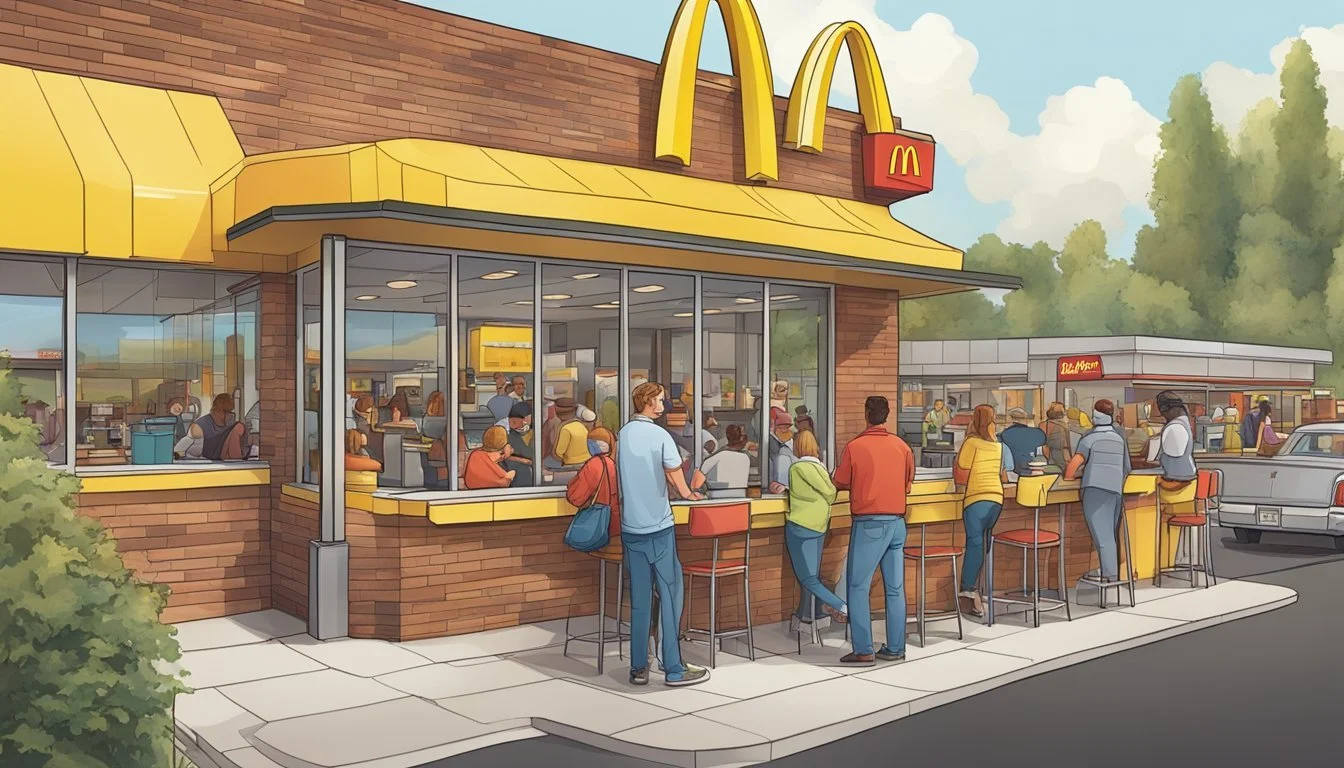
Richard and Maurice McDonald were the visionary architects of the "Speedee Service System," the operational foundation of the modern fast-food industry. In 1961, after years of friction with their franchising agent Ray Kroc, they sold the company to him for $2.7 million. While the brothers lived comfortably, they lost out on billions in future royalties, and their original restaurant was eventually driven out of business by Kroc.
From New England to San Bernardino: The Early Ambitions
The story of the McDonald brothers begins far from the golden arches of popular imagination. Richard "Dick" and Maurice "Mac" McDonald were born in New Hampshire to Irish immigrant parents. In the 1920s, like many ambitious young men of their era, they moved to California with dreams of making it in the motion picture industry. They initially worked as set movers and handymen in Hollywood but soon realized that the real money was in entrepreneurship rather than manual labor.
Their first venture was a movie theater in Glendora, California, which struggled during the Great Depression. By 1937, they pivoted to the food industry, opening a small hot dog stand called "The Airdrome" near the Monrovia airport. This modest start provided the capital and the proof of concept they needed to move to San Bernardino in 1940, where they opened the first "McDonald's Bar-B-Q."
This initial restaurant was a typical drive-in of the time, featuring a large 25-item menu dominated by barbecue and served by "carhops"—waitresses who brought food to customers' cars. While successful, the brothers grew frustrated with the inefficiencies of the drive-in model, such as the constant turnover of teenage carhops and the tendency for silverware and plates to go missing or break.
Revolutionizing the Kitchen: The Speedee Service System
In 1948, the McDonald brothers did something radical: they closed their highly profitable restaurant for several months to re-engineer it from the ground up. This was the birth of the Speedee Service System. They analyzed their sales and discovered that 80% of their revenue came from hamburgers. Consequently, they slashed their menu to just nine items: hamburgers, cheeseburgers, soft drinks, milk, coffee, potato chips, and pie.
The brothers treated their kitchen like a manufacturing assembly line. They hired a blacksmith to create custom stainless steel equipment, including large condiment dispensers that allowed them to dress burgers with precision and speed. They replaced porcelain plates with paper wrappers and ditched silverware for disposable packaging.
Most importantly, they eliminated the carhops. Customers now had to walk up to the window to order. By standardizing every movement of the staff, they could prepare a burger, fries, and a shake in less than a minute. This efficiency allowed them to drop the price of a hamburger from 30 cents to 15 cents, making high-quality food accessible to the working class on a scale never before seen.
The Partnership with Ray Kroc: A Collision of Cultures
In 1954, a Multimixer salesman named Ray Kroc visited the brothers in San Bernardino. He was stunned by the volume of milkshakes they were selling and even more impressed by the efficiency of their operation. Kroc immediately saw the potential to replicate this model across the United States.
While the brothers had already sold a few franchises—including the iconic Phoenix location with the first "Golden Arches"—they were not interested in the grueling work of nationwide expansion. They preferred the quality of life their single, highly profitable location provided. Kroc, however, persuaded them to let him act as their exclusive franchising agent.
The relationship was fraught with tension from the beginning. The brothers were perfectionists who cared about the integrity of their system and the quality of the food. Kroc was a growth-oriented salesman who wanted to prioritize scale. Conflict frequently erupted over minor details; for instance, the brothers famously refused to allow Kroc to use "Insta-Mash" potatoes instead of fresh ones, and they resisted his desire to implement an aggressive national marketing strategy that they felt compromised their local control.
The 1961 Buyout and the "Handshake" Royalties Controversy
By 1961, the tension reached a breaking point. Kroc wanted full control to take the company to the next level, and the brothers were tired of the constant battles. They agreed to sell the entire business to Kroc for $2.7 million. After taxes, this left each brother with approximately $1 million—a significant fortune in 1961, equivalent to roughly $10 million each in 2026 inflation-adjusted dollars.
However, the deal came with a legendary and bitter footnote. The brothers claimed that, in addition to the cash payment, Kroc had made a "handshake agreement" to pay them a 0.5% royalty on all future gross sales of the chain. Because Kroc needed to show a clean balance sheet to investors to secure the loans for the buyout, this royalty was reportedly not included in the written contract.
Kroc never paid those royalties. Had that handshake deal been honored, the McDonald family would have received hundreds of millions of dollars annually by the late 20th century. Furthermore, Kroc was furious that the brothers refused to include the original San Bernardino restaurant in the sale. The brothers renamed their original location "The Big M," but Kroc retaliated by opening a brand-new McDonald’s just one block away, eventually driving the brothers out of business.
Life After the Empire: The Fate of "The Big M"
After selling the company, Richard and Maurice McDonald largely retreated from the public eye. Maurice "Mac" McDonald, who had been the more stressed of the two during the years of expansion, died of heart failure in 1971. Many associates, including Richard, believed that the stress of the buyout and the subsequent battle with Kroc contributed to his early death.
Richard McDonald lived a longer, quieter life in New Hampshire. For decades, he watched as the brand bearing his name became the most recognized corporate symbol in the world. While he was wealthy, he was never "billionaire wealthy" like the executives who led the corporation after Kroc.
In his later years, Richard began to receive more public recognition for his role as the true founder of the fast-food concept. In the early 1990s, the McDonald's Corporation, under new leadership that sought to soften its image, finally acknowledged the brothers' contribution more formally. Richard even participated in several anniversary events and was served the ceremonial "50 billionth" McDonald's burger by Ed Rensi, then-president of McDonald's USA. Richard McDonald passed away in 1998 at the age of 89.
Comparative Overview: The McDonald Brothers vs. Ray Kroc
The following table highlights the fundamental differences in how the brothers and Kroc approached the business, which ultimately led to their split.
| Feature | The McDonald Brothers | Ray Kroc |
|---|---|---|
| Primary Goal | Operational perfection and local success | Global brand dominance and scale |
| Expansion Strategy | Slow, selective, and quality-controlled | Aggressive nationwide franchising |
| View on Innovation | Focused on kitchen efficiency (The System) | Focused on real estate and marketing |
| Menu Philosophy | Limited and strictly standardized | Open to new products and industrial efficiency |
| Financial Outcome | $2.7 million (one-time payment) | Multi-billion dollar corporate empire |
| Legacy Recognition | Pioneers of the "Speedee Service System" | The man who built the "McDonald's" brand |
FAQ: Common Questions About the McDonald Brothers
Did the McDonald brothers regret selling the company?
Richard McDonald often stated in interviews that he did not regret the sale, noting that he had a peaceful life and enough money to be comfortable. However, he did express bitterness toward Ray Kroc’s claim that he was the sole "founder" of the company, and the loss of the original San Bernardino location remained a sore point.
What happened to the original McDonald's restaurant in San Bernardino?
After being renamed "The Big M" following the buyout, the original location could not compete with the new McDonald's Kroc opened nearby. It closed in the 1970s. Today, the site is home to an unofficial McDonald's museum owned by Albert Okura, which houses a massive collection of historical memorabilia.
Was the movie "The Founder" accurate about their relationship?
The 2016 film The Founder is considered broadly accurate regarding the timeline and the nature of the conflict. It accurately depicts the brothers' innovation of the assembly-line kitchen and Kroc’s aggressive tactics. Some historians argue that Kroc’s character was portrayed with slightly more villainy than in real life, but the central conflict over the handshake royalty deal is well-documented.
Are there any McDonald descendants still involved with the company?
No. Following the 1961 buyout, the McDonald family had no further ownership or operational involvement in the corporation. The company is now a publicly-traded entity owned by shareholders worldwide.
Why did Ray Kroc take the title of "Founder"?
Kroc viewed himself as the founder of the McDonald's Corporation (the business entity), whereas he viewed the brothers as the founders of a single restaurant. To Kroc, the "empire" didn't exist until he began the franchising process in 1955.
Verifying the Legacy: Exploring Fast Food History
For those interested in the authentic history of the McDonald brothers, several historical resources and locations offer a deeper look into their innovations. The First McDonald's Museum in San Bernardino, located at 1398 N. E St, provides a physical history of the Speedee Service System. It is an essential stop for business historians studying the evolution of American commerce.
Additionally, researchers can consult the archives of the San Bernardino Historical and Pioneer Society for original records and photographs of the brothers' first ventures. Understanding the McDonald brothers’ story is a lesson in the distinction between invention and commercialization; while the brothers invented the "machine" of fast food, it was Kroc’s relentless pursuit of scale that turned it into a global phenomenon. As of 2026, the principles of the Speedee Service System—standardization, speed, and value—remain the core pillars of the multi-billion dollar global restaurant industry.