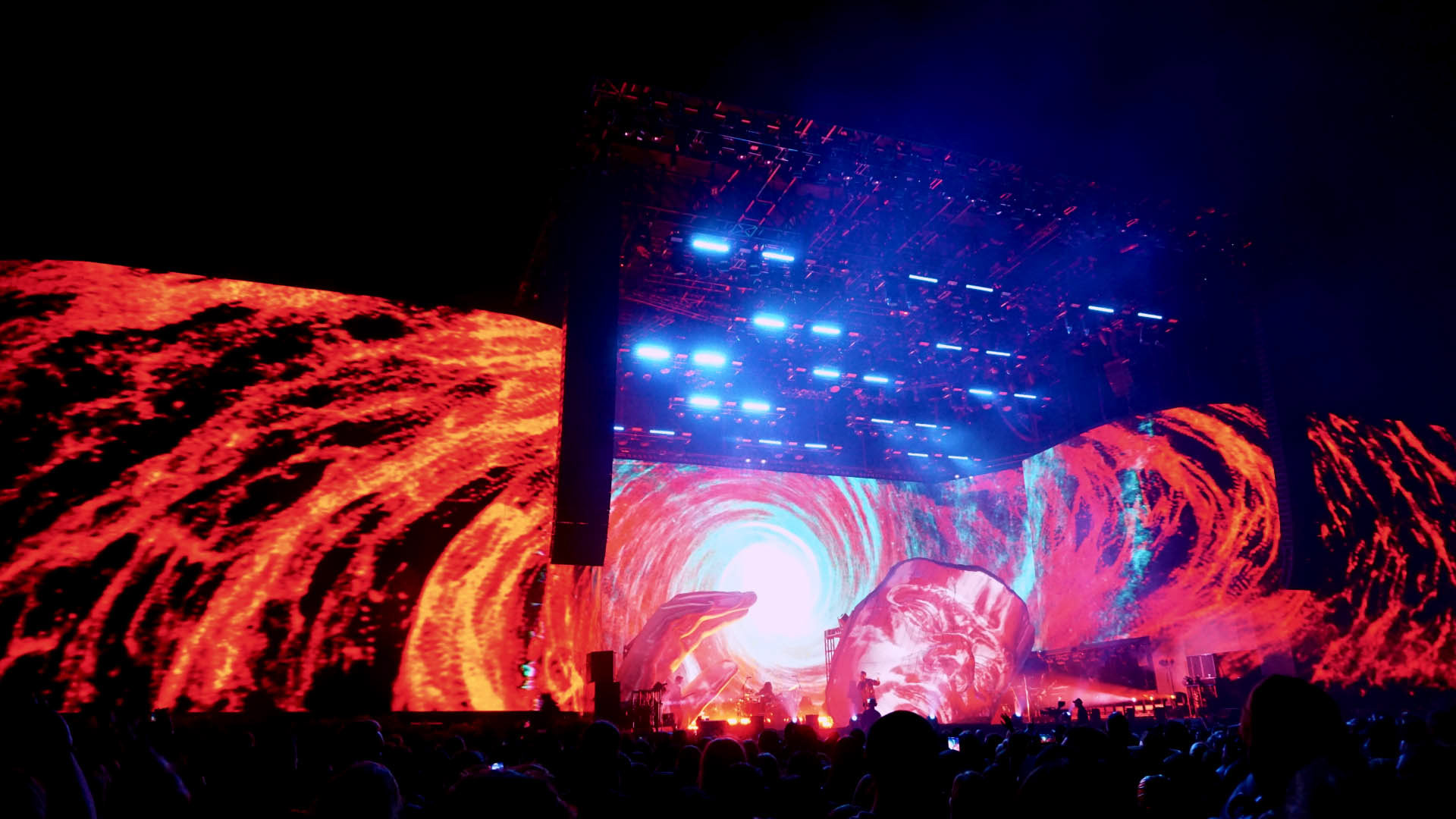
The Weeknd’s performance at the 2018 Coachella Valley Music and Arts Festival served as a major turning point in his live career, cementing his status as a premier global stadium headliner. Performing as a top-billed act on the festival’s main stage, Abel Tesfaye delivered a career-spanning set that highlighted his evolution from alternative R&B enigma to chart-topping pop superstar.
The Significance of the 2018 Coachella Headline Slot
When The Weeknd was announced as one of the three headliners for the 2018 edition of the Coachella Valley Music and Arts Festival, the booking represented a definitive "arrival" moment for the artist. Coachella is widely regarded as one of the most culturally significant music festivals in the world, and securing a headline slot—alongside Beyoncé and Eminem—signaled that The Weeknd had transitioned from a festival-favorite club act to a centerpiece of global pop music.
By 2018, The Weeknd had already achieved massive commercial success with albums like Beauty Behind the Madness (2015) and Starboy (2016). His performance at Coachella was intended to showcase this trajectory. The desert setting provided a grand stage for his atmospheric, often dark, and highly polished production style. For attendees, the set was an opportunity to witness a transition in real-time: a performer who began his career shrouded in mystery and lo-fi aesthetics commanding a massive crowd with high-octane, arena-ready production values.
Production Design and Stage Craft
The visual language of The Weeknd’s 2018 Coachella set was meticulously curated to match the cinematic quality of his recorded work. The stage design utilized extensive LED displays, complex lighting arrays, and pyrotechnics that emphasized the scale of the Polo Fields in Indio, California.
Unlike his earlier, more intimate performances, the 2018 iteration of his stage show prioritized synchronization. The lighting cues were tightly mapped to the bass-heavy drops and synth-hooks that defined his discography. The production team utilized a mix of industrial, gritty urban aesthetics with futuristic, high-fashion lighting elements, reflecting the "Starboy" persona he was projecting at the time. This contrast was crucial, as it allowed him to bridge the gap between his earlier, moodier material like Trilogy and his radio-dominating hits.
Setlist Evolution: Bridging the Eras
The setlist for Coachella 2018 was a masterclass in balancing fan service with artistic progression. For a performer with a discography that ranges from the underground "bedroom pop" of his initial mixtapes to the global pop hits of his mid-career, constructing a coherent festival set is a logistical challenge.
He managed this by grouping songs into thematic blocks. The opening section of the show often leaned into his high-energy, tempo-heavy tracks to capture the festival’s massive, shifting crowd. The mid-section allowed for vocal showcases, highlighting his technical proficiency in singing live—a frequent point of critique for many modern pop artists. The closing section featured his most recognizable global anthems, ensuring that even casual attendees were engaged.
Comparative Overview of Setlist Dynamics
| Era / Style | Primary Focus | Representative Tracks |
|---|---|---|
| Early / Alternative R&B | Atmospheric, Dark, Lo-fi | "The Hills", "Wicked Games" |
| Mid / Pop Crossover | Commercial, Upbeat, Anthemic | "Can't Feel My Face", "In The Night" |
| Current / Electro-Pop | High-energy, Polished, Synth | "Starboy", "Reminder" |
Technical Challenges of Desert Performances
Performing as a headliner at the Coachella Valley Music and Arts Festival presents unique environmental and technical challenges that distinguish it from standard indoor arena tours. The desert climate, characterized by intense daytime heat and rapid cooling at night, puts significant strain on audio equipment and vocal longevity.
Sound engineers for the 2018 set had to manage the expansive, open-air acoustics of the Polo Fields. Unlike an indoor arena where sound is contained by walls and a ceiling, the desert wind and wide-open space can cause sound dispersion, leading to a loss of low-end frequencies—a vital component of The Weeknd’s R&B-influenced sound. The production team addressed this by utilizing specialized speaker arrays and delay towers strategically placed throughout the field, ensuring that the back of the crowd received as high-fidelity an experience as those in the front row.
Audience Impact and Critical Reception
Critical reception of The Weeknd’s 2018 set was largely positive, with many reviewers noting his growth as a frontman. His ability to maintain audience engagement without relying on excessive guest appearances was frequently cited as a sign of his maturity. While other headliners might lean on a carousel of surprise guests to sustain energy levels, Tesfaye focused on the delivery of his own catalog.
The audience, composed of tens of thousands of music enthusiasts, responded to the transition from his slower, bass-heavy grooves to his high-tempo pop hits. This performance solidified his reputation as a "festival-proof" act, proving that his music, which is often characterized by its intimate, late-night vibe, could translate effectively to the scale of a major outdoor festival.
Lessons in Festival Headlining
For emerging artists or production managers, the 2018 Coachella performance serves as a case study in effective set management. The key takeaway is the importance of pacing. A headlining set is an endurance test; it requires a deep understanding of energy management.
- Strategic Pacing: Start with high-impact visuals to hook the crowd, move through the deeper catalog to reward loyal fans, and build toward the final act with major radio hits.
- Audio Calibration: Acknowledge the venue. Outdoor festivals require a more "compressed" audio mix than indoor venues to ensure clarity over long distances.
- Visual Cohesion: Ensure the lighting design is not just background flicker, but an extension of the music’s emotional arc.
- Vocal Management: The physical exertion of a full hour-plus set under desert conditions requires a structured vocal approach that avoids overextending during the early tracks.
Frequently Asked Questions
Did The Weeknd bring out any surprise guests during his 2018 Coachella set?
While some headliners at Coachella are known for heavy guest participation, The Weeknd’s 2018 performance was notable for his focus on his own material. He kept the set tightly focused on his own discography, prioritizing his progression as a solo performer over high-profile cameos.
How did the Coachella 2018 performance impact his later tour productions?
The logistics of the Coachella stage—specifically the large-scale LED management and the outdoor audio balancing—directly informed his subsequent world tours. The 2018 appearance functioned as a "stress test" for his touring infrastructure, validating that his production design could scale up to massive, non-traditional venues.
What was the most significant technical aspect of his stage show?
The use of real-time, motion-synced lighting was the most critical technical component. Because the stage was so large, relying on static lighting would have failed to capture the audience's attention. The team used proprietary software to map lighting intensity to the specific frequency bands of his tracks, creating a rhythmic visual pulse.
Why is the 2018 Coachella performance considered a turning point?
It was the first time he headlined a festival of that magnitude while simultaneously transitioning away from his earlier, darker "mysterious" persona into a full-fledged, mainstream pop star. It proved he could handle the demands of the world's most high-profile stage.
Were there specific environmental factors that affected the set?
Yes, the dust and shifting wind conditions in Indio are notorious. The sound team had to employ "atmospheric compensation," which involves shifting the EQ balance of the mid-range frequencies in real-time to prevent the sound from being swallowed by the desert air.
Next Steps for Festival Attendees and Students of Production
If you are analyzing the 2018 performance for professional production purposes, the most actionable step is to review the professional archival recordings available from the era. Focus not just on the performance, but on the camera switching patterns—the way the broadcast director cuts between close-ups and wide shots reveals how the performance was intended to be perceived by the viewer. For attendees looking to replicate or appreciate the experience, pay attention to how the artist utilizes the "dead space" on stage; headliners of this caliber use the entire footprint of the platform to command the audience, a skill that can be observed and studied for any large-scale event management.