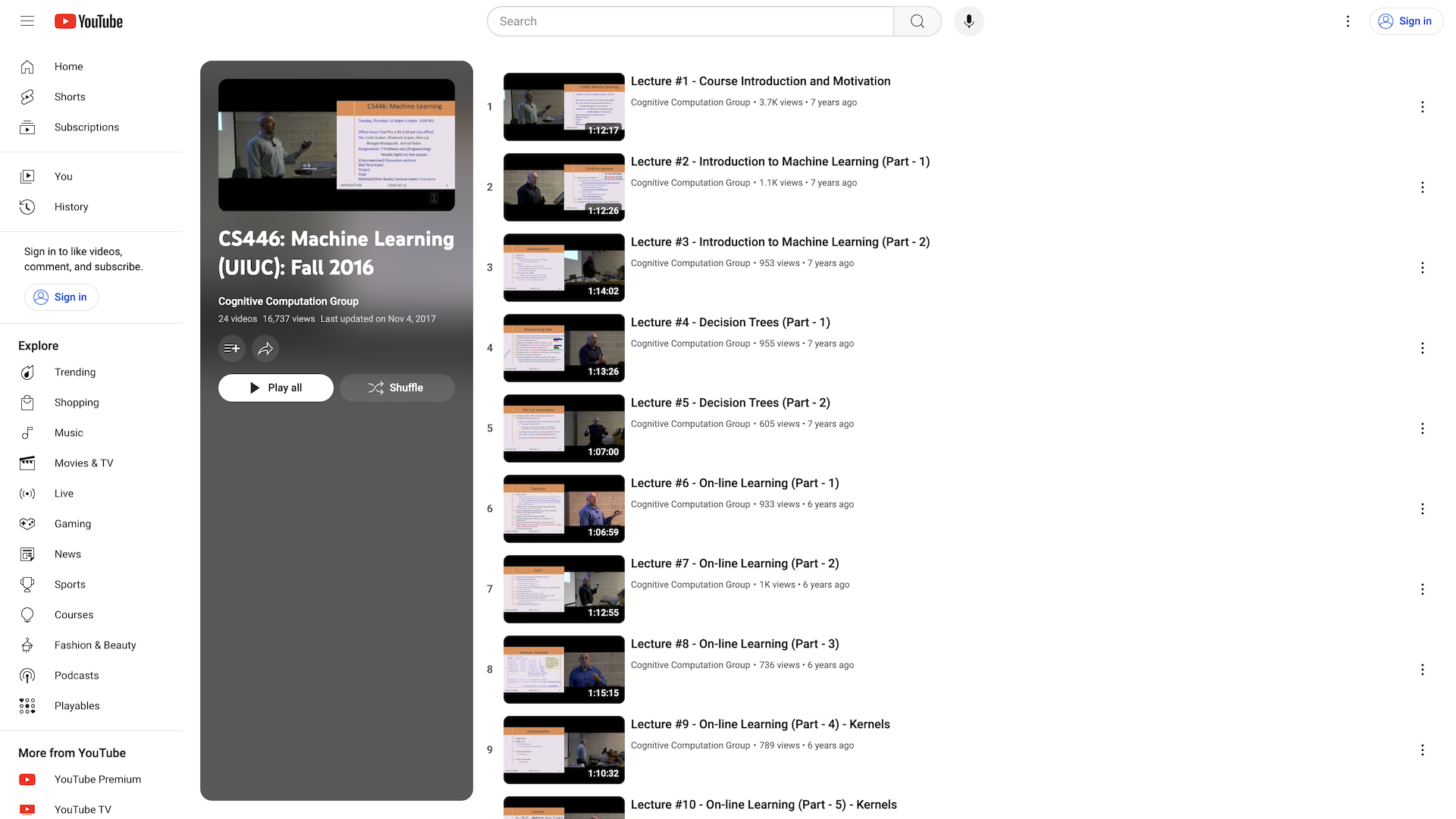
Navigating the computer science curriculum at the University of Illinois Urbana-Champaign (UIUC) requires a strategic approach, as the Department of Computer Science stands among the top-ranked programs globally. This guide provides prospective and current students with a detailed breakdown of UIUC CS courses for the 2026 academic year, covering core requirements, foundational tracks, advanced electives, and registration strategies designed to maximize academic success.
Core Foundational Requirements and Introductory Sequences
The foundation of the UIUC computer science curriculum rests on rigorous mathematical proof, systems architecture, and algorithmic design. Entering undergraduate students must master these baseline competencies before transitioning to specialized upper-division coursework.
- CS 124 (Introduction to Computer Science): The primary entry point for majors and non-majors alike, focusing on object-oriented programming paradigms, basic data structures, and problem-solving methodologies primarily utilizing Java and Kotlin.
- CS 128 (Introduction to Computer Science II): A rigorous transition into systems-level programming using C++, covering memory management, pointers, heap allocation, and fundamental software engineering practices.
- CS 173 (Discrete Structures): The mathematical bedrock of the major, teaching propositional logic, set theory, induction, relations, graphs, and introductory combinatorial analysis.
- CS 225 (Data Structures): Universally recognized as the gateway to upper-level CS, this course examines AVL trees, hash tables, graph algorithms, disjoint sets, and algorithmic complexity analysis.
Core Systems and Theoretical Computer Science Pathways
Once students clear the foundational gatekeepers, the curriculum diverges into deep architectural systems and rigorous theoretical computing. These courses build the mental models required for high-performance computing, distributed engineering, and cryptographic security.
Important Prerequisite Warning: UIUC strictly enforces prerequisite chains. Attempting to register for upper-level systems courses without a passing grade of C- or higher in CS 225 and CS 233 will result in immediate administrative drops from course rosters.
- CS 233 (Computer Architecture): Explores hardware-software interfaces, pipelining, memory hierarchies, and instruction set architectures using RISC-V.
- CS 241 (System Programming): A deep dive into operating system kernels, multi-threading, synchronization primitives, virtual memory, and network socket programming in Unix environments.
- CS 374 (Algorithms and Models of Computation): Combines advanced algorithm design (dynamic programming, greedy algorithms, network flows) with automata theory, computability, and NP-completeness.
Specialized Upper-Level Electives and Emerging 2026 Tracks
UIUC continuously updates its 400-level and 500-level electives to reflect the rapid evolution of industry demands. The 2026 course catalog places heavy emphasis on artificial intelligence, cloud-native infrastructure, and cybersecurity engineering.
- CS 421 (Programming Languages and Compilers): Examines type systems, lambda calculus, operational semantics, and foundational compiler construction techniques.
- CS 440 (Artificial Intelligence): Covers heuristic search, probabilistic reasoning, reinforcement learning, and natural language processing architectures.
- CS 498 / Special Topics: Dynamic courses addressing real-time industry shifts, such as large-scale transformer optimization, quantum computing algorithms, and ethical AI deployment.
Comparative Overview of Core Programming Languages Used in UIUC CS
Different tracks within the UIUC curriculum rely on specific programming languages to teach distinct computer science principles. The table below outlines the primary languages utilized across key courses and their primary pedagogical targets.
| Course Code | Course Name | Primary Language | Pedagogical Focus |
|---|---|---|---|
| CS 124 | Intro to Computer Science I | Java / Kotlin | Object-oriented design and syntax basics |
| CS 128 | Intro to Computer Science II | C++ | Memory management and pointer arithmetic |
| CS 241 | System Programming | C / Assembly | Low-level OS primitives and concurrency |
| CS 374 | Algorithms & Models of Comp. | Python / Pseudocode | Abstract problem solving and mathematical proof |
| CS 421 | Programming Languages | OCaml / Scala | Functional programming and type inference |
Strategic Guidance for Registration and Curriculum Planning
Registering for computer science courses at UIUC is highly competitive due to high student enrollment in the Grainger College of Engineering. Implementing proactive registration tactics prevents graduation delays and ensures access to high-demand electives.
- Prioritize Major Restrictions: Register during your designated early registration window. Pay close attention to restricted seats reserved exclusively for CS majors versus those open to CS+X interdisciplinary programs or general engineering students.
- Balance Workloads: Never pair heavy systems courses like CS 241 with theoretical monsters like CS 374 in the same semester unless necessary. Balance coding-heavy projects with mathematically intensive theory classes.
- Leverage Proficiency Exams: Incoming students with extensive prior coding experience should evaluate UIUC's departmental proficiency exams for introductory courses such as CS 124 and CS 128 to accelerate their degree timeline.
Frequently Asked Questions About UIUC CS Courses
Can non-majors enroll in upper-level UIUC computer science courses?
Non-majors face strict registration bottlenecks, as upper-level CS 400-level courses are primarily reserved for enrolled computer science and computer engineering majors until late registration phases. Non-majors should explore minor pathways or campus-wide interdisciplinary electives.
How are UIUC CS courses adapted for artificial intelligence advancements?
The department has integrated machine learning components directly into core software engineering and data structure frameworks, alongside expanding dedicated upper-level offerings in deep learning, neural networks, and generative AI systems.
What is the difference between Grainger CS and CS+X programs regarding course requirements?
While both tracks complete the exact same core technical requirements in data structures, systems, and algorithms, CS+X programs replace traditional engineering electives with specialized coursework in a partnered humanities, social science, or fine arts discipline.
Are UIUC CS courses available for remote or online completion?
While certain graduate-level certificates and the online Master of Computer Science (MCS) program are fully remote, undergraduate foundational and core courses require physical attendance on the Urbana-Champagin campus.
What resources are available for students struggling with challenging weed-out courses?
Students can utilize the Grainger Engineering Tutoring service, join departmental office hours, participate in student-led organizations like ACM for collaborative study sessions, and utilize professorial supplemental instruction groups.
Take the Next Step in Your Academic Journey
Mastering the computer science curriculum at UIUC demands dedication, strategic planning, and a deep understanding of prerequisite dependencies. Whether you are finalizing your schedule for the upcoming semester or mapping out your four-year degree plan, consult with your assigned academic advisor in the Grainger College of Engineering to align your course selections with your long-term career goals in software engineering, research, or advanced graduate studies.