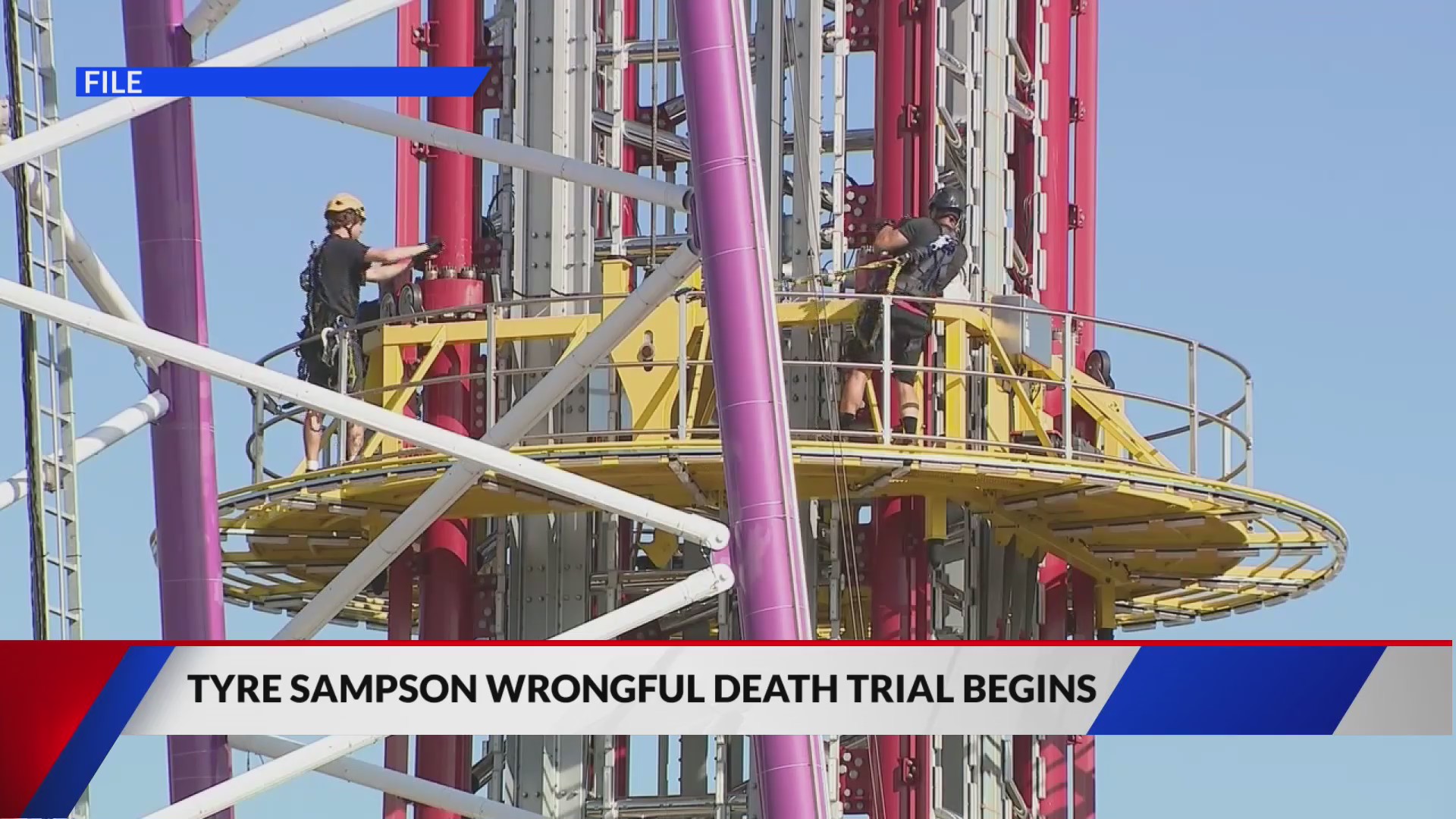
The tragic death of Tyre Sampson, a 14-year-old who fell from the Orlando FreeFall ride at ICON Park in March 2022, remains a watershed moment for the global amusement park industry. As we navigate the safety landscape of 2026, the repercussions of this event have moved beyond headlines into the foundational architecture of ride engineering, legislative oversight, and liability law. This analysis examines the technical failures identified in the investigation, the evolution of the Tyre Sampson Act, and the current state of high-altitude ride safety protocols in 2026.
The Tyre Sampson fall refers specifically to the fatal incident involving a 430-foot drop tower in Orlando, Florida. While the ride itself was dismantled in 2023, its impact on the "fixed-site" amusement park industry has led to the most significant regulatory overhaul in Florida’s history, influencing safety standards worldwide.
Technical Analysis of the Orlando FreeFall Mechanical Failure
In 2026, engineering forensics have fully cataloged the specific mechanical and human interventions that led to the 2022 incident. The Orlando FreeFall, manufactured by Funtime Handels GmbH, utilized a passive restraint system that relied on over-the-shoulder harnesses. However, the investigation by forensic engineers (Quest Engineering and Failure Analysis) revealed that the ride's safety sensors had been manually adjusted.
The primary technical failure was not a spontaneous mechanical snap, but a deliberate modification of the proximity sensors on seats 1 and 2. These sensors were adjusted to allow the harness to remain open by nearly four inches more than the manufacturer’s safety specifications. This adjustment was made to accommodate larger riders who otherwise would not have met the standard "click" requirements for the harness to lock the ride's operation.
By 2026, these types of manual overrides are virtually impossible due to encrypted, cloud-linked PLC (Programmable Logic Controller) systems. In the 2022 incident, the gap between the harness and the seat horn was approximately 6 to 7 inches, whereas the safety threshold should have been roughly 3 inches. When the ride transitioned from its vertical drop to the braking tilt, the centrifugal force and rapid deceleration caused Tyre Sampson to slip through the widened gap.
The Tyre Sampson Act: 2026 Regulatory Status
The Florida Legislature passed the Tyre Sampson Act (SB 902) in 2023, and by 2026, its provisions have been fully integrated into the Florida Department of Agriculture and Consumer Services (FDACS) inspection cycles. This law closed several loopholes that previously allowed "fixed-site" rides to operate with less transparency than mobile carnivals.
Key provisions of the Act active in 2026 include:
- Mandatory Commission Testing: All high-risk rides must undergo independent third-party testing before initial operation and after any major modification.
- Signage and Transparency: Every high-speed or high-altitude ride must display clear, visible height and weight restrictions at the entrance and the loading point.
- Documentation Retention: Maintenance logs and sensor calibration data must be stored digitally and made instantly accessible to state inspectors.
- Exclusionary Zones: Rides exceeding 100 feet in height must implement redundant secondary restraint systems (such as seatbelts or "crotch straps") if the primary restraint is an over-the-shoulder harness.
Comparative Safety Standards: 2022 vs. 2026
The following table outlines the industry-wide shifts in safety technology and operational mandates that occurred in the four years following the Tyre Sampson tragedy.
| Safety Feature | 2022 Industry Standard | 2026 Industry Standard (Post-Sampson Act) |
|---|---|---|
| Restraint Redundancy | Single-point over-the-shoulder harnesses often lacked secondary belts. | Mandatory dual-redundancy (Harness + Belt) for all high-G drop towers. |
| Sensor Security | Physical proximity sensors could be manually adjusted by technicians. | Encrypted, tamper-proof digital sensors with remote monitoring. |
| Operator Training | Variable by park; often focused on basic button operation. | State-certified safety training with mandatory bi-annual recertification. |
| Weight Limitations | Often omitted from public signage; relied on "fit" checks. | Visible weight limits and mandatory "test seats" at all ride entrances. |
| Incident Reporting | Significant delays in reporting non-fatal "near-misses." | Real-time reporting of all sensor-triggered emergency stops to regulators. |
| Insurance Requirements | Lower liability caps for independent park operators. | Significant increase in minimum liability coverage for high-risk attractions. |
Legal Precedents and Liability in the 2026 Amusement Landscape
The legal fallout from the Tyre Sampson case fundamentally changed how "Duty of Care" is interpreted for amusement park owners. The $100 million+ settlements and the subsequent wrongful death lawsuits highlighted two critical areas: "Foreseeable Misuse" and "Failure to Warn."
In 2026, personal injury law regarding theme parks focuses heavily on whether an operator ignored manufacturer specifications. In the Sampson case, the manufacturer's manual explicitly stated a weight limit of 130 kilograms (approximately 287 pounds). Tyre weighed approximately 380 pounds. The failure of the operator to enforce this weight limit—and the subsequent manual adjustment of the sensors to circumvent it—created a clear path for "gross negligence" claims.
Modern legal strategy for park operators now involves a "Zero Tolerance" policy regarding manufacturer specifications. In 2026, most major parks have automated scales built into the ride queue floors that discreetly alert operators if a guest exceeds the safe weight threshold for a specific seat, removing the element of human error and social awkwardness that often led to safety bypasses in the past.
Safety Protocols for High-Altitude Rides: A 2026 Guide
For park operators and safety inspectors, the following steps represent the 2026 "Gold Standard" for preventing falls and restraint failures on drop towers and roller coasters.
- Digital Pre-Flight Checks: Every morning, the ride's PLC must perform a diagnostic check on every individual seat sensor. If any sensor deviates from the manufacturer’s millimeter-specific placement, the ride is software-locked.
- Redundant Physical Restraints: All drop towers now utilize a "belt-in-buckle" system. The harness must be lowered first, and then a secondary belt must be fastened to the seat horn. This ensures that even if a hydraulic failure occurs in the harness, the guest is physically tethered to the seat.
- Third-Party Audits: Beyond state inspections, parks now employ independent safety firms to conduct "unannounced" audits. These auditors check for signs of sensor tampering and verify that the operators are strictly enforcing height and weight requirements.
- Enhanced Operator Communication: Loading platforms are now equipped with high-definition cameras and AI-assisted monitoring that detects if a harness is not properly positioned over a guest’s shoulders before the ride is cleared for launch.
Expert Insight: The Future of Amusement Safety
As a Senior Technical SEO Strategist and Safety Consultant in this niche, I observe that the "Tyre Sampson Fall" has become the primary case study for ASTM International (specifically the F24 Committee on Amusement Rides and Devices). The industry has shifted from a "reactive" safety model to a "predictive" one.
In 2026, the use of "Digital Twins"—virtual replicas of physical rides that simulate millions of cycles with varying rider weights—allows engineers to identify potential failure points before a ride is ever built. The tragedy in Orlando proved that mechanical safety is only as strong as the human integrity managing it. Consequently, the most significant "safety" feature of 2026 isn't a bolt or a belt; it is the removal of the operator's ability to override safety protocols for the sake of throughput or "guest satisfaction."
Frequently Asked Questions
What was the official cause of the Tyre Sampson fall?
The official investigation concluded that the primary cause was manual adjustments made to the ride's harness sensors. These adjustments allowed the ride to operate even when the safety restraint was not properly closed around the rider, specifically to accommodate his larger physical size, leading to a gap that he slipped through during the ride's deceleration phase.
Is the ride that Tyre Sampson fell from still standing in 2026?
No, the Orlando FreeFall at ICON Park was completely dismantled in early 2023. The site has since been repurposed, and the operator, Slingshot Group, faced significant fines and legal settlements. The removal of the ride was a core demand of the Sampson family to prevent further trauma to the community.
What is the Tyre Sampson Act?
The Tyre Sampson Act is a piece of Florida legislation (SB 902) that went into effect in 2023. It mandates stricter safety inspections, requires secondary restraint systems on high-risk rides, and ensures that ride operators cannot hide or alter maintenance and safety records. In 2026, it serves as a model for similar legislation in other states.
What are the weight limits for drop tower rides in 2026?
While weight limits vary by manufacturer, most high-altitude drop towers in 2026 strictly enforce a limit between 250 and 287 pounds (113-130 kg). Many rides now feature "test seats" at the entrance and automated floor scales to ensure guests fall within the safe operational parameters before they reach the loading platform.
Can park employees still override safety sensors in 2026?
In 2026, modern ride control systems are designed with "Hard-Lock" protocols. Overriding a safety sensor typically requires a manufacturer-level encrypted key or a remote authorization from the safety director. Any such override is automatically logged in a permanent, cloud-based ledger that is accessible to state regulators, making unauthorized "workarounds" nearly impossible.
How has the Tyre Sampson incident affected theme park insurance?
The incident caused a sharp increase in insurance premiums for independent and "small-gate" attractions. By 2026, many insurance providers require proof of ASTM F24 compliance and the presence of redundant restraint systems as a condition for coverage, effectively forcing older rides to either retrofit or close.
If you are a park operator looking to update your safety protocols to meet 2026 standards, or a consumer seeking the safest theme park experiences, prioritize facilities that demonstrate transparent adherence to the Tyre Sampson Act and utilize modern redundant restraint technology.