The pursuit of scoring supremacy remains the ultimate benchmark of offensive longevity, skill, and dominance in professional basketball. As the 2025-2026 NBA season unfolds, the upper echelon of the all-time scoring list continues to evolve, reflecting shifts in playstyles, medical science, load management, and the evolution of the three-point revolution. Understanding who sits at the summit of NBA scoring requires examining not only raw totals, but also the efficiency metrics, era-adjusted scoring rates, and the sheer durability required to amass tens of thousands of points against elite defensive schemes.
Evolution of Scoring Paradigms in Modern Professional Basketball
Scoring thresholds in the National Basketball Association have shifted dramatically over the decades. In the foundational eras of the league, pace was exceptionally high, but shooting efficiencies and offensive schemes lacked the spatial mathematical optimization seen today. As the game transitioned through the isolation-heavy 1990s and into the pace-and-space analytics era of the 2010s and 2020s, player utilization rates and three-point volume redefined output expectations.
Reaching the pinnacle of the all-time scoring list demands an extraordinary confluence of factors:
- Immediate Impact: Elite players must earn significant rotation minutes from their rookie season, minimizing developmental lag.
- Longevity and Health: Sustaining peak performance across 15 to 22 grueling 82-game regular seasons while avoiding catastrophic soft-tissue or structural injuries.
- Versatility: The ability to score at all three levels—at the rim, in the midrange, and from beyond the arc—ensures defensive schemes cannot neutralize a scorer through basic tactical adjustments.
- Offensive System Gravity: Elite scorers often dictate franchise offensive architectures, ensuring high usage rates and consistent playcalling designed to maximize their scoring touches.
The Mount Rushmore of National Basketball Association Scorers
The history of the league is anchored by transcendent talents who transformed putting the ball through the basket into an art form. While scoring champions come and go every single season, the cumulative all-time list represents an exclusive fraternity of durability and execution.
| Rank | Player Name | Active Years | Estimated Career Points (As of 2026) | Primary Franchises | Career Field Goal Percentage (Approx.) |
|---|---|---|---|---|---|
| 1 | LeBron James | 2003–2026 | 41,000+ | Cleveland Cavaliers, Miami Heat, Los Angeles Lakers | 50.6% |
| 2 | Kareem Abdul-Jabbar | 1969–1989 | 38,387 | Milwaukee Bucks, Los Angeles Lakers | 55.9% |
| 3 | Karl Malone | 1985–2004 | 36,928 | Utah Jazz, Los Angeles Lakers | 51.6% |
| 4 | Kobe Bryant | 1996–2016 | 33,643 | Los Angeles Lakers | 44.7% |
| 5 | Michael Jordan | 1984–2003 | 32,292 | Chicago Bulls, Washington Wizards | 49.7% |
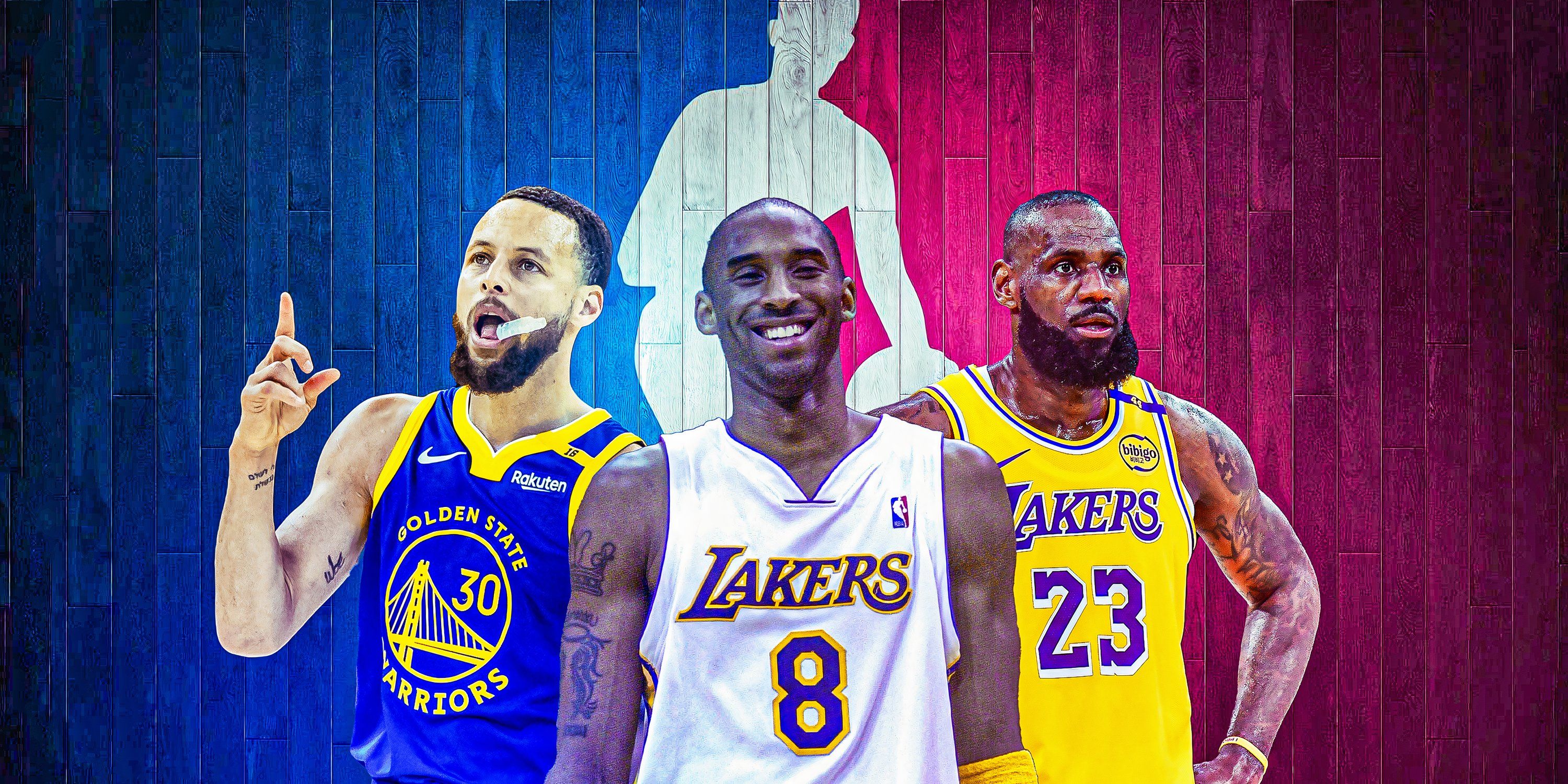
Analyzing this hierarchy illustrates distinct pathways to offensive greatness. Kareem Abdul-Jabbar dominated through the unmatched un-guardability of his signature Skyhook, maintaining apex efficiency for two full decades. Karl Malone utilized ironman durability, missing remarkably few games over 19 seasons while benefiting from elite playmaking orchestration. Michael Jordan and Kobe Bryant relied on relentless footwork, midrange mastery, and ferocious competitive volume, while LeBron James rewrote the record books through unprecedented physical preservation, passing vision, and sustained dominance across multiple distinct eras of basketball.
Key Statistical Benchmarks and Efficiency Metrics in Historical Scoring
Evaluating modern scorers against historical legends requires looking beyond raw point totals. Advanced analytics provide a clearer picture of how these players achieved their historical milestones. True Shooting Percentage (TS%), Usage Rate (USG%), and Points Per Possession (PPP) offer granular insight into scoring efficiency.
Methodology Note on Era Adjustments: Pace and Possession Value: Comparing a 1960s scorer to a 2026 floor-spacer requires acknowledging that modern teams generate significantly higher three-point efficiency, altering the relative value of individual field goal attempts. Advanced metric systems utilize possession-adjusted metrics to level the playing field across different decades of basketball history.
When examining efficiency, players who balance high volume with high conversion rates separate themselves from high-volume gunners. For instance, efficiency drops are common for players who play well into their late thirties, yet all-time greats mitigate this decline by shifting their shot selection toward high-percentage catch-and-shoot opportunities, post-ups, and efficient transition play.
Active Chasers and the Future Landscape of the Scoring List
As the league progresses through the 2026 season, analysts and fans continuously monitor active superstars who possess a mathematical trajectory toward the upper rungs of the all-time leaderboard.
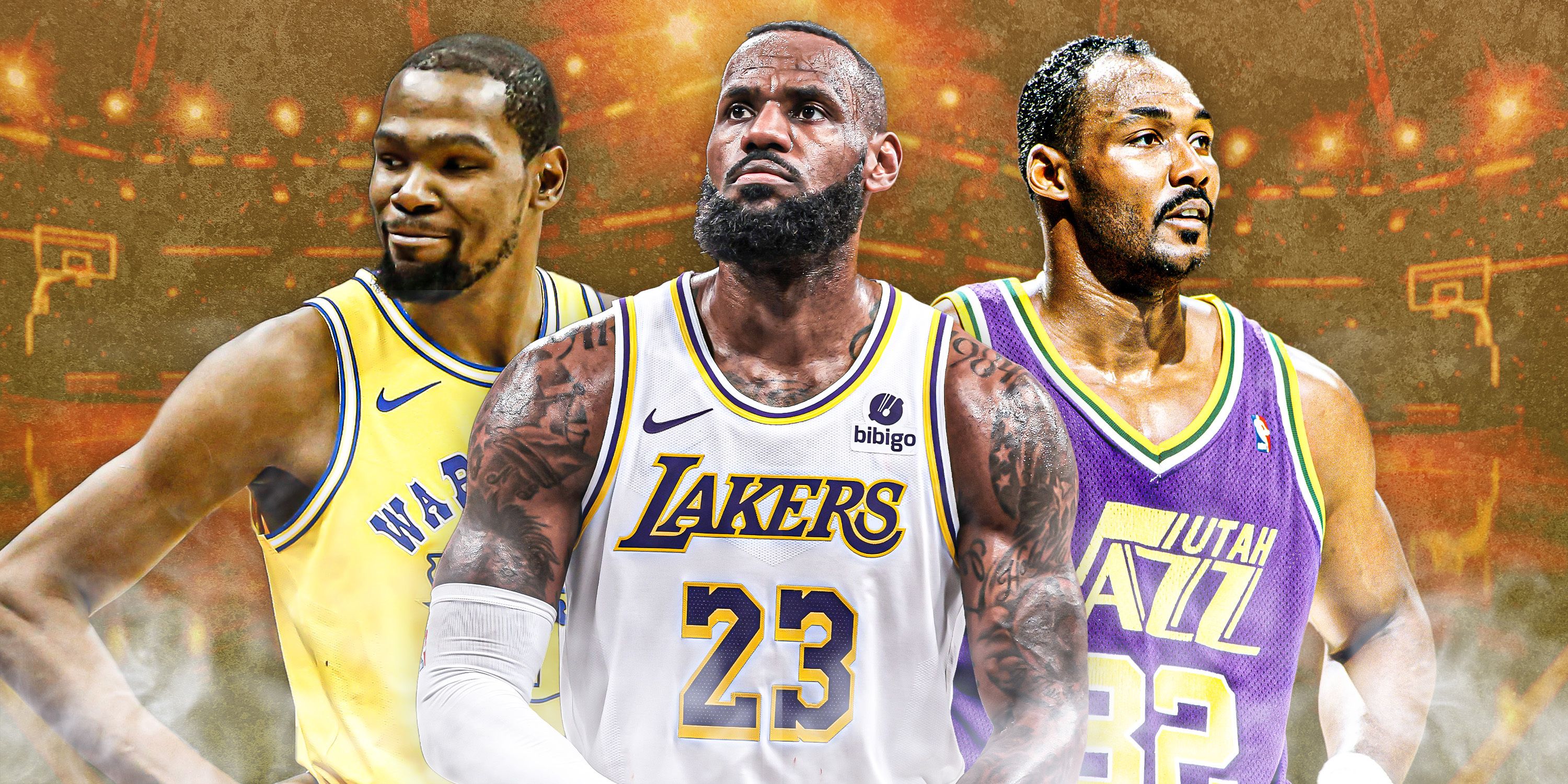
- Kevin Durant: Renowned as one of the purest, most versatile jump shooters in basketball history, Durant's combination of elite height, a high release point, and three-level scoring capability has allowed him to climb deeply into the all-time top ten despite missing significant time due to injuries earlier in his career.
- The Next Generation: Younger generational talents enter the league with higher rookie scoring averages than past eras, aided by modern training, early specialization, and an officiating emphasis on offensive freedom. However, reaching the 35,000-point threshold remains exceptionally rare due to the sheer physical toll of modern defensive schemes and the implementation of strategic resting protocols.
Operational Realities of Modern Scoring: Load Management and Games Played Thresholds: The implementation of regular-season participation thresholds for major end-of-season awards and statistical leaderboards has stabilized how franchises manage player minutes. While this protects long-term health, it fundamentally alters the historical pacing of career milestone accumulation compared to the unbroken ironman stretches seen in past decades.
Comparative Advantages: Volume Scorers vs. Efficiency Specialists
Evaluating historical scorers often sparks debate between traditional volume scorers and high-efficiency modern operators.
Volume Scorers
- Pros: Carry the entire offensive burden of a franchise; capable of creating their own shot against double-teams and set playoff defenses; consistently generate high free-throw attempt rates.
- Cons: Can experience shooting slumps during high-usage stretches; may occasionally compromise offensive ball movement if forced to take low-percentage bail-out shots.
Efficiency Specialists
- Pros: Maximize team offensive rating by avoiding wasted possessions; punish defenses instantly when double-teamed through elite passing out of traps; sustain higher career field-goal percentages.
- Cons: Often require specialized playmaking systems or elite point guards to unlock optimal scoring positions; may lack the isolation bailout gravity required in late-clock playoff possessions.
Frequently Asked Questions About NBA Scoring History
Who holds the record for the most total points scored in NBA history?
LeBron James holds the all-time regular-season scoring record, surpassing Kareem Abdul-Jabbar's long-standing mark during the 2022-2023 season and continuing to extend his lead through 2026. His unprecedented combination of elite scoring output and sustained longevity across more than two decades set a new standard for professional basketball endurance.
What is the difference between regular-season and combined all-time scoring?
Regular-season scoring records traditionally exclude playoff games, which are tracked in a separate historical category. While some players accumulate massive overall scoring numbers when factoring in postseason runs, official NBA historical scoring lists and milestone announcements are primarily based on regular-season accumulation.
Has any player averaged over 30 points per game for an entire career?
Michael Jordan holds the highest career regular-season scoring average in NBA history, hovering just above 30 points per game across his illustrious career. Wilt Chamberlain also maintained an extraordinary career scoring average, driven by anomalous peak seasons where he scored over 50 points per game.
How does the three-point line impact modern scoring lists compared to past eras?
The exponential increase in three-point attempt volume and efficiency gives modern perimeter scorers a distinct mathematical advantage in generating high point totals rapidly. Players who master deep shooting extend their effective scoring range well beyond the arc, creating floor spacing that alters defensive assignments and opens driving lanes.
What is the likelihood of a modern player breaking the 40,000-point barrier again soon?
Breaking or building significantly upon the 40,000-point milestone requires exceptional rookie-season readiness, elite durability, and playing at an All-NBA level for roughly 18 to 20 years. While offensive schemes favor high production, the physical demands and modern games-played management make this feat extraordinarily difficult to replicate.
Conclusion and Strategic Tracking
The historical landscape of NBA scoring stands as a testament to athletic evolution, medical advancement, and relentless competitive drive. Tracking these milestones offers insight not only into individual brilliance, but also into how basketball strategy transforms from decade to decade. Whether analyzing the timeless baseline efficiency of Kareem Abdul-Jabbar or witnessing LeBron James redefine the boundaries of athletic longevity in 2026, the pursuit of scoring greatness remains an enduring focal point of professional sports culture. Fans, analysts, and franchise architects will continue watching closely as every basket shifts the boundaries of what is possible on a basketball court.