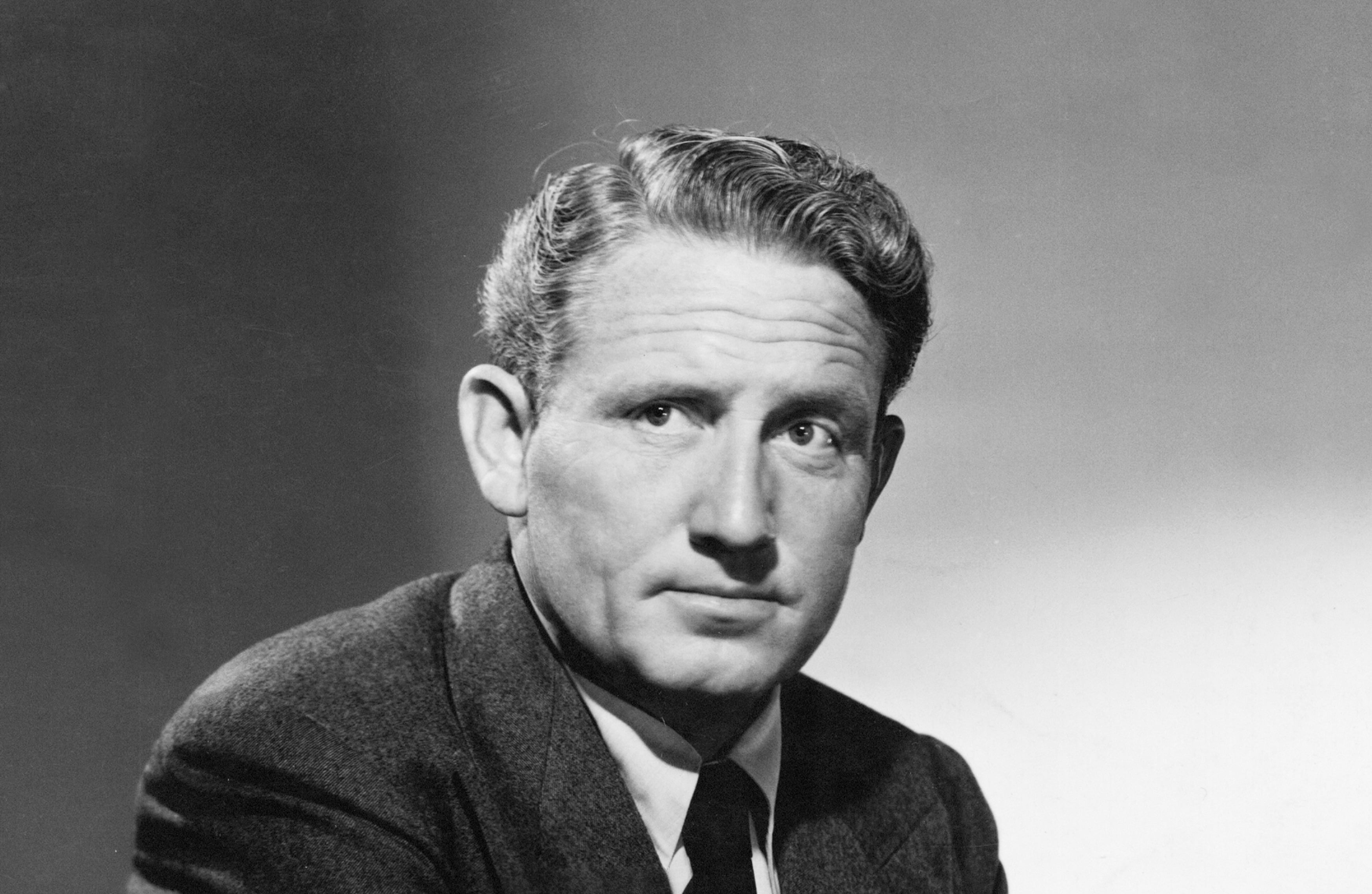
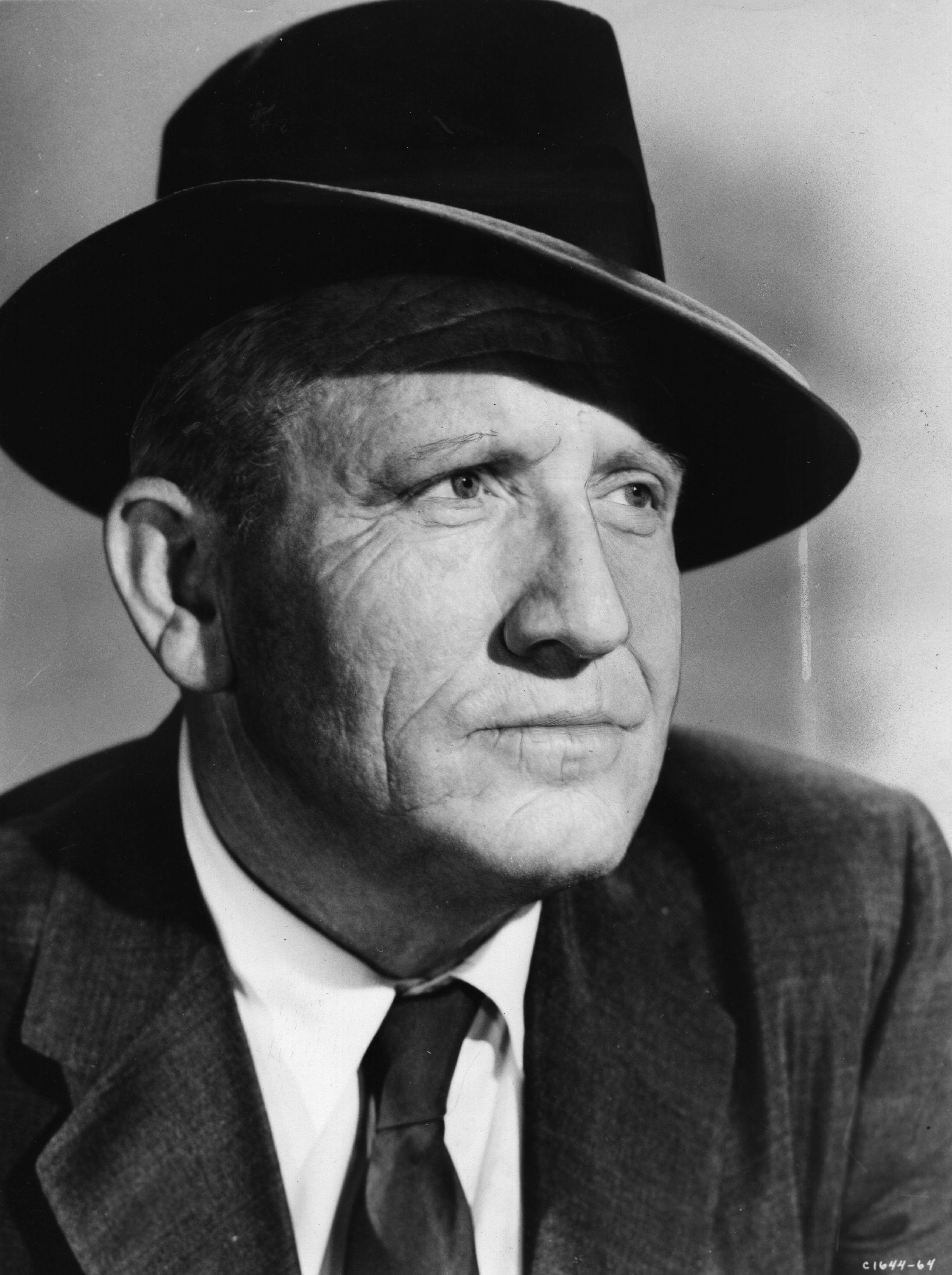
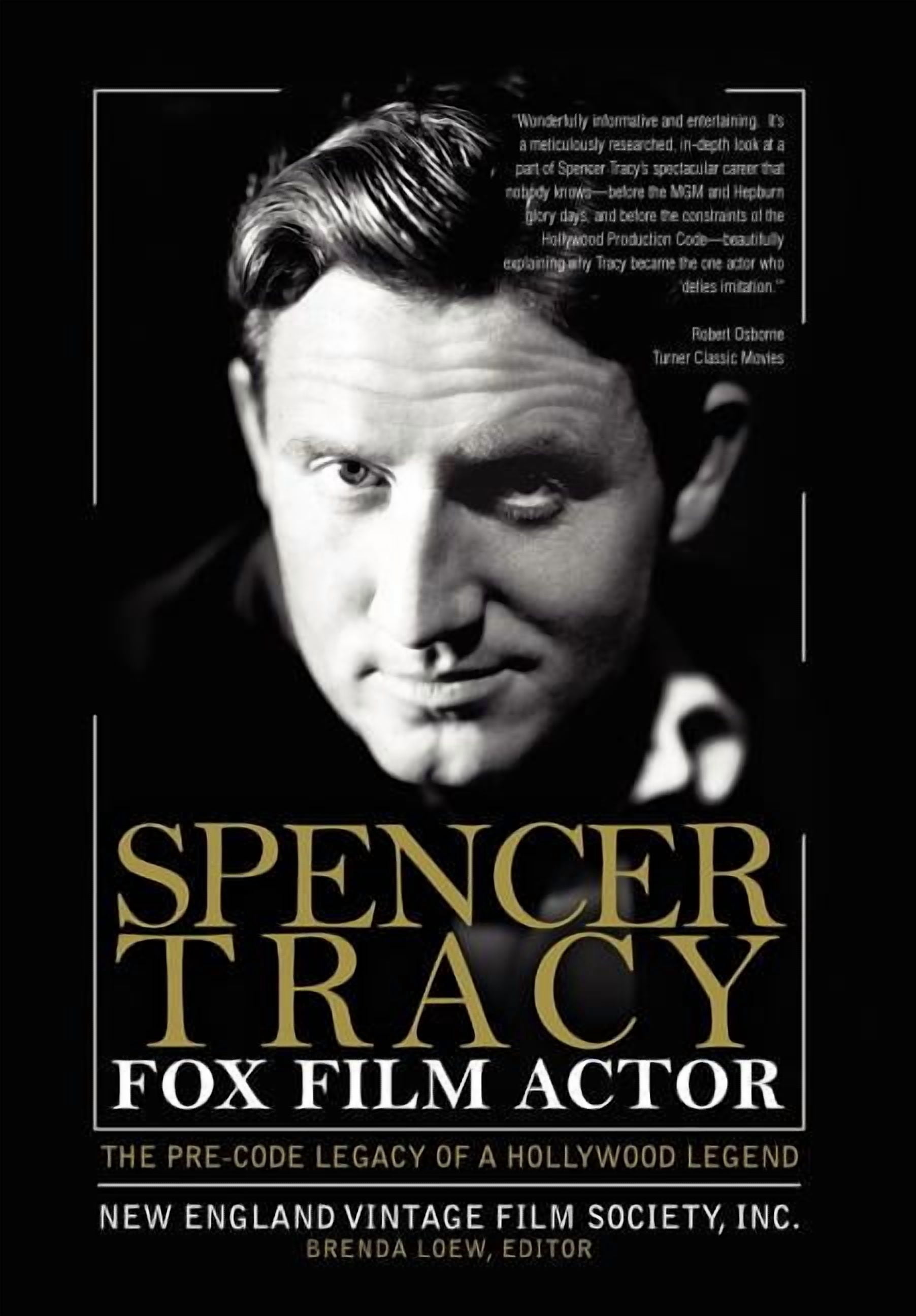
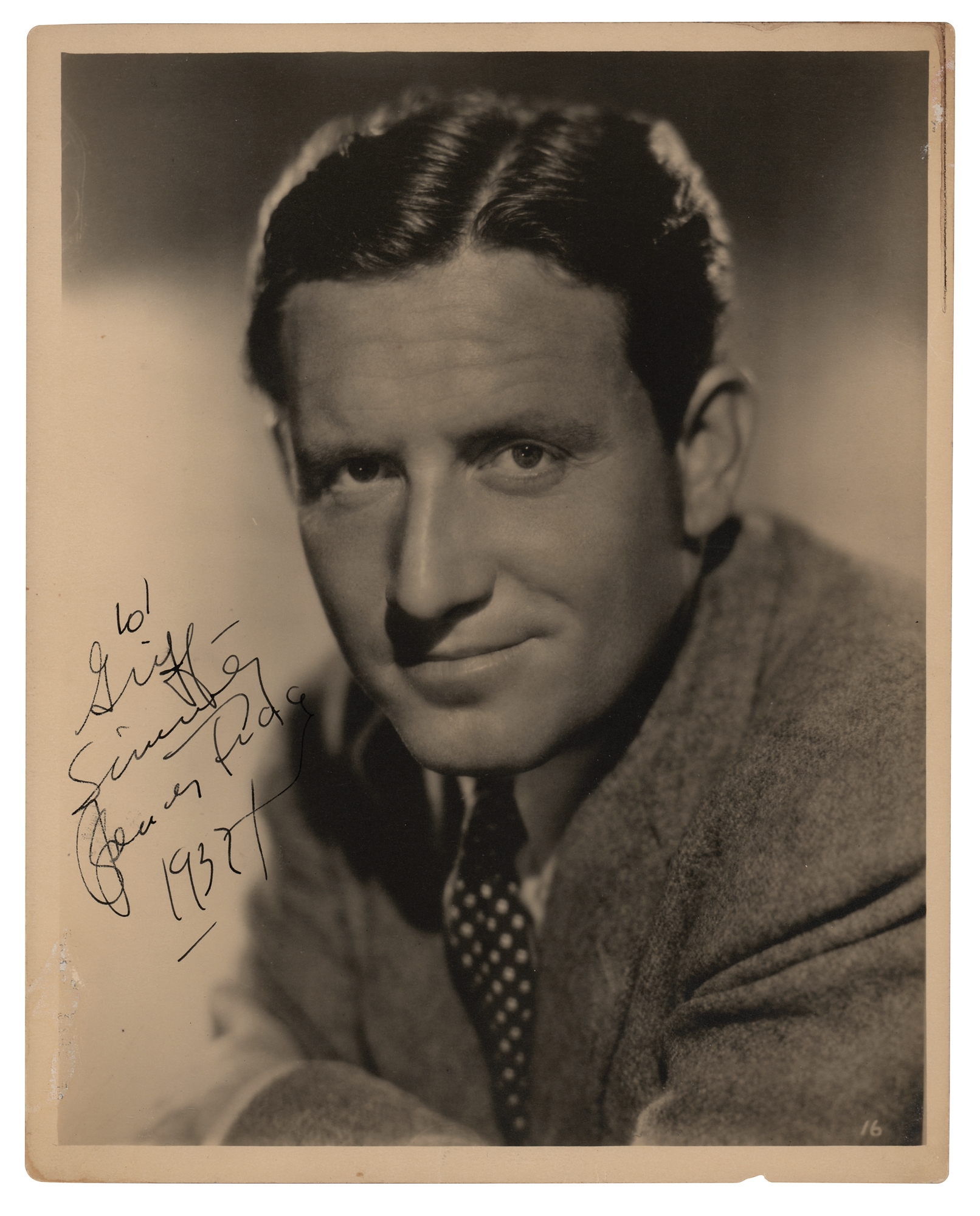
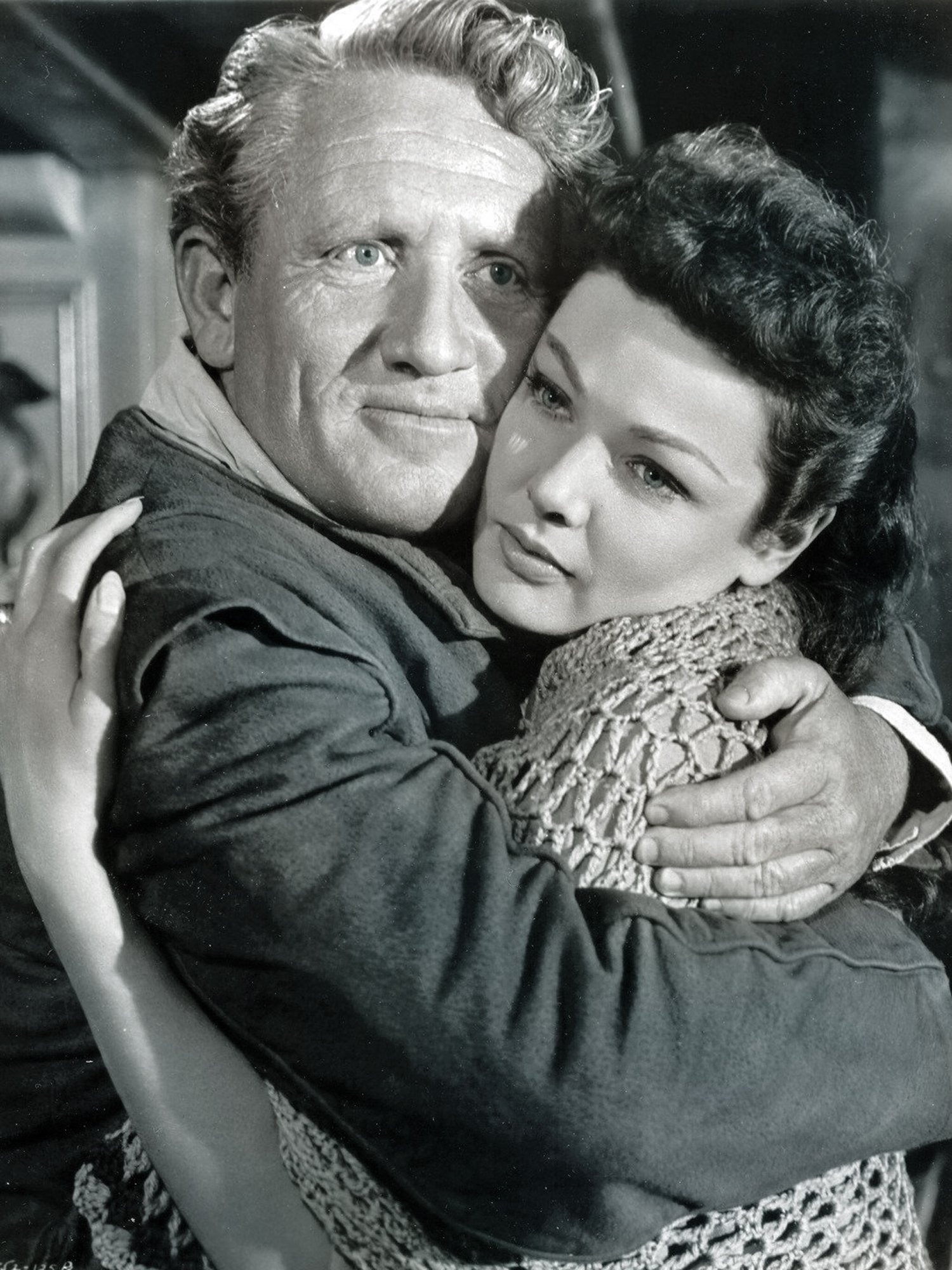
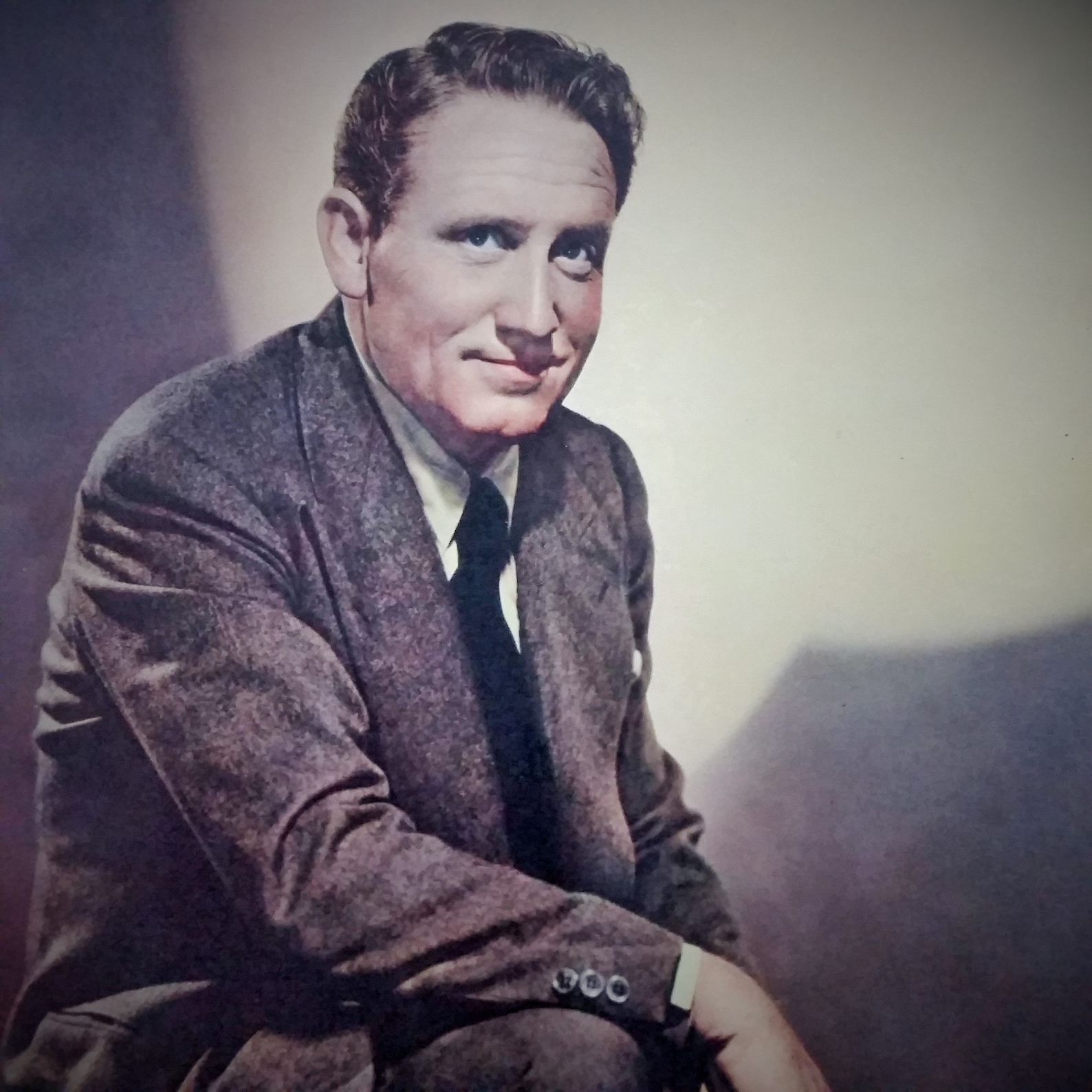
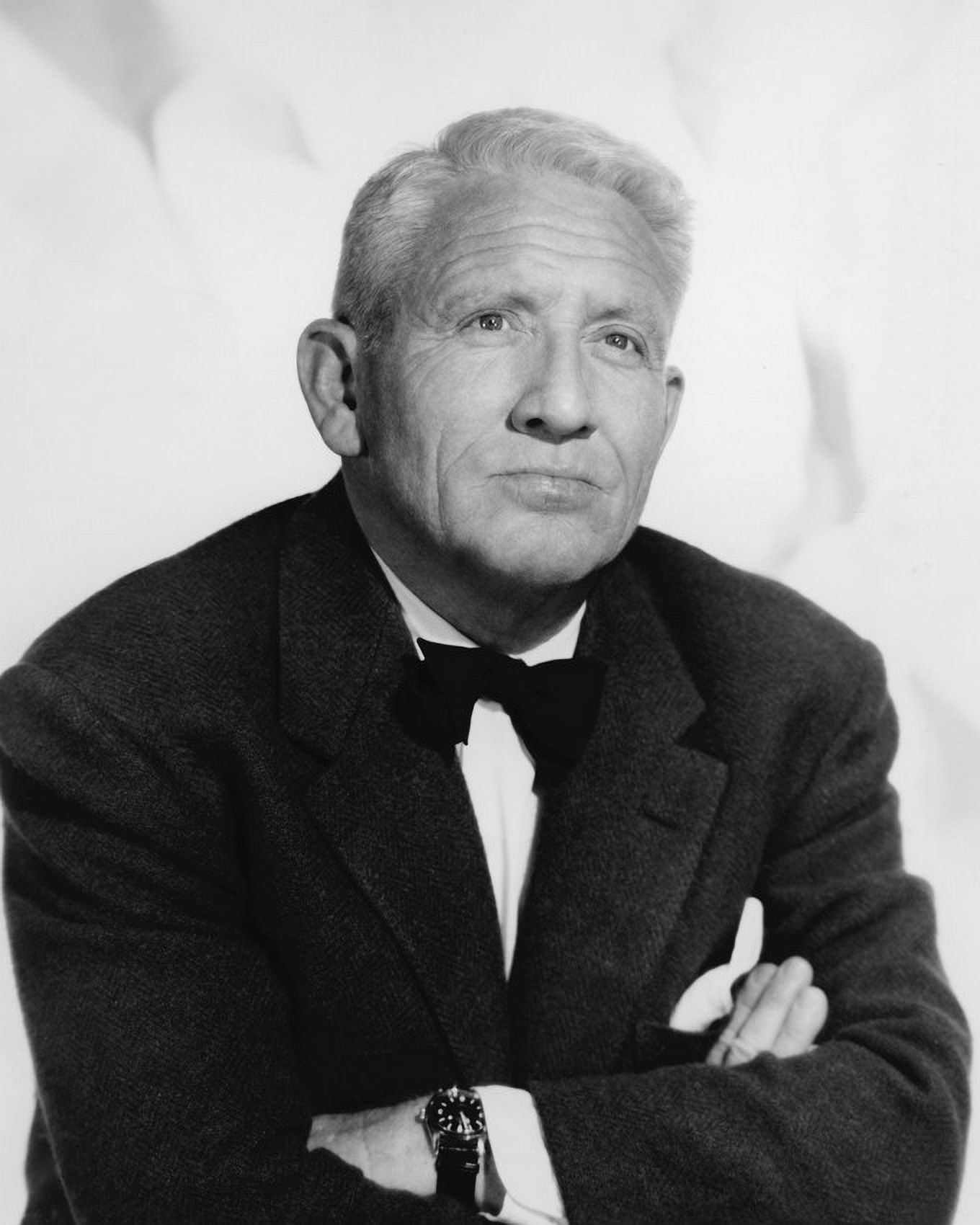
Spencer Tracy (1900–1967) was an iconic American actor whose understated, deeply naturalistic style redefined screen acting during Hollywood's Golden Age. Nominated for nine Academy Awards for Best Actor—winning back-to-back for Captains Courageous (1937) and Boys Town (1938)—he left a lasting legacy through his acclaim, nine-film partnership with Katharine Hepburn, and definitive cinematic performances.
Early Life and the Transition from Stage to Screen
Born on April 5, 1900, in Milwaukee, Wisconsin, Spencer Bonaventure Tracy developed an early interest in drama while attending Ripon College. After serving briefly in the United States Navy during World War I, Tracy pursued formal theatrical training at the American Academy of Dramatic Arts (AADA) in New York City. Alongside fellow aspiring actor Pat O'Brien, Tracy honed his craft on the stock theater circuit, spending years performing in regional plays across the Northeast and Midwest.
Tracy’s major theatrical breakthrough arrived in 1930 when he starred as convict Killer Mears in the Broadway production of The Last Mile. His commanding yet realistic performance caught the attention of film director John Ford, who cast Tracy in his feature film debut, Up the River (1930), produced by Fox Film Corporation. The film notably featured future star Humphrey Bogart in an early supporting role.
Following his debut, Tracy signed a five-year contract with Fox. During this period, the studio struggled to leverage his unique talents, often casting him in standard gangster roles, working-class melodramas, and light comedies. Despite appearing in over 20 films for Fox—including notable titles like Me and My Gal (1932) and Preston Sturges's non-linear narrative drama The Power and the Glory (1933)—Tracy felt artistically restricted. The structural rigidity of Fox's studio assignments prompted his transition to Metro-Goldwyn-Mayer (MGM) in 1935, a move that transformed his career trajectory.
The Metro-Goldwyn-Mayer Years and Academy Award Dominance
At Metro-Goldwyn-Mayer, studio executive Irving Thalberg and studio head Louis B. Mayer recognized that Tracy possessed a rare screen authenticity that set him apart from traditional leading men of the era. Rather than relying on glamorous aesthetics or dramatic theatricality, Tracy anchored scenes with an unvarnished realism.
His tenure at MGM produced immediate critical and commercial success. In 1936, Tracy earned his first Academy Award nomination for Best Actor for his portrayal of Father Tim Mullen in San Francisco, starring alongside Clark Gable and Jeanette MacDonald.
Oscars Recognition Summary:
- 1936: Nomination for "San Francisco"
- 1937: WINNER - "Captains Courageous" (Manuel Fidelio)
- 1938: WINNER - "Boys Town" (Father Edward J. Flanagan)
The late 1930s marked a historic period of critical success for Tracy:
- Captains Courageous (1937): Tracy portrayed Manuel Fidelio, a Portuguese-American fisherman who rescues and mentors a spoiled child (played by Freddie Bartholomew). His performance earned him his first Academy Award for Best Actor.
- Boys Town (1938): The following year, Tracy portrayed Father Edward J. Flanagan, the founder of the real-life home for underprivileged boys. Tracy’s performance won him his second consecutive Best Actor Oscar.
This achievement made Tracy the first actor in Academy Award history to win consecutive Best Actor statuettes—a record that remained unmatched for 56 years until Tom Hanks equaled it in 1994. Throughout the 1940s and 1950s, Tracy solidified his standing as an actor's actor, admired by peers such as Laurence Olivier, Marlon Brando, and Humphrey Bogart.
The Mechanics of the "Tracy Style": Naturalism and Screen Presence
To understand Spencer Tracy’s impact on American cinema requires evaluating his distinct methodology. During an era dominated by projected voice delivery and overt stage mechanics inherited from 19th-century theater, Tracy pioneered an internal, camera-focused style of acting.
Key Elements of Tracy's Acting Methodology:
- Active Listening: Treating listening as a dynamic performance element rather than waiting for lines.
- Economy of Gesture: Eliminating unnecessary hand movements, body shifts, and facial expressions.
- Vocal Realism: Speaking with conversational pitch, varying cadence, and realistic pauses.
- Emotional Subtext: Carrying complex internal motivation beneath a calm exterior.
When asked about his approach to acting, Tracy famously offered pragmatic advice: "Just know your lines and don't bump into the furniture." Behind this simplified statement lay a meticulous technical precision. Film scholars note that Tracy’s greatest asset was his capacity for active listening on screen. While co-stars delivered dialogue, Tracy reacted naturally in real time, drawing the audience's focus through non-verbal subtlety.
This economy of movement allowed Tracy to transition effortlessly across genres. Whether playing a hard-boiled police officer, a weary trial judge, or a comedic patriarch, he maintained an authentic presence that bridged early Hollywood sound pictures with modern screen realism.
The Tracy-Hepburn On-Screen and Personal Alliance
One of the most celebrated creative partnerships in cinema history began in 1942 when Spencer Tracy was paired with Katharine Hepburn in the romantic comedy Woman of the Year. Produced by MGM, the film showcased an immediate dynamic between Tracy's grounded, pragmatic persona and Hepburn's quick-witted, aristocratic energy.
Over twenty-five years, Tracy and Hepburn starred in nine feature films together, spanning romantic comedies, political dramas, and social commentaries:
- Woman of the Year (1942) – Directed by George Stevens
- Keeper of the Flame (1942) – Directed by George Cukor
- Without Love (1945) – Directed by Harold S. Bucquet
- Sea of Grass (1947) – Directed by Elia Kazan
- State of the Union (1948) – Directed by Frank Capra
- Adam's Rib (1949) – Directed by George Cukor
- Pat and Mike (1952) – Directed by George Cukor
- Desk Set (1957) – Directed by Walter Lang
- Guess Who's Coming to Dinner (1967) – Directed by Stanley Kramer
The scripts written for their collaborations—most notably by Ruth Gordon and Garson Kanin for Adam's Rib and Pat and Mike—focused on themes of gender equality, professional rivalry, and romantic compromise.
Off-screen, Tracy and Hepburn formed a deep personal bond that lasted until Tracy's death. Tracy had married actress Louise Treadwell in 1923, with whom he had two children, including a son born deaf. Out of a combination of Roman Catholic religious convictions, personal duty, and familial loyalty, Tracy remained legally married to Treadwell throughout his life, living apart from her while maintaining a quiet, private relationship with Hepburn that was widely respected and protected by the Hollywood community.
Key Milestones: A Comparative Filmography Matrix
The following table outlines key film achievements across Spencer Tracy's four-decade career, detailing the roles, studios, and historical significance of each work:
| Year | Film Title | Character / Role | Studio | Major Recognition | Key Historical Significance |
|---|---|---|---|---|---|
| 1930 | Up the River | Saint Louis | Fox Film Corp. | Feature Debut | First feature film for both Tracy and Humphrey Bogart. |
| 1933 | The Power and the Glory | Tom Garner | Fox Film Corp. | Critical Acclaim | Early use of non-linear structure that influenced later cinema. |
| 1936 | San Francisco | Father Tim Mullen | MGM | Oscar Nomination (Best Actor) | Established Tracy as a leading dramatic force at MGM. |
| 1937 | Captains Courageous | Manuel Fidelio | MGM | Oscar Winner (Best Actor) | Tracy's first Academy Award win; cemented his naturalistic style. |
| 1938 | Boys Town | Father Edward Flanagan | MGM | Oscar Winner (Best Actor) | Historic back-to-back Oscar win in the Best Actor category. |
| 1942 | Woman of the Year | Sam Craig | MGM | Major Box-Office Hit | First of nine iconic screen collaborations with Katharine Hepburn. |
| 1949 | Adam's Rib | Adam Bonner | MGM | Cultural Landmark | Archetypal battle-of-the-sexes courtroom comedy. |
| 1955 | Bad Day at Black Rock | John J. Macreedy | MGM | Cannes Best Actor Winner; Oscar Nom. | Modern Western noir highlighting post-WWII social themes. |
| 1958 | The Old Man and the Sea | The Old Man / Narrator | Warner Bros. | Oscar Nomination (Best Actor) | Major adaptation of Ernest Hemingway's Pulitzer Prize novella. |
| 1960 | Inherit the Wind | Henry Drummond | United Artists | Oscar Nomination (Best Actor) | Landmark trial film based on the 1925 Scopes Monkey Trial. |
| 1961 | Judgment at Nuremberg | Chief Judge Dan Haywood | United Artists | Oscar Nomination (Best Actor) | Critical examination of judicial responsibility in post-WWII Germany. |
| 1967 | Guess Who's Coming to Dinner | Matt Drayton | Columbia Pictures | Posthumous Oscar Nomination | Final film appearance; addressed interracial marriage in America. |
Later Masterworks, Health Struggles, and Final Legacy
During the 1950s and 1960s, Tracy transitioned from classic studio-system star to veteran character lead, collaborating with director Stanley Kramer on several socially conscious projects.
In 1955, Tracy delivered a standout late-career performance in Bad Day at Black Rock, playing a one-armed World War II veteran investigating a cover-up in a isolated desert town. For this role, he was awarded Best Actor at the Cannes Film Festival. He followed this with commanding roles in Kramer's courtroom dramas, including Inherit the Wind (1960)—a fictionalized retelling of the Scopes Monkey Trial where Tracy played defense attorney Henry Drummond opposite Fredric March—and Judgment at Nuremberg (1961), portraying a magistrate evaluating Nazi war crimes.
Late-Career Milestone Directorial Collaborations (Stanley Kramer):
- Inherit the Wind (1960) - Defense of scientific thought and free speech.
- Judgment at Nuremberg (1961) - Exploration of legal morality and international accountability.
- It's a Mad, Mad, Mad, Mad World (1963) - Ensemble comedy featuring Tracy as Captain Culpeper.
- Guess Who's Coming to Dinner (1967) - Timely examination of racial integration and family dynamics.
By the early 1960s, years of heavy drinking, smoking, and chronic health issues—including heart disease, diabetes, and respiratory failure—severely impaired Tracy’s ability to work. Studios found it difficult to insure him for feature productions. Stanley Kramer and Katharine Hepburn famously deferred their own salaries as insurance collateral to secure Tracy's casting in Guess Who's Coming to Dinner (1967).
Filming completed in May 1967. Just seventeen days after wrapping his final scene—a moving seven-minute monologue on the enduring nature of love—Spencer Tracy died of a heart attack on June 10, 1967, at the age of 67. He received a posthumous Academy Award nomination for Best Actor, his ninth overall.
Frequently Asked Questions About Spencer Tracy
How many Academy Awards did Spencer Tracy win?
Spencer Tracy won two Academy Awards for Best Actor during his career. He won his first Oscar for playing Manuel Fidelio in Captains Courageous (1937) and his second the following year for playing Father Edward J. Flanagan in Boys Town (1938). He received nine total Best Actor nominations throughout his lifetime.
What made Spencer Tracy's acting style unique for his era?
Unlike many early sound-era actors who retained theatrical habits like exaggerated gestures and vocal projection, Tracy pioneered a naturalistic, camera-focused approach. His technique relied on restraint, realistic vocal delivery, economy of movement, and active listening, making his performances feel authentic and modern.
Which films featured Spencer Tracy and Katharine Hepburn together?
Tracy and Hepburn co-starred in nine feature films: Woman of the Year (1942), Keeper of the Flame (1942), Without Love (1945), Sea of Grass (1947), State of the Union (1948), Adam's Rib (1949), Pat and Mike (1952), Desk Set (1957), and Guess Who's Coming to Dinner (1967).
Did Spencer Tracy ever return to the stage after becoming a film star?
Tracy made a brief return to the stage in 1945 to star in Robert E. Sherwood's Broadway play The Rugged Path. Despite solid box-office sales driven by his screen popularity, Tracy found the repetition of live theater exhausting and returned permanently to film work.
Why did Spencer Tracy never divorce his wife Louise Treadwell?
Tracy remained legally married to Louise Treadwell from 1923 until his death in 1967. His Roman Catholic faith, personal values, and a lifelong commitment to his family—particularly supporting the education and care of their deaf son, John—led him to maintain the marriage privately, even during his long relationship with Katharine Hepburn.
Recommended Viewing Strategy for Studying Spencer Tracy's Work
For film historians, students of acting, and classic cinema enthusiasts seeking a structured exploration of Spencer Tracy's legacy, the following viewing progression offers a comprehensive overview of his artistic evolution:
- Phase 1: The Formative MGM Years (1936–1938)
- Watch San Francisco (1936) followed by Captains Courageous (1937) and Boys Town (1938) to analyze how Tracy established his naturalistic style within early studio-system productions.
- Phase 2: The Hepburn Collaborations and Romantic Comedies (1942–1952)
- Pair Woman of the Year (1942) with Adam's Rib (1949) to observe the natural rapport, timing, and gender-equality themes that defined the Tracy-Hepburn dynamic.
- Phase 3: Genre Expansion and Modern Western Noir (1955)
- Study Bad Day at Black Rock (1955) to evaluate Tracy’s economy of movement in widescreen CinemaScope, demonstrating how minimal dialogue can generate suspense.
- Phase 4: Late-Career Social Dramas (1960–1967)
- Conclude with Inherit the Wind (1960), Judgment at Nuremberg (1961), and Guess Who's Coming to Dinner (1967) to examine how Tracy delivered heavy, monologue-driven courtroom and dramatic roles near the end of his life.