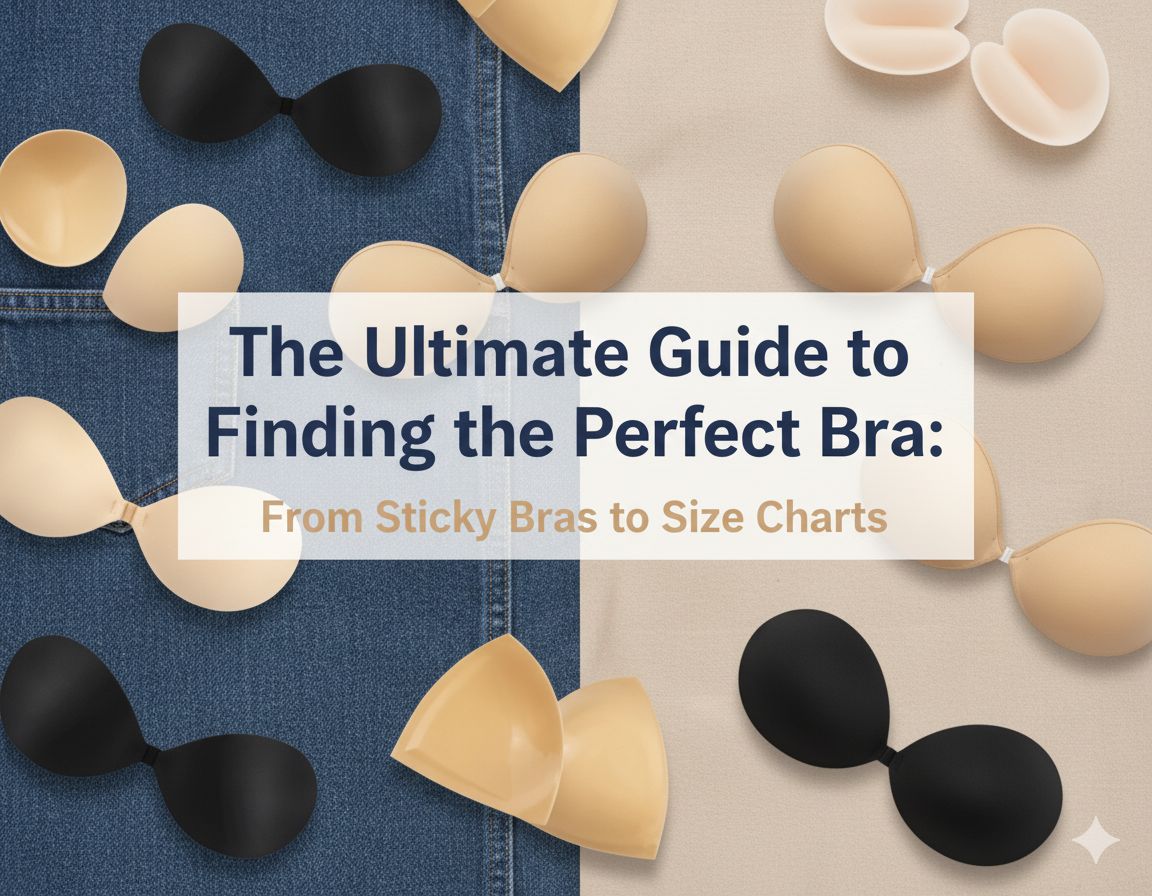
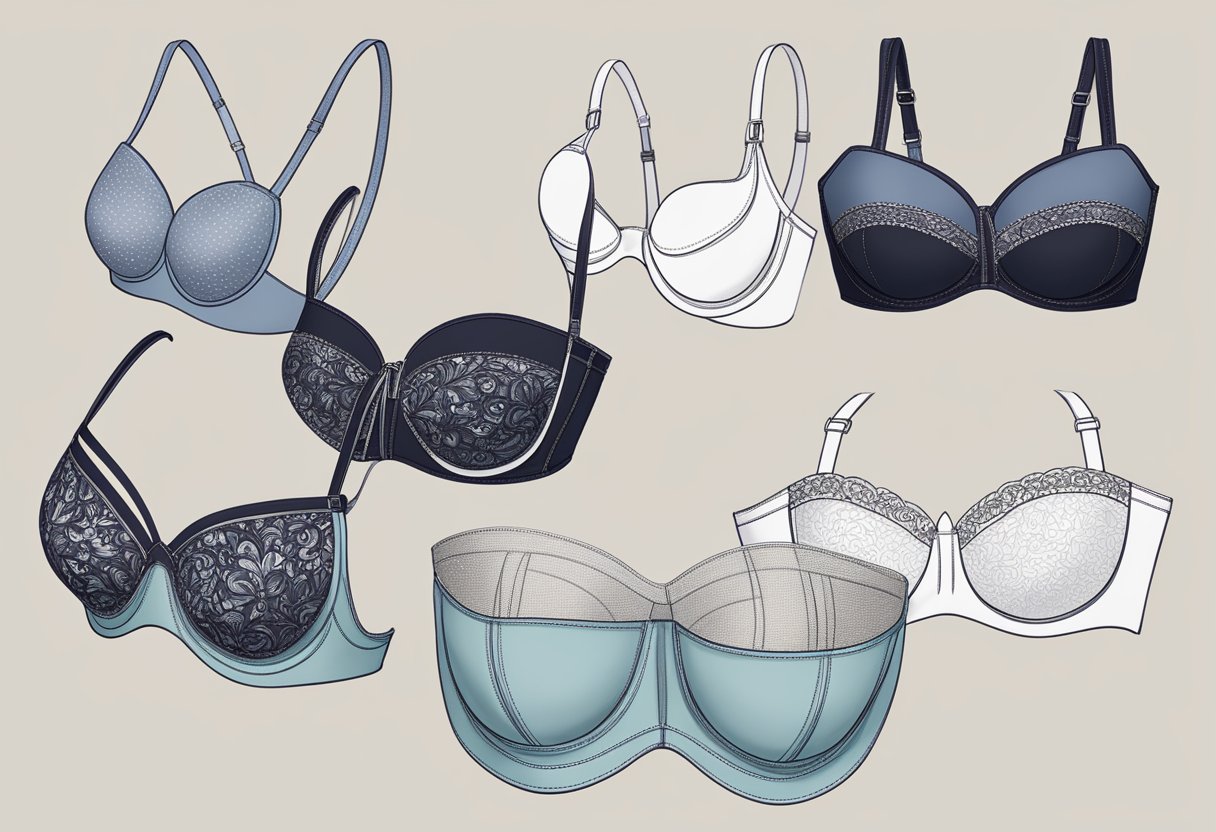
To find a reliable strapless bra, you must prioritize band fit over cup size, as the band provides 90% of the support. Look for technical features like silicone "gripper" strips, reinforced side boning, and a wide power-mesh wing. Ensuring the underwire sits flush against your ribcage is essential for stability.
Understanding the Mechanics of Strapless Support
The fundamental challenge of a strapless bra is gravity. In a standard bra, the straps assist in keeping the cups upright and help distribute weight across the shoulders. Without them, the entire structural burden shifts to the circumference of your ribcage. In 2026, garment engineering has advanced, but the physics remains the same: the band must be the anchor.
A common mistake is assuming that if a bra stays up, it fits. However, if the band is too loose, the wearer often compensates by over-tightening the cups or choosing a cup size that is too small to "pinch" the breast tissue into place. This leads to discomfort and a poor silhouette. A reliable strapless bra uses a combination of high-modulus elastic (power mesh) and architectural boning. The "wing"—the part of the bra that wraps around your back—should be wider than that of a standard bra. This wider surface area distributes pressure more evenly, preventing the bra from digging in while ensuring it does not slide down during movement.
Furthermore, the "gore"—the center piece between the cups—plays a vital role. In a well-fitted strapless bra, the gore should "tack" or sit flat against your sternum. If it floats, the band is likely too large or the cups are too small, compromising the leverage needed to hold the weight of the bust.
Essential Features of High-Performance Strapless Bras
When evaluating options in 2026, look beyond the aesthetic and focus on the internal construction. Modern textile technology has introduced smarter materials, but several "old school" features remain non-negotiable for a reliable fit.
Silicone Gripper Technology
Most quality strapless bras feature silicone or latex strips along the top and bottom edges of the band and the top of the cups. This creates friction against the skin, acting as a secondary security measure. However, the presence of silicone is not a substitute for a firm band. In 2026, many brands have moved toward "micro-dot" silicone patterns, which are more breathable and less likely to cause skin irritation than the thick, continuous bands found in older designs.
Side Boning and Reinforced Wings
Boning refers to the vertical stays inserted into the side seams of the bra. These prevent the fabric from bunching or rolling down. In larger cup sizes, look for double boning or reinforced panels. These elements maintain the vertical integrity of the bra, ensuring the band stays wide and flat against the skin even when you are sitting or twisting.
Multi-Way Functionality
A reliable strapless bra often comes with detachable straps. While the goal is to wear it strapless, the presence of multiple hook-and-eye attachment points inside the cups indicates a versatile design. These points should be reinforced; if the fabric around the strap hooks looks flimsy, the bra may lose its shape quickly after a few wears.
Accuracy in Measurement: The Foundation of Fit
You cannot find a reliable strapless bra using outdated measurement techniques like the "plus four" method (adding four inches to your underbust measurement). This method often results in a band that is too large and cups that are too small, which is the primary reason strapless bras fail.
To get an accurate 2026 sizing, you should take three underbust measurements (tight, snug, and loose) and three bust measurements (standing, leaning, and lying down). The difference between the average bust measurement and the snug underbust measurement determines the cup size. Because a strapless bra must be very secure, many professional fitters recommend choosing a band size that feels "firm" rather than just "comfortable."
If you find yourself between band sizes—for example, measuring a 33-inch underbust—it is usually better to size down to a 32 and use a band extender for the first few wears until the elastic relaxes. A band that is slightly too tight is manageable; a band that is too loose will inevitably result in the bra sliding toward your waist by the end of the evening.
Matching Bra Construction to Your Breast Shape
The volume of your breasts is only half the battle; the shape (or "topology") determines which strapless bra will actually stay put. In 2026, manufacturers categorize bras more effectively by shape, and understanding your own is key to a reliable purchase.
- Shallow vs. Projected: If your breast tissue is spread over a wide area and does not stick out much (shallow), a balconette or "demi" strapless bra with a straight-across neckline is often best. If you have more forward-reaching tissue (projected), you will need a bra with deeper cups and more immediate projection at the wire to avoid the bra being pushed down by your own body.
- Full on Top vs. Full on Bottom: Those with more fullness at the bottom of the breast often struggle with gaping at the top of a strapless cup. A "sweetheart" neckline or a molded cup that curves inward at the top can solve this. Conversely, those who are full on top need a more open-top cup (like a vertical-seam balconette) to prevent the "quad-boob" effect where the edge of the cup cuts into the tissue.
- Root Width: The "root" is where the breast tissue attaches to the chest wall. If you have wide roots, you need a bra with wide underwires that extend back toward the armpit. If the wires are too narrow, they will sit on the breast tissue, which is not only painful but also causes the bra to shift and slide.
Comprehensive Comparison of Strapless Bra Styles
The following table summarizes the different types of strapless support available in 2026, helping you choose the right construction for your specific needs.
| Bra Type | Best For | Key Structural Feature | Potential Limitation |
|---|---|---|---|
| Classic Molded Strapless | Everyday wear under T-shirts | Seamless foam cups for a smooth look | Can be difficult to match to very projected shapes |
| Longline Strapless | Bridal and formal wear | Band extends down to the waist/hips | Can be restrictive or warm due to extra fabric |
| Wired Bandeau | Small to medium busts | Minimalist, straight-across design | Often lacks the lift required for larger cup sizes |
| Multi-Way/Convertible | Versatility | Reinforced loops for various strap configurations | Usually has less silicone than dedicated strapless models |
| Plunge Strapless | Low-cut necklines | Low center gore and angled cups | Less "center" support; may feel less secure for very full busts |
| High-Apex Strapless | Large busts (DDD+) | Higher side wings and deeper cups | May show under low-armhole or sleeveless tops |
Common Troubleshooting for Strapless Fit Issues
Even with the right size, you may encounter performance issues. Solving these requires looking at the interaction between the bra and your skin.
The Bra Keeps Sliding Down
This is almost always a band size issue. If the band is firm enough, it should stay parallel to the floor. Check the back of your bra in a mirror: if the back is pulling upward toward your shoulder blades, the band is too large. Gravity is pulling the front down, and the back is rising to compensate. Size down in the band and up in the cup (e.g., move from a 36C to a 34D).
Gapping at the Top of the Cup
If there is a space between your skin and the top of the bra, it may not mean the cup is too big. It often means the cup is the wrong shape. If the cup is too shallow for you, your breasts will push the bra away from your body, causing it to tilt and gap at the top. Alternatively, ensure you are "scooping and swooping"—manually moving all breast tissue from the sides into the cups—to ensure the cup is properly filled.
"Quad-Boobing" or Spillage
If the cup is cutting into your tissue, creating a bulge, you need to go up at least one cup size. Do not be tempted to stay in a smaller cup size just because you think the tightness will keep the bra up. Spillage actually creates an unstable center of gravity, making the bra more likely to flip or slide.
Care and Longevity: Keeping the Support Intact
A strapless bra is an investment in engineering. Because it relies heavily on the elasticity of the power mesh and the integrity of the silicone, proper care is mandatory. In 2026, synthetic fibers are more durable, but heat remains their primary enemy.
- Avoid the Dryer: Never put a strapless bra in a tumble dryer. Heat breaks down the elastane fibers and can melt or warp the silicone grippers. Always air dry your bras flat.
- Rotation is Key: Do not wear the same strapless bra two days in a row. The elastic needs at least 24 hours to "snap back" to its original shape. Rotating between two bras will more than double the lifespan of each.
- Hand Washing: If possible, hand wash with a gentle detergent. If using a machine, use a mesh lingerie bag and a delicate cycle with cold water. Avoid fabric softeners, as they coat the fibers and reduce the "grip" of the silicone.
Frequently Asked Questions
Should I buy a size smaller than my regular bra?
No, you should not arbitrarily size down. You should buy the size that matches your actual measurements. While you want a firm fit, a band that is too small will stretch out prematurely and may cause the underwires to distort, which ruins the cup shape and reduces support.
Can I wear a strapless bra if I have a very large bust?
Yes. In 2026, brands specialized in full-bust lingerie (offering sizes up to K and L cups) have perfected strapless technology. The key for larger busts is a "longline" style or a bra with a very wide band (4 or 5 hooks) and deep, multi-part seamed cups rather than molded foam.
Why does my strapless bra feel like it's digging into my ribs?
This often happens if the underwire is too narrow or if the band is too loose. If the band is loose, the bra tilts forward, forcing the bottom of the underwire into your ribcage. A firmer band keeps the wires vertical and prevents this painful digging.
How often should I replace my strapless bra?
With regular wear, a strapless bra typically lasts 6 to 12 months. Once you find you have to use the tightest set of hooks to feel secure, or if the silicone starts to peel, the bra has reached the end of its functional life and will no longer provide reliable support.
Is it normal for a strapless bra to be uncomfortable?
A strapless bra will always feel more "present" than a standard bra because the band is tighter. However, it should not be painful. If it causes bruising, significant red marks that don't disappear within 20 minutes, or inhibits breathing, the fit is incorrect.
Finalizing Your Selection: The Fit Test
Before removing the tags from a new strapless bra, perform a "stress test." Put the bra on and adjust yourself properly. Lift your arms over your head, twist from side to side, and do a gentle jump. If the bra shifts significantly or requires immediate adjustment, it is not the right one for you. A truly reliable strapless bra should allow you to move naturally without the constant urge to "hitch" it up. By prioritizing the technical construction of the band and matching the cup shape to your unique anatomy, you can find a solution that remains secure and comfortable throughout 2026 and beyond.