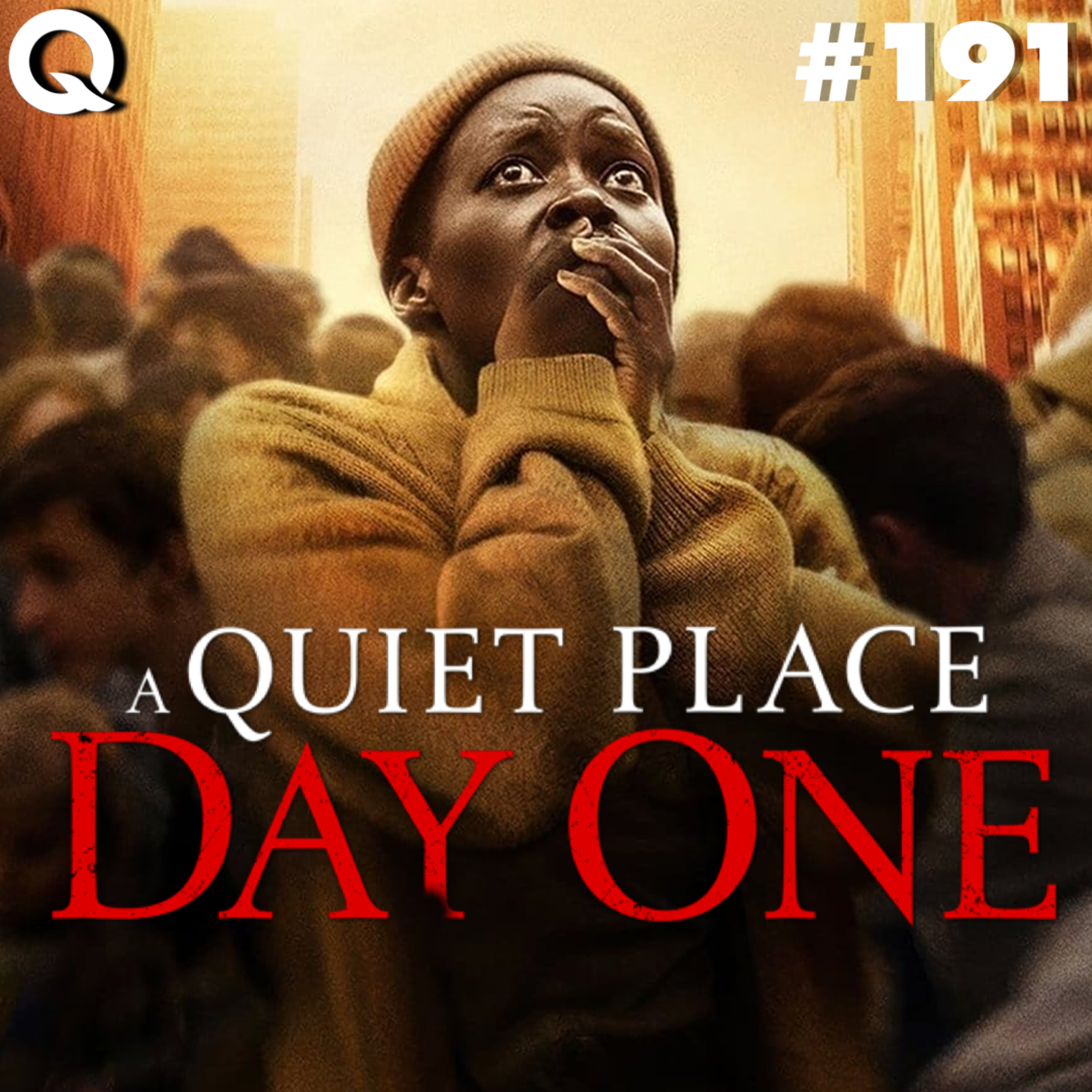
A Quiet Place: Day One reimagines apocalyptic cinema by shifting the focus from physical survival to emotional resolution and human connection. Directed by Michael Sarnoski, the film examines terminal illness, urban claustrophobia, and grief during the onset of an alien invasion, fundamentally expanding the thematic scope and cultural resonance of the franchise.
The Origins of Day One: Expanding the Quiet Place Universe
The concept of A Quiet Place: Day One originated from a desire to explore the initial collapse of civilization through a fresh thematic lens. While the original 2018 film and its 2020 sequel focused on the Abbott family in rural upstate New York, Day One transports the premise to New York City—one of the loudest metropolitan areas in the world.
Original franchise creator John Krasinski sought a filmmaker who could ground a major sci-fi spectacle in profound character intimacy. He selected Michael Sarnoski, whose directorial debut Pig (2021) demonstrated a unique ability to explore grief, memory, and dignity within unconventional narratives. Sarnoski developed the story alongside Krasinski, writing a screenplay that prioritized quiet character beats over standard monster-movie tropes.
Setting the film on "Day Zero" and "Day One" of the invasion allowed the creators to contrast the chaotic acoustic footprint of Manhattan—where ambient sound averages 90 decibels—with the sudden requirement for absolute silence. The arrival of blind extraterrestrial predators with hyper-sensitive hearing transforms the city's concrete canyons into a acoustic trap. By introducing new characters unconnected to the Abbott storyline, Sarnoski detached the franchise from familial protection dynamics, framing the apocalypse instead around strangers seeking connection amidst existential dread.
The Core Meaning of Day One: Terminality, Agency, and Connection
At its heart, A Quiet Place: Day One is not a film about surviving an apocalypse; it is an exploration of living with mortality. The narrative centers on Samira (Lupita Nyong'o), a terminally ill hospice patient living with late-stage cancer. This narrative choice shifts the conventional stakes of survival horror. For Samira, the alien invasion does not interrupt a long future; it merely accelerates an already inevitable ending.
THEMATIC DUALITY IN DAY ONE
| Physical Environment | Internal Human Experience |
|---|---|
| • Sudden urban violence | • Acceptance of mortality |
| • Enforced absolute silence | • Quiet reclamation of agency |
| • Destruction of societal infrastructure | • Unexpected empathy among strangers |
Samira’s Journey: Finding Dignity in Palliative Care
Unlike typical horror protagonists who fight to reach a safe zone, Samira’s primary objective during the collapse of Manhattan is to travel to Harlem to get a slice of pizza from Patsy’s, a pizzeria tied to memories of her late father. This quest symbolizes a reclamation of personal agency. When life is reduced to arbitrary violence and terminal decay, small rituals of memory and preference become acts of profound resistance.
Samira’s journey illustrates that dignity in dying comes from choosing how to spend one's remaining time, rather than clinging frantically to physical existence. Her final moments demonstrate peace rather than defeat, altering the moral framework of the post-apocalypse.
Silence as Isolation vs. Silence as Sanctuary
In the broader A Quiet Place universe, silence is primarily a physical defense mechanism enforced by terror. Day One deepens this concept by contrasting acoustic silence with emotional isolation. Samira begins the film isolated by her illness and bitterness, retreat into internal quiet long before the creatures arrive.
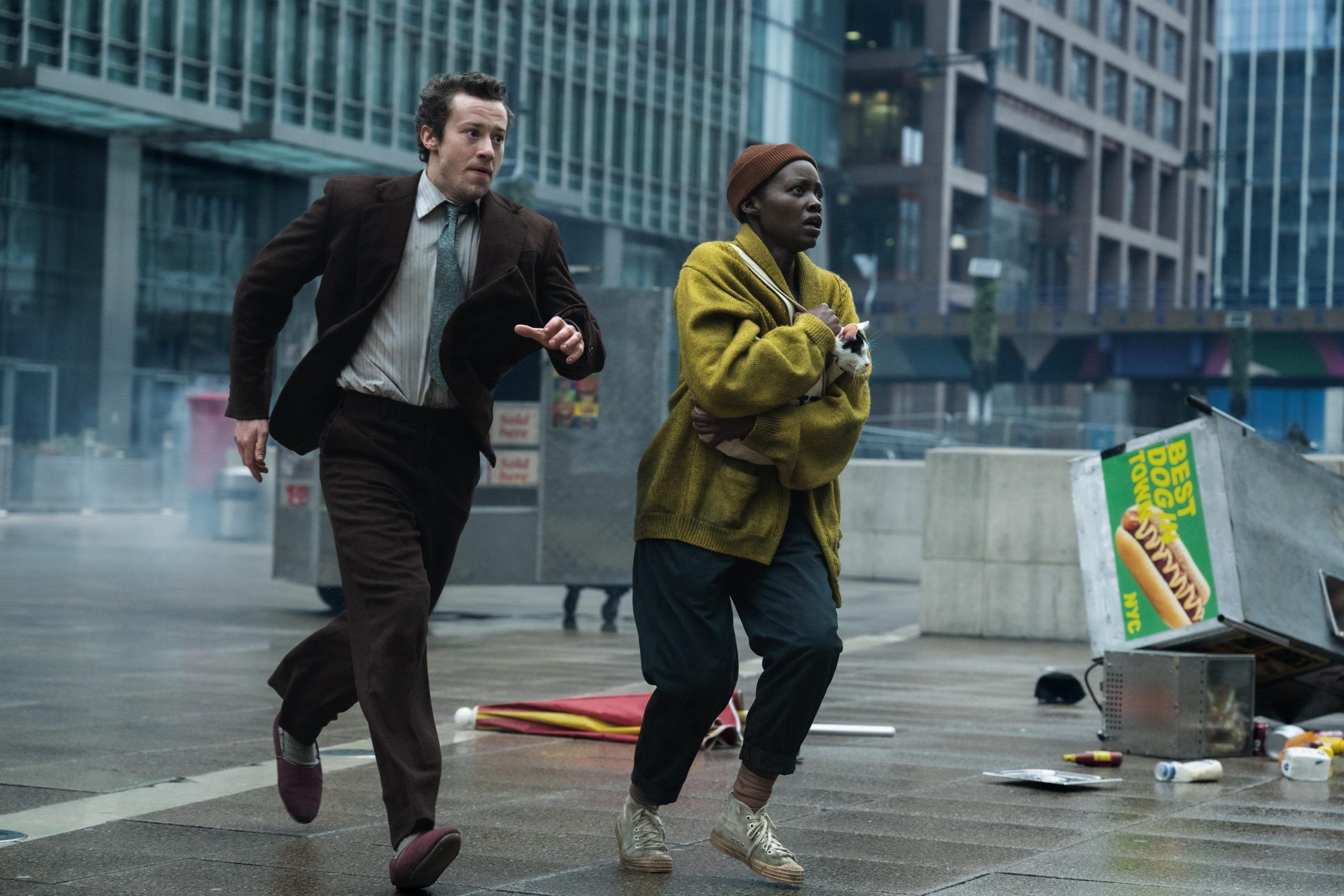
As the city falls silent under the threat of the monsters, Samira and her companion Eric (Joseph Quinn) learn to use sound and silence purposefully. Thunderstorms, pouring rain, and soundproof environments become sanctuaries where emotional expression is liberated. Silence evolves from a terrifying mandate into a shared space of unspoken understanding.
Eric and Frodo: Unlikely Bonds in Chaos
The relationship between Samira, Eric—an anxious law student stranded in the city—and Samira’s service cat, Frodo, underscores the human need for companionship during crises. Eric’s panic contrasts with Samira’s stoic resignation. Through their shared journey, Samira shifts from self-imposed detachment to actively protecting Eric, giving him the chance at survival she no longer has.
Frodo serves both as a narrative catalyst and an acoustic barometer. As a silent companion, the cat grounds the characters in present tactile reality, emphasizing that empathy does not require spoken dialogue.
Narrative Evolution Across the Franchise
A Quiet Place: Day One marks a deliberate departure in tone, setting, and character motivation compared to its predecessors. The table below outlines how the core narrative elements evolved across the three main film releases:
| Narrative Dimension | A Quiet Place (2018) | A Quiet Place Part II (2020) | A Quiet Place: Day One (2024) |
|---|---|---|---|
| Primary Setting | Rural farm / Upstate NY | Industrial ruins & island community | Hyper-dense urban Manhattan |
| Central Protagonists | The Abbott Family | The Abbotts & Emmett | Samira, Eric, and Frodo (the cat) |
| Core Character Motivation | Parental protection & family unit survival | Expanding safety & finding remaining survivors | Personal closure, agency, and human connection |
| Narrative Goal | Long-term physical survival | Rebuilding civilization / Resistance | Obtaining a final meaningful memory |
| Acoustic Environment | Natural wilderness, soft ground | Mixed industrial & natural acoustics | Urban concrete Echoes & ambient city noise |
| Thematic Focus | Family sacrifice & parental duty | Grief recovery & generational hope | Existential mortality & palliative grace |
This progression illustrates how the franchise expanded from an intimate thriller about parental protection into a broader canvas capable of exploring diverse human experiences under extreme acoustic constraints.
Sound Design and Artistic Craftsmanship
The artistic success of A Quiet Place: Day One relies heavily on sound design as a primary narrative engine. Sound supervisors and editors created an acoustic environment where ambient sound tells the story when dialogue is impossible.
- City Ambient Noise (90dB)
- Alien Assault / Initial Crash
- Enforced Zero-Noise Environment
- Natural Sound Sanctuaries (Rain/Thunder)
In urban Manhattan, total silence is non-existent under normal conditions. The film contrasts the initial cacophony—sirens, car alarms, shouting crowds, crashing helicopter debris—with sudden, unnatural drops in volume. Sound designers utilized extreme dynamic range:
- Sub-bass Frequencies: Used to represent the heavy, rhythmic movement of the creatures as they navigate buildings.
- Foley Artistry: Highlighted delicate sounds such as footsteps on shattered glass, wet clothing, breathing patterns, and a cat’s paws on asphalt.
- Acoustic Masking: Demonstrates real-world physics where louder ambient phenomena (such as rolling thunder or fountain water) mask human-made noise, allowing characters brief moments of vocal release.
Lupita Nyong'o and Joseph Quinn deliver performances driven largely by facial expression, posture, and micro-gestures. The absence of heavy expository dialogue forces audiences to interpret emotional states through non-verbal cues, elevating the visual storytelling standard for modern creature features.
Cultural Impact and Genre Legacy
Since its release, A Quiet Place: Day One has influenced both mainstream horror filmmaking and broader discussions around representation in cinema. By placing a terminally ill Black woman at the center of a summer blockbuster, the film subverted standard casting tropes inherent to action and horror genres.
- Cultural Impact
- Subversion of Horror Tropes (Focus on Grace over Survival)
- Character Representation (Terminally ill Black female protagonist)
- Critical & Commercial Proof of Anthology Expansion
- Redefining Post-Apocalyptic Narratives: Traditional post-apocalyptic films emphasize survivalism, resource hoarding, and militarized resistance. Day One introduced a compassionate counter-narrative, suggesting that emotional resolution and grace can be as valid a goal as physical survival.
- Thematic Integration of Chronic Illness: Media coverage and audience commentary highlighted the film's sensitive handling of chronic pain and palliative care. Rather than treating illness as a narrative burden to be miraculously cured, the film respects Samira’s physical limits while highlighting her emotional strength.
- Animal Companionship as a Narrative Anchor: The overwhelming audience engagement with Frodo the cat demonstrated the power of non-human companions in high-stress cinematic narratives. The character of Frodo inspired widespread discussion regarding working animals in film and provided an emotional anchor for viewers.
- Franchise Longevity Beyond Core Characters: Critically and commercially, Day One proved that the A Quiet Place universe could expand anthologically. By demonstrating that audiences respond to the core acoustic concept regardless of whether the Abbott family is present, the film opened pathways for future international or historical settings within the same universe.
Frequently Asked Questions
Why did Samira want a slice of pizza during an alien invasion?
Samira’s search for pizza from Patsy’s in Harlem was not about food, but about reclaiming agency and honoring her past. As a terminally ill patient facing the end of the world, obtaining the pizza represented a nostalgic connection to her childhood and her late father. It allowed her to die on her own terms rather than living in fear.
Is A Quiet Place: Day One connected to the Abbott family storyline?
Day One is set in the same continuity as the main films but follows entirely new characters in New York City. The only direct character overlap is Henri (played by Djimon Hounsou), who appears briefly in Manhattan before his later appearance as the island community leader in A Quiet Place Part II.
What happens to Eric and Frodo at the end of the film?
With Samira’s help, Eric and Frodo successfully reach an evacuation ferry off the coast of Manhattan, escaping the immediate threat of the creatures who cannot swim. Before they depart, Samira leaves Eric a note inside his pocket alongside her father's cardigan, ensuring he and Frodo survive together.
What do the creatures in A Quiet Place: Day One symbolize?
Beyond their role as sci-fi predators, the creatures symbolize inescapable, unreasoning mortality and nature's indifference. In Samira's narrative arc, they act as an external manifestation of her terminal diagnosis—an inevitable force that cannot be defeated by combat, requiring instead adaptation, courage, and ultimate acceptance.
Who directed A Quiet Place: Day One and how did their style influence it?
The film was directed by Michael Sarnoski. Known for his character-driven drama Pig, Sarnoski brought a understated, empathetic approach to the horror franchise. He prioritized silence, sensory details, and quiet human vulnerability over constant action sequences.
How to Analyze the Themes and Sound Design of Day One
To fully appreciate the artistic mechanics of A Quiet Place: Day One, viewers and film students can focus on specific structural elements during a rewatch:
- Track the Decibel Transitions: Pay attention to how the audio mix transitions from the noisy theater scene at the start of the film to the quiet after the strike. Note how atmospheric noise (rain, wind) is utilized as a sanctuary for dialogue.
- Examine Non-Verbal Performance: Watch how Lupita Nyong'o and Joseph Quinn communicate emotional shifts using eye movement, physical posture, and breathing techniques without relying on spoken exposition.
- Analyze Spatial Framing: Notice how director Michael Sarnoski frames the tall architecture of New York City. Vertical shots emphasize how the creatures utilize height and spatial geometry to trap human targets on ground level.
- Compare Franchise Motifs: Contrast Samira's ultimate goal with Lee Abbott's goals in the 2018 original. Observe how the shift from preserving life at all costs to finding meaning in limited time alters the emotional resolution of each film.