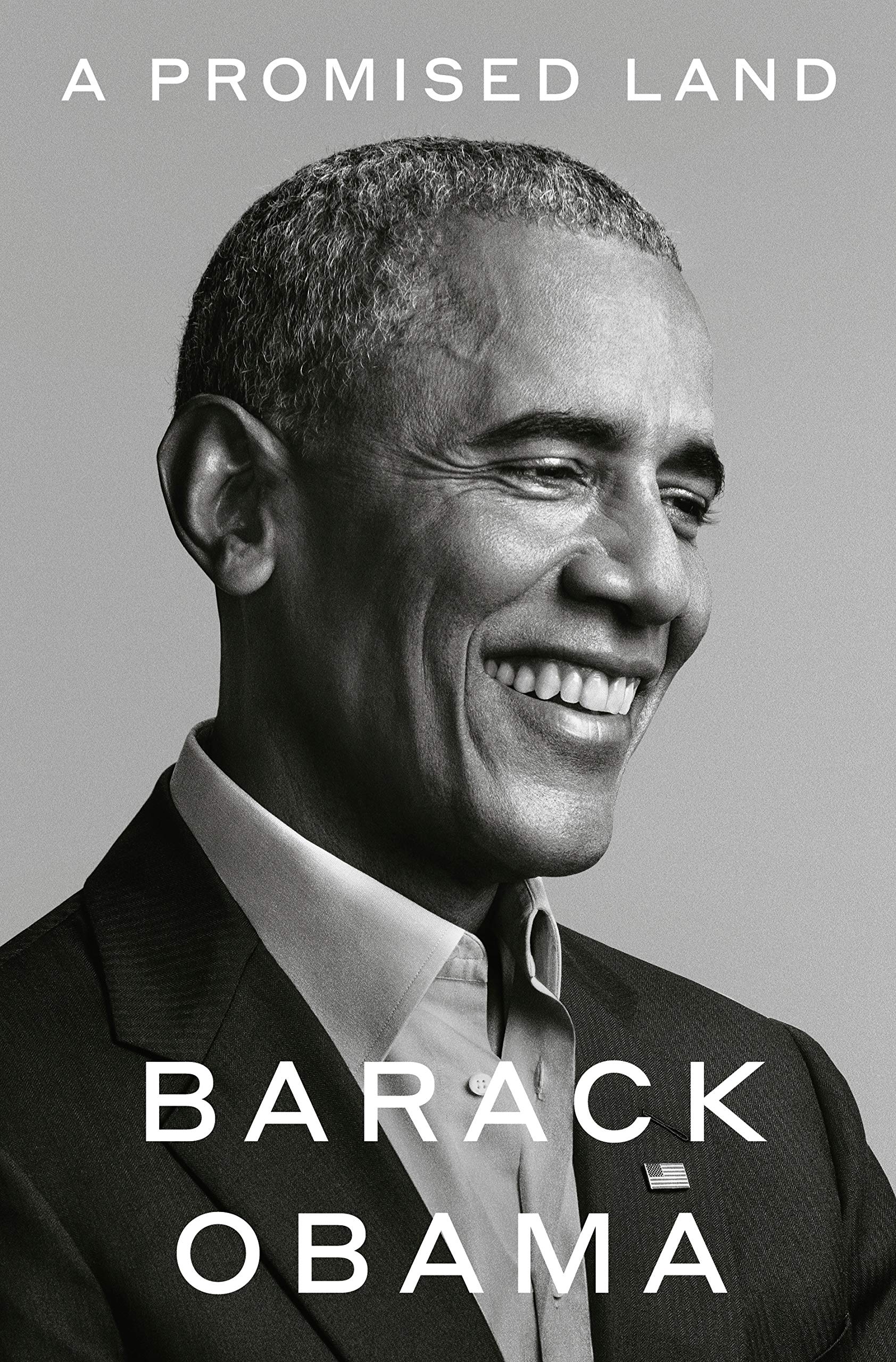
A Promised Land is the first volume of former U.S. President Barack Obama’s presidential memoirs, published by Crown in November 2020. The book details his early life, political evolution, 2008 presidential campaign, and the first two and a half years of his presidency, culminating in the May 2011 raid on Osama bin Laden.
Scope and Historical Timeline Covered in A Promised Land
A Promised Land offers a comprehensive account of Barack Obama’s journey from his youth through the major milestones of his early presidency. Rather than attempting to compress his entire eight years in office into a single volume, Obama focuses on the path that brought him to the White House and the intense, high-stakes decisions that defined his initial years in the Oval Office.
The narrative opens with reflections on his upbringing in Hawaii and Indonesia, his education at Occidental College, Columbia University, and Harvard Law School, and his early career as a community organizer in Chicago. It details his decision to enter elective politics, beginning with his tenure in the Illinois State Senate and his subsequent national emergence following his keynote address at the 2004 Democratic National Convention. The memoir extensively documents the hard-fought 2008 Democratic primary campaign against Hillary Clinton, followed by the general election victory over Republican nominee John McCain.
Early Life & Education ➔ Illinois Senate & DNC Speech (2004) ➔ 2008 Presidential Campaign ➔ Administration Setup & Financial Crisis (2009) ➔ ACA & Foreign Policy (2009–2010) ➔ Bin Laden Operation (May 2011)
The majority of the book’s 768 pages are dedicated to the period between his inauguration in January 2009 and May 2011. During this timeframe, his administration confronted a series of simultaneous global and domestic crises, providing readers with an insider perspective on modern executive leadership under extreme stress.
Major Policy Battles and Executive Decisions
The 2008–2009 Financial Crisis and Economic Recovery
Upon taking office in January 2009, the Obama administration faced the most severe economic contraction since the Great Depression. A Promised Land details the urgent deliberations surrounding the implementation of the Troubled Asset Relief Program (TARP) and the drafting of the American Recovery and Reinvestment Act (ARRA). Obama explains the complex mathematical models and economic theories presented by his advisors, including Larry Summers and Timothy Geithner, alongside the political realities of securing votes in a divided Congress.
The narrative outlines the strategic rationale behind the automotive industry bailout, which rescued General Motors and Chrysler from liquidation. Obama reflects on the intense political backlash against government interventions, acknowledging the gap between necessary technical policy interventions and public perception during widespread economic distress.
Negotiating the Affordable Care Act (ACA)
A central pillar of the memoir is the legislative effort to enact comprehensive healthcare reform. Obama traces the origin of the Affordable Care Act from initial policy blueprints to intense negotiations with Congressional leadership, including Speaker Nancy Pelosi and Senate Majority Leader Harry Reid. The book documents the procedural hurdles, such as the loss of a filibuster-proof Senate majority following the special election of Scott Brown in Massachusetts.
Obama provides a candid look at the trade-offs required to secure passage, including negotiations with pharmaceutical representatives and conservative blue-dog Democrats. He reflects on the personal and political capital expended on the effort, presenting healthcare reform as a moral imperative that carried immense political costs for his party during the 2010 midterm elections.
Foreign Policy, Counterterrorism, and Diplomatic Strategy
In foreign affairs, A Promised Land covers the strategic recalibration of U.S. military operations in Iraq and Afghanistan. The text details the internal debate surrounding the 2009 troop surge in Afghanistan, contrasting the perspectives of Defense Secretary Robert Gates and military commanders with those of Vice President Joe Biden and civilian advisors.
The book also addresses diplomatic efforts to rebuild international alliances, address global climate change at the 2009 Copenhagen Summit, and respond to the Arab Spring uprisings in early 2011. The final chapters deliver a step-by-step account of Operation Neptune Spear, detailing the intelligence gathering, risk assessments, operational planning, and ultimate decision to launch the raid on the compound in Abbottabad, Pakistan, resulting in the death of Osama bin Laden.
Literary Style, Introspection, and Political Philosophy
The Pragmatic Idealist Framework
Throughout A Promised Land, Obama evaluates his decisions through the lens of political pragmatism balanced against institutional ideals. Unlike standard political autobiographies that primarily defend an administration's legacy, Obama uses an introspective narrative voice to dissect his own motivations, hesitations, and misjudgments.
He frequently examines the structural constraints of American governance, describing the constitutional, institutional, and political friction that prevents rapid systemic change. The text explores the inherent tension between campaign rhetoric and executive reality, showing how theoretical ideals are repeatedly modified when confronted with Congressional procedures, institutional norms, and global diplomatic realities.
Personal Impact and Institutional Isolation
The memoir offers significant detail on the psychological and personal toll of the presidency. Obama describes the transition into the "White House bubble"—the security apparatus and privacy loss that isolates a president from daily public life. He writes candidly about the impact of the presidency on his marriage and children, describing how domestic routines were constructed within the executive mansion to maintain stability for his family.
Furthermore, Obama addresses the racial dynamics surrounding his presidency. He analyzes how his background influenced public perception and political opposition, offering a measured examination of how race intersected with national political discourse during his first term.
Overview: A Promised Land at a Glance
| Aspect | Specification / Detail |
|---|---|
| Author | Barack Obama (44th U.S. President) |
| Publication Date | November 17, 2020 |
| Publisher | Crown (Penguin Random House) |
| Page Count / Format | 768 pages (Hardcover), eBook, Unabridged Audiobook |
| Audiobook Narrator | Barack Obama (29 hours, 10 minutes) |
| Primary Scope | Early life through May 2011 (Osama bin Laden raid) |
| Key Domestic Topics | 2008 Financial Crisis, ARRA, ACA, BP Oil Spill |
| Key Foreign Topics | Iraq withdrawal, Afghanistan surge, Arab Spring, Bin Laden operation |
| Commercial Status | Over 3.3 million copies sold in North America in its first month |
Critical Reception and Commercial Impact
Upon its release in late 2020, A Promised Land achieved historic commercial success. In its first 24 hours of availability in the United States and Canada, the book sold more than 890,000 copies across all formats, marking a single-day record for Penguin Random House. Within four weeks, total sales in North America surpassed 3.3 million units.
Literary critics broadly praised the book for its elegant prose and rigorous self-examination. Reviewers highlighted Obama's talent for character portraiture, noting his vivid descriptions of international figures such as Angela Merkel, Nicolas Sarkozy, Vladimir Putin, and Hu Jintao.
First 24 Hours: 890,000+ copies (US/Canada) ➔ First Month: 3.3 Million+ copies (North America)
Critical commentary also noted the book's substantial length and deliberate pace. While some reviewers praised the granular focus on policy mechanics, others observed that the meticulous detail occasionally slowed the narrative momentum. Nevertheless, literary scholars and historians routinely rank A Promised Land among the most literary and analytically thorough presidential memoirs in modern American history, comparing its depth to John Grant’s 19th-century memoirs and Dwight D. Eisenhower’s executive recollections.
Format Options and Audio Performance
Readers interested in A Promised Land can select from print, digital, and audio formats, each catering to different preferences:
- Hardcover and Digital Editions: The physical print and eBook versions contain an expanded photo insert featuring high-resolution archival images from the Obama Presidential Library and White House photographer Pete Souza. These formats allow readers to navigate the detailed policy analyses and structural appendices easily.
- Unabridged Audiobook: Narrated directly by Barack Obama, the audiobook runs just over 29 hours. Obama's narration adds emotional nuance, vocal cadence, and personal emphasis to historical quotes and tense decision-making sequences. Listening to the author deliver his own reflections provides an added dimension to the text, particularly during diplomatic exchanges and national security briefings.
Frequently Asked Questions
Does A Promised Land cover Barack Obama’s second term in office?
No, A Promised Land is strictly Volume 1 of a planned two-volume presidential memoir series. It covers his life and career up through May 2011. Volume 2 will cover the remainder of his first term and his second term in office.
How long is the audiobook edition of A Promised Land?
The unabridged audiobook edition of A Promised Land, narrated by Barack Obama, has a total running time of 29 hours and 10 minutes.
What is the significance of the title A Promised Land?
The title draws from biblical and historical metaphors commonly used in American political rhetoric, most notably by Civil Rights leaders like Dr. Martin Luther King Jr. It signifies the ongoing, unfinished effort to build a more perfect union and fulfill America’s democratic promise.
Which major historical figures are featured prominently in the book?
The book includes detailed descriptions and personal impressions of key administration officials (Joe Biden, Hillary Clinton, Rahm Emanuel, Timothy Geithner), Congressional leaders (Nancy Pelosi, Harry Reid, Mitch McConnell), and foreign heads of state (Angela Merkel, Vladimir Putin, Nicolas Sarkozy, Manmohan Singh).
How does this book differ from Obama’s previous writings?
While Dreams from My Father (1995) focused on identity and personal history, and The Audacity of Hope (2006) laid out a political manifesto, A Promised Land is a formal executive memoir focused on governance, institutional friction, statecraft, and the reality of exercising power.
Navigating A Promised Land: Recommended Next Steps
For readers preparing to read or study A Promised Land, the following steps can enhance comprehension and historical context:
- Pair Reading with Primary Sources: Cross-reference key chapters (such as those detailing the Affordable Care Act or the 2009 Economic Stimulus) with archived White House transcripts, official legislative records, and news reporting from the 2009–2011 period to gain a multi-perspective view of events.
- Select the Right Format: Choose the print edition if you prefer highlighting policy details and referencing the historical photographic plates. Choose the audiobook edition for an immersive experience narrated by the author.
- Examine Modern Presidential Literature: Compare A Promised Land with other modern executive memoirs—such as George W. Bush’s Decision Points or Bill Clinton’s My Life—to understand how different leaders frame executive authority, decision-making, and legacy.