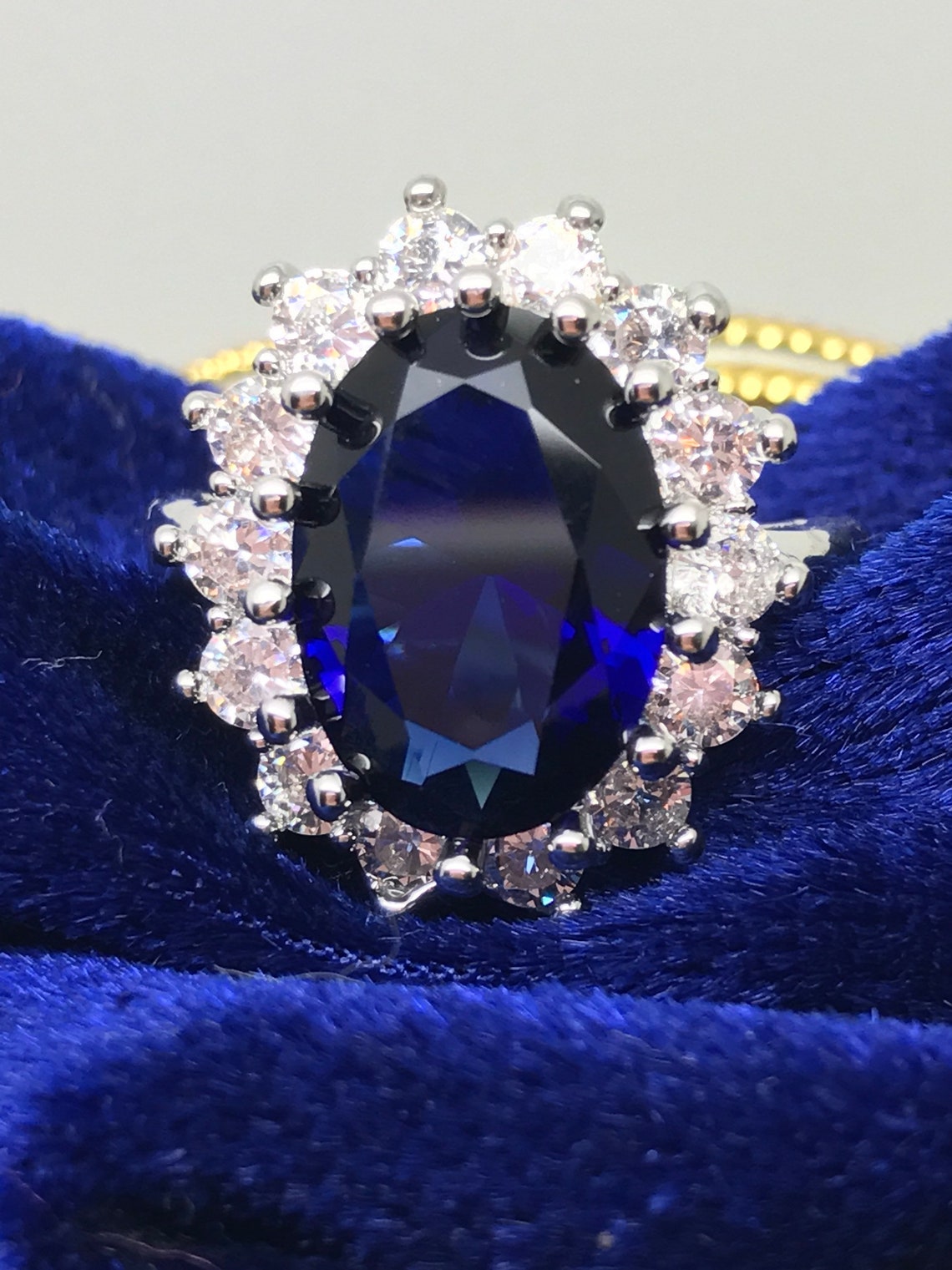
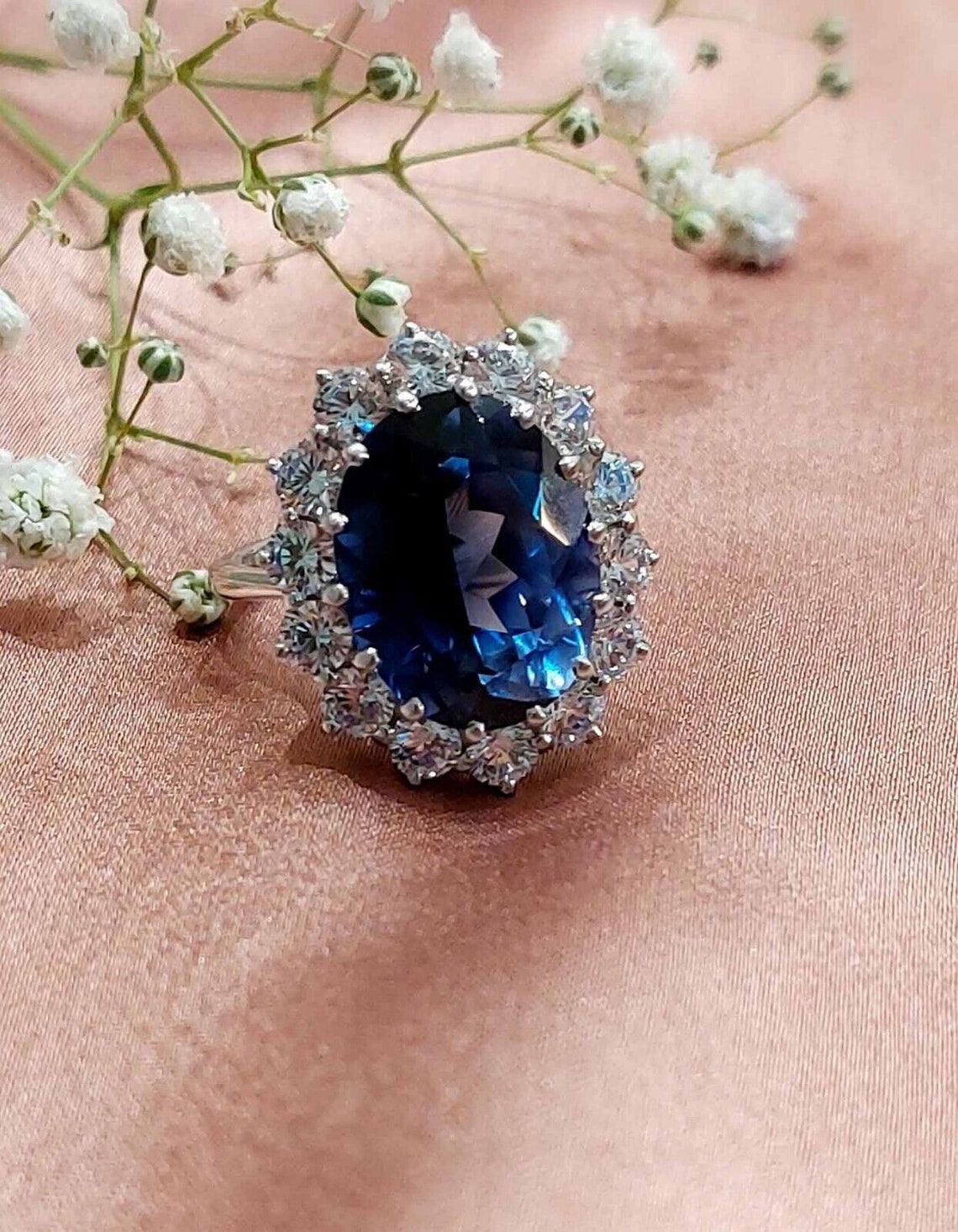
The engagement ring style popularized by the late Princess Diana—a deep blue oval sapphire surrounded by a halo of brilliant-cut diamonds—remains one of the most recognizable jewelry designs in history. Today, "Princess Diana inspired" engagement rings refer to this iconic cluster-style setting, often featuring a center gemstone, typically a sapphire, accented by a floral or rectangular halo of melee diamonds, set in precious metals like white gold, platinum, or yellow gold.
Understanding the Iconic Design Aesthetic
The original ring, now worn by the Princess of Wales, features an oval Ceylon sapphire weighing approximately 12 carats, set in 18-karat white gold and surrounded by 14 solitaire diamonds. When shopping for an "inspired" version, you are looking for the "halo" engagement ring category.
The aesthetic is characterized by its high-contrast visual impact. The saturation of the center stone against the fire of the surrounding diamonds creates a silhouette that feels both antique and regal. While the original features a sapphire, modern iterations often use other deep-colored gemstones or even diamonds as the center stone, provided the surrounding halo configuration remains intact.
Key Factors Influencing Pricing
The price of a Princess Diana inspired engagement ring fluctuates significantly based on the materials used. Because these rings are multi-stone settings, the cost is an aggregation of the center stone, the accent stones, and the mounting.
- Center Stone Quality: If you choose a natural blue sapphire, the price is determined by the "cornflower" blue intensity, the clarity (lack of inclusions), and the origin (e.g., Ceylon vs. heat-treated stones). A high-quality, unheated natural sapphire carries a premium price.
- Accent Diamonds: The halo consists of multiple smaller diamonds. The total carat weight of these stones, combined with their cut grade (which dictates sparkle), contributes to the final cost.
- Metal Choice: Platinum is the most durable and expensive, providing a cool tone that complements blue stones perfectly. 18-karat gold is a classic choice, while 14-karat gold offers a more budget-friendly, harder alloy option.
- Craftsmanship: Complex gallery work, such as milgrain detailing (a decorative beading technique) or intricate basket settings beneath the stones, increases labor costs compared to simple prong settings.
Price Tier Comparison Table
| Ring Tier | Materials | Estimated Price Range (2026) |
|---|---|---|
| Entry Level | Lab-created sapphire, Sterling Silver or 10k Gold | $400 – $1,200 |
| Mid-Range | Natural treated sapphire, 14k Gold, small diamond melee | $2,000 – $5,500 |
| Luxury | High-grade natural sapphire, Platinum, GIA-certified diamonds | $8,000 – $25,000+ |
Where to Buy Inspired Styles
Purchasing an engagement ring involves balancing your budget with the need for quality certification. There are three primary channels for acquiring a ring in this style.
Jewelry Retailers and Online Brands
Major jewelry retailers often carry "halo" or "cluster" collections. Online retailers allow for high customization, letting you select the specific size of the center sapphire and the metal type. When buying online, ensure the vendor provides high-resolution imagery and a transparent return policy. Always check for independent laboratory reports (such as GIA or AGS) for the center diamond or gemstone.
Specialized Custom Jewelers
If you want an exact recreation that mimics the dimensions of the original, a custom jeweler is the best option. They can source a sapphire that matches the specific "Princess Diana" blue hue and hand-set the halo diamonds to ensure perfect symmetry. This route is typically more expensive but offers the most control over the final product.
Estate and Antique Dealers
The halo style was a popular design long before the 1980s, originating from the Edwardian and Art Deco periods. Estate jewelers often have genuine vintage rings that bear a striking resemblance to the royal style. These offer a unique history and often provide better value for your money regarding metal weight and stone quality compared to mass-produced modern jewelry.
Maintenance and Technical Considerations
A cluster-style ring with a prominent halo is more susceptible to snagging than a solitaire setting. Because there are multiple stones, there are more prongs that can potentially loosen over time.
- Regular Inspections: Professional jewelers should inspect the prongs at least once a year. A single bent prong can lead to the loss of a halo diamond.
- Cleaning: Avoid ultrasonic cleaners for sapphire rings, as the vibrations can damage treated stones or loosen settings. A soft-bristled brush, warm water, and mild dish soap are the safest way to maintain the luster of both the sapphire and the diamonds.
- Insurance: Given the high value and the potential for loss of small accent stones, consider an appraisal from a certified gemologist. Ensure your insurance policy covers "mysterious disappearance" and "stone replacement," not just total loss.
Common Mistakes When Purchasing
One of the most frequent errors is prioritizing size over quality. A large, dark, or heavily included sapphire will lack the vibrant glow associated with the royal inspiration. It is almost always better to choose a slightly smaller stone with excellent transparency and color than a large, dull stone.
Another mistake is neglecting the "profile" of the ring. The original design has a distinctive gallery (the side profile). If the setting is too low, it may be difficult to stack a wedding band flush against it. Always inquire about the "wedding band compatibility" if you intend to wear a band alongside the engagement ring.
Frequently Asked Questions
Is a sapphire durable enough for daily wear?
Yes, sapphires are the third hardest mineral, rating a 9 on the Mohs scale of mineral hardness, right behind diamonds and moissanite. They are highly resistant to scratching, making them excellent choices for engagement rings worn every day, provided they are cared for properly.
What does "Ceylon" sapphire mean in this context?
"Ceylon" refers to sapphires sourced from Sri Lanka. They are historically prized for their specific vivid, medium-blue color. While other regions like Madagascar or Montana also produce blue sapphires, the term "Ceylon" is often used in the trade to describe a specific, desirable bright blue color grade.
Can I use a lab-grown sapphire for this style?
Yes, lab-grown sapphires are chemically, physically, and optically identical to natural sapphires. They are an excellent way to achieve the "Princess Diana" look at a significantly lower price point, or to obtain a larger, flawless stone that would be prohibitively expensive if sourced from a mine.
How do I ensure the diamonds in the halo are high quality?
Look for "colorless" (D-F) or "near-colorless" (G-H) grades in the accent diamonds. Because the halo contains multiple stones, you want them to be matched in color and cut grade so the entire ring sparkles uniformly. If the diamonds are too low in quality, they will look dull or yellow compared to the bright blue of the center stone.
Does the halo design make the center stone look larger?
Yes, the primary function of a halo setting is to create a larger visual footprint for the ring. By surrounding a center stone with smaller diamonds, the light reflected from the halo enhances the perceived size and brightness of the central gemstone, offering a high-impact look for a lower total carat weight.
Recommended Next Action
If you are ready to purchase, start by visiting a local reputable jeweler to try on halo-style rings. Even if you plan to buy online, physically wearing the style will help you determine which halo size and sapphire shape (oval vs. cushion) best complements your hand. Once you know your preference, search for rings with certified center stones and ensure you receive a comprehensive appraisal document at the time of purchase for insurance purposes.