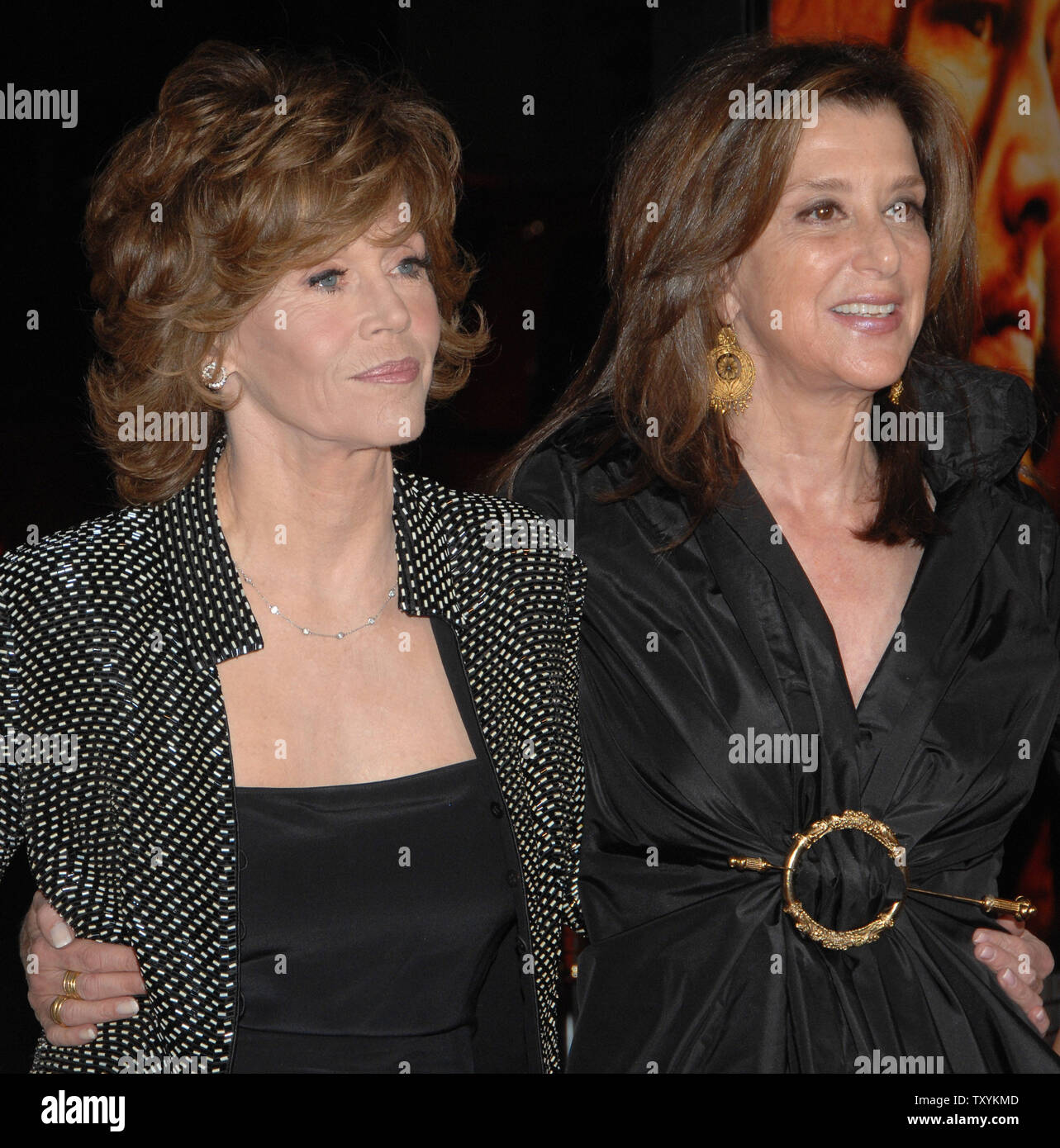
Paula Weinstein was an acclaimed American film producer, studio executive, and activist whose career spanned over four decades in the entertainment industry, marked by her involvement in politically engaged cinema, leadership roles at major Hollywood studios, and dedicated advocacy for social and political causes.
Early Life and Family Background
Paula Weinstein was born on November 19, 1945, in New York City, into a family deeply embedded in the theatrical world. Her mother, Hannah Weinstein, was a pioneering television and film producer who famously produced the British television series The Adventures of Robin Hood while living in exile during the McCarthy era blacklist. Her father, Jack Weinstein, was a prominent attorney. Growing up in an environment where politics and the arts intersected profoundly shaped Weinstein’s worldview and her future career choices. She attended Columbia University, where she studied English literature, absorbing the intellectual and cultural currents of the 1960s that would later inform her commitment to socially conscious storytelling.
After completing her education, Weinstein gravitated toward the creative industries, initially working in New York theater and public relations before transitioning to film production and talent management. Her early exposure to the mechanics of the entertainment business provided her with a rare combination of artistic sensibility and hard-nosed executive acumen. This foundation allowed her to navigate the male-dominated power structures of Hollywood during the 1970s and 1980s with remarkable resilience.
Evolution of a Hollywood Producer and Executive
Weinstein’s professional trajectory encompassed both independent production and major studio executive suites, giving her a 360-degree perspective on the motion picture business. In the early stages of her career, she worked as a talent agent at the William Morris Agency and later joined the theatrical division at Columbia Pictures. Her executive leadership capabilities were further recognized when she was appointed Vice President of Production for United Artists and later served as President of Production at Metro-Goldwyn-Mayer (MGM) during the late 1980s and early 1990s.
Despite her success in corporate suites, Weinstein’s true passion lay in producing independent features and politically resonant studio projects. In 1995, she co-founded Baltimore/Spring Creek Pictures alongside Barry Levinson, a partnership that yielded a diverse slate of critically acclaimed films. Through this banner and her subsequent production company, Spring Creek Productions, she championed stories that tackled complex social issues, corporate malfeasance, and human rights. Her producing credits reflect a consistent dedication to narratives that challenge audiences rather than merely entertain them, establishing her as a formidable creative force who successfully bridged the gap between commercial viability and artistic integrity.
Key Filmography and Creative Achievements
Throughout her prolific career, Weinstein produced or executive-produced dozens of films and television projects, collaborating with some of the industry’s most respected directors and actors. Her filmography is notable for its thematic breadth, ranging from biting satires and tense political thrillers to intimate character studies and large-scale dramas. Films produced by Weinstein often featured complex protagonists grappling with ethical dilemmas, institutional corruption, or personal redemption.
Her work on Costa-Gavras’s political thriller Mad City (1997) and Barry Levinson’s satirical comedy Wag the Dog (1997) demonstrated her ability to bring sharp, socially relevant material to the screen. Wag the Dog, in particular, became a cultural touchstone for its prescient exploration of media manipulation and political spin. Other notable producing credits include Fearless (1993), directed by Peter Weir; Analyze This (1999) and its sequel Analyze That (2002); The Perfect Storm (2000); and Blood Diamond (2006). The following table provides an overview of selected notable films produced by Paula Weinstein, highlighting their directors and thematic focal points.
| Film Title | Release Year | Director | Primary Theme |
|---|---|---|---|
| Fearless | 1993 | Peter Weir | Trauma, existential transformation, and human resilience |
| Wag the Dog | 1997 | Barry Levinson | Political satire, media manipulation, and public perception |
| Analyze This | 1999 | Harold Ramis | Psychiatry, organized crime, and identity |
| The Perfect Storm | 2000 | Wolfgang Petersen | Maritime survival, nature, and human endurance |
| Blood Diamond | 2006 | Edward Zwick | Corporate greed, conflict minerals, and human rights |
Activism, Philanthropy, and Tribeca Leadership
Beyond her filmography, Paula Weinstein was widely recognized for her tireless political activism and philanthropic endeavors. Aligning her professional life with her personal convictions, she was deeply involved in Democratic politics and progressive advocacy organizations. She served on the boards of various non-profits focused on civil liberties, environmental protection, and women's rights. Her ability to mobilize the Hollywood community for political campaigns and charitable causes made her a trusted strategist and fundraiser for progressive candidates and initiatives.
In her later career, Weinstein brought her administrative expertise and cultural influence to the Tribeca Enterprises as Chief Content Officer. In this capacity, she helped shape the direction of the Tribeca Film Festival, fostering independent cinema and expanding the festival’s global reach. Her work at Tribeca underscored her lifelong commitment to discovering new voices in storytelling and providing platforms for diverse creators. She viewed film and digital media not merely as commercial commodities, but as essential tools for civic engagement and empathy building.
Legacy and Industry Impact
Paula Weinstein passed away on June 25, 2023, leaving behind an indelible mark on American cinema and political advocacy. Her legacy is defined by her refusal to separate art from social responsibility. In an industry frequently driven by short-term commercial returns, she maintained a career-long dedication to films that provoked thought and sparked public discourse.
Her influence extended far beyond the specific credits on her resume. As a mentor to younger producers, particularly women entering the film industry, Weinstein advocated for gender equity and executive leadership representation. She demonstrated that an individual could achieve the highest levels of corporate success without compromising personal integrity or political convictions. Her contributions continue to be felt through the enduring relevance of the films she produced and the organizations she helped shape.
Frequently Asked Questions
What were Paula Weinstein’s most famous producing credits?
Paula Weinstein produced numerous acclaimed films, including Wag the Dog (1997), Fearless (1993), The Perfect Storm (2000), and Blood Diamond (2006). Her work frequently explored complex political, social, and ethical themes.
Did Paula Weinstein work in studio executive roles?
Yes, Weinstein held significant executive positions throughout her career. She served as Vice President of Production for United Artists and President of Production at Metro-Goldwyn-Mayer (MGM) during the late 1980s and early 1990s.
What was her role at Tribeca Enterprises?
Weinstein served as the Chief Content Officer for Tribeca Enterprises, where she helped program and direct the Tribeca Film Festival, supporting independent filmmakers and expanding the organization's media initiatives.
How did her family background influence her career?
She was the daughter of pioneering film and television producer Hannah Weinstein, who produced The Adventures of Robin Hood. This early exposure to the entertainment industry and political activism deeply shaped Weinstein's creative vision and commitment to socially conscious cinema.
What organizations and causes did she support through activism?
Weinstein was a prominent figure in progressive politics, actively supporting the Democratic Party, civil liberties organizations, environmental causes, and initiatives promoting women's rights and representation in media.