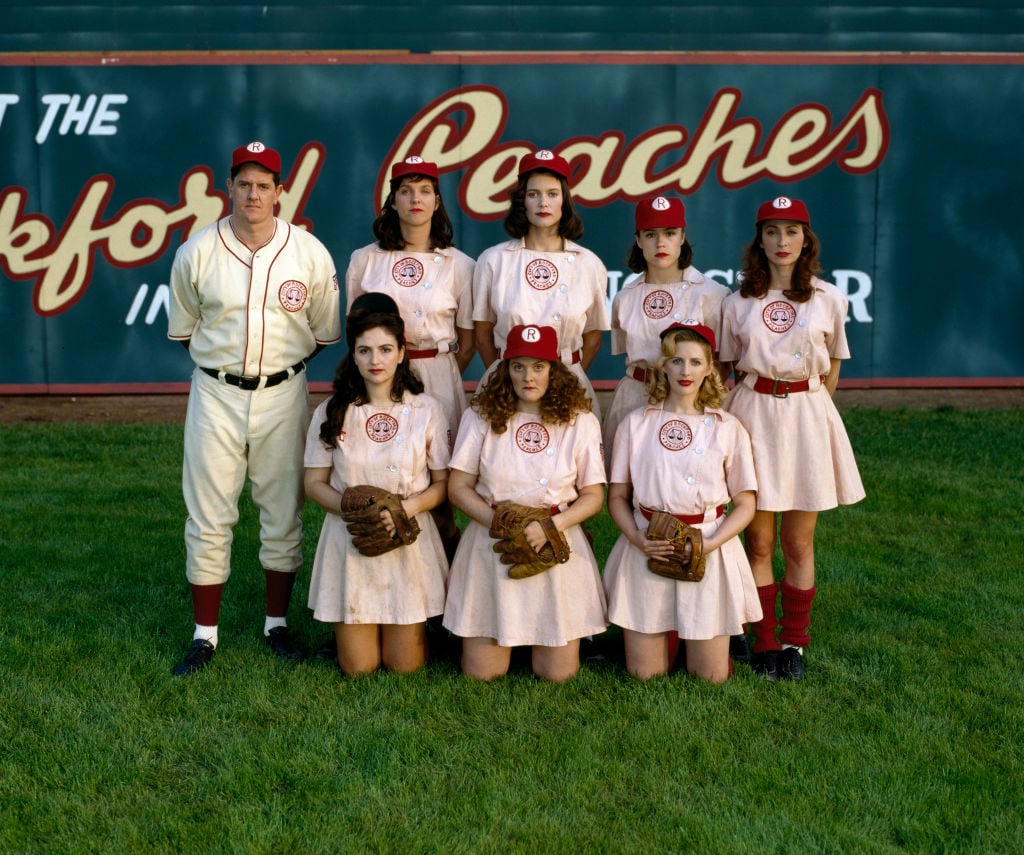
The 1998 NBC miniseries A Will of Their Own remains a seminal piece of television history, chronicling a century of the American women’s movement through the experiences of five generations of a single family. Spanning from the late 1890s to the late 1990s, the production features an ensemble cast led by Lea Thompson, Ellen Burstyn, and Faye Dunaway, offering a detailed exploration of the social, political, and personal battles fought for female autonomy and suffrage.
As of 2026, the series is frequently revisited by historians and fans of period dramas for its ambitious scope and its ability to condense complex legislative shifts—such as the passage of the 19th Amendment—into deeply personal narratives. This breakdown provides an exhaustive look at the cast, the multi-generational character arcs, and the thematic structure that defines the show.
Historical Context and Narrative Structure
A Will of Their Own was originally broadcast as a two-part event in October 1998. Directed by Karen Arthur and written by Cynthia Whitcomb, the miniseries was designed to be more than a simple family saga; it was intended as a visual document of the evolving status of women in the United States. The narrative is structured chronologically, beginning in the Victorian era where women lacked basic property rights and ending in the modern era where the struggles shift toward glass ceilings and work-life balance.
The show is divided into distinct eras, each represented by a specific female lead who anchors the family’s legacy. The storytelling utilizes the "passing of the torch" motif, where the daughter of one generation becomes the protagonist of the next, allowing the audience to see how the radical ideas of one era become the hard-won realities of the next.
Primary Cast and Character Breakdown
The strength of the miniseries lies in its high-caliber cast, many of whom were at the height of their careers or established legends when the show was produced.
Lea Thompson as Amanda Steward
Amanda Steward is the emotional and narrative center of the miniseries. Lea Thompson portrays her across several decades, capturing her transition from a hopeful young woman to a seasoned activist. Amanda’s journey is defined by her desire for higher education and her refusal to be a "silent partner" in her marriage. Her character arc serves as the bridge between the turn-of-the-century suffrage movement and the mid-century push for professional recognition.
Ellen Burstyn as Terese
Ellen Burstyn provides a powerhouse performance as Terese, who represents the generational bridge to the modern era. As the story progresses into the mid-20th century, Terese embodies the domestic frustrations and subsequent awakenings of the "Greatest Generation" and the early "Baby Boomers." Her character highlights the psychological toll of societal expectations and the quiet resilience required to maintain family stability while yearning for individual identity.
Faye Dunaway as Margaret
Faye Dunaway appears in a pivotal role as Margaret, a character who embodies the sophisticated but restricted nature of upper-class women in the early 20th century. Her performance adds a layer of gravitas to the production, illustrating how the struggle for "will" was not limited to the working class but was a systemic issue affecting women across all socioeconomic strata.
Thomas Gibson as James Steward
Thomas Gibson plays James Steward, Amanda’s husband. James is a complex figure; he is not a mustache-twirling villain but rather a product of his time. His character represents the traditionalist viewpoint that saw female independence as a threat to the family unit and social order. His interactions with Amanda provide the central domestic conflict of the first half of the series.
Supporting Cast and Generational Roles
The supporting ensemble rounds out the family tree and the social circles that influenced the central women.
| Character | Actor/Actress | Role Description |
|---|---|---|
| Jessie | Sonia Braga | A close confidante and firebrand who represents the more radical arm of the movement. |
| Sarah | Diana Scarwid | Represents the generation dealing with the Great Depression and the impact of global war on the home front. |
| Dr. Charles | Reiss-Davis | A mentor figure who highlights the difficulties women faced when trying to enter the medical profession. |
| Young Amanda | Various | Child actors who establish the early motivations of the lead characters. |
| The Granddaughter | Taryn Manning | (In later segments) Represents the modern woman of the 1990s, benefiting from the struggles of her ancestors. |
The Generational Timeline: A Show Breakdown
To understand the full breakdown of A Will of Their Own, one must look at the specific milestones covered in the two-part broadcast.
Part One: The Foundation (1890s – 1920s)
The first half focuses on the legal invisibility of women. We see Amanda’s mother and grandmother navigate a world where they cannot own property in their own names or vote. The narrative follows Amanda’s attempt to attend medical school, a pursuit met with derision from her husband and the academic establishment. This segment culminates in the 1910s suffrage marches and the eventual ratification of the 19th Amendment in 1920.
Part Two: The Evolution (1930s – 1990s)
The second half shifts the focus to the subtle forms of discrimination that persisted after the right to vote was won. It covers the economic hardships of the 1930s, the temporary liberation of the workforce during World War II, and the subsequent "return to the kitchen" in the 1950s. The final act of the miniseries looks at the 1960s and 70s feminist movement, showing how Amanda’s descendants carry her "will" into the political and corporate arenas.
Themes of Autonomy and "The Will"
The title, A Will of Their Own, refers to both the legal document (the last will and testament) and the psychological strength (willpower). Throughout the series, the concept of a "will" is a recurring motif:
- Legal Will: The struggle for women to inherit and control wealth.
- Political Will: The drive to change the Constitution and local laws.
- Personal Will: The individual choice to pursue a career, leave an unhappy marriage, or demand equal treatment.
The show argues that none of these "wills" can exist in isolation. Personal strength is required to spark political change, and political change is necessary to protect personal autonomy.
Production Design and Authenticity
Director Karen Arthur emphasized period authenticity to ground the dramatic elements. The costume design is particularly noteworthy, as it visually depicts the physical liberation of women—from the restrictive corsets and heavy skirts of the 1890s to the more practical and varied attire of the mid-20th century.
The production also utilized locations that mirrored the changing American landscape, moving from rural homesteads to burgeoning urban centers. This geographical shift mirrors the demographic movement of women from domestic spheres into the public workforce.
Reception and Long-Term Impact
Upon its 1998 release, A Will of Their Own was praised for its educational value and the performances of its lead actresses. While some critics at the time found the broad historical sweep to be occasionally melodramatic, the series was a ratings success for NBC and became a staple for educational viewing in gender studies and American history courses.
In 2026, the series is viewed as a precursor to more modern historical dramas like Mrs. America or The Gilded Age. It remains one of the few television projects that attempts to cover the entire 100-year span of the first and second waves of feminism within a single narrative framework.
Why the Cast Matters Today
The casting of Lea Thompson and Ellen Burstyn was instrumental in making the series accessible to a wide audience. Thompson, known for Back to the Future and Caroline in the City, brought a relatable, everywoman quality to Amanda, while Burstyn’s presence lent the show prestige. Their performances ensured that the "history lesson" felt like a human story, which is why the breakdown of these characters remains relevant for viewers discovering the show decades later.
Frequently Asked Questions
Is "A Will of Their Own" based on a true story?
The miniseries is a work of historical fiction. While the Steward family is fictional, their experiences are meticulously based on the real-life struggles, legal cases, and social conditions faced by American women between 1890 and 1990. Many of the political events depicted, such as the suffrage protests, are historically accurate.
Where can I watch "A Will of Their Own" in 2026?
The series is occasionally available on legacy streaming platforms that specialize in Hallmark-style dramas or historical miniseries. It was also released on DVD in the early 2000s, and those physical copies remain the most reliable way to view the full four-hour uncut version, as digital rights for 90s miniseries can be fragmented.
Who plays the husband in "A Will of Their Own"?
Thomas Gibson plays James Steward. At the time of filming, Gibson was a rising star known for Dharma & Greg. His portrayal of James is noted for its nuance, showing a man who loves his wife but is fundamentally unable to understand her need for an identity outside of their marriage.
How many episodes are in the miniseries?
A Will of Their Own is technically a two-part miniseries. In its original broadcast, it aired over two nights. In syndication or on home media, it is often presented as a single four-hour film or divided into four one-hour segments.
Does the show cover the modern era?
Yes, the final segments of the show bring the timeline into the 1990s. This allows the narrative to come full circle, showing how the great-great-granddaughter of the original protagonist navigates a world that her ancestors fought to build.
Accessing Further Information on Women's History
For those interested in the real-life events that inspired A Will of Their Own, further research into the 19th Amendment and the Equal Rights Amendment (ERA) is recommended. The Library of Congress and the National Women’s History Museum offer digital archives that correlate with the eras depicted in the show. These resources provide the primary source documents—letters, posters, and legislative records—that the writers of the miniseries used to build the world of the Steward family.