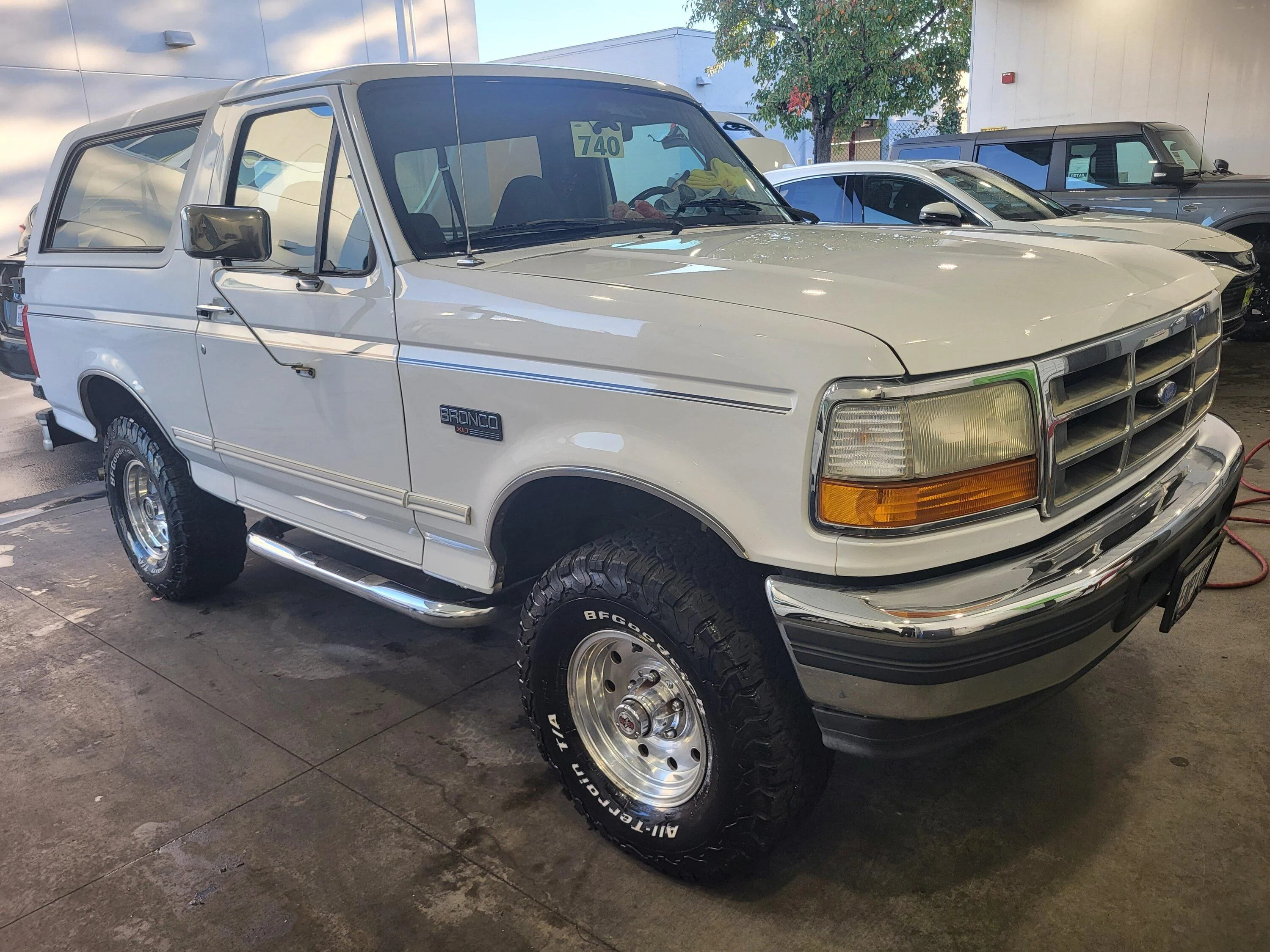
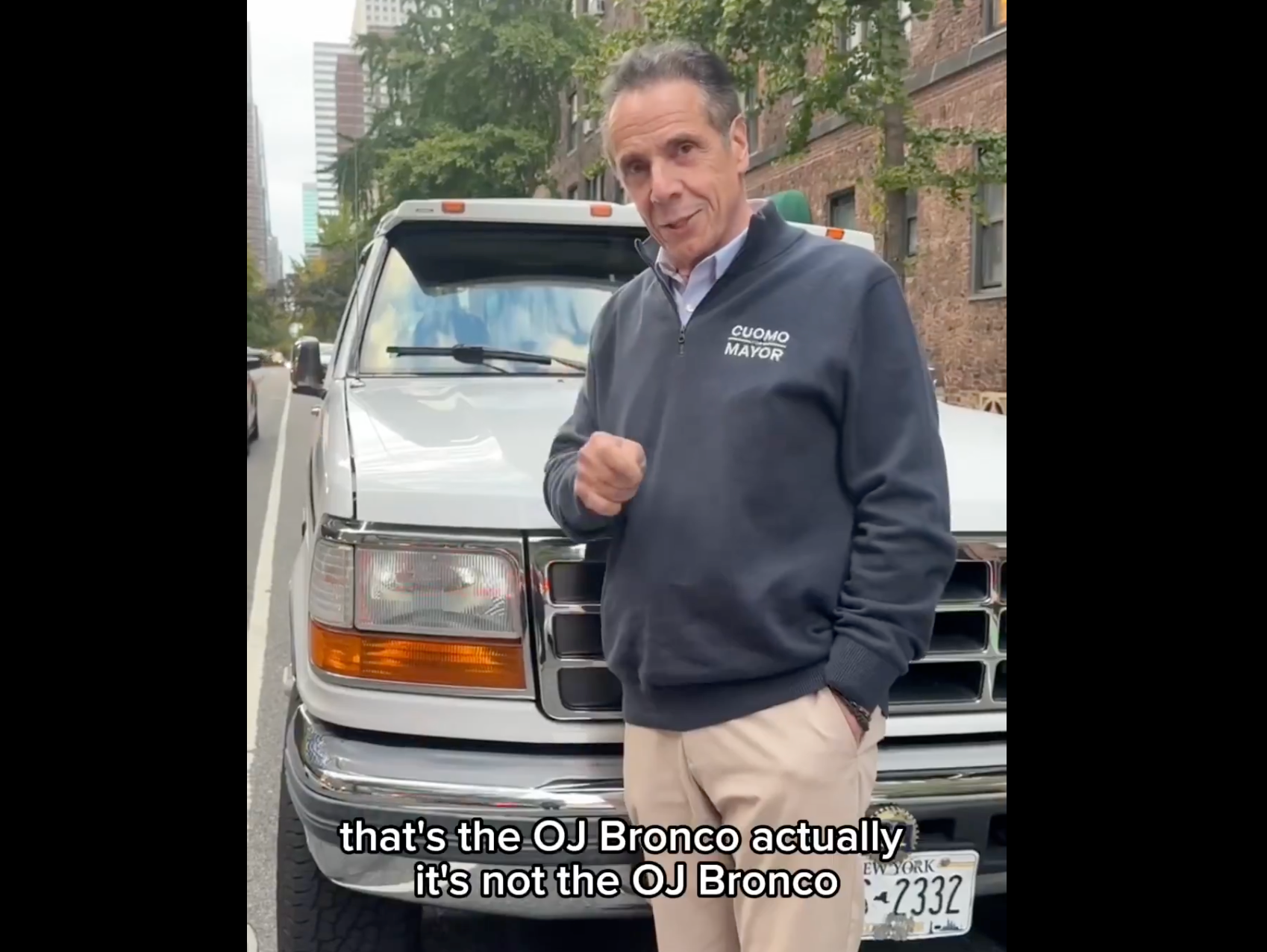
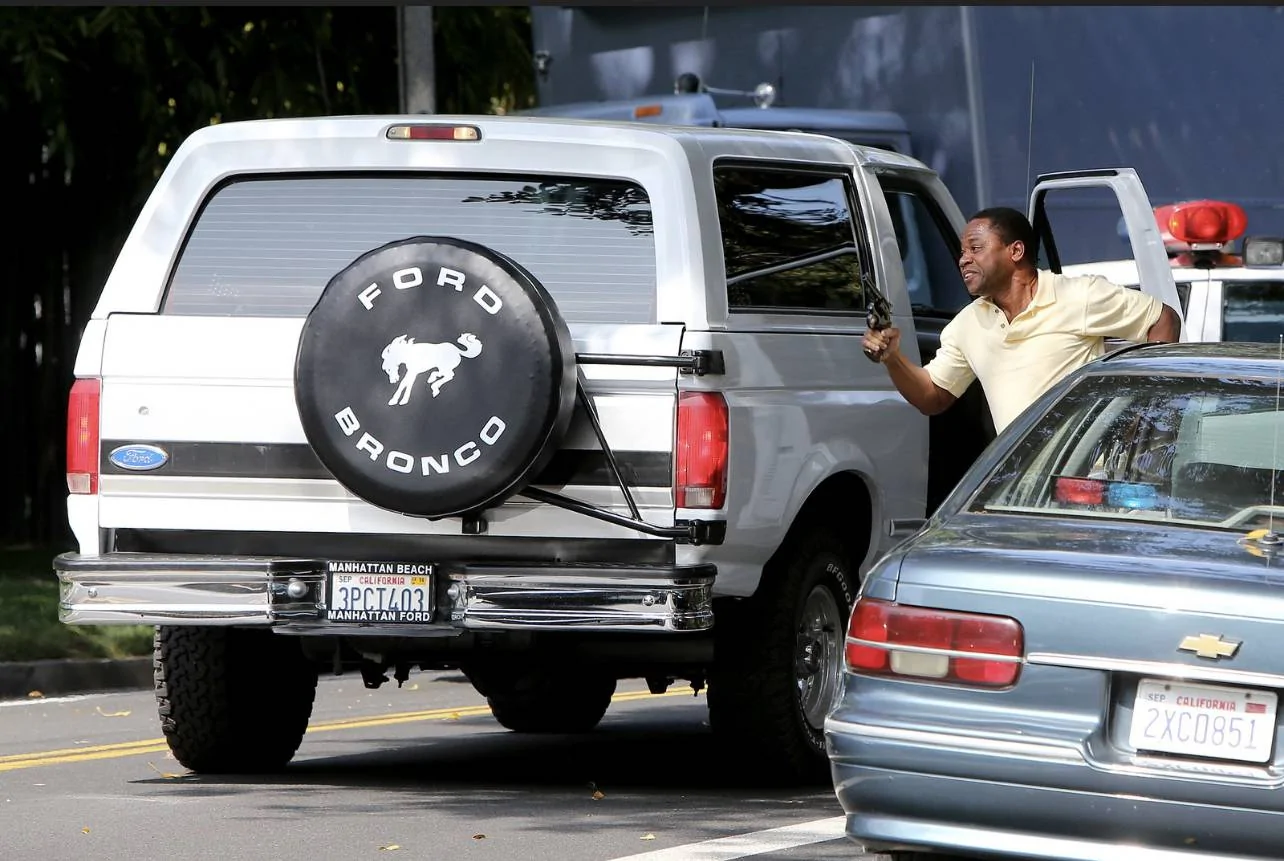
The 1993 Ford Bronco driven by Al Cowlings during the infamous June 17, 1994, low-speed police pursuit of O.J. Simpson remains one of the most recognizable and culturally imprinted vehicles in modern American history. Far transcending its identity as a standard full-size sport utility vehicle, this specific white Ford Bronco became a central artifact in a media event watched by an estimated 95 million television viewers worldwide, permanently altering the intersection of broadcast news, celebrity culture, and criminal justice.
The Context of June 17, 1994: The Chase That Stopped a Nation
On the afternoon of June 17, 1994, O.J. Simpson was a fugitive from justice. Following the brutal murders of his ex-wife, Nicole Brown Simpson, and her friend Ronald Goldman, the former NFL star and actor had been ordered to surrender to the Los Angeles Police Department (LAPD) by 11:00 a.m. that day. When he failed to turn himself in, a massive manhunt ensued, culminating in the discovery of Simpson in the back seat of a white 1993 Ford Bronco owned and driven by his friend and former teammate, Al Cowlings.
What followed was not a high-speed highway escape, but a surreal, slow-speed procession along the Interstate 405 and Interstate 5 freeways in Southern California. Traveling at speeds averaging around 35 miles per hour, the Bronco was trailed by a phalanx of police cruisers and an armada of news helicopters whose live broadcasts interrupted regular programming—most notably the fifth game of the 1994 NBA Finals between the New York Knicks and the Houston Rockets.
The visual of the white SUV gliding across the sun-drenched Los Angeles asphalt captured the collective attention of the nation. For millions of viewers, the pursuit symbolized the surreal unraveling of an American icon. Crowds gathered on highway overpasses waving signs of support, transforming the grim aftermath of a double homicide into an unprecedented, real-time media spectacle. The journey eventually ended peacefully at Simpson’s Brentwood estate late that evening, where he surrendered to authorities following a prolonged standoff.
Technical Specifications and Production Legacy of the 1993 Ford Bronco
Long before its association with the O.J. Simpson case, the fifth-generation Ford Bronco was a staple of the American automotive landscape. Built on a shortened F-150 pickup truck platform, the 1993 Ford Bronco represented a rugged, body-on-frame utility vehicle designed for both off-road capability and highway comfort.
The vehicle featured a removable fiberglass rear top, a standard independent front suspension (Twin-Traction Beam), and a live axle rear end. Under the hood, buyers typically opted for either the 5.0-liter (302 cubic inch) Windsor V8 or the more powerful 5.8-liter (351 cubic inch) Windsor V8 engine, paired with either a 5-speed manual transmission or a 4-speed electronic automatic transmission (E4OD).
| Feature / Specification | 1993 Ford Bronco Details |
|---|---|
| Vehicle Class | Full-Size Sport Utility Vehicle (SUV) |
| Platform | F-150 Derived Shortened Chassis |
| Engine Options | 4.9L Inline-6, 5.0L V8, or 5.8L V8 |
| Transmission | 5-Speed Manual or 4-Speed Automatic (E4OD) |
| Drivetrain | Four-Wheel Drive (4WD) with Manual/Auto Hubs |
| Curb Weight | Approximately 4,500 to 4,800 lbs |
| Seating Capacity | 5 Passengers |
Despite its robust engineering and enduring popularity among truck and SUV enthusiasts, the 1993 Bronco model year suffered an immediate and irreversible branding shift in the wake of the televised chase. The specific color—Oxford White—became universally synonymous with the event, permanently altering public perception of the vehicle model.
Ownership History, Authentication, and Public Display
The exact vehicle involved in the chase—bearing the California license plate 3XYZ800—was owned by Al Cowlings, not O.J. Simpson. Following the events of June 1994, the Bronco was impounded by the LAPD for evidence collection before being returned to Cowlings. In the years immediately following, the vehicle became a liability and a magnet for morbid curiosity, leading Cowlings to sell it.
The Bronco eventually came into the possession of Mike Gilbert, a former sports memorabilia dealer and longtime associate of O.J. Simpson. For decades, the vehicle remained largely hidden from public view, stored in an undisclosed parking garage in Pigeon Forge, Tennessee, and later associated with the Alcatraz East Crime Museum.
Authenticating the vehicle required extensive documentation, including matching vehicle identification numbers (VINs), police impound records, registration documents, and forensic evidence matching the exact unit filmed by the television networks. The persistent public fascination with the artifact reflects a broader cultural obsession with true crime memorabilia, positioning the SUV alongside other historic artifacts of American infamy.
Cultural Aftershocks and the Transformation of Media Coverage
The O.J. Simpson Bronco chase served as a watershed moment in broadcast journalism. It was one of the earliest major news events broadcast live from aerial perspectives for hours on end, pioneering the modern 24-hour news cycle’s appetite for real-time sensationalism. The event foreshadowed the era of citizen journalism, reality television, and hyper-connected media consumption where tragic real-life events are treated as spectator sports.
Furthermore, the Bronco entered the lexicon of popular culture, referenced in countless television shows, films, and musical lyrics. It transformed an ordinary commercial product into an enduring symbol of American celebrity downfall. The cultural resonance of the vehicle is so potent that Ford’s modern reintroduction of the Bronco brand in 2020 necessitated careful marketing strategies to navigate the lingering shadows of the 1994 event, particularly regarding the promotion of white paint options.
Frequently Asked Questions
Was the white Bronco driven by O.J. Simpson during the chase?
No. While O.J. Simpson was a passenger in the vehicle, the Bronco was owned and driven by his close friend and former NFL teammate Al Cowlings. Simpson was in the back seat holding a family photograph and a passport while Cowlings navigated the Los Angeles freeway system.
What happened to the original 1993 Ford Bronco from the chase?
The vehicle was returned to Al Cowlings after being processed as evidence by the LAPD. It was later sold to a group of investors and sports memorabilia dealers, including Mike Gilbert, and has spent periods on display or stored in specialty crime-related museums.
Did the O.J. Simpson chase negatively affect Ford Bronco sales?
In the immediate aftermath of the June 1994 broadcast, Ford faced an unusual branding challenge, but overall sales of the Bronco were already declining due to changing consumer preferences toward four-door SUVs. Ford discontinued the Bronco line after the 1996 model year, though the decision was part of a planned shift toward larger four-door utilities like the Ford Expedition rather than a direct result of the trial.
Why was the vehicle traveling at such a slow speed?
Al Cowlings maintained a slow speed during the pursuit because O.J. Simpson was reportedly in a fragile emotional state, holding a firearm to his own head. Law enforcement officials chose to tail the vehicle at a distance to prevent a high-speed crash or a tragic escalation, safely monitoring the vehicle until it reached Simpson's residence.
Can the public visit or view the historic Bronco today?
The vehicle is not on permanent public display in a standardized automotive museum. It is managed by private collectors and has occasionally been featured in temporary exhibits or crime museums, though its location frequently changes due to security and private ownership arrangements.
Securing Automotive History and Responsible Preservation
For automotive historians and true-crime artifact collectors, preserving items like the 1993 Ford Bronco requires navigating complex ethical and legal boundaries. Collectors interested in acquiring high-profile historical vehicles must verify strict provenance, ensuring that titles, vehicle identification numbers, and chain-of-custody documentation are fully authenticated by law enforcement records and independent experts. Anyone evaluating high-value historical memorabilia should consult professional appraisers and legal counsel to verify asset authenticity and manage potential public relations liabilities associated with controversial historical artifacts.