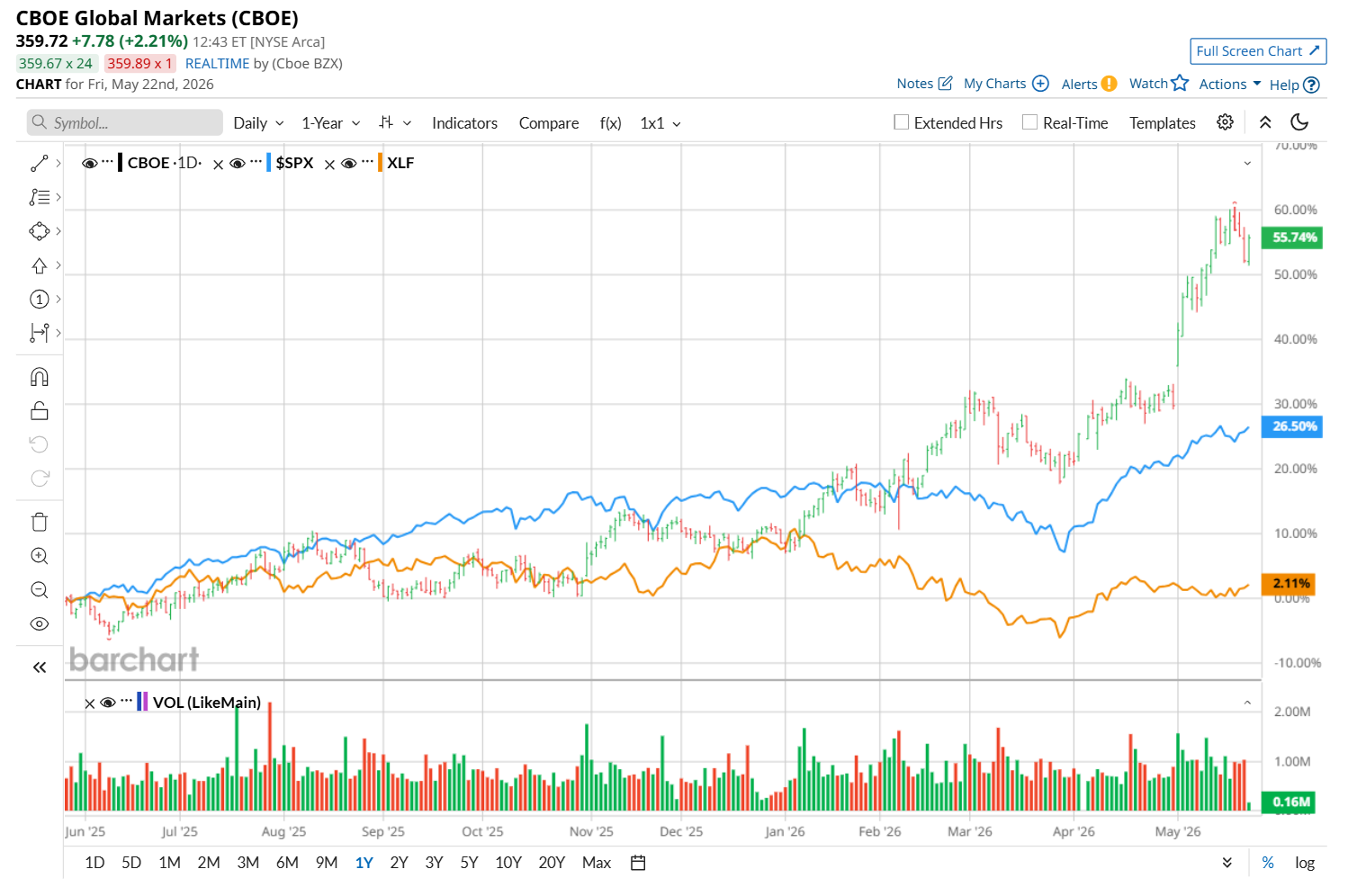
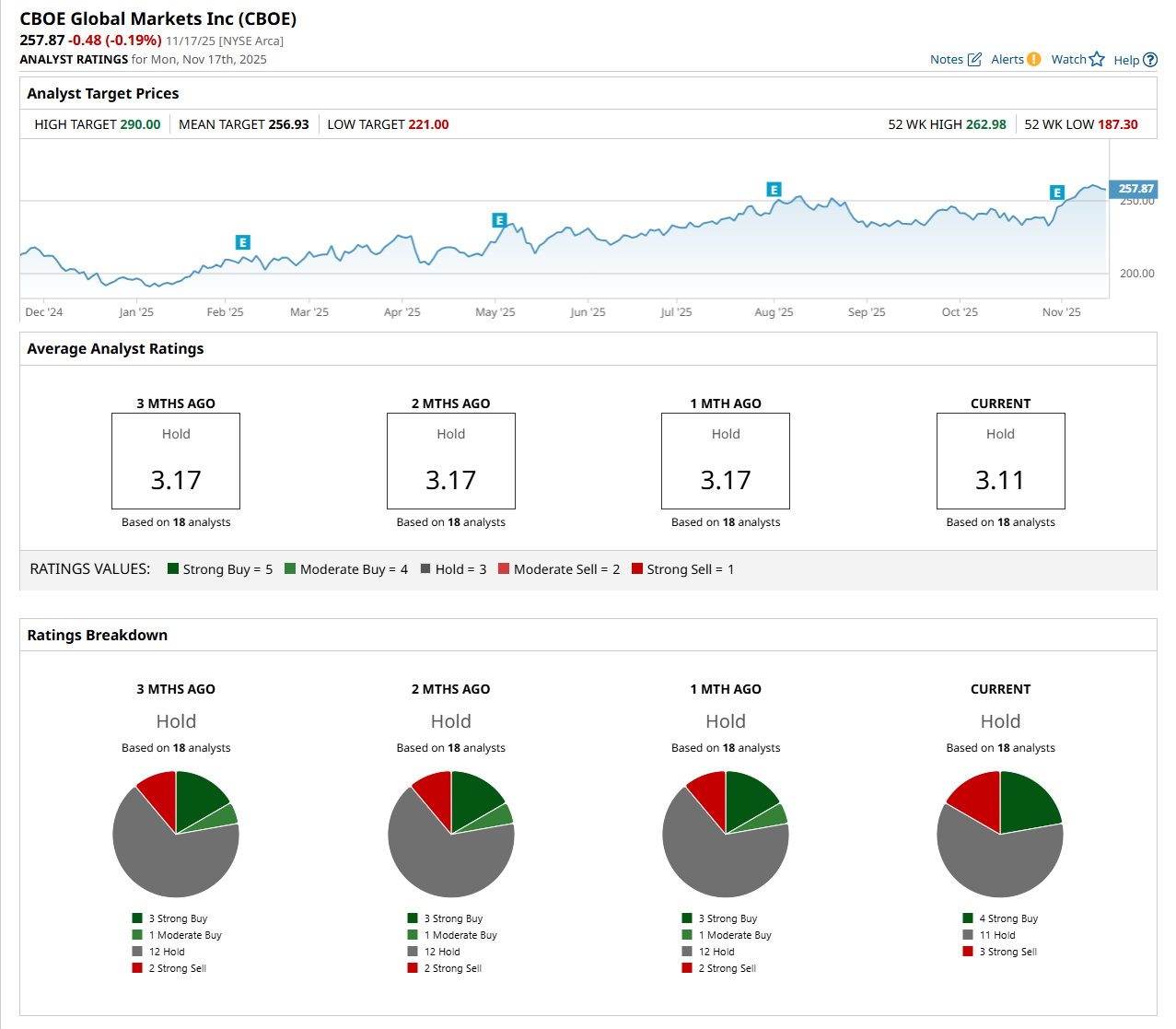
As of the first half of 2026, Cboe Global Markets, Inc. (CBOE) maintains a market capitalization typically ranging between $19.5 billion and $22.5 billion, depending on daily fluctuations in the equity markets. This valuation reflects its position as a Tier-1 global exchange operator, underpinned by its high-margin proprietary derivatives complex, including the VIX and SPX options suites.
Cboe Global Markets is a cornerstone of the global financial infrastructure. To understand what the company is "worth" in the current 2026 market data environment, one must look beyond the simple stock price. A comprehensive valuation involves analyzing market capitalization, enterprise value (EV), price-to-earnings (P/E) ratios, and the intrinsic value of its proprietary data and exclusive licensing agreements. As a diversified exchange holding company, Cboe operates across multiple asset classes, including options, equities, futures, foreign exchange (FX), and digital assets.
The Mechanics of Cboe’s Market Capitalization in 2026
Market capitalization remains the most common metric for determining a company's worth. For Cboe, this figure is calculated by multiplying the current trading price of its common stock by the total number of shares outstanding. In the 2026 fiscal environment, Cboe has benefited from sustained volatility in the global markets, which generally drives higher trading volumes and, consequently, higher valuations for exchange operators.
While the market cap provides a snapshot of equity value, analysts often prefer Enterprise Value (EV) to assess total corporate worth. The EV includes market capitalization plus total debt, minus cash and cash equivalents. For a capital-intensive yet cash-flow-positive entity like Cboe, the EV highlights the cost that would be required to acquire the company outright. In 2026, Cboe’s EV typically trades at a premium to its market cap, reflecting the strategic debt utilized for past acquisitions like BIDS Trading, Chi-X Asia Pacific, and ErisX (now Cboe Digital).
The valuation is also sensitive to the interest rate environment. In the mid-2020s, as interest rates stabilized, Cboe’s ability to generate "net interest income" on margin deposits and cash balances became a significant contributor to its overall bottom line, supporting a higher valuation floor than seen in the previous decade.
Key Financial Metrics Driving the 2026 Valuation
To determine if Cboe is fairly valued at its current $20 billion+ level, investors examine several key performance indicators (KPIs). These metrics provide the "why" behind the market's pricing of the stock.
Price-to-Earnings (P/E) Ratio
Historically, Cboe has traded at a P/E ratio between 18x and 25x. In 2026, its forward P/E ratio reflects a balance between its high-growth data services and its mature, stable trading business. Compared to peers like CME Group (CME) or Intercontinental Exchange (ICE), Cboe often trades at a slight discount or parity, depending on the projected growth of the VIX (Volatility Index) products.
EBITDA and Profit Margins
Cboe’s valuation is heavily supported by its exceptional EBITDA margins, which often exceed 50% on an adjusted basis. Because the incremental cost of executing one additional trade is nearly zero after the technology infrastructure is built, Cboe scales efficiently. High margins attract institutional investors who view the company as a "toll booth" for the financial markets.
Dividend Yield and Capital Return
The company’s worth to shareholders is also measured by its commitment to returning capital. In 2026, Cboe continues its trend of consistent dividend increases and opportunistic share buybacks. A steady dividend yield, often hovering between 1.2% and 1.8%, provides a valuation cushion during periods of broader market downturns.
Revenue Segments: How Cboe Generates Value
Cboe’s "worth" is a sum of its parts. The company has moved away from being a pure-play U.S. options exchange to a global multi-asset powerhouse. Understanding these segments is crucial for accurate valuation.
- Options: This is the crown jewel of Cboe. It includes the exclusive rights to list options on the S&P 500 Index (SPX) and the Cboe Volatility Index (VIX). These proprietary products have no direct competition, allowing Cboe to maintain significant pricing power.
- North American Equities: Cboe operates four U.S. equity exchanges (BZX, BYX, EDGX, EDGA) and Cboe Canada. While this is a highly competitive, low-margin business, it provides the necessary liquidity and scale to support the company’s data business.
- Europe and Asia Pacific: Through acquisitions, Cboe is now a dominant player in pan-European equities and has expanded its footprint in Australia and Japan. This geographic diversification reduces the valuation's dependence on the U.S. regulatory environment.
- Global FX: Cboe FX is one of the largest institutional spot FX platforms. As currency volatility remains a theme in 2026, this segment provides a non-correlated revenue stream that bolsters the overall corporate value.
- Data and Access Solutions: This is the fastest-growing part of Cboe. It involves selling real-time market data, indices, and connectivity services. Because this revenue is recurring (subscription-based), the market assigns it a higher valuation multiple than transaction-based revenue.
Comparative Valuation: Cboe vs. Major Peers
A company's worth is often judged relative to its competitors. In the exchange space, Cboe is a mid-to-large-cap player compared to the giants of the industry.
| Metric (Projected 2026) | Cboe Global Markets | CME Group | Nasdaq, Inc. | Intercontinental Exchange (ICE) |
|---|---|---|---|---|
| Market Cap (Est.) | $20.5 Billion | $78.0 Billion | $35.0 Billion | $72.0 Billion |
| Primary Moat | Proprietary Index Options | Interest Rate Futures | Tech/Listing Services | Energy & Mortgage Tech |
| Forward P/E | 20.2x | 23.5x | 21.0x | 22.5x |
| Dividend Yield | 1.55% | 4.20% | 1.60% | 1.40% |
| Revenue Growth | 6-8% | 4-6% | 7-10% | 5-7% |
The data shows that Cboe offers a unique value proposition: it is smaller and potentially more agile than CME or ICE, with a specific niche in volatility and index derivatives that provides high barriers to entry.
Factors Influencing Valuation in the Current Environment
Several macroeconomic and internal factors are currently influencing Cboe’s market value in 2026.
The "Volatility Regime"
Cboe's valuation is positively correlated with market uncertainty. When the VIX rises, trading volume in VIX futures and options typically spikes. In the 2026 market, characterized by geopolitical shifts and evolving monetary policies, "hedging" has become a permanent fixture for institutional portfolios, keeping Cboe’s core products in high demand.
The Expansion of 0DTE Options
The explosion of Zero Days to Expiration (0DTE) options, which began earlier in the decade, has matured by 2026. Cboe has successfully capitalized on this trend by offering daily expirations on its SPX and Russell 2000 (RUT) products. This has fundamentally shifted the baseline of daily trading volume, providing a permanent lift to the company’s revenue floor.
Digital Asset Integration
Cboe Digital has integrated cryptocurrency trading and clearing into the traditional exchange framework. As the regulatory landscape for digital assets in the U.S. became clearer by 2025, Cboe’s "regulated" approach to crypto has become a differentiator, adding a speculative but promising growth premium to its stock valuation.
Strategic Risks to Cboe's Worth
No valuation analysis is complete without considering the downside risks. For Cboe, these include:
- Regulatory Pressure: Potential changes to "payment for order flow" (PFOF) or transaction fee caps in the U.S. and Europe could compress margins in the equities segment.
- Competitive Threats: While SPX and VIX are proprietary, other exchanges constantly innovate with "look-alike" products or different hedging tools that could siphon off market share.
- Macroeconomic Stagnation: A prolonged period of low volatility (a "flat" market) could lead to decreased trading activity in Cboe’s most profitable derivatives.
Guidance for Accessing Real-Time Value Data
To get the most accurate "worth" of Cboe Global Markets at any specific moment in 2026, investors should utilize the following resources:
- SEC EDGAR Filings: Review the latest Form 10-K or 10-Q for verified balance sheet data, debt levels, and share counts.
- Cboe Investor Relations: The company provides monthly volume reports and quarterly earnings presentations that break down revenue by segment.
- Financial Terminals: Bloomberg, FactSet, or Refinitiv Eikon provide real-time Enterprise Value and P/E ratio calculations.
- Exchange Data: Monitor the Cboe BZX exchange for real-time price discovery of the CBOE ticker itself.
FAQ: Understanding Cboe’s Market Worth
Does Cboe own the VIX?
Yes, Cboe Global Markets owns the methodology and the trademark for the Cboe Volatility Index (VIX). This is one of the company's most valuable intangible assets, as it allows them to be the exclusive venue for VIX-related futures and options.
How does market volatility affect Cboe’s stock price?
Generally, Cboe is seen as a "natural hedge." When markets are volatile, trading activity in Cboe’s proprietary products increases, which typically boosts earnings and can lead to an increase in the stock price even when the broader market is falling.
Is Cboe Global Markets the same as the Chicago Board Options Exchange?
Cboe Global Markets is the parent holding company. The Chicago Board Options Exchange (now officially Cboe Options Exchange) is the largest of its various exchange subsidiaries. The "Global Markets" branding reflects its expansion into Europe, Asia, and other asset classes.
What is the difference between Cboe's Market Cap and Enterprise Value?
Market Cap is the value of the equity alone. Enterprise Value (EV) includes the market cap plus the company's debt, minus its cash. EV is a better metric for understanding the total cost of the business.
Why is the Data and Access Solutions segment so important for Cboe's valuation?
While trading volumes can be unpredictable, data and access fees are recurring. Markets reward companies with high recurring revenue with higher P/E multiples because the income is more stable and predictable.
Strategic Outlook for Market Participants
In the current 2026 data landscape, Cboe Global Markets is valued as a high-margin, diversified financial technology company rather than just a traditional floor-based exchange. Its worth is increasingly tied to its ability to leverage data and expand its proprietary product moat globally. For those tracking the company, the key will be observing whether Cboe can maintain its dominance in the "volatility space" while successfully scaling its international equities and digital asset platforms. As long as global markets require sophisticated hedging tools, Cboe’s intrinsic and market value are likely to remain robust.