Major League Baseball relocation history spans over a century of franchise movements driven by stadium economics, shifting demographics, and television market expansion. From the landmark cross-country moves of the 1950s to modern franchise shifts, franchise relocations have repeatedly redefined the competitive and geographic landscape of professional baseball.
The Golden Era Shift: The 1950s Relocation Wave
For half a century following the 1903 agreement between the National League and American League, the geographic footprint of Major League Baseball remained entirely unchanged. The sixteen original franchises operated within a compact northeastern and midwestern corridor, bounded by Boston in the east, St. Louis in the west, and Washington, D.C. in the south. Cities like Philadelphia, Boston, St. Louis, Chicago, and New York hosted multiple teams, creating fierce local rivalries but leaving vast stretches of the country—including the rapidly growing West Coast—without major league representation.
By the early 1950s, shifting population dynamics, suburbanization, and declining attendance in two-team markets forced club owners to re-evaluate their business models. The dam broke in 1953 when Lou Perini moved the Boston Braves to Milwaukee. The Braves' immediate success in Wisconsin, where they set single-season National League attendance records, demonstrated the tremendous financial potential of untapped single-team markets.
1950s Relocation Wave Timeline: 1953: Boston Braves ➔ Milwaukee Braves 1954: St. Louis Browns ➔ Baltimore Orioles 1955: Philadelphia Athletics ➔ Kansas City Athletics 1958: Brooklyn Dodgers ➔ Los Angeles Dodgers 1958: New York Giants ➔ San Francisco Giants
Following the Braves' move, the St. Louis Browns relocated to Baltimore in 1954 to become the Orioles, and the Philadelphia Athletics moved west to Kansas City in 1955. However, the most consequential moves occurred in 1958, when Walter O'Malley shifted the Brooklyn Dodgers to Los Angeles and Horace Stoneham moved the New York Giants to San Francisco. O'Malley recognized that the future of major professional sports lay in booming sunbelt metropolitan areas with vast land for parking and stadium construction. By convincing Stoneham to move the Giants alongside the Dodgers, O'Malley preserved their historic rivalry while transforming Major League Baseball into a truly coast-to-coast enterprise.
Expansion, Competition, and Relocations in the 1960s and 1970s
The success of the 1950s moves ignited a turbulent era during the 1960s and early 1970s characterized by franchise migrations, expansion, and intense political conflict between team owners and municipal leaders. Municipalities began recognizing major league franchises as essential economic drivers and civic status symbols, making local governments willing to offer public funds for stadium construction to attract or retain teams.
In 1961, the original Washington Senators moved west to become the Minnesota Twins. To appease local political leaders and avert federal legislative pressure regarding MLB's antitrust exemption, the league immediately placed an expansion franchise back in the nation's capital under the same Senators moniker. Five years later, in 1966, the Milwaukee Braves moved to Atlanta, bringing Major League Baseball to the American South for the first time.
The late 1960s and early 1970s produced additional relocation volatility:
- Kansas City Athletics to Oakland (1968): Owner Charles O. Finley moved the Athletics to the Bay Area after years of friction with Kansas City leadership. The departure sparked severe political blowback, prompting Missouri politicians to threaten MLB's antitrust exemption unless Kansas City was awarded a replacement team, ultimately leading to the creation of the Kansas City Royals in 1969.
- Seattle Pilots to Milwaukee (1970): The expansion Pilots endured a single catastrophic season in 1969 marred by financial insolvency and an unfinished Sick's Stadium. A consortium led by Bud Selig purchased the franchise out of bankruptcy court just weeks before the 1970 season, moving the team to become the Milwaukee Brewers.
- Washington Senators to Arlington (1972): The second incarnation of the Washington Senators struggled on the field and at the box office. Owner Bob Short relocated the team to northern Texas, establishing the Texas Rangers and leaving Washington without major league baseball for over three decades.
Comprehensive Timeline of Major League Baseball Relocations
The table below details every franchise relocation in modern Major League Baseball history, tracking the original team entity, destination market, primary operational driver, and lasting outcome.
| Year | Original Team & Location | New Location & Team Name | Primary Relocation Driver | Long-Term Impact |
|---|---|---|---|---|
| 1953 | Boston Braves | Milwaukee Braves | Declining attendance in a 2-team market | Proved profitability of single-team midwestern markets |
| 1954 | St. Louis Browns | Baltimore Orioles | Financial distress & rivalry with Cardinals | Established a stable, long-term franchise in Maryland |
| 1955 | Philadelphia Athletics | Kansas City Athletics | Outdated facility (Shibe Park) & poor fan turnout | Served as a stepping-stone move before migrating west |
| 1958 | Brooklyn Dodgers | Los Angeles Dodgers | Failure to secure Brooklyn dome venue site | Opened West Coast market; popularized multi-acre venues |
| 1958 | New York Giants | San Francisco Giants | Decreasing attendance at Polo Grounds | Preserved rivalry with Dodgers; established Northern CA base |
| 1961 | Washington Senators (I) | Minnesota Twins | Declining regional demographics | Brought baseball to the upper Midwest region |
| 1966 | Milwaukee Braves | Atlanta Braves | Television broadcast revenue opportunities | Established the first MLB footprint in the American South |
| 1968 | Kansas City Athletics | Oakland Athletics | Conflict with local civic leaders & stadium disputes | Created a rivalry in Northern CA; led to KC Royals creation |
| 1970 | Seattle Pilots | Milwaukee Brewers | Bankruptcy and sub-standard temporary venue | Emergency move establishing Bud Selig's executive profile |
| 1972 | Washington Senators (II) | Texas Rangers | Stagnant revenue and poor performance | Expanded MLB footprint into the Dallas–Fort Worth market |
| 2005 | Montreal Expos | Washington Nationals | Failure of stadium deal; league ownership intervention | Returned MLB to the nation's capital after 33 years |
| 2025 | Oakland Athletics | Sacramento / Las Vegas | Inability to secure waterfront stadium project | Marks transition into a major entertainment market |
Modern Era Relocations: Montreal to Washington and the Oakland Saga
Following the Texas Rangers' relocation in 1972, Major League Baseball experienced more than thirty years of franchise location stability. Revenue sharing, regional sports network (RSN) deals, and a boom in publicly funded retro-style ballparks during the 1990s kept clubs profitable in their existing markets. However, chronic stadium and financial problems eventually triggered two modern relocations.
The Montreal Expos Transition (2005)
The Montreal Expos, introduced as an expansion franchise in 1969, suffered from escalating financial pressure, a weak Canadian dollar, and the lack of a downtown open-air venue to replace Olympic Stadium. Following a labor strike in 1994 that cut short their best season, attendance eroded significantly.
In 2002, Major League Baseball took the unprecedented step of purchasing the Expos franchise directly from owner Jeffrey Loria. The league operated the club for three seasons—even scheduling select home games in San Juan, Puerto Rico—while evaluating relocation candidates. In late 2004, MLB selected Washington, D.C., after city leaders agreed to fully finance a state-of-the-art venue (Nationals Park). The team began play as the Washington Nationals in 2005, ending a 33-year absence of baseball in the District of Columbia. Detailed records of this era are maintained within the Library of Congress Sports History Archives.
The Oakland Athletics Relocation Path
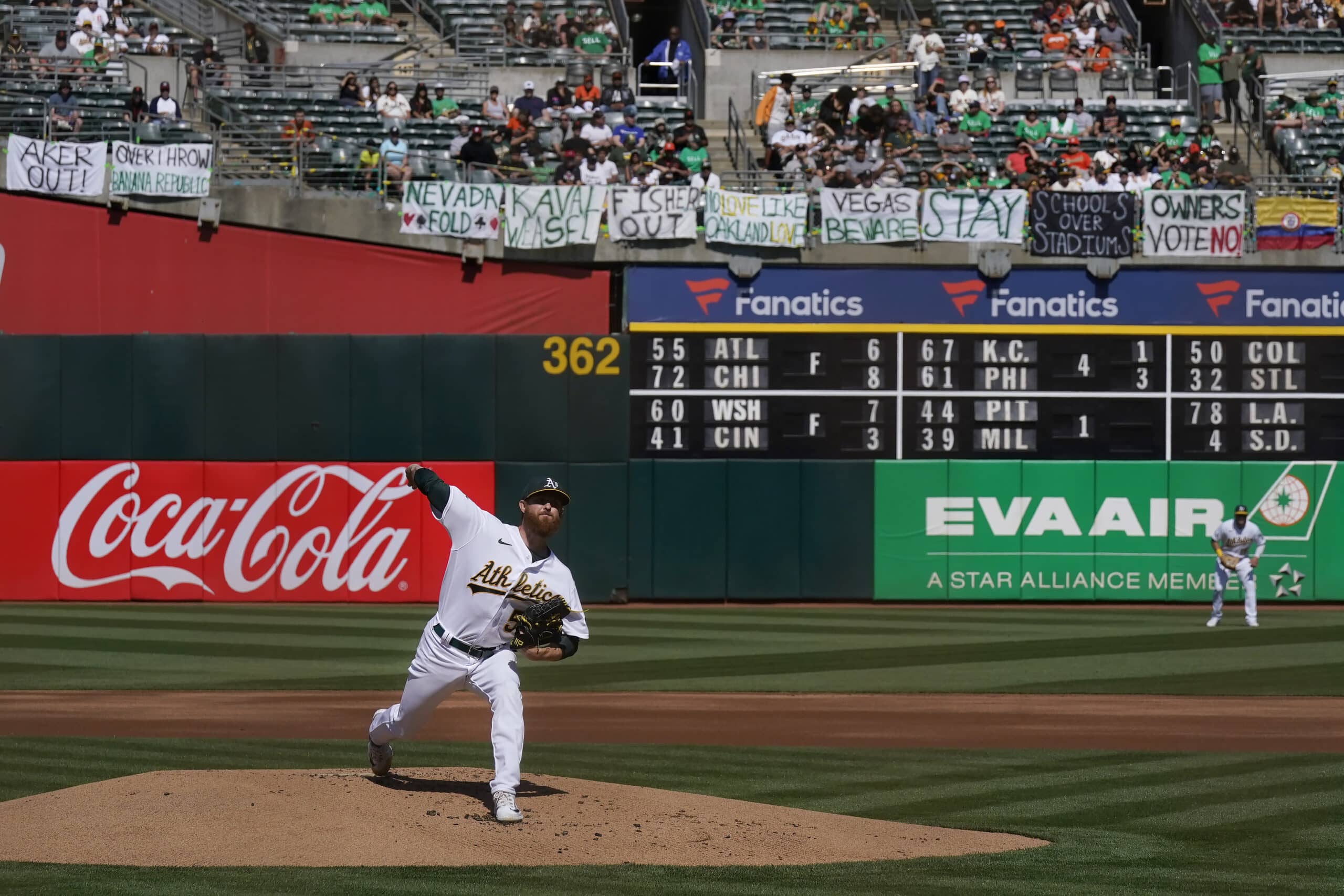
The Oakland Athletics' search for a modern facility stretched across multiple decades, involving failed proposals in Fremont, San Jose, and various Oakland sites, including the Howard Terminal waterfront project. Operating in the aging Oakland-Alameda County Coliseum, the franchise struggled with low attendance and constrained revenue generation.
After years of stalled negotiations with local government entities, MLB authorized the Athletics to explore parallel paths in alternative markets. In November 2023, MLB owners unanimously approved the franchise's relocation to Las Vegas, Nevada. The move involved a multi-step transition plan, with the franchise ending its run at the Oakland Coliseum after the 2024 season to play temporarily in Sacramento starting in 2025 while constructing a new stadium along the Las Vegas Strip.
Oakland A's Relocation Milestones: 2023: MLB Owners unanimously approve relocation to Las Vegas 2024: Final season played at Oakland-Alameda County Coliseum 2025–2027: Temporary residency at Sutter Health Park in Sacramento 2028+: Planned opening of modern venue in Las Vegas
Business Catalysts and Legal Mechanisms Behind Franchise Moves
Franchise relocations in professional baseball are rarely prompted by a single factor; rather, they result from complex legal, structural, and financial dynamics. Understanding these mechanisms clarifies why certain markets face relocation risk while others secure long-term commitment.
Stadium Economics and Media Rights
Modern baseball revenue relies heavily on venue customization and media rights. Ballparks are designed to generate high-margin revenue streams through corporate luxury suites, premium club seating, naming rights, and stadium sponsorship activations. When an older venue lacks these features, a franchise experiences a competitive disadvantage against higher-revenue clubs. Furthermore, territorial broadcast rights determine a club's regional sports network distribution, defining its long-term financial capacity.
The MLB Constitution and Voting Requirements
Under the rules governing Major League Baseball, an owner cannot unilaterally relocate a team. Article VIII of the MLB Constitution dictates that any proposed franchise relocation requires approval from at least three-quarters (75%) of the Major League Clubs. This mechanism ensures that a relocation does not infringe on another member club's territorial exclusivity without appropriate financial compensation or consensus agreement.
Antitrust Exemptions and Congressional Oversight
Major League Baseball holds a unique federal antitrust exemption originating from the 1922 Supreme Court ruling in Federal Baseball Club of Baltimore v. National League. This legal status allows MLB to restrict franchise movement in ways that other professional sports leagues cannot easily emulate. However, as demonstrated during the relocation battles of the late 1960s, Congress retains powerful oversight tools. Historical legal analysis provided by the National Baseball Hall of Fame Research Center highlights how municipal lawsuits and congressional threats to revoke the antitrust exemption have directly influenced league expansion decisions to replace departed teams.
Evaluating Potential Future MLB Relocation and Expansion Candidates
As Major League Baseball evaluates potential market expansion, stakeholders use specific criteria to assess whether a city can support a franchise. Municipalities seeking to attract or retain a team undergo evaluation across key areas:
- Public-Private Stadium Financing Strategy: Cities must present a legally binding stadium plan featuring explicit allocation of public infrastructure support, corporate tax district structures, or private capital equity.
- Corporate Market Depth: A candidate city needs a sufficient concentration of Fortune 500 companies and regional enterprises capable of purchasing season sponsorship packages, corporate suites, and stadium naming rights.
- Media Market Footprint: The metropolitan statistical area (MSA) must offer a broadcast footprint that expands MLB's total television and digital streaming audience without over-fragmenting existing regional sports networks.
- Territorial Rights Clearance: Proposed locations must sit outside existing exclusive territorial zones or include a framework to compensate nearby incumbent franchises.
Practical Steps to Track Ongoing Franchise Moves and Stadium Deals
For researchers, municipal policy analysts, and sports executives tracking real-time facility negotiations and potential franchise shifts, structured monitoring yields the most accurate insight:
- Review Municipal Council Agendas: Track city council agendas, county board notices, and port authority commission records in candidate cities for proposed tax-increment financing (TIF) districts or stadium bond measures.
- Monitor Ballpark Lease Expiration Dates: Maintain an inventory of facility lease terms across all thirty clubs to identify franchises entering the final five years of venue contracts without active extension agreements.
- Follow Legislative Finance Committees: State-level appropriations committees regularly introduce legislation regarding sports authority bonding capabilities long before official franchise announcements occur.
- Analyze League Committee Reports: Follow official owner meeting agendas, particularly reports issued by MLB's internal Stadium and Relocation Committees.
Frequently Asked Questions
What was the first modern MLB franchise relocation?
The first modern relocation occurred in 1953 when the Boston Braves relocated to Milwaukee, Wisconsin. This move ended a 50-year period of franchise stability across Major League Baseball and demonstrated the financial viability of single-team midwestern markets.
Why did the Brooklyn Dodgers move to Los Angeles in 1958?
Owner Walter O'Malley moved the Dodgers due to persistent failures to secure municipal support for a new domed stadium in Brooklyn to replace Ebbets Field. Los Angeles offered sprawling land at Chavez Ravine, vast parking potential, and access to an emerging West Coast broadcast market.
Which MLB team has relocated the most times in history?
The Athletics franchise holds the record for the most relocations in MLB history. Originally founded in Philadelphia (1901), the team relocated to Kansas City in 1955, moved to Oakland in 1968, and initiated a transition to Las Vegas.
Has an MLB team ever moved back to its original city?
While individual franchise entities have not returned to a former home city under the same corporate structure, multiple markets have received replacement expansion teams after a relocation. For example, Washington, D.C. received expansion Senators in 1961 after the original team moved to Minnesota, and later welcomed the Washington Nationals in 2005.
How does MLB officially approve a team relocation?
Under Article VIII of the MLB Constitution, a franchise relocation requires a formal evaluation by the league's relocation committee followed by a vote of all club owners. At least 75% (24 out of 30) of the team owners must vote in favor of the proposal for the relocation to be approved.