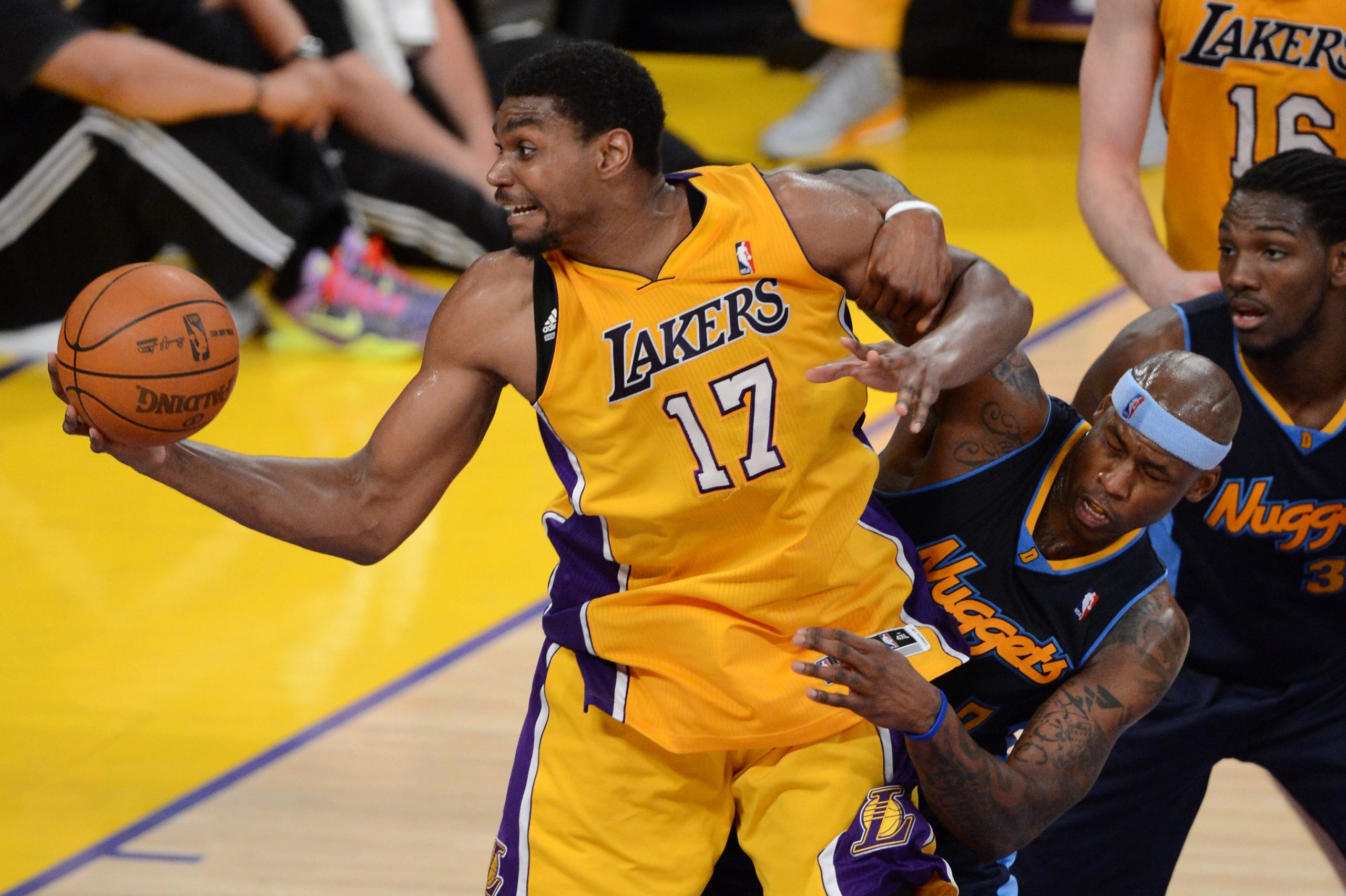
Andrew Bynum’s "untold story" is a complex narrative of immense physical talent derailed by chronic knee degeneration and a fluctuating passion for professional basketball. Despite becoming the youngest player in NBA history and winning two titles with the Los Angeles Lakers, his career effectively ended by age 26 due to catastrophic injuries and a perceived lack of commitment to the game’s traditional grind.
The Youngest to Ever Do It: Bynum’s Meteoric Rise
Andrew Bynum’s journey began as a gamble that redefined the NBA’s draft landscape. In 2005, the Los Angeles Lakers selected the 17-year-old center from St. Joseph High School with the 10th overall pick. At the time, the move was met with significant skepticism. The Lakers were in the post-Shaq era, struggling to surround Kobe Bryant with championship-caliber talent. Selecting a raw, high-school prospect seemed like a project that would take years to bear fruit.
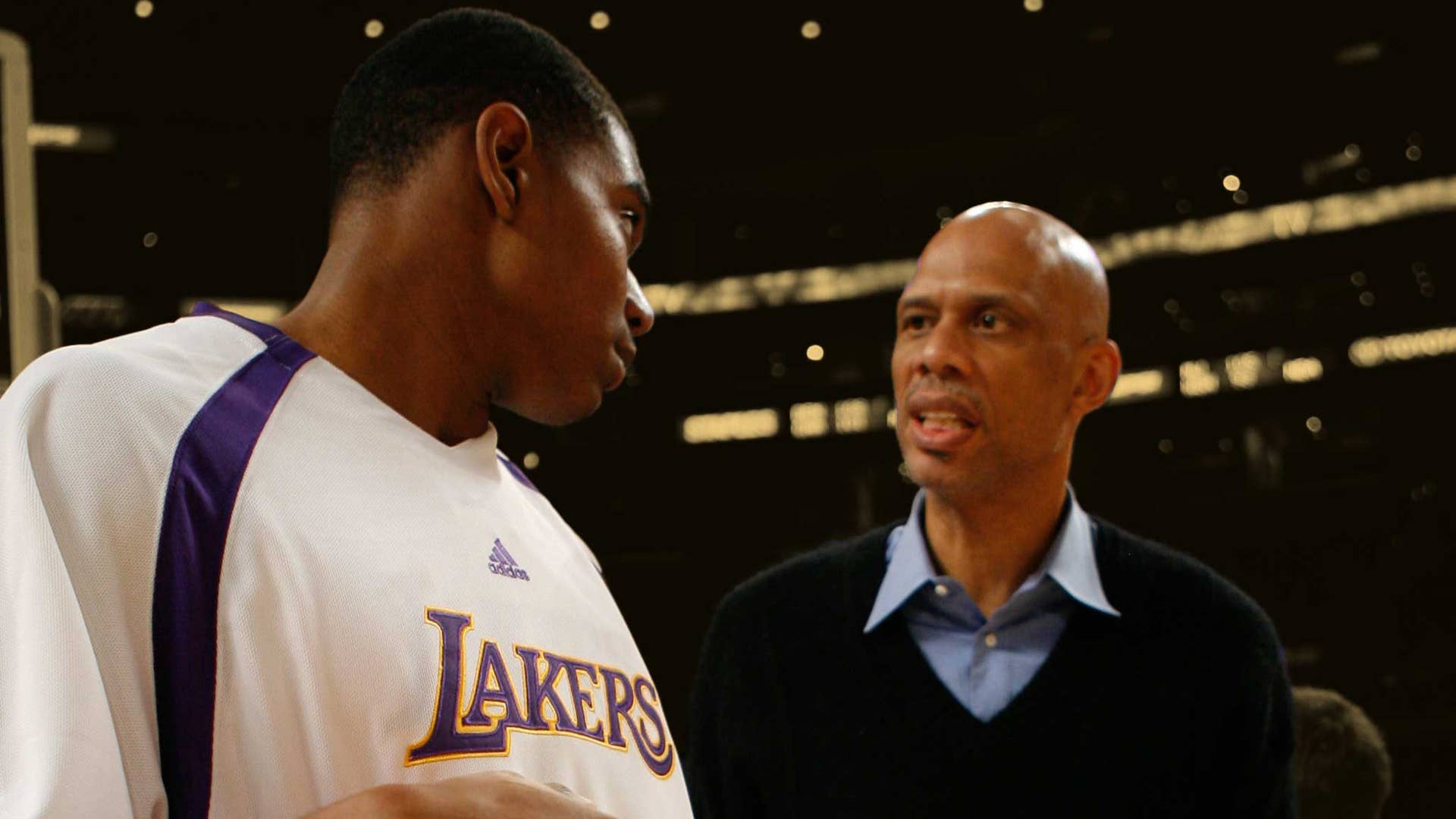
Under the tutelage of NBA legend Kareem Abdul-Jabbar, who was hired specifically to mentor him, Bynum developed an advanced post game that few seven-footers could match. By the 2007-2008 season, Bynum had transformed from a bench-warmer into a dominant force. His ability to anchor the defense while providing efficient scoring in the paint allowed the Lakers to return to elite status. Before a mid-season kneecap injury in 2008, Bynum was averaging 13.1 points and 10.2 rebounds, signaling the arrival of the NBA’s next great center.
The "untold" aspect of this period often revolves around the sheer amount of work Bynum put into his footwork. While later narratives labeled him "lazy," his early years were marked by rigorous sessions with Abdul-Jabbar, mastering the skyhook and defensive positioning. He was the vital interior component that allowed the Lakers to transition from a perimeter-heavy team to the back-to-back champions of 2009 and 2010.
The Physical Toll: A Career Defined by Knee Degeneration
The tragedy of Andrew Bynum’s career is found in his medical charts rather than his box scores. Bynum suffered from recurring knee issues that shifted from acute injuries to chronic, degenerative conditions. In 2008, it was a subluxed kneecap; in 2009, it was a torn MCL. However, it was the 2010 playoff run that arguably ended his long-term viability as an elite athlete.
During the 2010 NBA Finals against the Boston Celtics, Bynum played with a torn meniscus in his right knee. He had the knee drained of fluid multiple times just to stay on the court for 15 to 20 minutes a night. While his presence was a major factor in the Lakers’ Game 7 victory, the long-term cost was immense. By delaying surgery to chase a second ring, Bynum accelerated the "bone-on-bone" condition that would eventually force him out of the league.
By the 2011-2012 season, Bynum was an All-Star and an All-NBA Second Team selection, averaging 18.7 points and 11.8 rebounds. Statistically, he was at his peak, even recording a legendary 30-rebound game against the San Antonio Spurs. Yet, behind the scenes, the maintenance required to keep his knees functional was becoming unsustainable. This period represents the "last dance" of a traditional center before the league moved toward the high-mobility, "small-ball" era.
The Philadelphia Disaster and the "Bowling Incident"
In August 2012, the Lakers traded Bynum to the Philadelphia 76ers in a massive four-team deal that brought Dwight Howard to Los Angeles. This was supposed to be the start of the "Bynum Era" in Philadelphia. Instead, it became one of the most infamous chapters in sports history. Bynum never played a single minute for the 76ers.
The "untold story" of Philadelphia is often reduced to the "bowling incident." While rehabbing his right knee, Bynum reportedly injured his other knee while bowling. This event became a symbol of his perceived lack of professionalism. However, medical experts have since noted that for a person with Bynum’s degenerative condition, even low-impact activities could cause significant setbacks. The 76ers’ medical staff eventually discovered that Bynum had bilateral chondromalacia—a softening and breakdown of the cartilage under the kneecap in both legs.
The frustration in Philadelphia was palpable. Fans felt betrayed by a player who was earning a maximum salary while sitting on the sidelines with flamboyant hairstyles and a seemingly detached attitude. This disconnect between the player’s physical reality and the public’s expectations of "hustle" and "grit" defined the end of his time in the Northeast.
The Psychological Shift: Was Basketball Ever the Priority?
One of the most debated aspects of Andrew Bynum’s story is his psychological relationship with the game. Unlike Kobe Bryant, whose life was defined by basketball, Bynum often viewed the NBA as a job rather than a calling. This became increasingly evident during his brief stints with the Cleveland Cavaliers and the Indiana Pacers in 2013 and 2014.
In Cleveland, Bynum was suspended for "conduct detrimental to the team" after he reportedly began shooting the ball every time he touched it during a practice session—regardless of where he was on the court. Teammates and coaches sensed a player who was checking out. Bynum’s interests had always been diverse; he was a fan of high-performance cars, computer engineering, and electronics.
As the pain in his knees became a constant companion, the incentive to endure the grueling travel and rehabilitation schedule of the NBA diminished. By 2026, looking back at his departure, many analysts view Bynum not as a "bust," but as a man who simply chose to stop doing a job that was causing him physical agony and mental burnout.
Comparative Look: Andrew Bynum vs. Peer Centers (2011-2012)
To understand how dominant Bynum was at his peak, it is necessary to compare his performance during his final healthy season with the other elite centers of that era.
| Player | Team | PPG | RPG | BPG | FG% |
|---|---|---|---|---|---|
| Andrew Bynum | L.A. Lakers | 18.7 | 11.8 | 1.9 | 55.8% |
| Dwight Howard | Orlando Magic | 20.6 | 14.5 | 2.1 | 57.3% |
| Tyson Chandler | N.Y. Knicks | 11.3 | 9.9 | 1.4 | 67.9% |
| Marc Gasol | Memphis Grizzlies | 14.6 | 8.9 | 1.9 | 48.2% |
| DeMarcus Cousins | Sacramento Kings | 18.1 | 10.9 | 1.2 | 44.8% |
This data highlights that Bynum was effectively the second-best center in the world in 2012. His efficiency and rim protection were elite, making his sudden disappearance from the league all the more jarring for fans and historians.
Life After the NBA: Where is Andrew Bynum Now?
As of 2026, Andrew Bynum has remained largely out of the public eye. Unlike many of his contemporaries, he did not seek a career in broadcasting or coaching. Having earned over $70 million in career salary, Bynum was financially secure enough to disappear into a life of private interests.
Reports from those close to him suggest he has spent his post-NBA years pursuing his passion for mechanics and technology. He has been spotted at various automotive shows and is known to be an avid collector and modifier of high-end vehicles. There was a brief attempt at a comeback in 2018 when he scheduled workouts with NBA teams, but his knees simply could not handle the lateral movement required for the modern, faster-paced game.
His legacy remains a polarizing topic. In Los Angeles, he is remembered as a crucial piece of two championship teams. In Philadelphia and Cleveland, he is often cited as a cautionary tale of "max contract" risks. However, the "untold story" is ultimately one of a young man who reached the pinnacle of his profession, lost his health, and had the financial freedom to walk away when the joy was gone.
Why did Andrew Bynum retire so early?
Andrew Bynum retired primarily due to degenerative knee issues, specifically bilateral chondromalacia and various meniscus tears. By the age of 26, his knees were essentially "bone-on-bone," making the physical demands of professional basketball excruciating. Additionally, Bynum expressed a declining interest in the lifestyle of an NBA player, preferring to pursue other personal hobbies.
Did Andrew Bynum ever return to the NBA after 2014?
No, Andrew Bynum did not play in the NBA after his brief stint with the Indiana Pacers in 2014. Although he entertained the idea of a comeback in 2018 and held several private workouts for teams, he did not receive a contract offer, likely due to concerns regarding his long-term physical mobility and health.
How much did Andrew Bynum earn during his career?
Andrew Bynum earned approximately $73 million in total salary during his nine seasons in the NBA. His largest contracts came from the Los Angeles Lakers and the Philadelphia 76ers. Despite not playing for Philadelphia, he was paid his full salary for the 2012-2013 season, which was roughly $16.9 million.
Was the "bowling incident" actually the reason his career ended?
While the bowling incident is famous, it was not the sole cause of his career ending. Bynum already had significant cartilage damage in both knees. Bowling may have caused an acute setback, but his career was already in jeopardy due to years of playing through injuries and the natural degeneration of his joints.
What is Andrew Bynum's legacy with the Lakers?
Bynum is viewed as a vital contributor to the Lakers' 2009 and 2010 championships. He is often credited with providing the size and interior defense necessary to overcome the Boston Celtics and Orlando Magic. While his exit was unceremonious, his peak years remain some of the best center play in Lakers history.
Recommendations for NBA History Enthusiasts
For those looking to understand the full context of Andrew Bynum's career, the following actions provide deeper insight:
- Study the 2010 NBA Finals: Watch the full series to see how Bynum's limited minutes drastically altered the Celtics' offensive strategy and allowed Pau Gasol more freedom.
- Analyze the 2012 Dwight Howard Trade: Review the "Dwightmare" trade documents and reports to see how Bynum's health was the "X-factor" that ultimately led to the Philadelphia 76ers' "Process" rebuild.
- Compare Center Eras: Look at the transition from 2012 to 2015 to see how the rise of the "Stretch Four" and "Small Ball" would have likely marginalized a healthy Bynum, regardless of his knee status.
Andrew Bynum's story serves as a reminder that in professional sports, physical longevity is a gift, and a player's "untold" narrative is often written in the quiet moments of rehabilitation and the personal decisions made when the cameras are turned off.