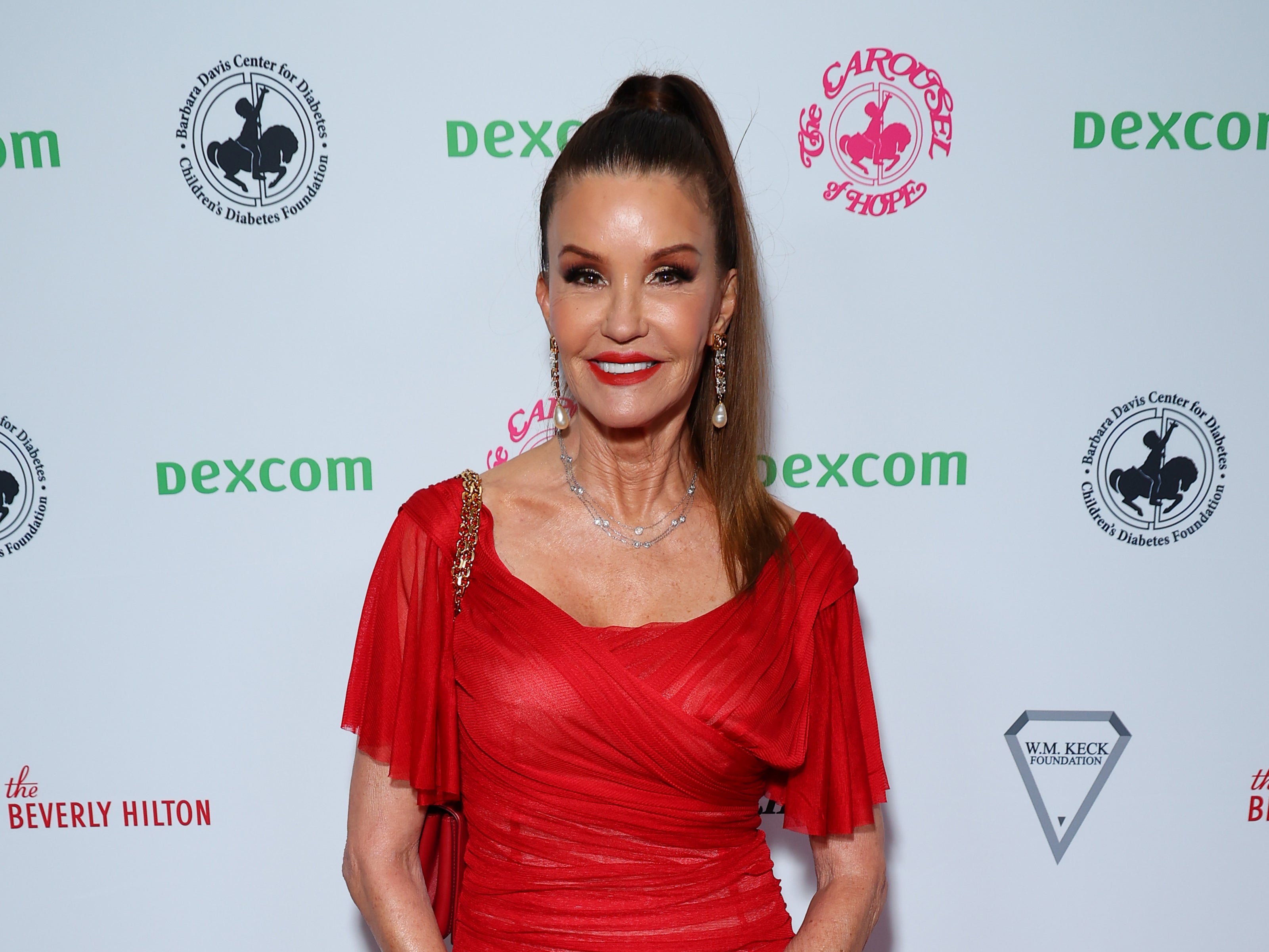
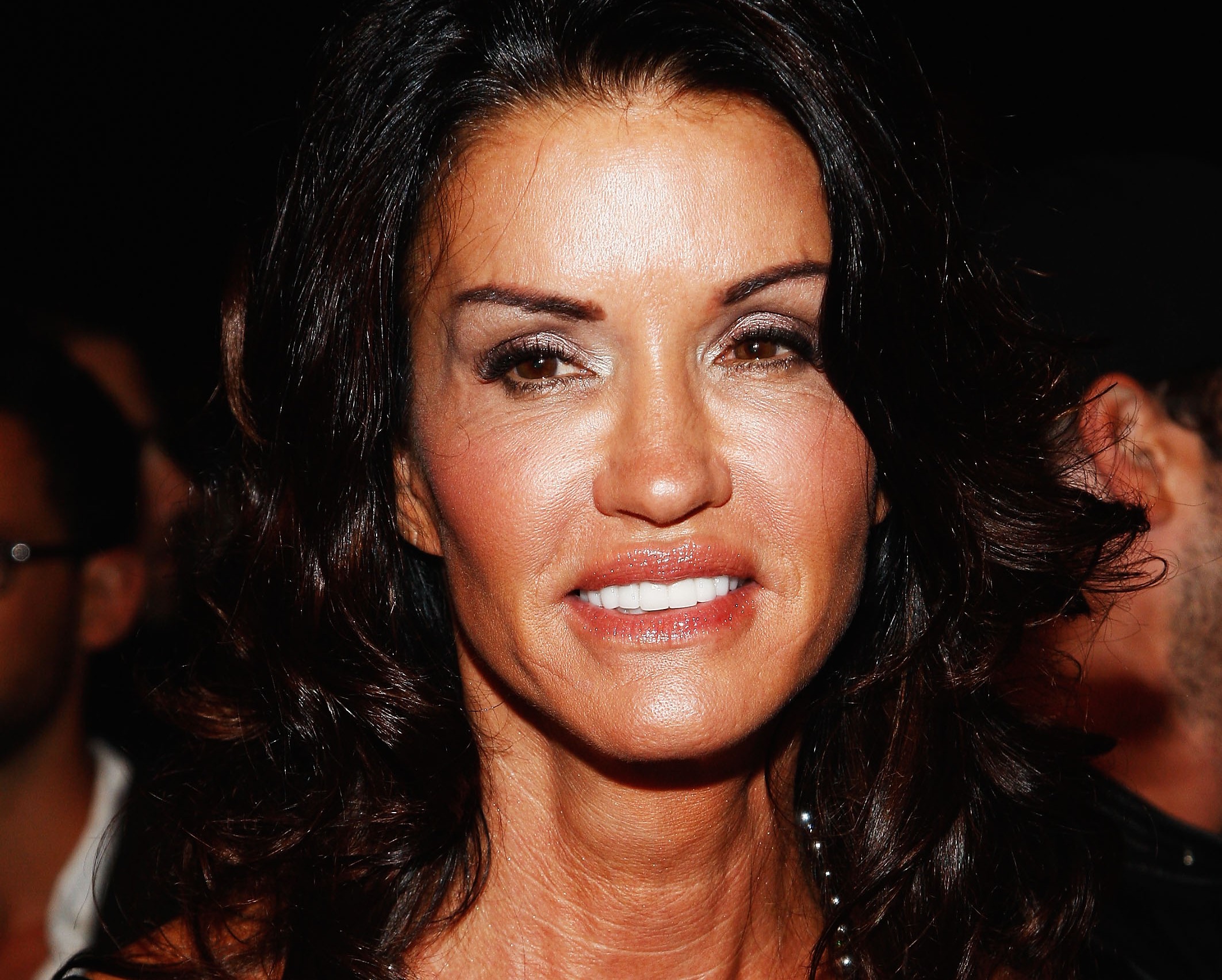
Janice Dickinson is an American model, television personality, and author who achieved global prominence in the 1970s and 1980s. Widely recognized as the creator of the term "supermodel," she bridged the gap between high-fashion editorial work and mass-market celebrity. Beyond her prolific modeling career, Dickinson became a prominent television presence through her outspoken tenure as a judge on America’s Next Top Model.
Origins and Early Career Trajectory
Born on February 15, 1955, in Brooklyn, New York, Janice Doreen Dickinson moved to Florida during her childhood, where she graduated from Hollywood Hills High School. Her initial professional aspirations were focused on the arts, but after moving to New York City in the mid-1970s, she began pursuing a career in modeling.
Her breakthrough occurred when she met influential fashion photographer Jacques Silberstein, who facilitated her introduction into the high-fashion industry. Despite initial rejection from some agencies—most notably Eileen Ford, who famously told Dickinson she would never work—she persevered. Her aesthetic, characterized by a sharp, angular face and a non-traditional look for the era, resonated with photographers looking to move away from the "all-American girl" trope that had dominated the market throughout the early 1970s.
The Evolution of the Supermodel Concept
By the late 1970s, Dickinson was one of the most booked models in the world. Her work appeared on the covers of Vogue (both American and international editions), Elle, Harper’s Bazaar, and Marie Claire. During this period, she was one of the few models who successfully balanced high-fashion runway work with high-paying commercial contracts.
Dickinson has frequently stated in interviews and her written autobiographies that she coined the term "supermodel" to describe her own elevated status in the industry. While the term is now used broadly to denote a model who has achieved household-name status, in the 1970s and 1980s, it signified a shift in the power dynamic between the model, the photographer, and the fashion house. As a supermodel, Dickinson was not merely a mannequin; she was a brand unto herself, commandingly earning fees that far exceeded her peers. This transition set the foundation for the celebrity-model culture that would define the 1990s.
Professional Transition to Television
In 2003, Dickinson reached a broader international audience when she joined the judging panel of the reality television series America’s Next Top Model (ANTM). Alongside host Tyra Banks and other industry professionals, Dickinson served as a judge for the show's first four cycles. Her role was that of the "tough love" mentor—an expert who provided blunt, unfiltered critiques of contestants' performances and modeling potential.
Her tenure on the show solidified her status as a pop-culture icon, shifting her public image from a static fashion print model to a dynamic, outspoken television personality. The popularity of her persona on ANTM led to her own reality series, The Janice Dickinson Modeling Agency, which premiered in 2006. This program followed her efforts to transition into the business side of the industry by establishing her own boutique modeling agency, highlighting the operational challenges of talent scouting and client relations.
Impact and Industry Standing
The influence of Janice Dickinson on the fashion industry remains a subject of study regarding the commodification of models. By prioritizing her name and image as the focal point of her marketing, she moved the industry away from anonymity and toward personality-driven branding.
Comparative Industry Roles
The following table outlines the different phases of her professional trajectory and the shift in her public-facing responsibilities:
| Career Phase | Primary Focus | Industry Role |
|---|---|---|
| 1975–1985 | High Fashion | Editorial Model & Runway Specialist |
| 1985–2000 | Commercial Print | Face of Global Beauty Campaigns |
| 2003–2005 | Reality Television | Lead Judge, America's Next Top Model |
| 2006–2009 | Talent Management | CEO of The Janice Dickinson Modeling Agency |
| 2010–2026 | Media Appearances | Author, Guest Personality, & Cultural Commentator |
Advocacy and Public Narrative
Throughout her later career, Dickinson has been notably vocal about her personal life and the challenges inherent in the modeling industry. She has authored several books, including No Lifeguard on Duty (2002) and Everything About Me is Fake...And I'm Perfect (2004), which detail her rise to fame, struggles with substance abuse, and recovery.
In more recent years, Dickinson has utilized her platform to speak on legal and social issues. Her public testimony regarding sexual assault allegations against Bill Cosby in the mid-2010s brought significant media attention to the legal limitations and statute of limitations associated with historical allegations. Her involvement in these proceedings underscored her transition from a fashion-industry subject to a figure involved in broader social advocacy.
Navigating the Modeling Industry: Common Considerations
For those seeking to understand the legacy of figures like Dickinson, it is important to distinguish between the eras of modeling. The "supermodel" era of the 1970s and 1980s was defined by print magazines and physical portfolios. Today, the industry has shifted almost entirely to digital portfolios and social media metrics.
Key Considerations for Aspiring Models
- Brand Identity: Unlike the 1980s, where an agency built the model’s brand, modern models are expected to maintain their own personal brand through social media channels.
- Agency Relations: While digital platforms have democratized access, signed representation remains the primary gatekeeper for high-fashion runway shows and major campaign bookings.
- Professional Longevity: Historically, a model's career was considered short-lived. Current industry trends favor "career models" who diversify into acting, social media influencing, or business ownership, a trajectory Dickinson modeled early in her television career.
Frequently Asked Questions
Did Janice Dickinson actually invent the term "supermodel"?
The origins of the term "supermodel" are subject to debate. While Dickinson has claimed credit for the term, its usage dates back to the 1940s, when it was occasionally used in press releases. However, Dickinson is widely credited with popularizing the term and applying it to the modern era of models who wielded significant cultural and financial influence.
How many seasons was Janice Dickinson on America's Next Top Model?
Janice Dickinson served as a primary judge on America's Next Top Model for the first four cycles of the show. She later appeared in subsequent cycles as a guest judge and as an acting coach, maintaining a consistent association with the brand during its most influential years.
What happened to The Janice Dickinson Modeling Agency?
The agency was the subject of the reality series that aired from 2006 to 2009. While the show provided a fictionalized or dramatized view of the agency's daily operations, the business itself focused on talent management and scouting. The agency eventually ceased high-volume operations, mirroring the broader industry shift toward digital agency management.
How has Janice Dickinson influenced modern modeling standards?
Dickinson challenged the industry's rigidity during the 1970s by proving that a model could possess a non-conforming look and still achieve peak professional success. Her focus on "personality" helped set the stage for modern models to prioritize their personal brand identity over the traditional, silent mannequin approach.
Where can I find information on her current projects?
As of 2026, information regarding her appearances and current projects is primarily distributed through public relations representatives and official social media channels. She remains a frequent guest on talk shows and continues to engage in public discourse surrounding the fashion industry and personal health advocacy.
Next Steps for Aspiring Industry Professionals
If you are researching the history of modeling for professional or academic purposes, the most reliable path is to consult archives of Vogue or Harper’s Bazaar from the 1978–1985 period. Analyzing these primary sources allows you to see the visual changes in photography and styling that Dickinson championed. For those interested in the business of talent management, examining the transition from the agency-centric model of the 1980s to the current digital-first approach provides essential context for how the industry currently operates in 2026.