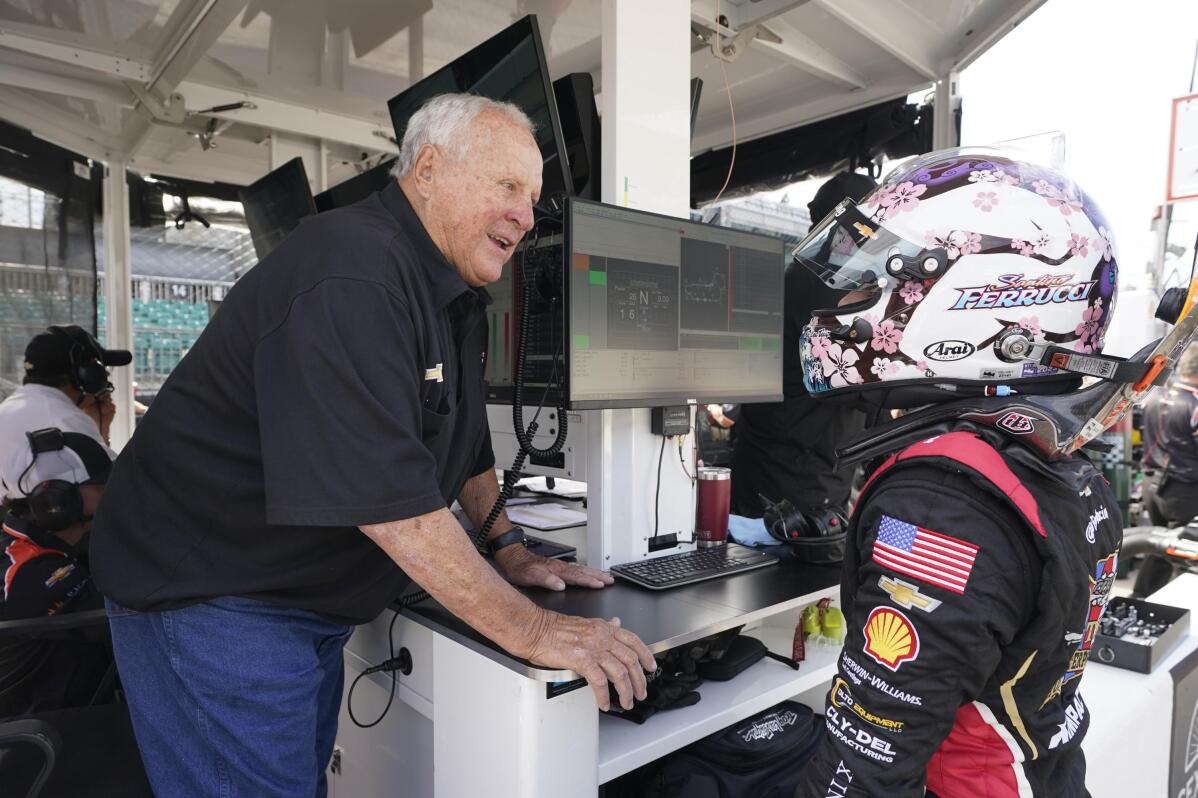
A.J. Foyt is widely considered the greatest driver in American open-wheel history, holding a record seven IndyCar championships and four Indianapolis 500 victories. His legacy is defined by unparalleled versatility across disciplines, an indomitable will to win, and his enduring role as a team owner at the highest levels of the sport.
The Foundation of a Texan Icon
Anthony Joseph Foyt Jr., known to the world as "Super Tex," did not just participate in racing; he dominated it through sheer force of will and mechanical intuition. Born in Houston in 1935, Foyt’s journey began in the dust of Texas dirt tracks. Unlike many modern drivers who specialize in a single discipline from a young age, Foyt’s early career was a masterclass in adaptation. He cut his teeth in midget cars and sprinters, where the lack of aerodynamic aids and high power-to-weight ratios demanded a level of car control that would become his trademark.
By the time he reached the United States Automobile Club (USAC) National Championship—the precursor to modern IndyCar—Foyt was already a seasoned veteran of the "bullrings." His entry into the big leagues of open-wheel racing in the late 1950s signaled a shift in the sport. He wasn't just a driver; he was a mechanic who understood the stress limits of every bolt on his machine. This technical depth allowed him to push cars further than his contemporaries, knowing exactly when a component was on the verge of failure.
The Four-Time Club: Conquering the Brickyard
The Indianapolis 500 is the centerpiece of Foyt’s career. He was the first driver to achieve the milestone of four victories at the "Brickyard," a feat so difficult it took decades for others to join him in that exclusive circle. Each of Foyt's wins represented a different era of technological evolution in racing.
1961: The First Breakthrough
Foyt’s first win in 1961 was a classic duel against Eddie Sachs. It was a race that highlighted Foyt's tactical brilliance. When a refueling issue late in the race forced Foyt into an unscheduled pit stop, it seemed his chance was gone. However, Sachs’ tires began to disintegrate, forcing him to pit and handing the lead back to Foyt. This victory established Foyt as a national star.
1964: The End of an Era
The 1964 race remains historically significant as it was the last time a front-engine "roadster" won the Indianapolis 500. As the "British Invasion" of rear-engine cars led by Lotus and Jim Clark began to take over, Foyt stayed loyal to the traditional front-engine Watson-Offenhauser. His victory proved that, in the hands of a master, grit could still overcome a technological shift—at least for one more year.
1967: The Turbine Challenge
In 1967, the racing world was shocked by the performance of the STP-Paxton Turbocar, a silent, turbine-powered machine that dominated the race. Foyt, driving his self-built "Coyote" chassis, stayed within striking distance. When the turbine failed just three laps from the finish, Foyt avoided a massive last-lap pileup to claim his third ring.
1977: Cementing the Record
A decade after his third win, Foyt became the first four-time winner in 1977. This victory was perhaps his most emotional, as he won in a car of his own design and construction—the Coyote-Foyt. Seeing him drive the pace car with Speedway owner Tony Hulman after the race remains one of the most iconic images in the history of the Indianapolis Motor Speedway.
Beyond IndyCar: The Ultimate Versatility
What truly separates A.J. Foyt from other racing legends like Rick Mears or Scott Dixon is his success outside of open-wheel racing. Foyt is the only driver in history to win the "Triple Crown" of endurance and oval racing: the Indianapolis 500, the Daytona 500, and the 24 Hours of Le Mans.
In 1967, just weeks after winning his third Indy 500, Foyt traveled to France to compete in the 24 Hours of Le Mans. Partnering with Dan Gurney in an all-American Ford Mark IV, Foyt won on his first and only attempt. This remains the only time an all-American team (drivers, car, and engine) has claimed the overall victory at Le Mans.
His victory in the 1972 Daytona 500 further solidified his status. Foyt could transition from a high-downforce Indy car to a heavy, lumbering NASCAR stock car or a sophisticated sports prototype with ease. This versatility is a lost art in the modern era of hyper-specialized driver development.
The Stats and Historical Comparison
To understand Foyt’s dominance, one must look at the raw numbers. His 67 career IndyCar wins remained the gold standard for decades. While modern legends have approached his win totals, the diversity of tracks and the danger of the era in which Foyt competed add a layer of prestige to his statistics that is hard to replicate.
| Driver | Indy 500 Wins | IndyCar Titles | Total Wins | Era |
|---|---|---|---|---|
| A.J. Foyt | 4 | 7 | 67 | 1957–1993 |
| Mario Andretti | 1 | 4 | 52 | 1964–1994 |
| Rick Mears | 4 | 3 | 29 | 1976–1992 |
| Scott Dixon | 1 | 6+ | 50+ | 2001–Present |
| Al Unser Sr. | 4 | 3 | 39 | 1964–1993 |
Note: Statistics reflect the verified historical records as recognized by IndyCar and USAC sanctioning bodies.
A.J. Foyt Enterprises: The Transition to Ownership
Foyt’s career did not end when he climbed out of the cockpit for the final time in 1993. Long before his retirement, he had established A.J. Foyt Enterprises, a racing team based in Waller, Texas. His transition to full-time ownership allowed him to mentor new generations of drivers while maintaining his presence in the paddock.
The team achieved the ultimate success in 1999 when Kenny Bräck won the Indianapolis 500, giving Foyt his fifth win at the Brickyard—his first as an owner only. The team has faced significant challenges in the 21st century, competing against better-funded operations like Team Penske and Chip Ganassi Racing. However, Foyt’s commitment to the sport never wavered.
By 2026, the team remains a fixture of the IndyCar Series, often serving as a grit-and-determination underdog that fans rally behind. The iconic #14, a number synonymous with Foyt, continues to represent his legacy on tracks across North America.
The "Super Tex" Persona and Cultural Impact
The legacy of A.J. Foyt is as much about his personality as it is about his trophies. Foyt was known for his "no-nonsense" attitude, a fiery temper, and a refusal to back down from anyone. This was famously illustrated during the 1997 true-life drama at Texas Motor Speedway, where Foyt slapped driver Arie Luyendyk in victory lane during a dispute over the race results.
While such actions might be scrutinized in the modern PR-managed world of sports, for Foyt’s fans, they represented an authentic passion for the sport. He was a man who survived horrific crashes—most notably a 1990 accident at Elkhart Lake that nearly cost him his legs—only to return to the cockpit through sheer stubbornness.
His legacy is one of "toughness." In an era where racing was incredibly lethal, Foyt was a survivor. He saw many of his friends and competitors perish on the track, yet he continued to push the limits. This resilience has made him a folk hero in the American South and a respected elder statesman globally.
Key Milestones in the Foyt Legacy
- 1958: Debut at the Indianapolis 500.
- 1961: First Indy 500 victory and USAC Championship.
- 1967: Wins both the Indy 500 and the 24 Hours of Le Mans in the same year.
- 1972: Wins the Daytona 500.
- 1977: Becomes the first four-time winner of the Indianapolis 500.
- 1993: Retires from driving on pole day at Indianapolis.
- 1999: Wins the Indy 500 as a team owner with driver Kenny Bräck.
Frequently Asked Questions
How many times did A.J. Foyt win the Indianapolis 500?
A.J. Foyt won the Indianapolis 500 four times as a driver, in 1961, 1964, 1967, and 1977. He was the first driver in history to reach this milestone, which has since been matched by Al Unser Sr., Rick Mears, and Helio Castroneves. Additionally, he won the race as a team owner in 1999.
What makes A.J. Foyt’s 1967 season so special?
In 1967, Foyt achieved what many consider the greatest single year in racing history. He won the Indianapolis 500 in May and then traveled to France in June to win the 24 Hours of Le Mans on his first attempt. Winning the world's most prestigious oval race and the world's most prestigious endurance race in the same month is a feat that has never been repeated.
Is A.J. Foyt still involved in IndyCar in 2026?
As of 2026, A.J. Foyt remains the patriarch of A.J. Foyt Enterprises. While his son Larry Foyt handles the day-to-day operations as Team President, A.J.’s influence and presence are still felt within the organization. The team continues to compete full-time in the NTT IndyCar Series, maintaining the legacy of the #14 car.
Why is A.J. Foyt called "Super Tex"?
The nickname "Super Tex" reflects both his Texas roots (he was born and raised in Houston and still resides in Texas) and his larger-than-life dominance in the sport. It became a popular moniker during the 1960s and 70s as he became the face of American motorsports, representing a rugged, independent, and fiercely competitive spirit.
Did A.J. Foyt ever race in Formula 1?
While Foyt was invited to test and race in Formula 1, he largely declined to compete in the European-based series. At the time, the USAC Championship was incredibly lucrative and prestigious, and Foyt preferred the variety of American racing, which included dirt tracks, ovals, and road courses. He did, however, prove his road-racing mettle by winning at Le Mans against many of the top F1 drivers of the day.
How to Follow the Foyt Legacy Today
For fans and historians looking to connect with the Foyt legacy in 2026, the best approach is a multi-step journey through racing history. First, visit the Indianapolis Motor Speedway Museum, which houses several of Foyt’s winning cars, including his 1961 Bowes Seal Fast Special and his 1977 Coyote. Seeing these machines in person provides perspective on the lack of safety features and the raw mechanical nature of the cars he mastered.
Second, attend an IndyCar event to see the A.J. Foyt Enterprises team in action. While the driver in the seat may change, the team's grit remains a direct reflection of its founder. Finally, studying the archives of the Motorsports Hall of Fame of America offers deep dives into the technical specifications and race reports that defined his seven championship seasons. Understanding A.J. Foyt is not just about looking at a trophy case; it is about recognizing the evolution of speed and the man who stayed at the front of the pack through four decades of change.