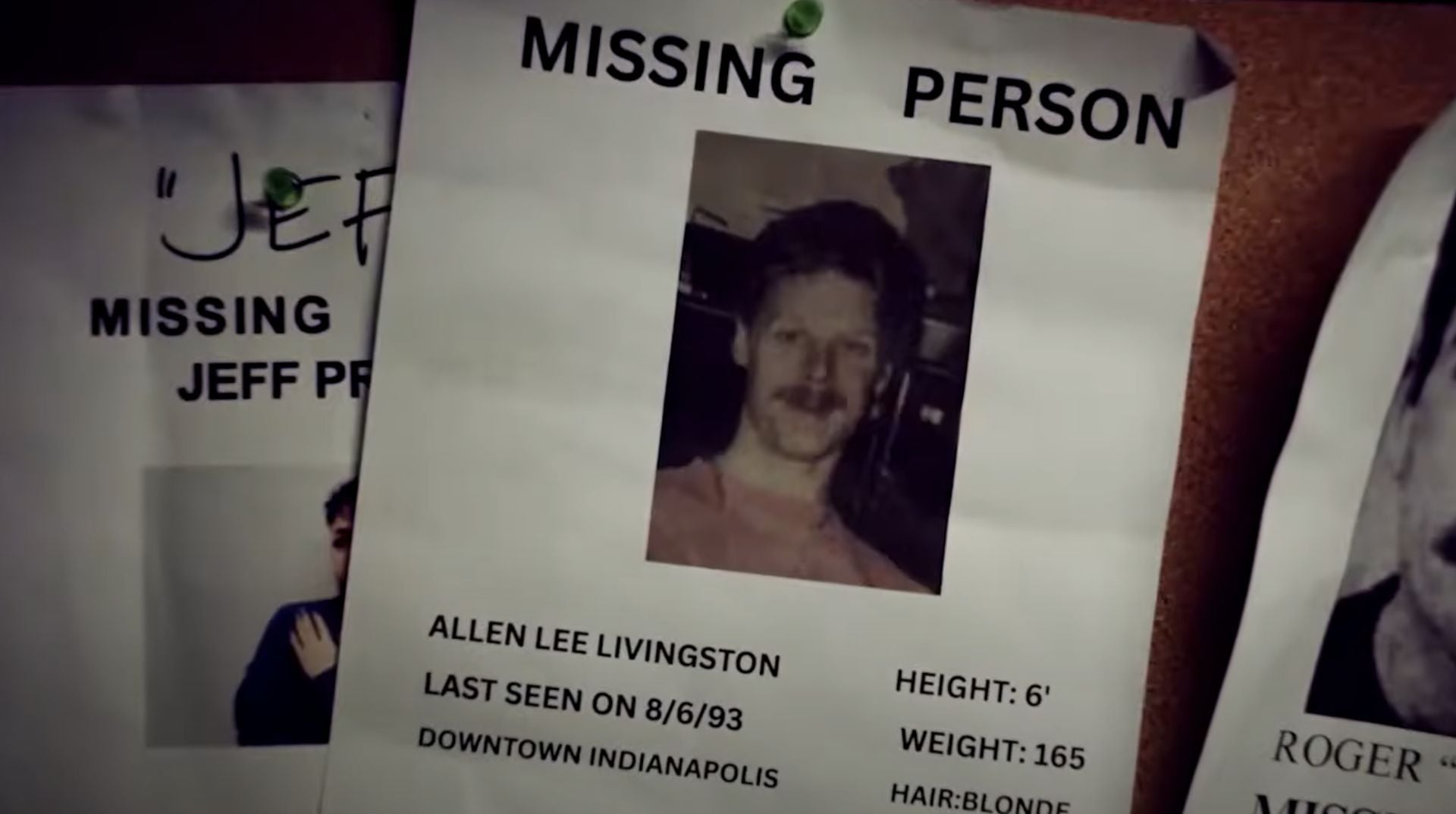
Herb Baumeister, the primary suspect in a series of disappearances across Indiana in the 1980s and 90s, died by suicide on July 3, 1996. He succumbed to a self-inflicted gunshot wound at Pinery Provincial Park in Ontario, Canada, while fleeing an intensive investigation into the discovery of thousands of human bone fragments at his Westfield estate, Fox Hollow Farm.
The Circumstances of Herb Baumeister’s Death in 1996
The death of Herb Baumeister was as abrupt as it was revealing. In June 1996, as the Hamilton County Sheriff’s Department and Indiana State Police began excavating the 18-acre Fox Hollow Farm estate, Baumeister disappeared. Knowing that the discovery of nearly 10,000 human remains on his property would lead to multiple counts of murder, he fled north, eventually crossing the border into Canada.
On July 3, 1996, his body was discovered by a passerby at Pinery Provincial Park, located near Grand Bend, Ontario. Forensic investigators determined the cause of death was a single gunshot wound to the head from a .357 caliber handgun. Baumeister was 49 years old at the time of his death.
While the physical cause of death was clear, the psychological and legal implications were far more complex. Baumeister left behind a three-page suicide note, but the document was notable for what it omitted. He detailed his distress over his failing marriage and his struggling business, Sav-A-Lot thrift stores, yet he offered no confession or mention of the victims found at his home. This refusal to acknowledge his crimes in his final moments left dozens of families without direct closure or an explanation for why their loved ones had been targeted.
The Investigation at Fox Hollow Farm and the Flight from Justice
The investigation that led to Baumeister's suicide began in the early 1990s. Law enforcement had been looking for a suspect involved in the "I-70 Strangler" cases and the disappearance of several men from the Indianapolis gay bar scene. It was not until 1994 that a tip focused attention on Baumeister. A young man reported that he had been invited to Baumeister’s home, where he saw a human skull and was nearly strangled during a sexual encounter.
However, investigators faced significant legal hurdles. Baumeister refused to allow a search of his property, and his wife, Julie, initially blocked police efforts to protect her family’s privacy. It was only after Julie filed for divorce in 1996—amidst her own growing suspicions—that she authorized a search of the Fox Hollow Farm property while Herb was out of town.
The subsequent search revealed a horrific scene. In the wooded area behind the family’s Tudor-style home, investigators found thousands of charred bone fragments and teeth. The scale of the discovery was unprecedented in Indiana history. As the gravity of the forensic evidence became clear, Baumeister realized that his dual life—as a successful businessman and family man by day, and a predator by night—had been permanently shattered. His flight to Canada was a direct reaction to the realization that he could no longer evade the legal system.
Modern Forensic Breakthroughs: Identifying the Victims (2023–2026)
Although Baumeister died in 1996, the investigation into his crimes did not end with his suicide. For decades, thousands of bone fragments remained unidentified due to the state they were found in—many were burnt or crushed, making traditional DNA extraction difficult. As of 2026, the Hamilton County Coroner’s Office, led by Coroner Jeff Jellison, has utilized significant advancements in forensic genealogy and DNA sequencing to identify remains that were previously thought to be "un-identifiable."
In the period between 2022 and 2026, a concerted effort was made to re-examine the remains. The coroner's office partnered with specialized labs to create genetic profiles from the degraded bone samples. This effort has led to several high-profile identifications of men who went missing in the mid-1990s. These breakthroughs have shifted the narrative from a cold case to an active forensic recovery operation, proving that Baumeister’s death did not close the book on the justice owed to the victims.
| Victim Name | Status | Year Identified | Context/Identification Method |
|---|---|---|---|
| Roger Goodlet | Confirmed | 1996 | Identified shortly after the initial search. |
| Steven Hale | Confirmed | 1996 | Identified through dental records and early DNA. |
| Allen Livingston | Confirmed | 2023 | Identified via advanced forensic DNA genealogy. |
| Manuel Resendez | Confirmed | 2024 | Remains re-identified using updated genetic profiles. |
| Jeffrey Jones | Confirmed | 2024 | Identified through the 2020s forensic push. |
| Unidentified Remains | Ongoing | N/A | Thousands of fragments representing 25+ suspected victims. |
The I-70 Strangler Connection and Modus Operandi
One of the most persistent questions following Baumeister's cause of death is whether he was also the "I-70 Strangler." This moniker refers to a series of murders involving men whose bodies were dumped along Interstate 70 across Indiana and Ohio in the 1980s. While Baumeister was never charged with these crimes due to his suicide, the modus operandi—strangulation followed by the disposal of bodies in rural or wooded areas—shared striking similarities with the Fox Hollow Farm cases.
Baumeister’s primary hunting ground was the Indianapolis gay bar scene. He often used the pseudonym "Brian McHuston" to lure victims to his estate. His 18-acre property provided the seclusion necessary to commit these acts, and the indoor pool area was often cited in witness reports as a location of terror. The transition from dumping bodies along the highway to burying/burning them on his own property suggests an evolution in his criminal behavior, moving from a disorganized disposal method to a more controlled, albeit gruesome, method of concealment.
The Psychological Profile and Social Standing of Baumeister
To understand why Baumeister chose suicide as his final act, one must look at his psychological profile. He was often described as a man obsessed with his social standing and perceived success. He operated the Sav-A-Lot franchise stores in Indianapolis, which were initially quite successful. He lived in a prestigious neighborhood and was a father of three.
However, his personal life was far from stable. Acquaintances described him as eccentric and prone to erratic behavior. The discovery of mannequins around his pool area and his bizarre interactions with neighbors hinted at a deeply fractured psyche. For Baumeister, the exposure of his crimes meant the total destruction of the "successful businessman" persona he had meticulously crafted. In the eyes of many criminal profilers, his suicide was not an act of remorse, but a final attempt to exert control over his own narrative and escape the public humiliation of a trial.
Legal and Investigative Limitations Following a Suspect's Death
The suicide of a primary suspect creates significant hurdles for the justice system. When Baumeister died, several legal avenues were immediately closed:
- Cessation of Prosecution: Under U.S. and Canadian law, criminal proceedings cannot continue against a deceased individual. This meant there would never be a formal verdict or sentencing for the Fox Hollow Farm murders.
- Abatement of Records: In some jurisdictions, the death of a defendant during an appeal or before a verdict can lead to the "abatement" of the case, which essentially wipes the legal slate clean. While the evidence against Baumeister was overwhelming, he remains legally a "suspect" rather than a "convicted serial killer."
- Resource Allocation: After a suspect dies, funding for ongoing investigations often dries up. It took nearly 30 years and a change in local leadership for the identification process at Fox Hollow Farm to receive the necessary funding and technological support it required.
Despite these limitations, the work conducted between 2023 and 2026 has shown that the truth can still be uncovered through forensic science, even when the perpetrator has long been dead.
Frequently Asked Questions
Did Herb Baumeister confess to the murders in his suicide note?
No. Herb Baumeister’s suicide note did not contain a confession for any of the murders. The three-page letter focused on his failing business, financial troubles, and the breakdown of his marriage. He expressed distress over his life falling apart but completely avoided addressing the human remains found at Fox Hollow Farm.
Where exactly was Herb Baumeister found in Canada?
His body was discovered at Pinery Provincial Park in Ontario, Canada. This is a large, wooded park along the shores of Lake Huron. He had driven there from Indiana in an attempt to escape the police search of his home. He was found inside his car near a picnic area.
How many victims is Herb Baumeister suspected of killing?
While the remains of approximately 10 to 12 individuals have been formally identified through DNA and dental records, investigators found more than 10,000 bone fragments. Based on the volume of remains, forensic experts estimate that the actual number of victims could exceed 25.
Was Herb Baumeister's wife involved in the crimes?
There is no evidence to suggest that Julie Baumeister was involved in or had knowledge of the murders. She worked long hours at the family’s stores and was often away from the house. When she finally became aware of the police’s suspicions and Herb’s erratic behavior, she cooperated with authorities and permitted the search that led to the discovery of the remains.
Are they still identifying bodies at Fox Hollow Farm?
Yes. As of 2026, the identification process is ongoing. The Hamilton County Coroner’s Office continues to process the thousands of bone fragments using modern genetic genealogy. New identifications are still being made as family members of missing men from that era provide DNA samples for comparison.
Following the Forensic Progress of the Baumeister Case
For those following the developments of this case in 2026, the most effective way to stay informed is through the official releases of the Hamilton County Coroner’s Office. The investigation has moved from a local criminal search to a global forensic milestone. If you are a relative of a man who went missing in the Midwest during the 1980s or 1990s, you are encouraged to contact the coroner's office regarding DNA submission.
Supporting victim advocacy groups and cold case initiatives remains the best way to ensure that the resources required for these complex DNA identifications remain available. While the perpetrator avoided a trial through his death, the identification of each victim serves as a form of posthumous justice that the legal system alone could not provide.