End-of-life cases involve legal and ethical disputes regarding the continuation or withdrawal of life-sustaining medical treatment for patients who lack decision-making capacity. These cases navigate the complex intersection of patient autonomy, clinical ethics, and state law to determine the "best interests" of individuals in persistent vegetative or minimally conscious states.
The legal landscape surrounding end-of-life cases has evolved significantly over the last several decades, shifting from a physician-led paternalistic model to one that prioritizes the patient’s known wishes and constitutional rights. As we navigate the clinical and legal realities of 2026, these cases remain some of the most sensitive and procedurally rigorous in the judicial system. They typically arise when there is a disagreement between medical professionals and family members, or among family members themselves, regarding a patient's quality of life and the perceived "futility" of ongoing medical intervention.
To understand how these cases are resolved, one must examine the legal standards of evidence, the role of advance directives, and the specific biological definitions that trigger judicial review.
The Legal Landscape of End-of-Life Decisions
At the heart of every end-of-life case is the tension between two primary legal principles: the individual’s right to bodily autonomy and the state’s interest in preserving life. In most jurisdictions, a competent adult has an near-absolute right to refuse medical treatment, even if that refusal will result in death. However, when a patient is incompetent—due to a coma, advanced dementia, or a persistent vegetative state (PVS)—the legal system must intervene to determine who speaks for the patient and what standard of proof is required to cease treatment.
Substituted Judgment vs. Best Interests Standard
Courts generally apply one of two standards when deciding end-of-life cases:
- Substituted Judgment: This standard asks, "What would this specific patient choose if they were competent for a moment and could see their current situation?" It relies heavily on prior statements, religious beliefs, and the patient's personality.
- Best Interests Standard: Used when a patient’s wishes are entirely unknown (such as in the case of a child or an adult who was never competent). This objective standard weighs the benefits of continued life against the burdens of treatment, focusing on pain, suffering, and the possibility of recovery.
In 2026, many jurisdictions have moved toward a hybrid model that prioritizes documented evidence but allows for clinical "quality of life" assessments when documentation is absent. This evolution reflects the increasing complexity of medical technology, which can maintain biological functions indefinitely even when neurological recovery is impossible.
Significant Historical Precedents and Case Law
Modern end-of-life law is built upon a foundation of landmark cases that defined the boundaries of medical interference. These cases established the "Right to Die" movement and created the legal mechanisms we use today.
In re Quinlan (1976)
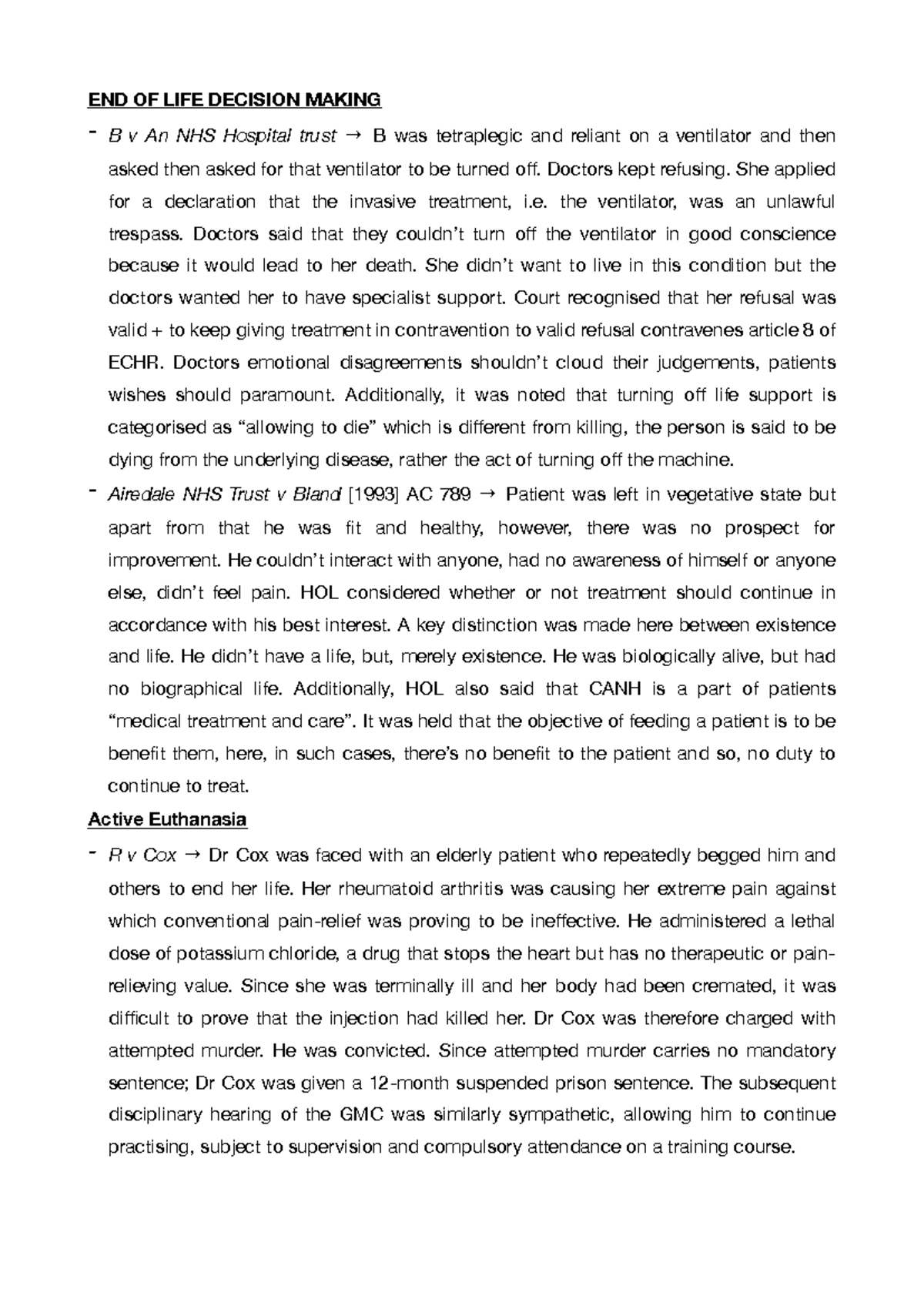
The case of Karen Ann Quinlan was the first major judicial challenge to the right to refuse life-sustaining treatment. The New Jersey Supreme Court ruled that Quinlan’s right to privacy was broad enough to encompass a patient’s decision to decline medical treatment under certain circumstances. This case established that families, in consultation with ethics committees, could decide to withdraw respirators without fear of criminal prosecution.
Cruzan v. Director, Missouri Department of Health (1990)
This was the first "right to die" case to reach the U.S. Supreme Court. The Court recognized that competent individuals have a constitutionally protected liberty interest in refusing unwanted medical treatment. However, it also ruled that states may require "clear and convincing evidence" of an incompetent patient's wishes before allowing the withdrawal of life support. This decision directly led to the widespread adoption of Living Wills and Durable Powers of Attorney for Healthcare.
Airedale NHS Trust v. Bland (UK, 1993)
In the United Kingdom, the Tony Bland case established that for patients in a persistent vegetative state, medical treatment (including artificial nutrition and hydration) could be withdrawn if it was no longer in the patient's best interests. This case clarified that the withdrawal of treatment is an omission, not an act of murder, provided the treatment is no longer providing a clinical benefit.
The Role of Advance Directives and Living Wills
To avoid the need for a court-mandated resolution, individuals are encouraged to complete advance directives. These documents serve as the primary evidence in end-of-life cases, often preventing the need for litigation entirely. As of 2026, these documents have become more granular, often including specific instructions regarding artificial nutrition, hydration, and the use of mechanical ventilation in specific neurological scenarios.
Healthcare Proxy and Power of Attorney
A Healthcare Proxy (or Durable Power of Attorney for Healthcare) designates a specific person to make decisions on the patient’s behalf. This individual is legally bound to follow the "substituted judgment" standard, making the choices the patient would have made. Cases often turn litigious when the designated proxy's decisions are challenged by other family members or the medical institution's ethics board.
Living Wills
A Living Will is a written statement detailing specific medical treatments the patient does or does not want. While highly influential, Living Wills can sometimes be ambiguous. For example, a directive stating "no heroic measures" may be difficult for clinicians to interpret in the context of modern 2026 medical interventions, leading to "grey area" cases that require legal clarification.
Navigating Disputed Cases: When Families and Clinicians Disagree
Disputes typically arise in two scenarios: when the family wants to stop treatment but the doctors believe there is hope, or—more commonly—when the doctors believe treatment is futile but the family insists on continuing.
Medical Futility and the Ethics Committee
When clinicians believe that continuing treatment provides no physiological benefit, they may declare the treatment "futile." In many regions, this allows the hospital to begin a formal process to withdraw support. However, this is rarely done unilaterally. Most hospital policies in 2026 require a review by an independent Ethics Committee. If the committee agrees with the physicians and the family still objects, the case moves to a court of law.
The Burden of Proof
In cases where a patient's wishes are not documented, the legal burden often falls on the party wishing to change the status quo. In many U.S. states, the "clear and convincing evidence" standard remains a high bar. This means that casual conversations or vague statements about "not wanting to be a vegetable" may not be enough to override the state's interest in preserving life, leading to prolonged legal battles and emotional distress for the family.
Global Variations in End-of-Life Legislation
The legal handling of end-of-life cases varies significantly by jurisdiction. While some countries focus strictly on the withdrawal of life support, others have legalized active interventions such as Physician-Assisted Dying (PAD) or euthanasia.
| Jurisdiction | Primary Legal Standard | Withdrawal of Life Support | Physician-Assisted Dying (PAD) | Role of Ethics Committees |
|---|---|---|---|---|
| United States | Substituted Judgment / Clear Evidence | Legal in all states with evidence | Legal in 10+ states (varies) | Advisory; court is final arbiter |
| United Kingdom | Best Interests (Mental Capacity Act) | Legal if in patient's best interest | Illegal | Central to decision-making |
| Canada | Patient Consent / MAiD Framework | Legal | Legal (Medical Assistance in Dying) | Strict procedural oversight |
| Netherlands | Patient Request / Unbearable Suffering | Legal | Legal (including euthanasia) | Mandatory review by RCE |
| Australia | Voluntary Assisted Dying (VAD) | Legal | Legal in most states | VAD Boards monitor compliance |
Note: Legal standards are subject to provincial and state-level variations. Consult local statutes for specific 2026 compliance requirements.
Ethical Considerations in 2026: Technology and Palliative Care
In 2026, the discussion around end-of-life cases is increasingly influenced by advances in neuroimaging and Artificial Intelligence. Functional MRI (fMRI) and EEG-based "brain-computer interfaces" are sometimes used in legal proceedings to determine if a patient in a minimally conscious state possesses "hidden" awareness.
The Determination of Brain Death
The legal definition of death is central to many cases. Most jurisdictions recognize "whole-brain death"—the irreversible cessation of all functions of the entire brain, including the brainstem. However, high-profile cases often emerge when families reject a brain-death diagnosis based on religious grounds, leading to legal injunctions to keep ventilators running even after death has been legally declared.
Palliative Sedation and the Double Effect
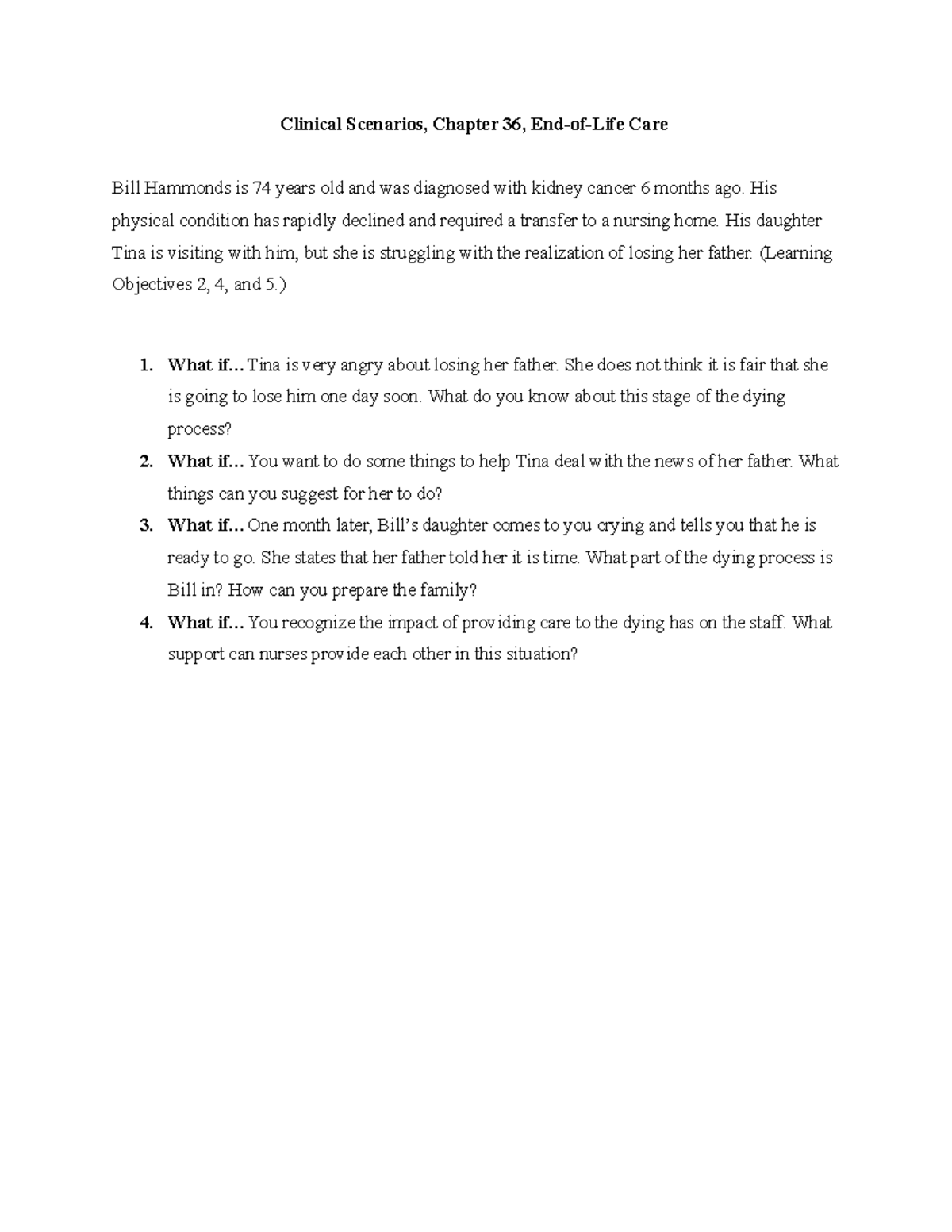
A common point of confusion in end-of-life cases is the "Principle of Double Effect." This ethical guideline allows doctors to administer high doses of pain medication (like opioids) to relieve suffering, even if it is foreseen that the medication may hasten death. Legally, this is distinguished from euthanasia because the intent is pain relief, not the termination of life. This distinction is vital in defending clinicians against claims of wrongful death in palliative care settings.
Procedural Steps for Families and Legal Guardians
If you are involved in a dispute regarding end-of-life care, the process generally follows a specific sequence. Understanding these steps can help reduce the administrative burden during a period of intense grief.
- Review Documentation: Locate all Living Wills, Healthcare Proxies, or Five Wishes documents. Verify the signatures and dates to ensure they meet local statutory requirements.
- Request an Ethics Consultation: Before seeking legal counsel, request a meeting with the hospital’s Ethics Committee. These multi-disciplinary teams (including doctors, nurses, chaplains, and ethicists) can often facilitate a consensus without court intervention.
- Obtain Independent Medical Opinions: If there is a dispute over the patient’s prognosis, a second or third opinion from an outside neurologist or specialist can provide the "clear and convincing evidence" needed for a judicial ruling.
- Legal Representation: If a consensus cannot be reached, you will need an attorney specializing in elder law or healthcare litigation. The court will likely appoint a Guardian ad Litem—an independent representative—to advocate solely for the patient's interests.
- Evidentiary Hearing: Be prepared to provide testimony regarding the patient’s values, religious beliefs, and previous statements regarding medical intervention.
Common Mistakes to Avoid
- Waiting for a Crisis: Do not wait until a patient is incapacitated to discuss their wishes.
- Assuming Family Consensus: Without a designated Healthcare Proxy, siblings or spouses may have equal legal standing, leading to "deadlock" cases that only a judge can break.
- Ambiguous Language: Avoid phrases like "no heroics" in legal documents; instead, specify "no mechanical ventilation" or "no cardiopulmonary resuscitation (CPR)."
FAQs About End-of-Life Cases
What is the difference between a Living Will and a Do Not Resuscitate (DNR) order?
A Living Will is a comprehensive legal document that outlines your preferences for various medical treatments when you cannot speak for yourself. A DNR is a specific medical order, usually signed by a doctor, that instructs healthcare providers not to perform CPR if your heart stops or if you stop breathing. While a Living Will informs future care, a DNR is an immediate instruction for emergency situations.
Can a hospital override a family's decision to continue life support?
Yes, in certain circumstances. If a medical team believes that continuing treatment is "physiologically futile" or causes the patient unnecessary suffering without benefit, they may seek a court order to withdraw support. These cases are rare and usually involve extensive review by ethics boards and the judicial system to ensure the patient's rights are not violated.
Does a Healthcare Proxy have the power to authorize euthanasia?
No. In jurisdictions where Physician-Assisted Dying (PAD) or euthanasia is legal, the request must almost always come from a competent patient. A Healthcare Proxy or surrogate generally cannot request active life-ending measures for an incompetent patient; their power is typically limited to the withdrawal or withholding of life-prolonging treatments.
How does "Clear and Convincing Evidence" affect these cases?
The "Clear and Convincing" standard is a high evidentiary bar used in many U.S. states. It requires the party wanting to withdraw treatment to prove that it is "highly probable" the patient would have wanted that outcome. This usually requires written documents or testimony of multiple specific, consistent verbal statements made by the patient while they were competent.
What happens if there is no advance directive and the family disagrees?
If no surrogate was named and the family is in conflict, the court will appoint a legal guardian to make the decision. The judge will then hear evidence from all parties and make a determination based on the "best interests" of the patient. This process is often lengthy, expensive, and emotionally taxing for all involved.
Is palliative sedation considered an "end-of-life case"?
Palliative sedation—inducing a state of decreased awareness to relieve intractable pain—is a standard medical practice and rarely becomes a "legal case" unless it is argued that the sedation was used with the primary intent to kill the patient rather than manage symptoms. When performed within clinical guidelines, it is legally and ethically protected.
Establishing a Proactive Advance Care Plan
The most effective way to prevent your medical situation from becoming a contested "end-of-life case" is to establish a clear, legally binding advance care plan. In 2026, the integration of digital health records has made it easier to upload these documents directly to your patient portal, ensuring they are accessible to emergency clinicians across different hospital systems.
You should consult with both a medical professional to understand the clinical implications of your choices and a legal professional to ensure your documents comply with the specific statutes of your jurisdiction. Periodically reviewing these documents—at least every five years or after a major life event—ensures that your recorded wishes reflect your current values and the latest medical possibilities.
Disclaimer: This article provides general information regarding the legal and ethical frameworks of medical end-of-life cases and does not constitute legal or medical advice. Laws vary significantly by jurisdiction. Consult with a qualified attorney or healthcare professional for guidance specific to your situation.