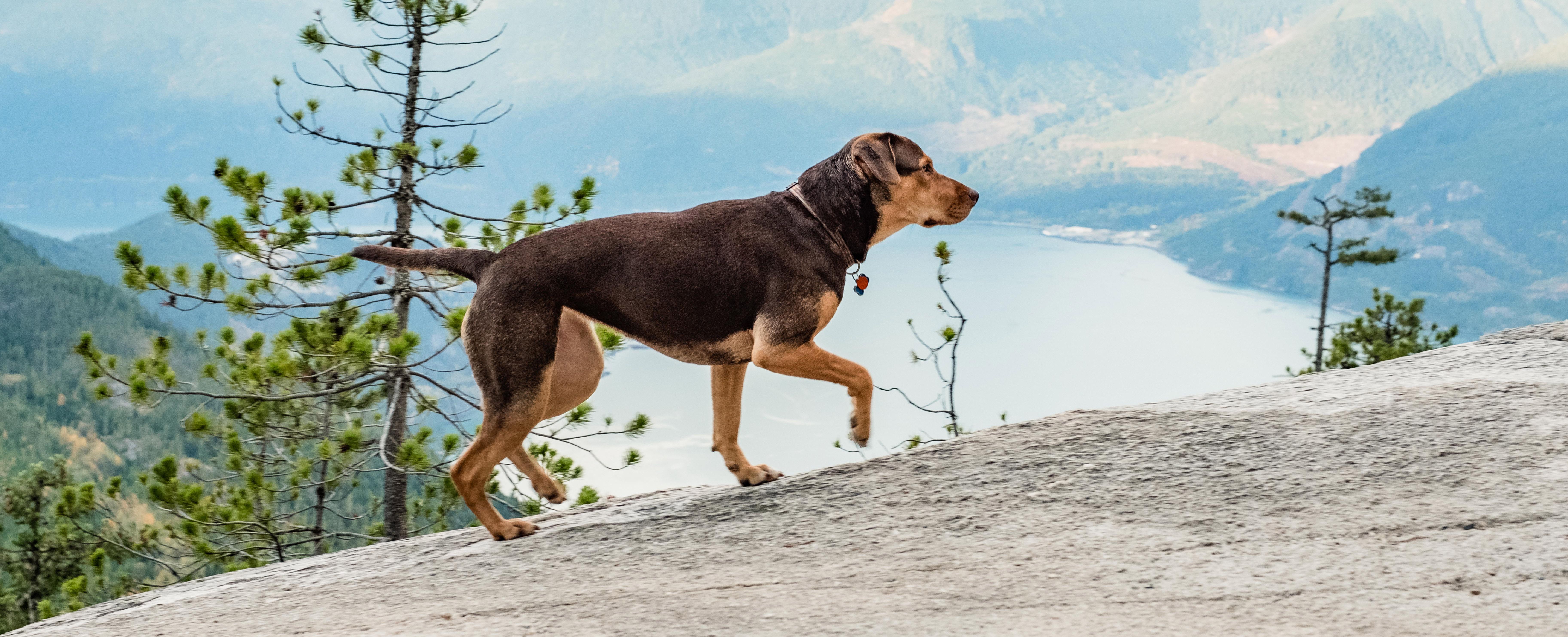
A Dog's Way Home follows Bella, a devoted mixed-breed dog who embarks on an arduous 400-mile journey across the American wilderness to reunite with her beloved owner, Lucas. Written by W. Bruce Cameron and adapted into a feature film, Bella's story highlights canine resilience, the flaws of breed-specific legislation, and the enduring human-animal bond.
The Narrative Foundation: How Bella's Quest Begins
The story of A Dog's Way Home opens in Denver, Colorado, where a stray puppy named Bella is born underneath an abandoned house. Following a raid by animal control that removes her mother, Bella is taken in by a compassionate mother cat and raised alongside a litter of kittens. This unusual upbringing instills in Bella a gentle temperament and a unique perspective on family that shapes her interactions throughout her life.
Lucas Ray, a young medical center worker and animal advocate, discovers Bella while attempting to feed the stray cat colony living beneath the ruined building. Smuggling the puppy past his landlord's strict prohibition on pets, Lucas brings Bella into the home he shares with his mother, Terri, a disabled veteran recovering from trauma.
Bella quickly becomes an essential emotional anchor for both Lucas and Terri. Her natural empathy makes her a comforting presence, and Lucas recognizes her potential as an unofficial therapy animal. He brings her to the local Veterans Affairs (VA) hospital, where she brings comfort to hospitalized veterans. During her early months, Lucas teaches Bella fundamental behavioral cues, including a playful game called "Do a Go Home"—a command that instructs Bella to run to her safe spot, which later becomes her psychological beacon during her long exile.
Key Narrative Arc:
- Stray Puppy in Denver
- Rescued by Lucas
- Exiled under BSL Law
- 400-Mile Wilderness Trek
- Reunion in Denver
The Catalyst: Breed-Specific Legislation and Forced Exile
The primary conflict in A Dog's Way Home stems not from human cruelty, but from municipal bureaucracy. As Bella grows, an overzealous city housing inspector named Günter takes offense at Lucas's ongoing efforts to protect the feral cats on the property Lucas wants to redevelop. Seeking leverage, Günter identifies Bella as a pit bull mix, triggering enforcement under Denver's strict municipal animal control codes.
For decades, Denver enforced one of the most stringent forms of Breed-Specific Legislation (BSL) in the United States, outright banning pit bulls and dogs exhibiting physical characteristics associated with bully breeds. Under the city ordinance, animal control officers had the authority to impound and euthanize dogs deemed to fit the breed criteria, regardless of the individual animal's behavior or lack of aggressive history.
When animal control officers impound Bella, Lucas manages to secure her release under the strict condition that she be permanently removed from Denver city limits. Facing the immediate threat of her confiscation and termination, Lucas makes the painful decision to foster Bella temporarily with relatives of his girlfriend, Olivia, in Farmington, New Mexico, roughly 400 miles south of Denver.
Lucas plans to find a new residence outside Denver's municipal borders where Bella can legally live. However, Bella cannot comprehend the legal mandate driving her displacement. Interpreting her relocation as a temporary separation, her instinct to return to Lucas overrides her physical comfort. Shortly after arriving in New Mexico, Bella escapes her foster enclosure and turns north toward Denver, initiating an extraordinary multi-year odyssey across the Rocky Mountains.
The 400-Mile Wilderness Odyssey: Survival and Encounters
Bella's return journey across the rugged terrain of Colorado spans two years and hundreds of miles of unforgiving wilderness. Lacking human guidance, Bella relies on deep-seated canine instincts, adaptability, and an unyielding attachment memory to navigate back toward her home coordinates.
- Farmington, NM (Relocation Site)
- Rocky Mountain Wilderness
- Encounters cougar cub ("Big Kitten")
- Rescues avalanche survivor
- Urban Outskirts & Roadways
- Befriends homeless veteran (Axel)
- Hit by car / Recuperation
- Denver, CO (Reunion with Lucas & Terri)
Throughout her journey, Bella encounters a series of wild animals, harsh weather conditions, and diverse human characters:
- The Motherless Cougar Cub ("Big Kitten"): Early in her trek, Bella encounters an orphaned cougar cub whose mother was killed by hunters. Drawing on her own experience of being raised by a mother cat, Bella assumes a protective role over the cub, whom she internally names "Big Kitten." The two animals form a symbiotic hunting and companionship bond, sharing food and mutual protection against packs of coyotes. As Big Kitten grows into a fully matured apex predator, their dynamic evolves from maternal protection to mutual respect, illustrating cross-species cooperation born of necessity.
- The Avalanche Victims: High in the snowbound mountains, Bella encounters two skiers buried by an avalanche. Guided by her instinct and training, she digs out one of the survivors, keeping him warm until rescue teams arrive. Although the rescuers attempt to adopt her, Bella's single-minded drive to "Do a Go Home" compels her to slip back into the forest.
- Axel and the Homeless Veteran Community: Returning to populated areas, Bella is taken in by Axel, a homeless military veteran living on the urban fringe. Recognizing the dog's soothing nature, Axel keeps Bella tethered to him for comfort. Bella remains loyal to Axel despite her restricted movement, staying by his side even after he tragically succumbs to exposure. She is eventually freed by well-meaning passersby, allowing her to resume her northward trek.
- Physical Trauma and Highway Hazards: Near the final leg of her journey, Bella is struck by a vehicle while trying to cross a busy highway. Suffering a severely injured leg and malnutrition, she is cared for by a rural family before summoning her remaining strength to complete the final distance into Denver.
Themes of Loyalty, Instinct, and Moral Courage
While A Dog's Way Home presents an exciting survival narrative, its deeper resonance lies in its thematic examination of devotion and human ethics.
The Science of Canine Homing Behavior
Bella's ability to navigate across hundreds of miles of unfamiliar terrain reflects real-world phenomenon recorded in animal behavior studies. Dogs possess powerful sensory mapping capabilities, utilizing olfactory cues, magnetic field sensitivity (magnetoreception), and visual landmarks to orient themselves. W. Bruce Cameron synthesizes these physiological traits with psychological attachment theory, demonstrating how a dog's primary human bond functions as an emotional compass.
Human Responsibility vs. Arbitrary Law
The narrative presents a stark contrast between legal compliance and moral duty. Lucas's struggle against local government highlights the ethical dilemmas created by sweeping administrative bans. By contrasting Bella's gentle, therapeutic nature with the harsh reality of her legal status as an banned breed, the story challenges readers to evaluate animals based on individual temperament rather than physical appearance or arbitrary breed classifications.
Novel vs. Film Adaptation: Key Differences
W. Bruce Cameron's 2017 novel was adapted into a major motion picture released by Sony Pictures in 2019, directed by Charles Martin Smith. While the film remains faithful to the core plot, key structural and artistic changes were made to suit the cinematic medium.
| Feature / Element | Novel (2017 Book by W. Bruce Cameron) | Film Adaptation (2019 Feature Film) |
|---|---|---|
| Narrative Voice | Internal first-person narration detailing complex sensory observations and animal logic. | Voiceover narration performed by actress Bryce Dallas Howard, conveying emotional internal dialogue. |
| Bella's Physical Breed | Described as a mixed pit bull / terrier rescue with varied physical traits. | Portrayed primarily by "Shelby," a real-life rescue dog discovered in a Tennessee shelter by animal trainer Teresa Ann Miller. |
| Big Kitten Representation | Depicted as an ongoing natural relationship grounded in realistic animal interactions. | Created largely using computer-generated imagery (CGI) to ensure safety and allow dramatic action sequences. |
| Character Focus | Greater emphasis on Lucas’s work at the VA hospital and the bureaucracy of property development. | Streamlined character arcs focusing heavily on the emotional bond between Lucas, Terri, and Bella. |
| Resolution of BSL Dispute | Emphasizes long-term relocation and community advocacy to change local attitudes. | Features a dramatic public confrontation where police officers decline to enforce the breed ban against Bella. |
Real-World Impact: Breed-Specific Legislation and Animal Rescue
The popularity of A Dog's Way Home elevated public awareness regarding the real-world implications of Breed-Specific Legislation (BSL). For decades, animal welfare organizations such as the American Society for the Prevention of Cruelty to Animals (ASPCA) and the American Kennel Club (AKC) have opposed breed-specific bans, citing evidence that such laws do not improve public safety and instead place unnecessary burdens on responsible dog owners and shelter systems.
BSL Impact Cycle:
- Arbitrary Breed Classification
- Forced Seizure or Exile
- Overcrowded Shelter Systems
- Advocacy for Temperament-Based Laws
Notably, the real-world setting of the story reflected historical changes. In November 2020, Denver voters approved Measure 2W, effectively repealing the city's 30-year-old ban on pit bulls. The updated regulations replaced the absolute prohibition with a conditional breed-restricted permit system, aligning local policy more closely with modern animal behavior science that evaluates pets based on individual conduct rather than physical traits.
Furthermore, the production of the 2019 film directly supported animal adoption initiatives. Shelby, the rescue dog cast as Bella, was discovered living in a landfill site in Tennessee before being rehabilitated and trained for the film. Following production, Shelby served as a certified therapy dog, echoing Bella's role in the story and highlighting the potential of shelter animals.
Practical Guidance for Pet Owners: Safeguarding Against Loss and Displacement
Bella's fictional journey reflects real dangers faced by lost or displaced pets. Dog owners navigating relocations, municipal regulations, or travel can take practical steps to secure their animals and maximize the chances of a safe reunion if separation occurs.
Pet Protection Checklist:
Microchip Implantation (Verify registry contact details annually)
External ID Tags (Include primary phone number and secondary contact)
Municipal Compliance Check (Research local breed codes prior to moving)
Secure Containment (Inspect physical fences and digital boundaries)
High-Resolution Photos (Maintain recent images showing distinct markings)
Maintain Up-to-Date Microchip Information: Visual tags can fall off or become unreadable during an escape. Ensure your pet is implanted with a universal microchip and that your contact information is updated in national pet registries.
Verify Local Municipal Codes Prior to Moving: Before relocating to a new city or county, review local animal control ordinances. While many jurisdictions have repealed breed bans, some municipalities still enforce specific registration, fencing, or insurance requirements for certain breeds.
Invest in Behavioral Recall Training: Training your dog to respond immediately to a reliable recall cue—similar to Bella's "Go Home" command—can prevent a frightened animal from running into dangerous situations or busy roadways.
Use GPS Tracking Technology: For pets residing in rural areas or prone to escape behavior, smart collars equipped with real-time GPS tracking provide immediate location updates via smartphone applications.
Frequently Asked Questions
Is A Dog's Way Home based on a true story?
No, A Dog's Way Home is a work of fiction written by author W. Bruce Cameron. However, the novel was inspired by real-world documented cases of dogs traveling extraordinary distances across unfamiliar terrain to find their families, as well as actual historical breed-specific legislation enforced in cities like Denver.
What breed of dog is Bella in A Dog's Way Home?
In the novel and film, Bella is depicted as a pit bull mix—a mixed-breed dog containing pit bull terrier characteristics. In the 2019 movie adaptation, Bella was played by a rescue dog named Shelby, who is a flat-coated retriever mix discovered in a Tennessee animal shelter.
What happens to Big Kitten, the mountain lion in the movie?
Big Kitten, the orphaned cougar raised partly alongside Bella, grows into a fully independent adult cougar. Toward the end of Bella's journey, Big Kitten reappears in the wilderness to protect Bella from a dangerous pack of coyotes, repaying the care Bella showed her when she was a cub before returning to her wild habitat.
Does A Dog's Way Home have a happy ending?
Yes, after a two-year, 400-mile journey, Bella successfully returns to Denver and reunites with Lucas and Terri. Although local animal control officers initially attempt to seize her, public support and a clear demonstration of her gentle temperament allow her to remain safely with her family outside the restricted municipal zone.
Why was Bella exiled from Denver in the story?
Bella was forced to leave Denver because the city enforced a strict ban on pit bulls and pit bull mixes under its Breed-Specific Legislation (BSL). Under the ordinance at the time the story takes place, owning a dog classified as a pit bull within city limits was illegal and subject to immediate impoundment.
Responsible Ownership and Navigating Pet Regulations
Bella’s journey in A Dog's Way Home serves as both an entertaining adventure and a poignant reminder of the responsibilities humans hold toward domestic animals. For pet owners facing housing transitions, regulatory hurdles, or unexpected separations, proactive preparation is essential.
By prioritizing permanent microchip identification, understanding local municipal codes, and committing to humane, positive behavioral training, owners can ensure their pets remain safe, protected, and legally secure. Supporting local shelter initiatives and advocating for fair, conduct-based animal control policies helps ensure that no real-world pet has to undertake an extraordinary wilderness journey just to stay with the family they love.