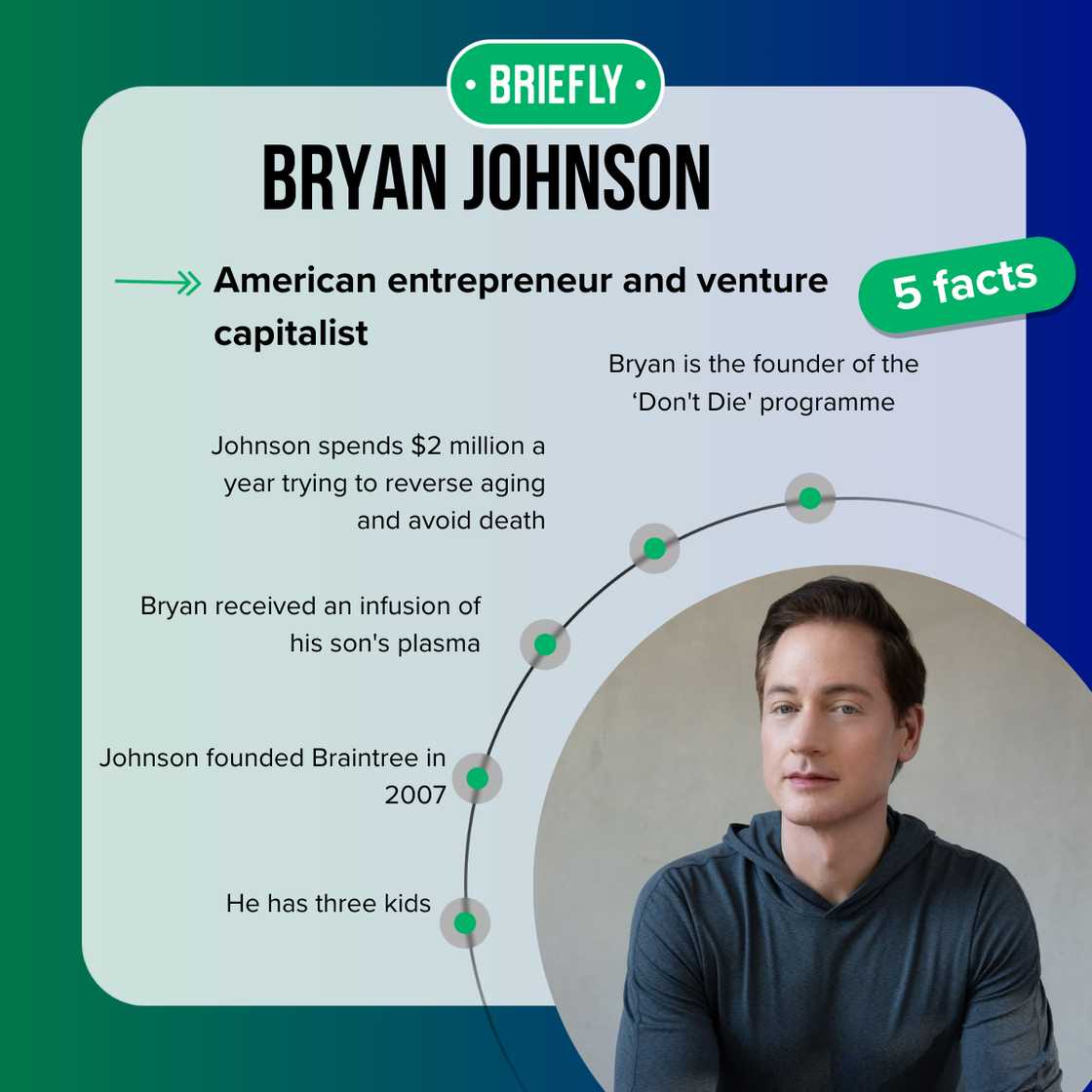
Bryan Johnson built his primary wealth through the $800 million sale of his payment processing company, Braintree, to PayPal in 2013. After netting approximately $300 million from that exit, he allocated $100 million to found Kernel, a neuroscience company, and established OS Fund to invest in "hard tech" startups, effectively pivoting from fintech entrepreneurship to high-stakes scientific venture capital.
The Genesis of Braintree: Disrupting the Payment Ecosystem
To understand Bryan Johnson’s wealth, one must look back to 2007, when he founded Braintree. At the time, the online payment landscape was fragmented and technically cumbersome for developers. Most merchant account providers were legacy banks with slow approval processes and outdated APIs. Johnson, drawing from his experience in the credit card processing industry, identified a critical gap: the need for a developer-friendly platform that could scale with the burgeoning "app economy."
Braintree’s value proposition was simple but transformative. It provided the "plumbing" for the next generation of digital giants. By offering a robust API that allowed businesses to store credit card information securely (vaulting) and handle recurring billing, Braintree became the go-to solution for startups that eventually became household names. Companies like Uber, Airbnb, and OpenTable relied on Braintree to manage their complex transaction flows. This early adoption by high-growth tech companies created a network effect; as these clients grew into multi-billion dollar enterprises, Braintree’s transaction volume—and its valuation—skyrocketed.
Johnson’s strategy was not just about technology, but about the quality of the merchant experience. By removing the friction from online commerce, Braintree positioned itself as an essential infrastructure provider. By 2011, the company was ranked on the Inc. 500 list of fastest-growing companies, and it began attracting significant venture capital, including a $34 million Series A round led by Accel Partners. This influx of capital allowed Johnson to look beyond organic growth and toward strategic acquisition.
The Venmo Acquisition: A Masterstroke in Market Consolidation
One of the most pivotal moments in Bryan Johnson’s wealth-building journey was the 2012 acquisition of Venmo. At the time, Venmo was a burgeoning peer-to-peer (P2P) payment app that had captured the millennial demographic but lacked a clear path to massive monetization. Braintree acquired Venmo for $26.2 million—a price that, in retrospect, was an extraordinary bargain.
This acquisition did two things for Johnson’s net worth. First, it integrated a social payment layer into Braintree’s existing merchant services, making the platform even more attractive to mobile-first businesses. Second, it made Braintree an irresistible target for larger competitors. PayPal, which was then owned by eBay, was struggling to maintain its dominance in the mobile payment space. Venmo was the missing piece PayPal needed to capture a younger audience and secure its future in mobile commerce.
The synergy between Braintree’s merchant tools and Venmo’s consumer popularity created a "must-have" package. When PayPal eventually approached Johnson, they weren't just buying a payment gateway; they were buying the future of mobile transactions. This strategic foresight directly led to the massive premium PayPal was willing to pay just one year after the Venmo deal.
The $800 Million PayPal Exit and Financial Liquidity
In September 2013, PayPal announced it would acquire Braintree for $800 million in an all-cash transaction. For Johnson, who owned a significant majority of the company, this was the "liquidity event" that transitioned him from a successful entrepreneur to a member of the ultra-high-net-worth (UHNW) community.
After accounting for investor payouts, employee stock options, and taxes, Johnson’s personal take from the deal was estimated to be around $300 million. This capital formed the bedrock of his subsequent ventures. Unlike many entrepreneurs who might have retired or moved into passive real estate investment, Johnson viewed this wealth as a "sovereign fund" for solving what he termed "the world's hardest problems."
The significance of the $800 million exit cannot be overstated. It provided the absolute financial freedom required to enter industries with extremely high barriers to entry, such as neuroscience and biotechnology. In the years following the sale, Braintree continued to flourish under PayPal, further validating Johnson’s original vision and the price tag he commanded during the negotiation.
Founding Kernel: Investing in the "Human Operating System"
In 2016, Johnson committed $100 million of his own money to launch Kernel. While Braintree was about the "fintech" layer of society, Kernel was an ambitious leap into the "neurotech" layer. The company’s goal was to build hardware and software capable of non-invasively monitoring and interpreting brain activity.
Kernel’s initial focus was on implantable devices to help with memory loss and neurological disorders, but it eventually pivoted to non-invasive technology. By 2026, Kernel has solidified its place in the market with its "Flow" and "Flux" systems. These devices use Magnetoencephalography (MEG) and Optical Pulsatile Monitors (OPM) to record brain activity with high precision without the need for surgery.
From a wealth perspective, Kernel represents a shift from liquid cash to high-value equity. While Kernel is a "deep tech" play that requires years of R&D before reaching mass-market profitability, its intellectual property (IP) portfolio is incredibly valuable. Johnson’s $100 million investment was not just a donation to science; it was a strategic move to own the foundational technology of the "Human-to-Computer Interface" (BCI) market. As neurological health and cognitive enhancement become central to the global economy, the valuation of companies like Kernel is expected to rival that of major pharmaceutical firms.
Diversification via OS Fund
Simultaneous with the growth of Kernel, Johnson established OS Fund with $100 million of his Braintree proceeds. The "OS" stands for "Operating System," reflecting his philosophy that the fundamental building blocks of life—genomics, biology, and chemistry—can be programmed much like computer software.
OS Fund’s portfolio includes companies working on synthetic biology, carbon capture, and longevity. By 2026, many of these early-stage bets have matured. The fund has invested in companies like:
- Ginkgo Bioworks: A leader in cell programming and synthetic biology.
- LanzaTech: Focused on recycling carbon into fuels and chemicals.
- Vicarious: Developing artificial intelligence with human-like cognitive capabilities.
This diversification ensured that Johnson’s wealth was not tied solely to the success of Kernel. By acting as a venture capitalist, he leveraged his Braintree success to gain equity in dozens of high-potential startups, many of which have since gone public or been acquired, further compounding his initial wealth.
Comparative Overview: Bryan Johnson’s Major Financial Milestones
The following table outlines the key phases of Johnson's career and the financial impact of each venture.
| Venture | Role | Timeline | Key Financial Outcome | Primary Wealth Driver |
|---|---|---|---|---|
| Braintree | Founder/CEO | 2007–2013 | $800M Sale to PayPal | Direct equity exit (all-cash) |
| Venmo | Acquirer | 2012 | $26.2M Purchase | Increased Braintree's exit valuation |
| OS Fund | Founder/GP | 2014–Present | Portfolio Growth | Equity in deep-tech startups |
| Kernel | Founder/CEO | 2016–Present | $100M Personal Investment | IP ownership in neuroimaging |
| Blueprint | Founder | 2021–Present | $2M+ Annual Personal Spend | Brand equity and longevity IP |
The Role of "Project Blueprint" and Brand Equity
While much of the public focus in recent years has been on Johnson’s "Project Blueprint"—his rigorous anti-aging protocol—it is important to view this through the lens of asset building. Johnson spends approximately $2 million per year on his health, but in doing so, he has created a massive personal brand and a repository of data that has commercial value.
By 2026, the data gathered from Blueprint has been integrated into commercial products and supplements. Johnson has effectively turned his own biology into a laboratory, creating a new revenue stream through longevity coaching, proprietary testing kits, and health optimization software. This "lifestyle-as-a-service" model represents the newest frontier of his wealth, moving from the acquisition of companies to the optimization of the human body itself.
FAQs About Bryan Johnson's Wealth
What is Bryan Johnson's net worth in 2026?
While private holdings in Kernel and OS Fund make an exact figure difficult to verify, Bryan Johnson's net worth is estimated to be between $400 million and $500 million. This reflects his initial $300 million payout from Braintree, adjusted for the $100 million invested in Kernel, the returns from OS Fund's diverse portfolio, and the rising valuation of neurotechnology assets.
Did Bryan Johnson make all his money from PayPal?
The vast majority of Johnson's liquid wealth originated from the $800 million sale of Braintree to PayPal in 2013. However, his subsequent wealth growth has been driven by the appreciation of his venture capital investments through OS Fund and the increasing enterprise value of Kernel, which has raised additional rounds of outside funding.
How much did Bryan Johnson invest in Kernel?
Johnson initially invested $100 million of his own money to launch Kernel. This was a significant "skin in the game" move that allowed the company to perform extensive R&D without the immediate pressure of seeking outside venture capital, though the company has since accepted external investment to scale its neuroimaging hardware.
Is Venmo still part of Bryan Johnson's portfolio?
No. Venmo was a subsidiary of Braintree. When PayPal acquired Braintree for $800 million, they also acquired Venmo. Johnson no longer has an ownership stake in Venmo; his exit from that asset was completed as part of the 2013 deal.
How does Bryan Johnson afford his $2 million a year health protocol?
The annual $2 million cost of Project Blueprint is funded by the interest and dividends from his liquid capital, as well as revenue generated from his various business interests. For an individual with a net worth in the mid-hundred millions, a $2 million annual expenditure represents a small percentage of total assets, similar to a high-end maintenance cost for a traditional business asset.
Strategic Takeaway for Entrepreneurs
Bryan Johnson’s path to wealth provides a masterclass in "staged" entrepreneurship. He began with a high-growth, scalable software service (Braintree) that addressed a universal pain point in the digital economy. Once he achieved a massive liquidity event, he did not diversify into traditional safe-haven assets. Instead, he reinvested a significant portion of his wealth into "frontier" industries where he could secure a "first-mover" advantage.
For those looking to emulate this success, the key takeaway is the importance of strategic liquidity. By selling Braintree at the peak of the mobile payment revolution, Johnson secured the capital necessary to fund ventures that are too risky for traditional bank financing. His wealth is not merely a collection of funds, but a tool used to dominate the next technological era—the intersection of human biology and machine intelligence.