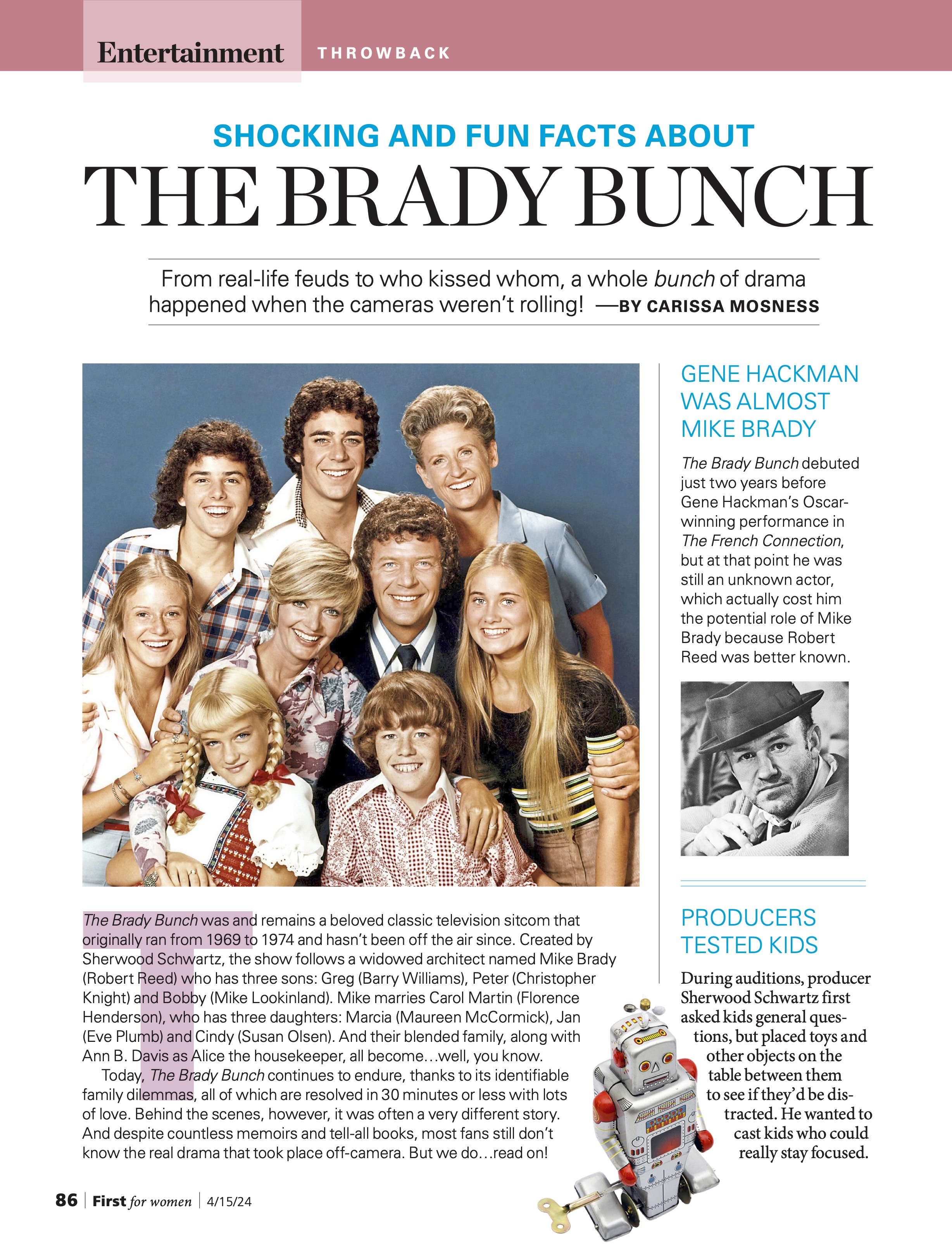
The Brady Bunch is a foundational American sitcom created by Sherwood Schwartz that aired for five seasons on ABC from 1969 to 1974. The story follows Mike Brady, a widowed architect with three sons, and Carol Martin, a mother with three daughters, as they navigate life as a large blended family in suburban Los Angeles.
The Origin Story: How the Bradys Became a TV Phenomenon
The genesis of The Brady Bunch dates back to 1965, when producer Sherwood Schwartz—fresh off the success of Gilligan’s Island—read a short news item in the Los Angeles Times. The article noted that approximately 30% of marriages in the United States involved at least one child from a previous marriage. Schwartz recognized that while the "blended family" was becoming a statistical reality, television was still largely populated by traditional nuclear families or "single parent" setups where the other parent was conveniently absent or deceased.
Schwartz developed a script titled Mine and Yours, which languished for a few years before ABC expressed interest. The network was looking for a family-friendly counterpoint to the more counter-cultural programming beginning to emerge in the late 1960s. The premise was simple: take two sets of children, bridge the gender divide, and explore the comedic and sentimental challenges of merging two households into one.
The show premiered on September 26, 1969. Although it was never a massive "top ten" ratings hit during its original run, it maintained steady enough numbers to survive five seasons. Its true cultural dominance arrived later through unprecedented success in afternoon syndication, where it became a staple for generations of "latchkey kids" throughout the 1970s, 80s, and 90s.
The Core Cast: A Study in Blended Family Dynamics
The chemistry of the nine-person ensemble (plus the housekeeper, Alice) was the engine of the series. Selecting the right actors was a rigorous process, as Schwartz needed to ensure the children looked like they could actually be related to their respective parents.
The Parents: Mike and Carol Brady
Robert Reed was cast as Mike Brady, a choice that would lead to significant creative tension. Reed was a Shakespearean-trained actor who often felt the show’s lighthearted scripts were beneath his talents. He frequently sent lengthy memos to Schwartz critiquing the logic and tone of the episodes. Despite this, his portrayal of a calm, wise, and patient father became a gold standard for TV dads.
Florence Henderson was cast as Carol Brady, though she was not the first choice (Joyce Bulifant was originally considered). Henderson brought a warmth and vocal talent to the role. Interestingly, she missed filming the first few episodes because she was finishing a film project in Denmark; her scenes were shot later and edited in. Carol’s previous marital status was never explicitly stated—Schwartz wanted her to be a divorcée, but the network insisted on keeping it ambiguous to avoid controversy.
The Children and Alice
The "three boys" (Greg, Peter, and Bobby) and "three girls" (Marcia, Jan, and Cindy) were cast to create a visual symmetry.
- The Elders: Barry Williams (Greg) and Maureen McCormick (Marcia) often handled the "coming of age" storylines.
- The Middles: Christopher Knight (Peter) and Eve Plumb (Jan) dealt with identity crises, most notably Jan's famous "Marcia, Marcia, Marcia!" resentment.
- The Youngest: Mike Lookinland (Bobby) and Susan Olsen (Cindy) provided the "cute" factor, with Cindy’s pigtails and lisp becoming iconic.
- Alice Nelson: Ann B. Davis, a two-time Emmy winner, played the wisecracking, blue-uniformed housekeeper who served as the family’s glue and a neutral sounding board for the children.
Behind the Scenes: Production Logistics and the Iconic Set
The physical environment of The Brady Bunch is as famous as the characters themselves. The show was filmed at Paramount Studios on Stage 5, but the exterior house is a real residence located at 11222 Dilling Street in North Hollywood.
The Architectural Aesthetic
The Brady house was designed by Mike Brady in the show’s lore, reflecting a mid-century modern aesthetic. Key features included the floating staircase, the orange-and-green kitchen, and the shared "jack and jill" bathroom that famously lacked a toilet—a standard censorship rule for television networks at the time. The house was designed to look like a split-level, but the interior sets did not match the exterior's window placement, a common technical inconsistency in 1970s television.
Filming Challenges
Working with six child actors required strict adherence to labor laws, which limited their filming hours. To maximize efficiency, the production used a "block filming" technique where scenes in the same location were filmed together, regardless of which episode they belonged to. This required the actors to quickly change costumes and mental states to keep up with the shifting storylines.
The "Brady Curse" and Real-Life Relationships
Like many shows involving child actors, The Brady Bunch has been the subject of rumors regarding a "curse" or behind-the-scenes drama. While the cast remained remarkably close compared to other Hollywood ensembles, there were notable real-world complexities.
- Cast Romances: Barry Williams and Maureen McCormick had a brief, innocent off-screen romance during the filming of the "Hawaii" episodes. Williams also famously admitted in his memoir to being under the influence of marijuana during the filming of one episode ("Goodbye, Alice, Hello"), which led to him appearing slightly disjointed on screen.
- Hair Color Adjustments: Mike Lookinland, a natural blonde, had to have his hair dyed jet black for the first few seasons to match Robert Reed and the other boys. Susan Olsen’s hair was frequently bleached to maintain her "platinum" look, which eventually caused some of her hair to fall out.
- Robert Reed’s Conflict: Reed’s dissatisfaction culminated in him being written out of the series finale, "The Hair-Brained Scheme," because he refused to perform a scene he found too ridiculous. He remained on set during filming to watch from the sidelines but does not appear in the episode.
Comprehensive Episode and Series Data
The following table summarizes the structural growth of the series and key milestones across its five-year run.
| Season | Year Range | Episode Count | Primary Themes/Developments |
|---|---|---|---|
| 1 | 1969–1970 | 25 | The "Merging" phase; initial rivalry between the boys and girls. |
| 2 | 1970–1971 | 24 | Establishment of the "Brady Kids" singing group; Jan's middle-child syndrome. |
| 3 | 1971–1972 | 26 | Grand Canyon and Hawaii location shoots; Greg enters high school. |
| 4 | 1972–1973 | 23 | Introduction of Cousin Oliver (widely considered a "jump the shark" moment). |
| 5 | 1973–1974 | 19 | Coming-of-age issues; the series ends without a formal "finale" plot. |
Cultural Impact and the Evolution of the Brand
The Brady Bunch did not simply vanish after its 1974 cancellation. Instead, it expanded into a massive media franchise. This longevity is attributed to the show's idealistic portrayal of family life, which provided a sense of stability and comfort to viewers during times of social upheaval.
Sequels and Spin-offs
The franchise includes several notable follow-ups:
- The Brady Bunch Hour (1976–1977): A poorly received variety show.
- The Brady Brides (1981): Focusing on the marriages of Marcia and Jan.
- A Very Brady Christmas (1988): A highly-rated television movie that reunited almost the entire original cast.
- The Bradys (1990): A short-lived dramedy attempt.
- The Brady Bunch Movie (1995): A satirical big-screen adaptation that placed the 70s-era Bradys in the 1990s.
The HGTV Renovation
In a significant modern development, HGTV purchased the original North Hollywood house in 2018. In 2019, they produced A Very Brady Renovation, where the six surviving "kids" helped renovate the interior of the house to perfectly match the original Paramount studio sets. This project highlighted the enduring technical interest in the show's production design and the public's deep nostalgia for the property.
Frequently Asked Questions
What happened to Tiger the dog?
Tiger, the family dog, appeared frequently in early Season 1 but disappeared shortly thereafter. The original dog was unfortunately killed in an off-set accident during the first season. A replacement dog was brought in, but it was difficult to train and frequently barked during takes. Eventually, the producers decided to remove the pet from the scripts entirely, though his doghouse remained in the backyard for the duration of the series.
Why was Jan Brady so upset about Marcia?
The "Marcia, Marcia, Marcia!" trope stemmed from the episode "Her Sister's Shadow" (Season 3). It addressed the psychological reality of "middle child syndrome," where Jan felt she could never live up to her older sister's achievements as a cheerleader and popular student. This specific conflict resonated so deeply with audiences that it became the defining characteristic of Jan’s persona in pop culture.
Did the Bradys ever have a last name for Carol's side?
In the pilot episode, it is mentioned that Carol’s maiden name was Tyler and her previous married name was Martin. However, after the first few episodes, she is exclusively referred to as Carol Brady, and the girls (Marcia, Jan, and Cindy) are treated legally and socially as Bradys, even though a formal adoption was never a plot point.
Is the Brady house still standing in 2026?
Yes, the house at 11222 Dilling Street in North Hollywood remains a popular tourist landmark. Following the 2019 renovation by HGTV, the house has been preserved to look exactly like the television set on the inside, though it remains a private residence or promotional property depending on its current ownership status.
Why did the show end so abruptly in 1974?
The show was cancelled due to a combination of declining ratings and the aging of the child actors. By the fifth season, Greg was in college and the "cute" factor of the younger children had faded. Additionally, the tensions with Robert Reed made the prospect of a sixth season difficult for the production team to navigate.
Practical Recommendations for Viewing and Research
For those looking to explore the series in 2026, several avenues exist for high-quality viewing and historical research. Most episodes have been digitally remastered and are available on streaming platforms like Paramount+ or through physical media collections that include the "lost" pilots and spin-offs.
When researching the show’s history, it is recommended to consult Barry Williams’ book, Growing Up Brady: I Was a Teenage Greg, which provides the most candid account of the production. For architectural enthusiasts, the HGTV specials offer the best technical breakdown of how the 1970s sets were constructed and how they differed from the actual floor plan of the North Hollywood house. For legal or educational studies on the portrayal of American families, archives at the Paley Center for Media provide original scripts and network memos that reveal the evolution of the show’s social messaging.