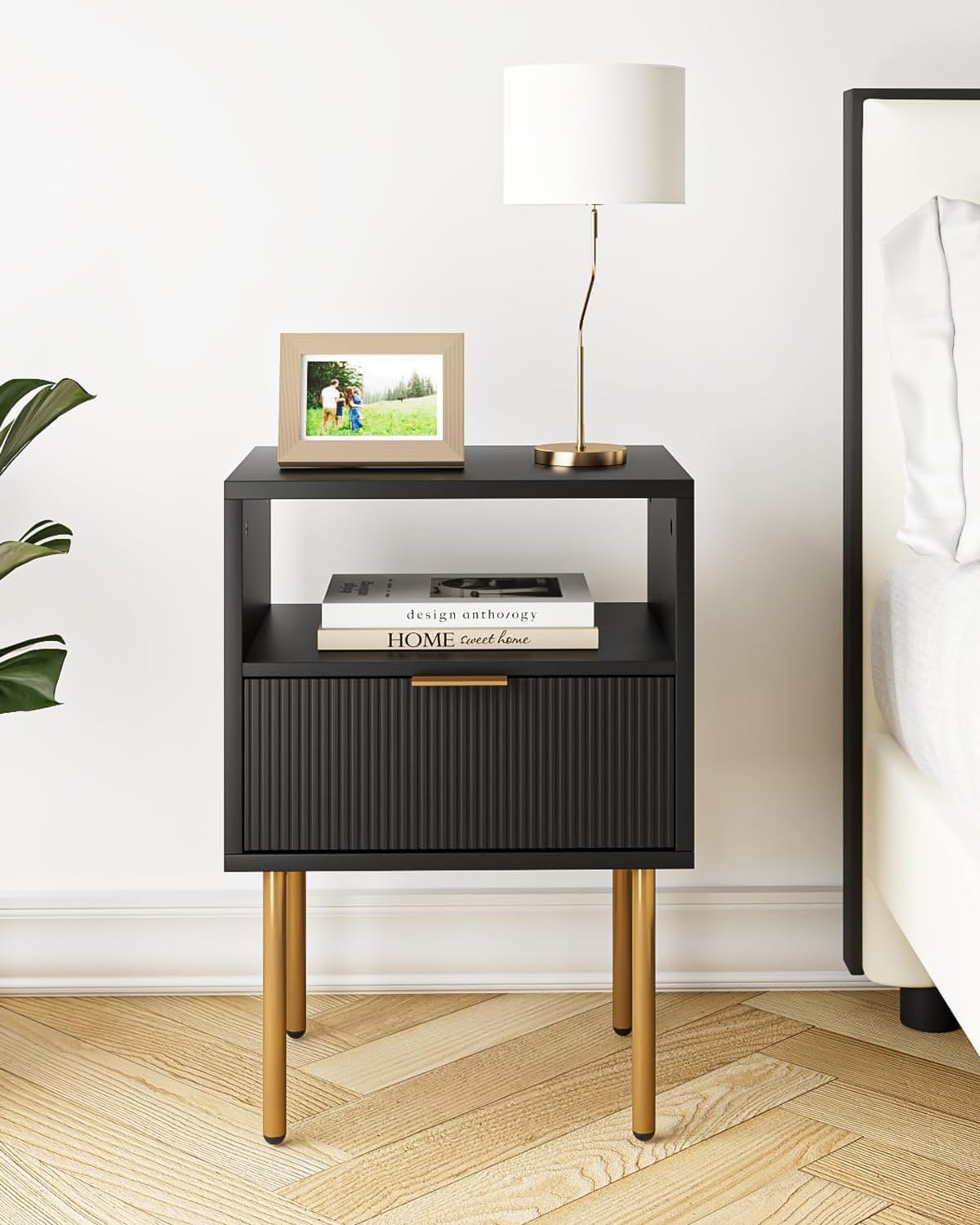
Modern bedside tables in 2026 prioritize a blend of minimalist aesthetics and high-utility storage. Key solutions include floating units that maximize floor space, integrated wireless charging hubs, and modular compartments that hide clutter while maintaining a sleek silhouette. These designs focus on "invisible" technology and sustainable materials to enhance bedroom ergonomics and visual clarity.
The Evolution of Bedside Storage in 2026
The bedside table has transitioned from a purely utilitarian furniture piece into a sophisticated command center for the modern bedroom. In 2026, the primary trend centers on "quiet functionality"—the idea that storage and technology should be present but not intrusive. This shift is driven by a growing desire for decluttered sleep environments, which have been scientifically linked to better sleep hygiene and reduced cognitive load before rest.
Unlike the bulky, traditional nightstands of the past, modern iterations emphasize lean profiles. Designers are now utilizing high-performance materials like carbon-fiber reinforced polymers and ultra-thin ceramic slabs to create pieces that look delicate but can support significant weight. The "stylish storage" aspect has evolved beyond a simple drawer; it now encompasses hidden niches for wearable tech chargers, recessed channels for cable management, and soft-close mechanisms that eliminate noise in a quiet room.
Furthermore, the concept of a "matching pair" is being challenged. Asymmetry is a defining characteristic of 2026 interior design, where one side of the bed might feature a floor-to-ceiling modular shelf while the other utilizes a minimalist floating stone ledge. This approach allows for personalized storage solutions that cater to the specific needs of each individual occupant.
Maximizing Small Spaces with Floating and Wall-Mounted Designs
For urban dwellers and those favoring a minimalist aesthetic, floating bedside tables remain the gold standard for spatial optimization. By detaching the unit from the floor, you create an uninterrupted line of sight across the room, which makes small bedrooms feel significantly larger.
Structural Requirements and Installation
Wall-mounted solutions require careful consideration of wall types. In 2026, many high-end floating units utilize a standardized French cleat system, allowing for easy mounting and the ability to swap out different modules. When installing these pieces, it is crucial to identify the stud location or use heavy-duty toggle bolts, especially if the table will house heavy items like books or high-capacity batteries.
The Benefit of Clear Floor Space
Beyond the visual appeal, floating storage solutions improve the hygiene of the sleeping area. They allow robot vacuums and air purifiers to operate without obstruction, reducing dust accumulation—a critical factor for allergy sufferers. Modern designs often include a "lip" or raised edge on the top surface to prevent items from sliding off, combining the safety of a tray with the sleekness of a shelf.
Multi-Functional Storage: Beyond the Standard Drawer
The traditional single-drawer nightstand is being replaced by tiered systems that categorize belongings by frequency of use. Modern storage solutions for 2026 focus on specific "zones" within the table structure to manage the various items we keep near us at night.
- The Top Tier (Active Zone): Often a shallow tray or a flat surface for immediate items like water glasses, glasses, or a phone.
- The Middle Tier (Accessible Storage): Open shelving for books or tablets, allowing for "breathable" storage that doesn't feel heavy.
- The Hidden Tier (Private Storage): Deep drawers or "push-to-open" compartments for personal items, medication, or valuables.
Integrated cable management is no longer an optional feature; it is a fundamental requirement. Modern tables often feature internal "wells" where power strips are hidden, with only a small, elegant exit point for a single charging cable. This prevents the "spiderweb" effect of multiple cords tangling behind the furniture, which is a major source of visual clutter in modern bedrooms.
Material Innovation: Sustainable and High-Tech Surfaces
Sustainability and durability are the twin pillars of material selection in 2026. As consumers move away from "fast furniture," there is a renewed focus on materials that age gracefully and have a lower environmental impact.
Upcycled Biocomposites are increasingly popular, using agricultural waste mixed with natural resins to create surfaces that mimic the warmth of wood but offer the durability of plastic. These materials are often used in "soft-touch" finishes that are pleasant to handle in the dark and don't produce a loud clatter when you set down a glass.
Sintered Stone and Ceramics are favored for top surfaces because they are virtually indestructible. They resist scratches from jewelry and are immune to water rings from condensation. In 2026, we are seeing these materials integrated with capacitive touch sensors, allowing the tabletop itself to act as a light switch or a volume controller for bedside speakers.
Comparison of Modern Bedside Table Styles
When selecting a storage solution, the decision often rests on the balance between capacity and footprint. The following table compares the most prevalent modern styles available in 2026.
| Style | Best For | Storage Capacity | Key Technical Feature | Visual Weight |
|---|---|---|---|---|
| Floating Shelf | Ultra-minimalist rooms | Low | Integrated LED downlighting | Very Light |
| Modular Pedestal | Evolving storage needs | Medium-High | Stackable component sections | Medium |
| Cantilevered Table | Over-bed utility | Medium | Adjustable height/tilt | Light |
| Enclosed Cabinet | Clutter concealment | High | Soft-close seamless doors | Heavy |
| Smart Hub Unit | Tech-heavy users | Medium | Built-in Qi2 charging & USB-C | Medium |
Integrating Technology: The 2026 Smart Bedside Standard
Modern bedside tables have moved past being "tech-ready" to being "tech-native." In 2026, the integration of power and connectivity is seamless and often invisible to the naked eye.
Wireless Charging and Inductive Surfaces
Standard Qi2 wireless charging pads are now frequently embedded beneath the veneer of the tabletop. Users simply place their device on a designated (often subtly marked) area to begin charging. This eliminates the need for plastic charging stands and dangling cables. Some advanced models even feature "multi-device zones" that can charge a smartphone, smartwatch, and earbuds simultaneously on a single surface.
Integrated Ambient Lighting
Instead of a traditional lamp taking up surface space, many modern storage solutions feature integrated LED strips. These are often controlled by motion sensors or touch-capacitive surfaces. In 2026, "circadian lighting" is a major feature, where the bedside table emits a soft amber glow in the evening to promote melatonin production and a cooler blue-white light in the morning to aid waking.
How to Choose the Right Bedside Table for Your Sleep Sanctuary
Selecting the perfect bedside table requires a balance of ergonomics and aesthetics. A common mistake is choosing a table based on looks alone, only to find it is uncomfortable to use in a reclined position.
- Height Alignment: The top of your bedside table should be level with, or slightly above, the top of your mattress. In 2026, the standard mattress height has stabilized at 25 inches, making 24–28 inches the ideal range for a nightstand. A table that is too low is difficult to reach, while one that is too high poses a risk of bumping your head.
- Scale and Proportion: The width of the table should be proportional to the bed size. A King-sized bed often looks best with tables that are 20–30 inches wide, whereas a Twin or Full bed benefits from narrower units (15–18 inches) to avoid overwhelming the space.
- Surface Area vs. Storage: Determine if you are a "surface person" (someone who needs space for lamps, books, and water) or a "storage person" (someone who wants to tuck everything away). If you fall into the latter category, prioritize units with multiple drawers or deep cabinets.
FAQs About Modern Bedside Tables
What is the most popular bedside table material in 2026?
Sustainable biocomposites and matte-finished sintered stone are the most sought-after materials. These provide a high-end look with extreme durability and low environmental impact, catering to the "conscious luxury" trend prevalent in 2026.
Should my bedside tables match the bed frame?
Not necessarily. In 2026, the trend is toward "curated eclecticism." While the materials should complement each other—for example, pairing a walnut bed frame with a matte black metal nightstand—exact matching is often seen as dated. Focus on maintaining a consistent "visual weight" instead.
How do I hide messy charging cables?
Look for tables with built-in "cable management gutters" or internal power strips. Many modern designs now feature a rear-access panel specifically designed to house excess cord length, ensuring that only the necessary connector is visible on the surface.
Are floating bedside tables safe for heavy items?
Yes, provided they are installed correctly. Modern floating units are often rated for up to 50 lbs (22 kg) when anchored into wall studs. If you plan to store a large collection of heavy books, ensure you use a mounting bracket that spans at least two studs.
Is integrated lighting better than a traditional lamp?
Integrated lighting saves valuable surface space and offers cleaner lines. However, traditional lamps allow for easier style updates. In 2026, many choose a hybrid approach: a table with integrated low-level "pathway" lighting for nighttime trips and a decorative lamp for reading.
Final Recommendation for Sourcing and Styling
When finalizing your bedroom layout in 2026, prioritize a bedside table that solves your specific "pain points." If your room constantly feels cluttered, an enclosed cabinet with internal dividers is the most logical choice. If you struggle with cord management, seek out a tech-integrated hub.
Before purchasing, measure your mattress height and ensure there is at least 2 inches of clearance between the table and the bed to allow for easy bed-making. To style your modern table, follow the "rule of three": one light source, one organic element (like a small plant), and one personal item. This ensures the table remains a "stylish storage solution" rather than a magnet for miscellaneous household clutter.