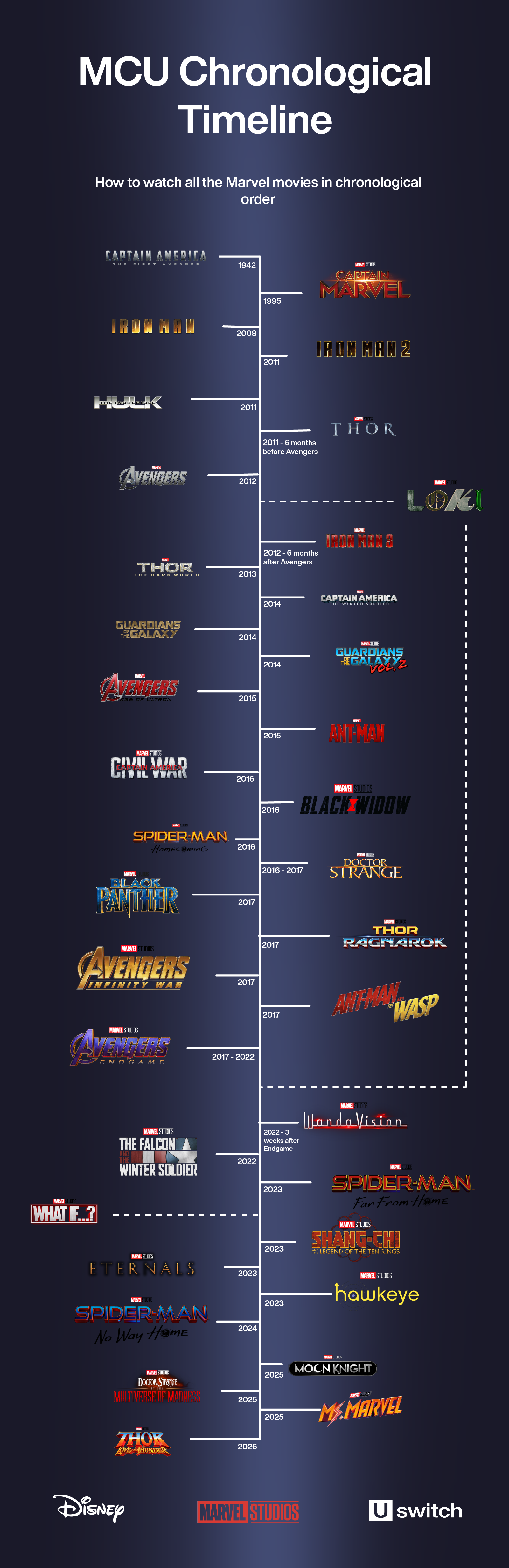
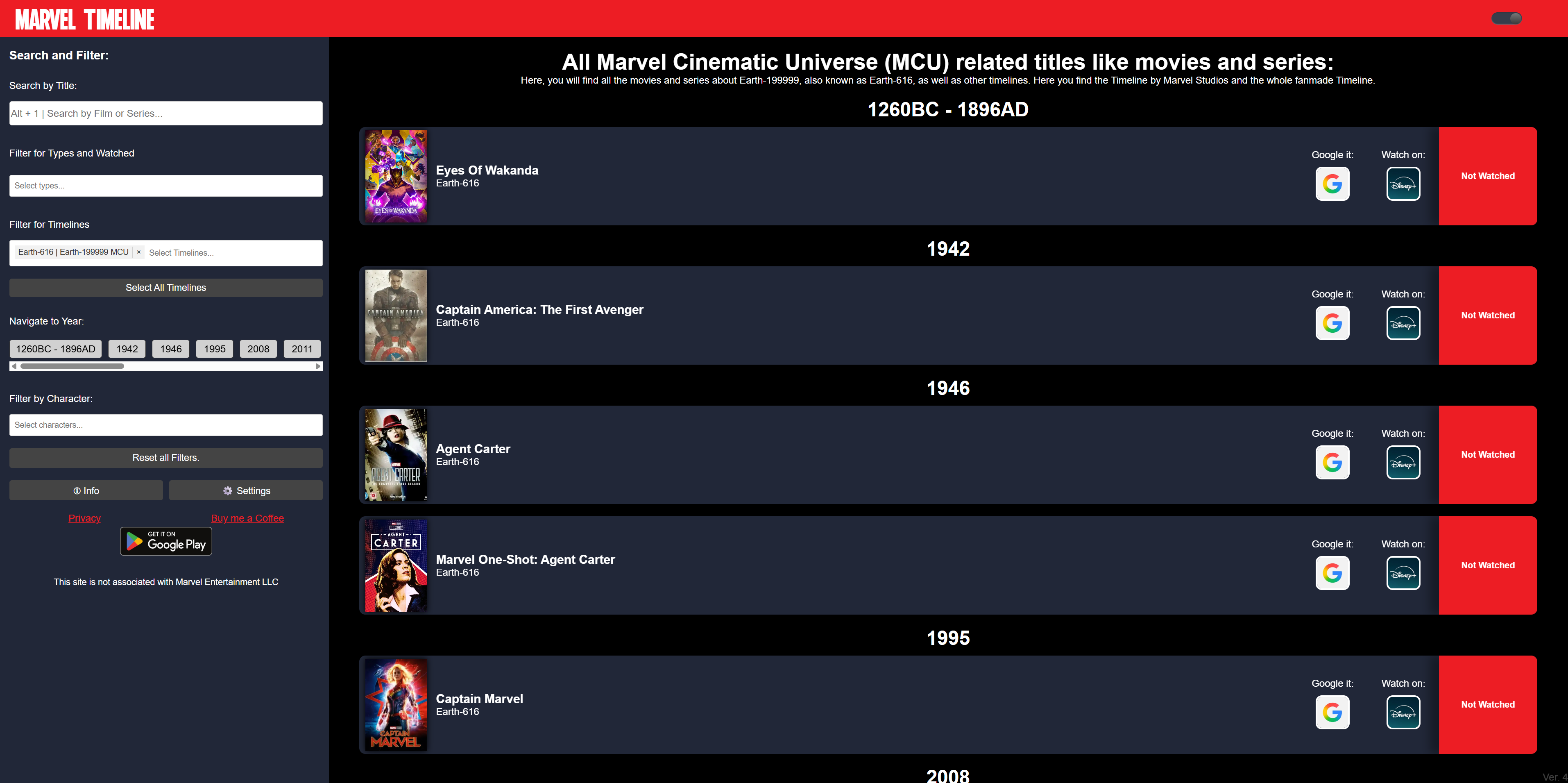
To watch the Marvel Cinematic Universe (MCU) in chronological order, you must follow the timeline of in-universe events rather than the theatrical release dates. This journey begins in 1942 with Captain America: The First Avenger and spans decades of superhero history, concluding with the most recent Phase 5 and Phase 6 cinematic entries set in the mid-2020s.
Understanding the Difference: Chronological vs. Release Order
When approaching the massive library of the Marvel Cinematic Universe, viewers generally choose between two primary methods: Release Order and Chronological Order. By 2026, the MCU has expanded to include over 35 feature films, making the distinction between these two viewing paths more significant than ever for both new fans and returning marathoners.
Release Order follows the movies as they were premiered in theaters, beginning with Iron Man in 2008. This is the way the creators intended the story to be consumed initially, as post-credit scenes and world-building elements are introduced sequentially. It allows the audience to experience the technical evolution of the franchise—from the grounded aesthetics of the late 2000s to the high-concept multiversal visuals of the 2020s.
Chronological Order, however, organizes the films based on when the events actually take place within the fictional timeline. This method provides a "historical" perspective of the MCU. For instance, while Captain Marvel was released in 2019, its story takes place primarily in 1995, making it the second film in a chronological marathon. This approach highlights the long-term consequences of specific events, such as the discovery of the Tesseract or the geopolitical fallout of the Sokovia Accords, in a linear fashion.
For the dedicated viewer in 2026, watching chronologically offers a unique narrative flow that clarifies how the "Age of Heroes" truly began and how the multiversal cracks started to form across the decades.
The Definitive MCU Chronological Timeline
The following list organizes the verified feature films of the MCU into their proper in-universe sequence. Note that while some films—like Eternals—feature scenes dating back thousands of years, they are placed based on where the majority of their primary narrative occurs.
| Movie Title | In-Universe Timeframe | Primary Narrative Focus |
|---|---|---|
| Captain America: The First Avenger | 1942–1945 | The origin of Steve Rogers and the SSR during WWII. |
| Captain Marvel | 1995 | Carol Danvers discovers her past and the Kree-Skrull war. |
| Iron Man | 2010 | Tony Stark builds the Mark I suit in Afghanistan. |
| Iron Man 2 | 2011 | The Stark Expo and the introduction of Black Widow. |
| The Incredible Hulk | 2011 | Bruce Banner’s flight from General Ross (occurs during "Fury's Big Week"). |
| Thor | 2011 | Thor’s banishment to Earth and the battle in Puente Antiguo. |
| The Avengers | 2012 | The Battle of New York and the first assembly of the team. |
| Iron Man 3 | 2012 | The aftermath of New York and the conflict with Aldrich Killian. |
| Thor: The Dark World | 2013 | The emergence of the Aether (Reality Stone) and the London convergence. |
| Captain America: The Winter Soldier | 2014 | The fall of S.H.I.E.L.D. and the return of Bucky Barnes. |
| Guardians of the Galaxy | 2014 | Peter Quill forms the Guardians in the Andromeda Galaxy. |
| Guardians of the Galaxy Vol. 2 | 2014 | Set only months after the first film; Ego the Living Planet. |
| Avengers: Age of Ultron | 2015 | The creation of Ultron and the Battle of Sokovia. |
| Ant-Man | 2015 | Scott Lang takes over the mantle from Hank Pym. |
| Captain America: Civil War | 2016 | The Avengers split over the Sokovia Accords. |
| Black Widow | 2016 | Set immediately after Civil War; Natasha’s past in the Red Room. |
| Black Panther | 2016 | T'Challa’s ascension to the throne of Wakanda. |
| Spider-Man: Homecoming | 2016 | Peter Parker balances high school and the Vulture. |
| Doctor Strange | 2016–2017 | Stephen Strange’s journey from surgeon to Sorcerer Supreme. |
| Thor: Ragnarok | 2017 | The destruction of Asgard and the encounter on Sakaar. |
| Ant-Man and the Wasp | 2018 | The rescue of Janet van Dyne (concludes during Infinity War). |
| Avengers: Infinity War | 2018 | Thanos’s quest for the Infinity Stones; The Snap. |
| Avengers: Endgame | 2018–2023 | The five-year gap and the "Time Heist" to reverse the Snap. |
| Shang-Chi and the Legend of the Ten Rings | 2023–2024 | The emergence of the real Mandarin and the hidden city of Ta Lo. |
| Eternals | 2024 | The emergence of a Celestial (main plot post-Endgame). |
| Spider-Man: Far From Home | 2024 | Peter Parker’s school trip to Europe; the Mysterio illusion. |
| Spider-Man: No Way Home | 2024 | The fallout of Peter’s identity reveal and multiversal incursions. |
| Doctor Strange in the Multiverse of Madness | 2024–2025 | Strange deals with the Scarlet Witch across the Multiverse. |
| Black Panther: Wakanda Forever | 2025 | The death of T'Challa and the conflict with Namor and Talokan. |
| Thor: Love and Thunder | 2025 | Thor’s journey of self-discovery and the battle with Gorr. |
| Ant-Man and the Wasp: Quantumania | 2025 | The Lang/Pym family enters the Quantum Realm to face Kang. |
| Guardians of the Galaxy Vol. 3 | 2025 | The final mission of the current Guardians against the High Evolutionary. |
| The Marvels | 2025 | Captain Marvel, Ms. Marvel, and Monica Rambeau's power entanglement. |
| Deadpool & Wolverine | 2024–2026 | Wade Wilson and Logan enter the MCU timeline via the TVA. |
| Captain America: Brave New World | 2025–2026 | Sam Wilson navigates global politics and the Red Hulk. |
| Thunderbolts* | 2026 | A team of anti-heroes and reformed villains on a covert mission. |
Crucial Timeline Nuances: Flashbacks and Time Travel
One of the most complex aspects of a chronological MCU viewing guide is how to handle films that span long periods or involve time travel. For a "verified" experience, we look at where the weight of the narrative sits.
The "Ancient" Prologues
Films like Eternals and Thor: The Dark World begin with scenes set thousands of years ago. However, watching these first would be jarring for a new viewer. The consensus among MCU historians is that these should be watched where their "present-day" stories reside. Eternals is particularly tricky because it explores the history of Earth, yet its primary conflict only arises because the "Blip" (the five-year disappearance of half the population) delayed a cosmic event. Therefore, it is best placed after Avengers: Endgame.
The 2023 Time Gap
Avengers: Endgame introduced a five-year jump from 2018 to 2023. This is known in-universe as "The Blip." Most Phase 4 and Phase 5 movies take place in the immediate years following this event. When watching chronologically, you will notice a distinct shift in the world's atmosphere after Endgame—nations are rebuilding, and there is a sense of global trauma that permeates films like Black Panther: Wakanda Forever and The Marvels.
Multiversal Overlap
As of 2026, the MCU has heavily integrated the concept of the Multiverse. Movies like Deadpool & Wolverine exist in a unique space. While they involve characters from other realities (the former Fox X-Men universe), the primary narrative intersects with the MCU's Sacred Timeline during the post-Endgame era. For chronological purposes, these are placed based on when the characters arrive or impact the "Earth-616" (the main MCU) timeline.
Why Choose the Chronological Order?
Watching the MCU chronologically is often considered the "Expert Mode." It is highly recommended for fans who have already seen the films at least once.
1. Character Arcs in Real Time: Watching Captain America: The First Avenger first allows you to see Steve Rogers as the foundation of the Avengers for a long period before Tony Stark even builds his first suit. This makes their eventual clash in Captain America: Civil War feel more like a collision of two distinct eras of American heroism.
2. The Evolution of the Infinity Stones: The Stones are the MacGuffins of the first three phases (The Infinity Saga). In chronological order, you see the Tesseract go from a Nazi stronghold to S.H.I.E.L.D. custody, then to Project PEGASUS in the 90s (Captain Marvel), and finally back to S.H.I.E.L.D. in The Avengers. Tracking these artifacts linearly makes the overarching plot much clearer.
3. Context for Black Widow: In release order, Black Widow (2021) felt like a strange step back because the character had already died in Endgame (2019). In chronological order, you watch it immediately after Civil War. This provides much-needed context for Natasha Romanoff’s mindset and her "family" before she joins the underground resistance that eventually leads into Infinity War.
Preparation and Streaming on Disney+
As we progress through 2026, Disney+ remains the primary repository for the MCU. The platform has a dedicated "Marvel Cinematic Universe in Timeline Order" category, which is frequently updated by Marvel Studios to reflect the official canon.
However, there are a few external factors to keep in mind:
- Spider-Man Rights: While Disney+ has secured many of the Spider-Man films through deals with Sony, regional licensing may vary. You may need to access external platforms to find Spider-Man: Far From Home or No Way Home to complete your chronological run.
- The Incredible Hulk: Similarly, the distribution rights for the 2008 film were historically held by Universal. It has recently become more widely available on Disney+ in many territories, but it remains a "floating" entry in some regions.
- IMAX Enhanced: For movies like Avengers: Infinity War and Endgame, ensure you select the IMAX Enhanced versions available on Disney+ to see the full vertical scope of the action.
Frequently Asked Questions
Where do the Disney+ series fit into this list?
While this guide focuses on the "Verified Viewing Guide" for movies, the series are now essential. Generally, WandaVision happens immediately after Endgame. Loki technically happens outside of time, but it is best watched after Endgame because it starts with a version of Loki from the 2012 time-heist. Secret Invasion and Ms. Marvel lead directly into the events of The Marvels.
Is 'Captain Marvel' better watched in 1995 or near 'Infinity War'?
For a chronological purist, 1995 is the correct placement. It introduces Nick Fury and the concept of the Avengers Initiative early. However, some argue that the post-credit scene of Captain Marvel (which links to Endgame) is a major spoiler. If you are a first-time viewer, stick to release order; for a rewatch, 1995 adds great flavor to the early MCU.
Does 'Deadpool & Wolverine' change the timeline?
Strictly speaking, no. It utilizes the TVA (Time Variance Authority) established in the Loki series. While it visits different years and universes, the "anchor" of the story takes place in the modern-day MCU timeline, roughly around 2024 or 2026, depending on the specific TVA mission parameters.
Why is 'Iron Man' listed in 2010 instead of 2008?
Although Iron Man was released in 2008, the "Official Marvel Cinematic Universe Timeline" book and subsequent Disney+ updates place the events of the film in 2010. This was done to condense the timeline of "Phase 1" so that the events of Iron Man 2, Thor, and The Incredible Hulk could all happen within the same week (Fury's Big Week) in 2011.
Is 'The Fantastic Four: First Steps' part of this chronology?
By 2026, The Fantastic Four: First Steps has joined the lineup. While it is set in a retro-future 1960s aesthetic, it is confirmed to be part of the wider Multiverse Saga. For a chronological marathon of the main MCU timeline (Earth-616), it is typically placed based on when the team eventually transitions into the modern era, similar to how Captain America is handled.
Final Recommendation: Starting Your Marathon
To successfully complete an MCU chronological marathon in 2026, set aside approximately 80 to 90 hours of viewing time. Begin with Captain America: The First Avenger to establish the heart of the universe. Pay close attention to the post-credits scenes, but be aware that in chronological order, some post-credits scenes (like the one in Black Widow or Ant-Man and the Wasp) leap forward years into the future. If a scene feels confusing, it is likely a "flash-forward" intended to bridge the gap to the next release.
For the most immersive experience, supplement the movies with the "Marvel Studios Legends" shorts on Disney+, which provide quick 5-10 minute summaries of character journeys before you dive into their specific sequels.