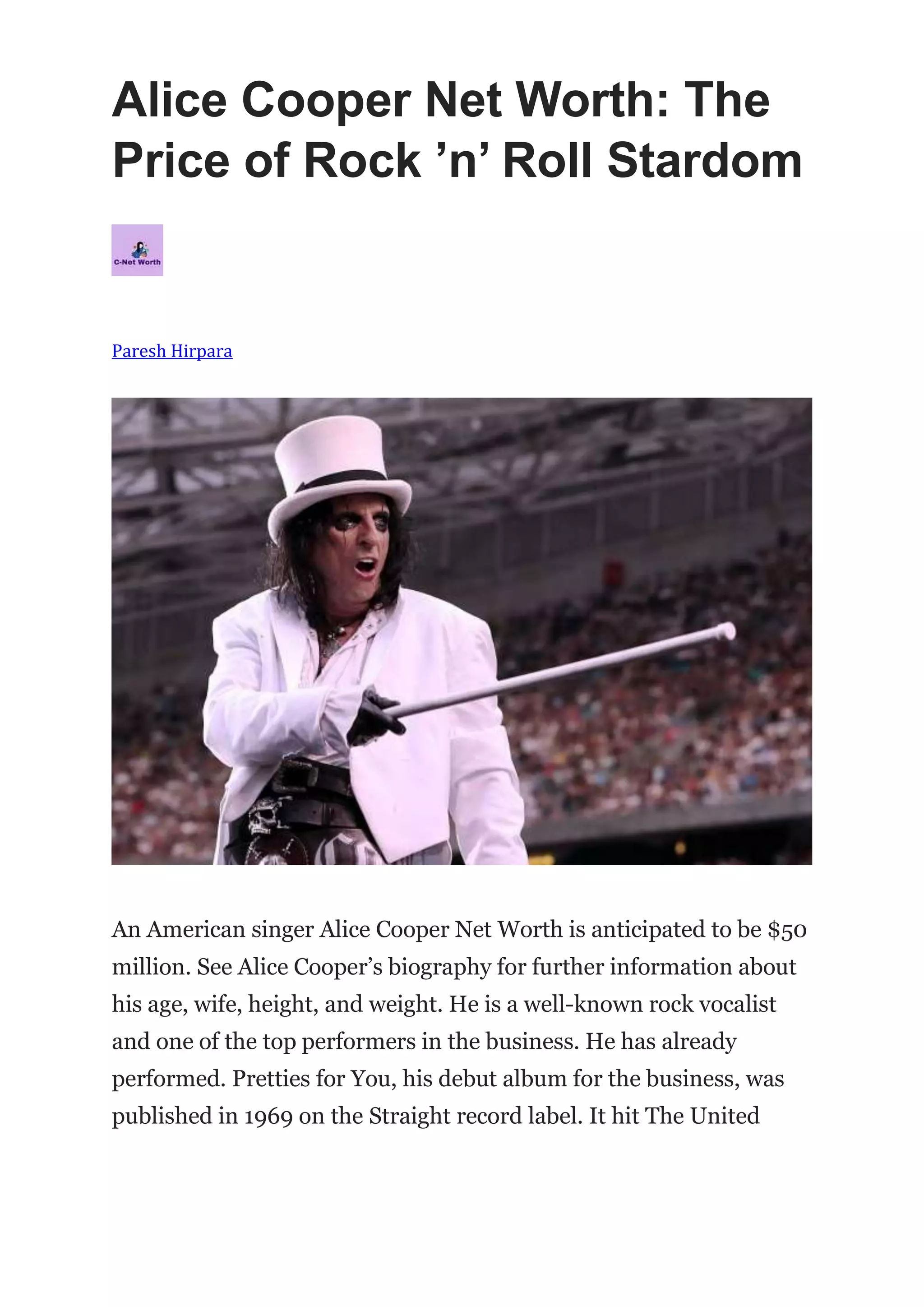
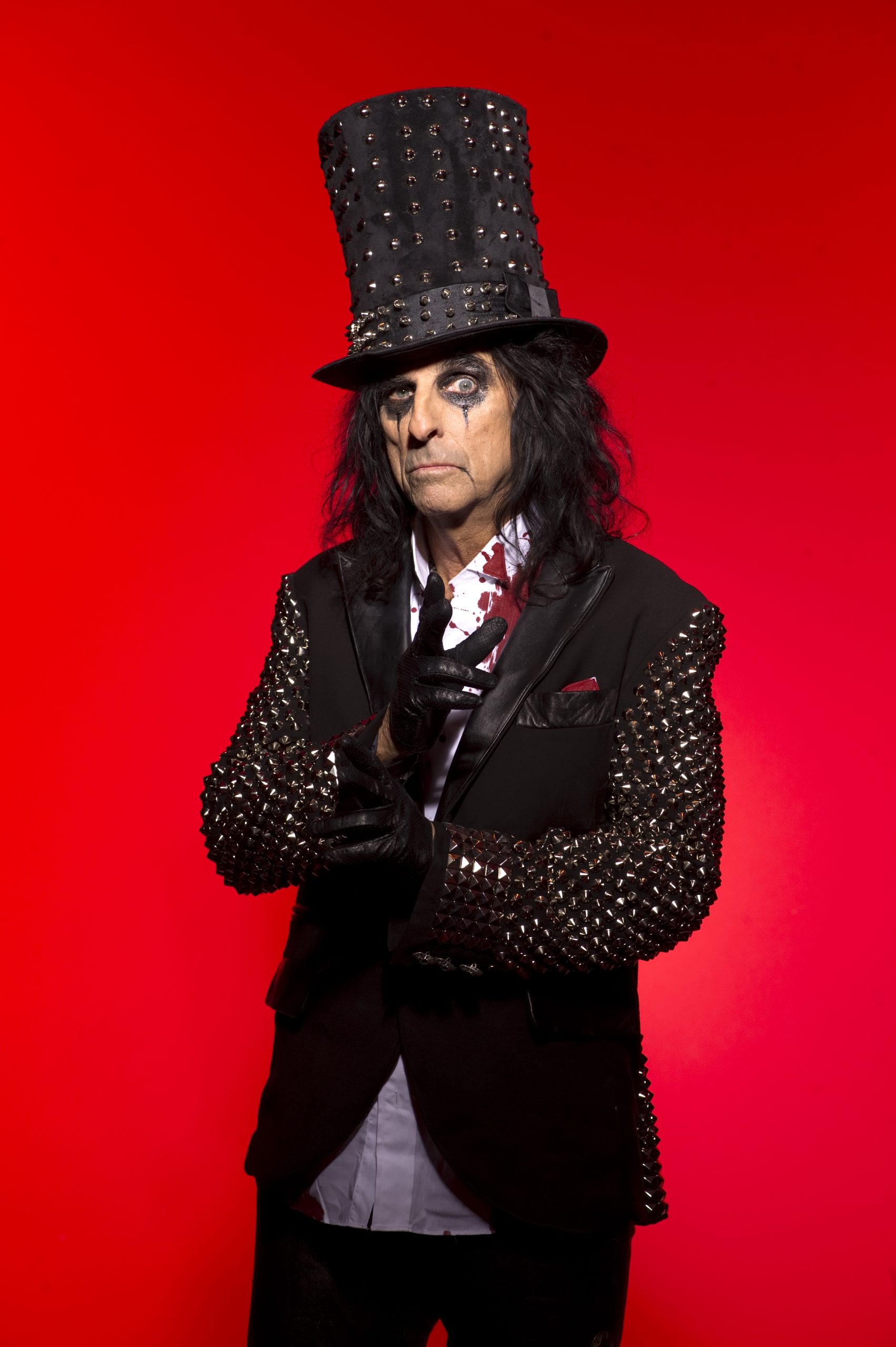
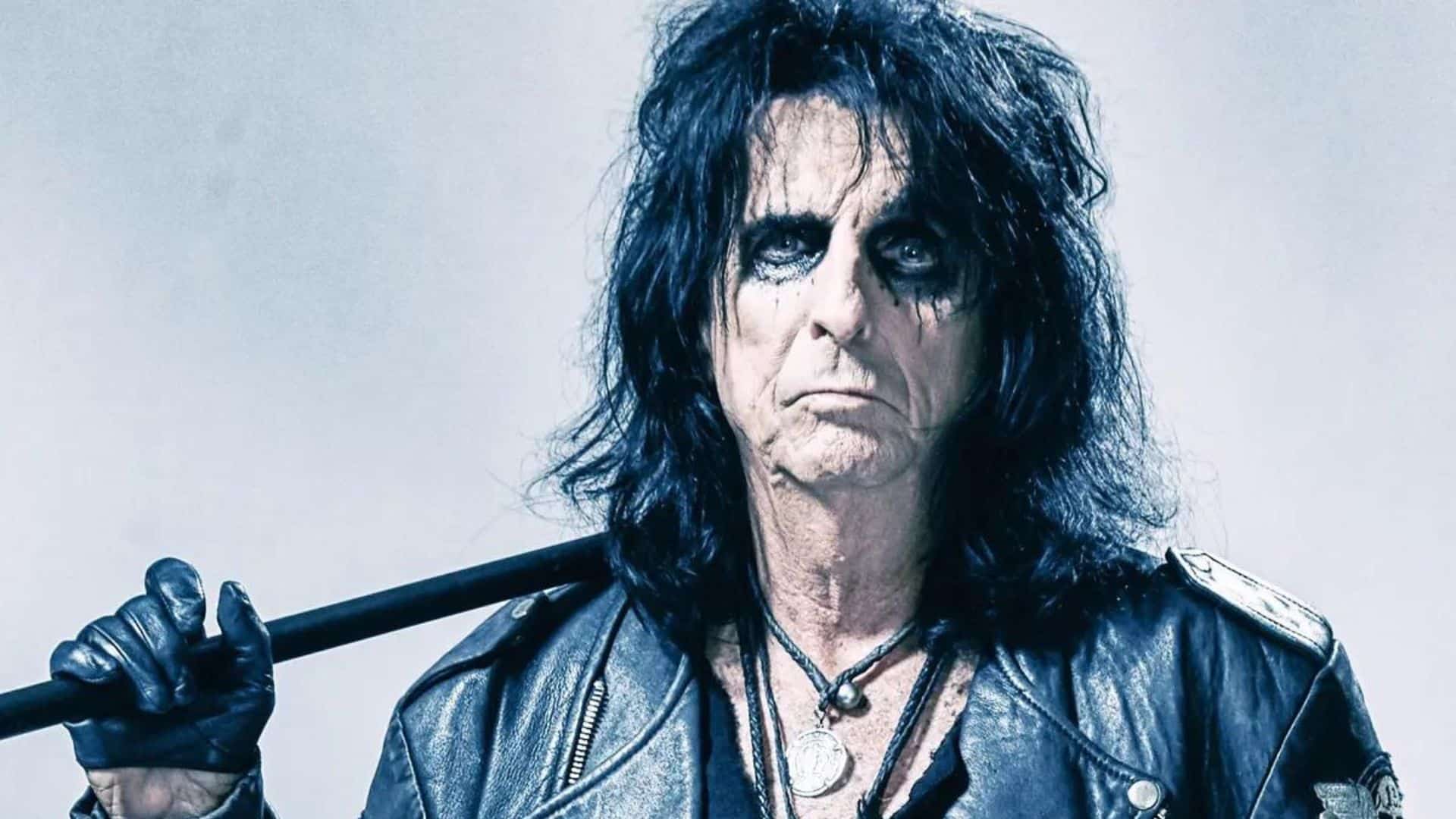
Alice Cooper, born Vincent Damon Furnier, has an estimated net worth of $100 million. His financial legacy stems from over five decades as the pioneer of theatrical shock rock, sustained global arena touring, a lucrative music publishing catalog, syndicated radio broadcasting, strategic real estate investments, and high-value personal collectibles.
Breakdown of Alice Cooper’s Financial Empire
Long before heavy metal and hard rock embraced theatrical horror elements, Alice Cooper pioneered a stage show incorporating guillotines, electric chairs, fake blood, and boa constrictors. However, behind the grand guignol spectacle lies a remarkably shrewd business strategy that transformed a controversial 1970s rock group into a multi-generational global brand.
Cooper's wealth is not tied to a single windfall; rather, it is built on diversified revenue channels developed over fifty years in the entertainment industry:
- Recorded Music & Publishing Royalties: Millions of album sales worldwide and enduring radio/streaming classics.
- Live Performance & Touring Income: Decades of relentless solo touring alongside high-profile supergroup ventures.
- Broadcast & Syndication: Host of a long-running, globally syndicated classic rock radio show.
- Merchandising & Brand Licensing: High-margin theatrical apparel, Halloween licensing, and commercial endorsements.
- Fine Art & Real Estate Holdings: Prime residential properties and valuable fine art acquisitions accumulated across several decades.
Music Career and Catalog Royalties: Building the Legacy
The Original Alice Cooper Group Era (1969–1974)
Originally formed as the Spiders and later renamed Alice Cooper, the original band—comprising Furnier, Glen Buxton, Michael Bruce, Dennis Dunaway, and Neal Smith—signed with Frank Zappa’s Straight Records before breaking through on Warner Bros. Records.
The band's 1971 single "I'm Eighteen" established their commercial footprint, followed by the landmark 1972 anthem "School's Out." The 1973 release Billion Dollar Babies reached number one on both the US Billboard 200 and UK Albums Chart. While early record deals in the 1970s were notoriously restrictive compared to modern standards, the ongoing publishing royalties from these foundational anthems continue to generate substantial annual performance royalties through platforms like ASCAP and global broadcast licensing.
Solo Transition and the 1980s Comeback
After legally adopting the name Alice Cooper for his solo career, Furnier released Welcome to My Nightmare in 1975, accompanying it with a massive TV special and worldwide tour. This established Cooper as a solo financial entity.
Although changing music trends hit hard rock in the early 1980s, Cooper executed one of the most successful financial and creative comebacks in rock history with his 1989 album Trash. Anchored by the global hit single "Poison," the album went multi-platinum worldwide, re-establishing his catalog's commercial relevance and expanding his fan base to a new generation.
Streaming Era Monetization
In the digital music economy, Cooper's master recordings and songwriting credits yield steady streaming passive income. Tracks like "School's Out," "Poison," and "No More Mr. Nice Guy" aggregate hundreds of millions of streams across platforms like Spotify and Apple Music, providing recurring revenue long after physical album sales slowed.
Live Touring Revenue and The Hollywood Vampires
While recorded music provides residual income, live performance remains the primary engine of Alice Cooper's net worth. Known as one of the hardest-working artists in classic rock, Cooper frequently performs 80 to 100 shows per year well into his seventies.
Touring Financial Engine:
- Solo World Tours: High Ticket Volumes + VIP Meet-and-Greets
- Hollywood Vampires: Co-Headlining European/US Arena & Festival Revenue
- Merchandise Sales: High-Margin Theatrical Apparel & Collectibles
Solo Arena and Festival Tours
Cooper’s live performances are elaborate, prop-heavy productions. Despite high production costs, his touring operation is meticulously managed to optimize profitability:
- Guaranteed Performance Fees: As a proven festival headliner and arena draw, Cooper commands substantial nightly performance guarantees alongside backend gross ticket cuts.
- VIP Packages: Theatrical rock fans pay premium prices for meet-and-greets, stage-prop access, and signed memorabilia packages, yielding high net profit margins.
- Co-Headlining Tours: Strategic joint tours with acts such as Deep Purple, Rob Zombie, and Mötley Crüe allow for shared staging costs while maximizing arena capacity.
The Hollywood Vampires
In 2015, Cooper co-founded the rock supergroup Hollywood Vampires alongside actor Johnny Depp and Aerosmith guitarist Joe Perry. Formed to honor the music of rock icons who died from excess in the 1970s, the group quickly evolved into a major international touring powerhouse. Playing European stadiums and high-capacity US venues, the band provides an additional major source of touring income separate from Cooper’s solo operations.
Media Ventures, Syndication, and Licensing
Nights with Alice Cooper Radio Show
From 2004 to 2023, Cooper hosted the nationally and internationally syndicated radio show Nights with Alice Cooper. Broadcast on over 100 classic rock stations across the United States, Europe, and Australia, the show featured classic rock tracks, celebrity interviews, and Cooper’s personal tour anecdotes. Over its nearly two-decade run, the show generated consistent multi-million dollar syndication fees and personal broadcast income.
Film, Television, and Cameos
Cooper’s recognizable persona has made him a pop-culture icon with lucrative film and television appearances:
- Wayne's World (1992): His famous "We're not worthy!" backstage cameo introduced him to millions of Generation X viewers and rejuvenated catalog sales.
- Dark Shadows (2012): Tim Burton featured Cooper as himself in the big-budget gothic comedy.
- Commercial Endorsements: Cooper has appeared in major advertising campaigns for brands like Samsung, Bridgestone, Staples, and Callaway Golf, earning substantial endorsement fees.
Halloween and Brand Licensing
As the "Godfather of Shock Rock," Cooper occupies a unique space in seasonal entertainment. His brand is licensed annually for haunted house attractions, specialized merchandise, Halloween collectibles, and apparel, generating recurring seasonal licensing income every autumn.
Real Estate, Fine Art, and Golf Investments
Arizona and Hawaii Real Estate
Cooper has maintained long-term real estate investments in prime markets:
- Paradise Valley, Arizona: Cooper has owned a sprawling primary residence in Paradise Valley—one of the most affluent enclaves in the Greater Phoenix area—for several decades. Property values in this district have appreciated exponentially over the past thirty years.
- Maui, Hawaii: Like many high-net-worth musicians, Cooper has owned vacation property in Hawaii, benefiting from strong long-term real estate valuation gains in the islands.
The Andy Warhol "Electric Chair" Print
One of the most remarkable assets in Cooper's portfolio was uncovered in 2017. During his 1970s friendship with pop artist Andy Warhol, Cooper acquired a red "Little Electric Chair" silkscreen print from Warhol’s Death and Disaster series.
Stored in a rolled-up tube inside a storage locker for over 40 years, the artwork was rediscovered by Cooper’s family and manager Shep Gordon. Art experts have estimated the print's value between $10 million and $15 million, representing a massive hidden asset within his net worth portfolio.
Golf Endorsements and Business Ventures
An avid golfer with a near-scratch handicap, Cooper credits the sport with helping him overcome severe alcoholism in the early 1980s. He authored the book Alice Cooper, Golf Monster and has worked closely with equipment manufacturers such as Callaway. His involvement in celebrity golf tournaments and corporate golf outings has provided both personal enjoyment and financial sponsorship opportunities.
Alice Cooper’s Net Worth & Asset Summary
The following table outlines the estimated distribution and contributing elements of Alice Cooper’s financial profile:
| Financial Stream / Asset Category | Primary Drivers & Key Details | Estimated Financial Contribution / Value |
|---|---|---|
| Music Catalog & Publishing | Over 50 years of royalties (School's Out, Trash, streaming rights) | $25 million – $35 million estimated catalog value |
| Live Performance & Touring | Solo arena tours, festival headlining, Hollywood Vampires dates | $3 million – $6 million annual net touring revenue |
| Real Estate Portfolio | Paradise Valley, AZ luxury estate & secondary properties | $12 million – $18 million property valuation |
| Fine Art & Collectibles | Andy Warhol Little Electric Chair print, vintage stage props, guitars | $15 million – $20 million combined asset value |
| Media & Licensing | Nights with Alice Cooper syndication archive, film cameos, Halloween branding | $1 million – $2 million annual secondary income |
Philanthropy and Financial Longevity
Unlike many of his 1970s rock contemporaries who suffered financial devastation due to predatory contracts, excessive lifestyles, or mismanaged wealth, Cooper made crucial changes early in his career:
- Management Stability: Cooper has maintained a business partnership with manager Shep Gordon since 1968—one of the longest management relationships in music history. This continuity protected Cooper from typical industry management exploitation.
- Personal Sobriety: Choosing sobriety in the early 1980s saved both his health and his wealth, allowing him to tour efficiently without financial drain.
- Solid Rock Foundation: Cooper channels significant personal effort into his non-profit organization, the Solid Rock Foundation. The foundation operates Solid Rock Teen Centers in Phoenix and Mesa, Arizona, providing free music, dance, art, and vocational recording training to local youth. While structured as a non-profit, the foundation highlights Cooper's deep financial and social roots in the Arizona community.
Frequently Asked Questions
What is Alice Cooper's estimated net worth in 2026?
Alice Cooper’s net worth is estimated at approximately $100 million. This wealth reflects more than five decades of album sales, continuous global arena touring, catalog publishing rights, real estate holdings, and valuable fine art acquisitions.
What is Alice Cooper's real name?
Alice Cooper was born Vincent Damon Furnier. Originally, Alice Cooper was the name of his band, but Furnier legally adopted the name for his solo career to maintain ownership and branding rights over the public persona.
How much money does Alice Cooper make from touring?
While exact figures vary per tour cycle, Cooper's live performances typically generate between $3 million and $6 million net annually. This income is generated through solo arena shows, co-headlining summer tours, European festival appearances, and performance earnings with the Hollywood Vampires.
Did Alice Cooper really find a multi-million-dollar Andy Warhol painting in storage?
Yes. In 2017, Cooper’s family discovered an authentic Andy Warhol "Little Electric Chair" silkscreen print rolled up in a storage container where it had sat forgotten since the 1970s. The artwork has been valued by art experts at between $10 million and $15 million.
How did Alice Cooper protect his wealth compared to other 1970s rock stars?
Cooper’s long-term financial stability relies on three key factors: a unbroken 50-plus-year managerial partnership with Shep Gordon, achieving total personal sobriety in 1983, and diversifying his income through radio broadcasting, film cameos, brand licensing, and real estate investments.
Evaluating Celebrity Rock Net Worths
When assessing the long-term net worth of legendary rock figures like Alice Cooper, financial analysts look beyond initial record sales. Lasting financial security in the music industry depends heavily on ownership of publishing catalogs, long-term operational discipline on tour, smart real estate acquisition, and personal brand longevity across non-music media. Fans and industry analysts tracking legacy artist wealth should focus on catalog licensing reports, venue attendance metrics, and asset holdings rather than surface-level album certification numbers alone.