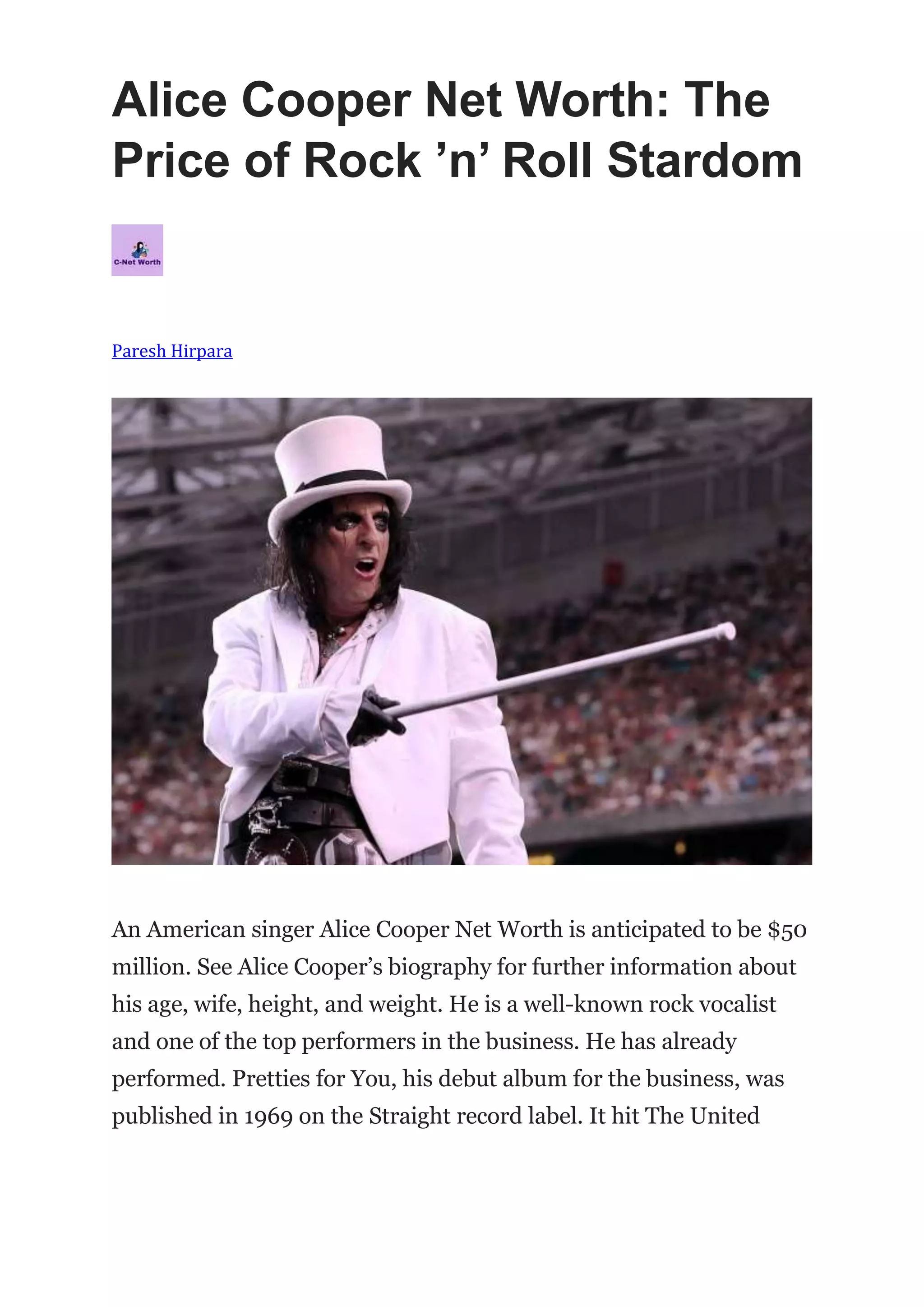
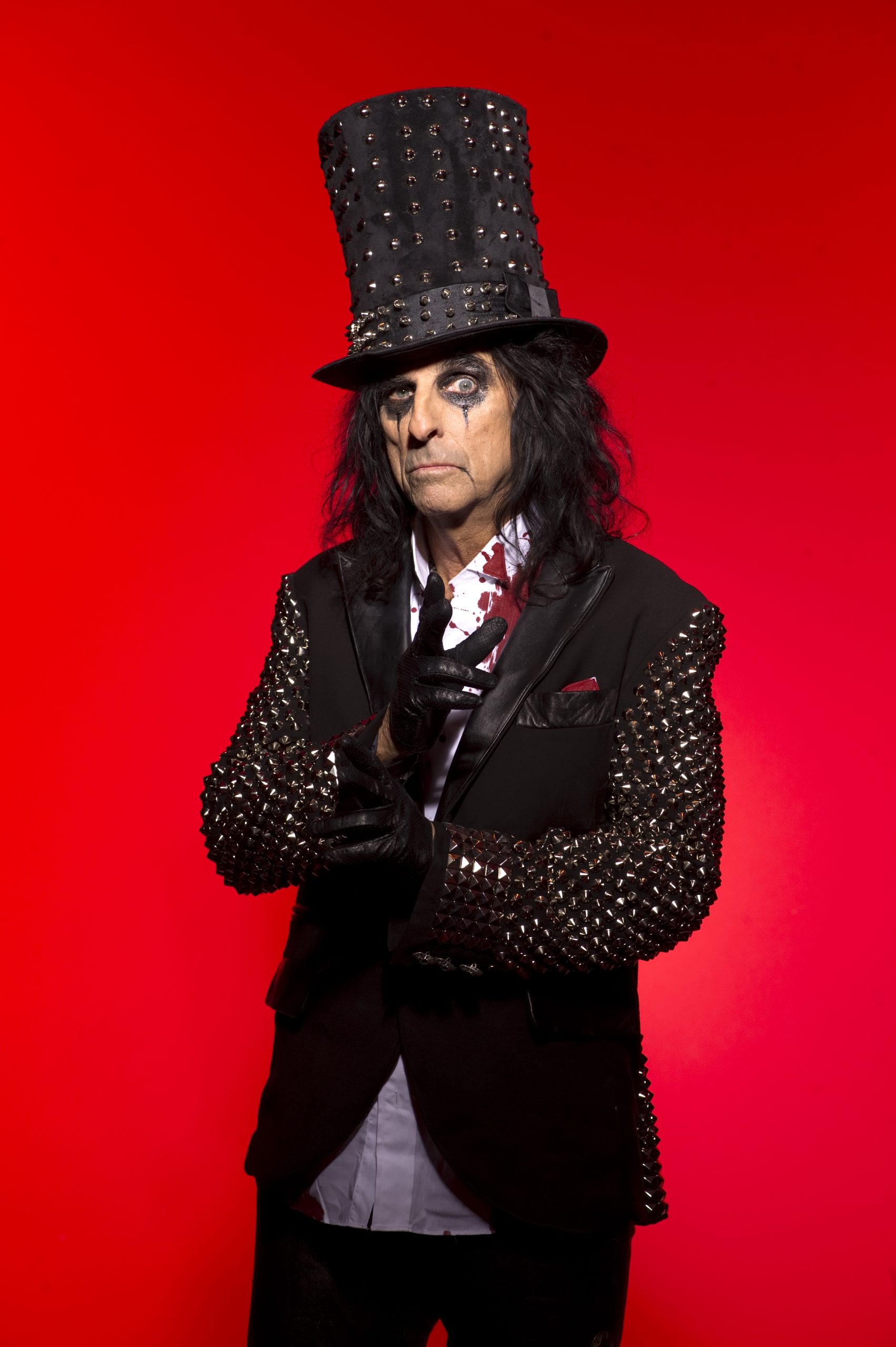
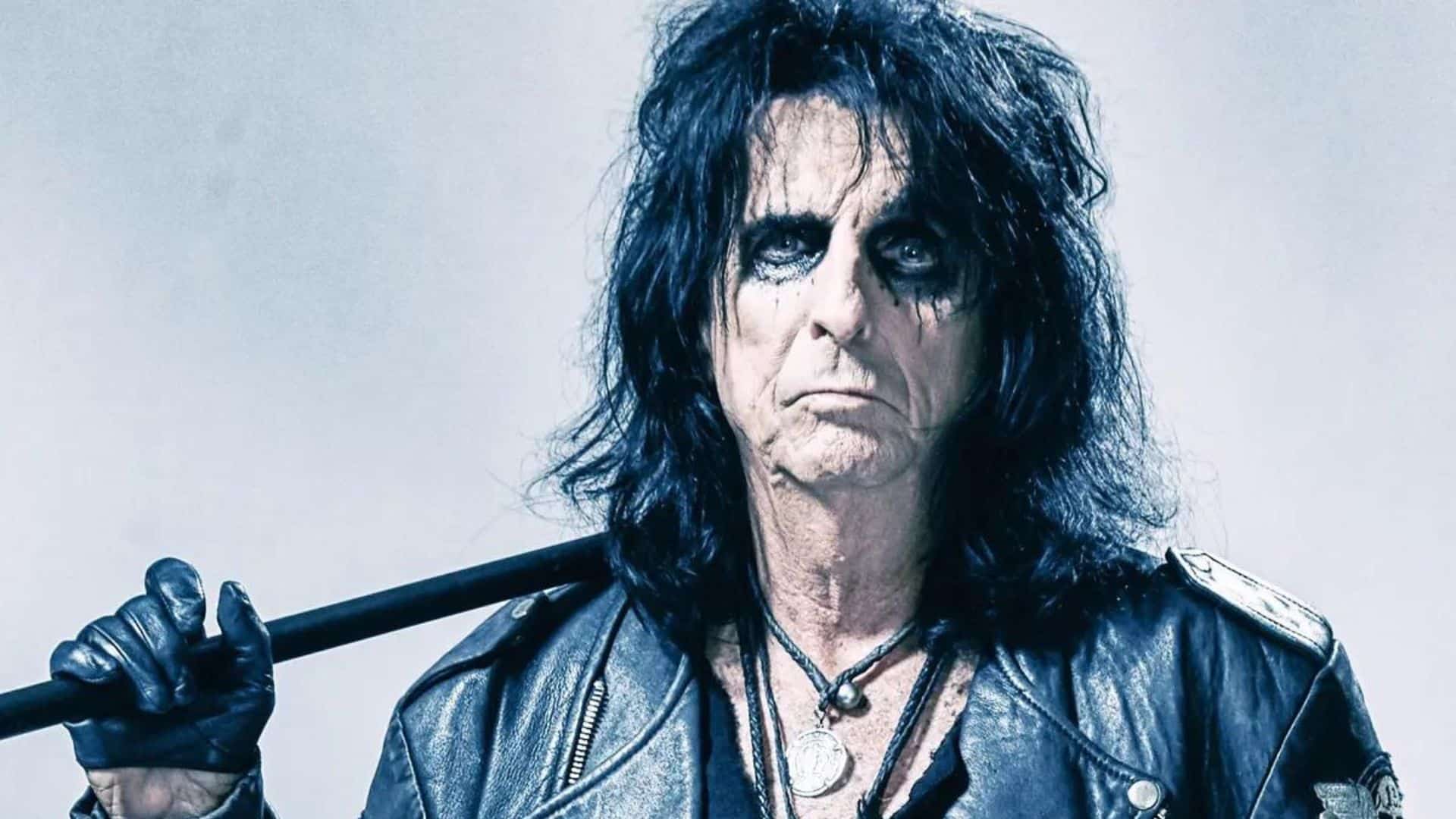
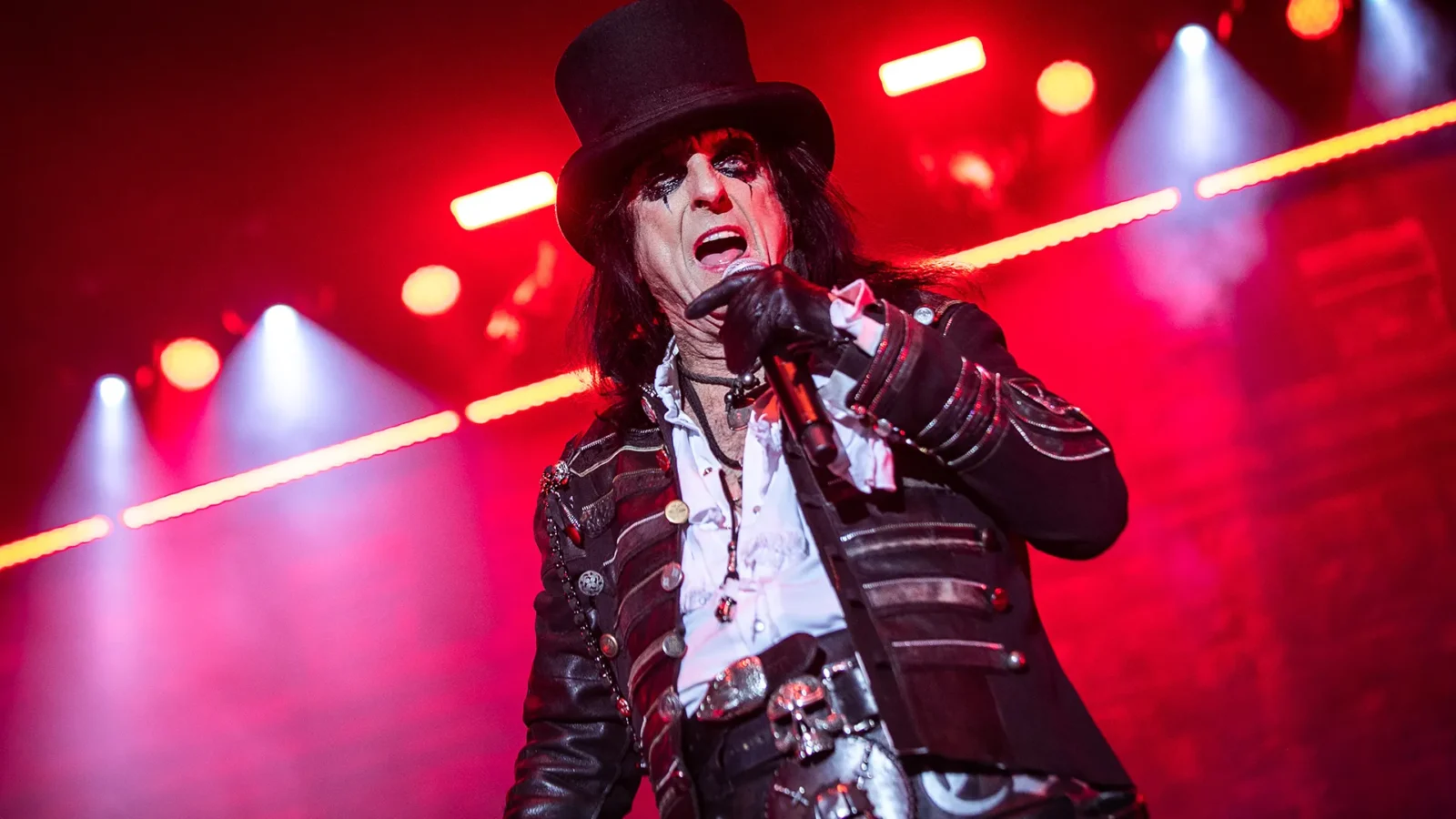
As of 2026, shock rock pioneer Alice Cooper has an estimated net worth of approximately $50 million. Built over a career spanning more than six decades, Cooper's financial standing stems from multi-platinum record sales, relentless global touring schedules, music publishing royalties, lucrative merchandising operations, syndicated radio broadcasting, and strategic real estate and business investments.
Financial Overview: Breaking Down Alice Cooper’s Wealth
Alice Cooper (born Vincent Damon Furnier on February 4, 1948) transformed rock and roll in the late 1960s and 1970s by combining heavy garage rock with theatrical stagecraft featuring guillotines, electric chairs, fake blood, and boa constrictors. While his stage persona is infamous for macabre excess, his approach to personal finance and career longevity is remarkably structured.
Evaluating the financial portfolio of a legendary musical artist requires looking beyond basic record sales. Cooper's wealth model relies on multiple revenue streams that generate consistent returns long after an album's initial release cycle. Continuous global touring, catalog streaming, product endorsements, radio syndication, and horror-themed merchandise licensing maintain his multi-million-dollar valuation.
| Revenue Stream / Asset Category | Primary Sources & Key Milestones | Estimated Financial Impact |
|---|---|---|
| Recorded Music & Catalog | Over 50 million copies sold worldwide; iconic hit albums including School's Out, Billion Dollar Babies, and Trash. | Multi-million dollar annual catalog, streaming, and sync licensing royalties. |
| Live Performance & Touring | Continuous solo arena/amphitheater tours; co-headlining runs; Hollywood Vampires supergroup tours. | Primary ongoing income driver; average gross earnings of $250k–$500k+ per arena show. |
| Merchandise & Brand Rights | Direct concert sales; online retail; Halloween licensing; classic shock rock intellectual property. | High-margin income; significant seasonal spikes around autumn and tour cycles. |
| Broadcasting & Media | Syndicated host of Nights with Alice Cooper (2004–2023); film and TV cameos (Wayne's World, Dark Shadows). | Consistent licensing and syndication fees across nearly two decades. |
| Business & Real Estate | Paradise Valley estate in Arizona; vintage automobile collection; former restaurant ventures; corporate endorsements. | Multi-million dollar physical asset base providing long-term equity stability. |
Recorded Music: Discography Sales, Royalties, and Catalog Value
Alice Cooper’s transition from a group format to a solo endeavor in the mid-1970s established a massive discography that continues to yield substantial mechanical, performance, and synchronization royalties. Across both the original Alice Cooper band era and his subsequent solo career, he has released 29 studio albums, with global record sales exceeding 50 million units.
The Golden Era: 1970s Breakthroughs
The original Alice Cooper band achieved commercial breakthrough status with their 1971 album Love It to Death, followed by Killer (1971) and the landmark School's Out (1972). The title track of School's Out reached the top of the UK charts and the top ten on the Billboard Hot 100, becoming a perennial anthem that generates heavy performance royalties every summer.
The band reached peak financial success with 1973’s Billion Dollar Babies, which hit number one on both the US and UK album charts. Certified platinum, the album supported one of the highest-grossing rock concert tours of that era, solidifying Cooper's status as a major stadium draw.
Solo Transition and late-80s Resurgence
When Vincent Furnier legally adopted the name Alice Cooper and launched his solo career with 1975's Welcome to My Nightmare, he established total control over the brand equity. The album went platinum and spawned a hit television special and a worldwide tour.
After a commercial lull in the early 1980s, Cooper executed one of the most successful financial comebacks in rock history with his 1989 album Trash. Produced by Desmond Child, Trash featured the hit single "Poison," which achieved multi-platinum status internationally. "Poison" remains one of Cooper's highest-earning digital catalog tracks, accruing hundreds of millions of streams on platforms like Spotify and Apple Music.
Key Commercial Highlights: • Worldwide Album Sales: 50+ Million Units • Billboard Top 40 Hits: 9 Singles • RIAA Certified Platinum Albums: 6 Releases • RIAA Certified Gold Albums: 11 Releases
Sync Licensing and Streaming Revenues
Unlike legacy artists who rely purely on physical media, Cooper’s management capitalized early on synchronization rights for film, television, and video games. Iconic appearances, such as his cameo in the 1992 film Wayne's World ("We're not worthy!"), introduced his catalog to a younger generation, boosting back-catalog sales. His tracks regularly feature in high-profile media campaigns, video games like Guitar Hero, and movie soundtracks, creating a passive annual revenue stream estimated in the low-to-mid seven figures.
Live Performance: The Core Financial Engine
While record sales established his fortune, live performance remains Alice Cooper’s largest source of ongoing earnings. Far from retiring, Cooper maintains an aggressive touring schedule, often performing between 80 and 100 shows per year across North America, Europe, Australia, and South America.
Arena and Amphitheater Tour Economics
The live shock rock experience requires elaborate stage props, custom pyrotechnics, and a full supporting band, incurring higher production overhead than a standard rock gig. However, Cooper's ability to headline mid-sized arenas and outdoor amphitheaters yields strong profit margins.
- Ticket Sales & Guarantees: A typical Alice Cooper headlining performance commands artist guarantees and ticket splits that generate gross receipts ranging from $200,000 to over $500,000 per night, depending on venue capacity and ticket pricing tiers.
- Co-Headlining Packages: Cooper frequently pairs with other legacy hard rock acts—such as Rob Zombie, Motley Crue, or Deep Purple—to fill outdoor sheds and amphitheaters holding 10,000 to 20,000 fans. These co-headlining packages split production costs while maximizing ticket yield.
- VIP Experience Packages: Premium ticketholders routinely pay $300 to $1,000+ for ticket bundles that include meet-and-greets, photo opportunities with Cooper, autographed memorabilia, and exclusive stage access. Given Cooper's dedicated fan base, VIP package sales contribute pure high-margin revenue to every tour stop.
Supergroup Touring: The Hollywood Vampires
In 2015, Cooper formed the rock supergroup Hollywood Vampires alongside actor Johnny Depp and Aerosmith guitarist Joe Perry. Conceived as a tribute to the music of the rock stars who died from excess in the 1970s, the group quickly evolved into a major international touring attraction.
Playing major European festivals and arena dates, the Hollywood Vampires draw massive crowds based on the combined star power of its members. The group's performance fees and festival headline slots add a secondary, highly lucrative live touring income stream to Cooper's annual schedule.
Business Ventures, Syndication, and Merchandising
Alice Cooper's financial stability is further reinforced by smart brand monetization outside of music venues.
Syndicated Radio: Nights with Alice Cooper
In 2004, Cooper launched the syndicated rock radio show Nights with Alice Cooper. Featuring classic rock tracks, personal anecdotes, insider musician interviews, and his dark humor, the show was picked up by over 100 radio stations across the United States, Canada, the UK, Australia, and Germany.
The radio venture ran for nearly two decades before concluding its syndication run in late 2023. Over its 19-year lifespan, the show provided Cooper with a consistent broadcast income, direct access to his core target demographic, and an efficient marketing platform for his concert tours and album releases.
Merchandising and Intellectual Property
Shock rock inherently lends itself to physical merchandising. The Alice Cooper brand controls a vast catalog of horror-themed merchandise designs.
Beyond standard concert t-shirts and hoodies, Cooper's intellectual property is licensed for:
- High-end collectible action figures and statues (NECA, Funko Pop!).
- Halloween-themed apparel and home decor.
- Official comic books and graphic novels (Marvel Comics, Dynamite Entertainment).
- Branded slot machines found in major casino resorts worldwide.
Direct-to-consumer tour merchandise regularly yields high revenue per attendee, making concert apparel one of his most profitable daily business operations.
Restaurant & Endorsement Deals
Cooper was an early celebrity entrant into the themed restaurant space. In 1998, he opened Cooper's Town, a sports and rock-and-roll-themed restaurant located in downtown Phoenix, Arizona. The venue operated successfully for nearly two decades, catering to sports fans visiting nearby arenas before eventually closing its doors in 2017.
In addition to food services, Cooper has appeared in major corporate advertising campaigns for brands such as Samsung, Staples, Xiaomi, Callaway Golf, and Saturn automobiles. His willingness to self-deprecate in commercials has made him a versatile corporate ambassador.
Assets, Financial Management, and Real Estate
A major factor in Alice Cooper’s sustained net worth of $50 million is his history of prudent asset management and financial discipline following his recovery from severe alcoholism in the late 1970s and early 1980s.
Real Estate Portfolio
Cooper's primary residence is located in Paradise Valley, Arizona—an affluent suburb of Phoenix known for high property values and luxury estates.
- Paradise Valley Estate: Purchased decades ago and custom-built to his preferences, the estate sits on expansive acreage featuring mountain views, private security, and extensive custom amenities. Local real estate appreciation has driven the value of this primary residence into the multi-million-dollar range.
- Secondary Properties: Over the years, Cooper has owned residential properties and land holdings across the American Southwest, benefiting from long-term real estate appreciation in the Phoenix metro area.
Classic Car Collection
Cooper is a noted car enthusiast and a frequent participant at the famous Barrett-Jackson classic car auctions held annually in Scottsdale, Arizona. His personal garage has housed rare muscle cars and hot rods, including:
- A restored 1963 Ford Thunderbird.
- A 1968 Plymouth GTX.
- Custom Chevy Corvettes and hot rods.
Cooper occasionally auctions vehicles from his personal collection, routinely fetching six-figure bids from collectors due to both vehicle rarity and celebrity provenance.
Key Asset Categories: 1. Luxury Residential Real Estate (Paradise Valley, Arizona) 2. Classic & Vintage Automobile Collection 3. Music Rights & Trademark Intellectual Property Portfolio 4. Private Equity & Liquid Financial Investments
The Shep Gordon Partnership
It is impossible to analyze Alice Cooper's net worth without highlighting his relationship with manager Shep Gordon. Gordon began managing Cooper in 1968, and the pair have operated on a handshake agreement without a formal written contract for over 50 years—a rarity in the music business.
Gordon shielded Cooper from classic music industry traps, ensuring that contract terms included strong publishing ownership, royalty terms, and equitable tour splits. This strategic guidance preserved Cooper's fortune during times when many of his 1970s peers faced bankruptcy, tax disputes, or predatory label deals.
The Financial Impact of Golf and Sobriety
In the late 1970s, Cooper addressed a severe alcohol addiction by replacing substance abuse with a passion for golf. Taking up the sport led him to play 36 holes a day, maintaining a low handicap and becoming a prominent figure in celebrity golf tournaments.
This lifestyle pivot had two massive financial consequences:
- Career Preservation: It allowed him to continue touring and recording well into his late 70s, avoiding early medical crises or premature career collapse.
- Commercial Opportunities: It opened up lucrative golf-related endorsement deals with equipment manufacturers like Callaway, sponsorship deals for charity pro-ams, and his 2007 autobiography Alice Cooper, Golf Monster, which detailed how golf saved his life and fortune.
Frequently Asked Questions
What is Alice Cooper's estimated net worth?
Alice Cooper has an estimated net worth of approximately $50 million. This total reflects his accumulated earnings from record sales, persistent global touring, syndicated broadcasting fees, real estate holdings, merchandise sales, and catalog royalties.
How much money does Alice Cooper make per concert?
Depending on venue size, festival positioning, and ticket pricing structure, gross receipts for an Alice Cooper headlining performance generally range between $200,000 and $500,000 per night. Net income varies based on venue splits, local promoter guarantees, and stage production costs.
Does Alice Cooper own his master recordings and publishing rights?
Cooper owns significant rights to his solo recordings and publishing catalog, negotiated over decades alongside manager Shep Gordon. While his early group albums released through Warner Bros. Records fall under standard major-label distribution frameworks, he receives steady performance and mechanical royalties for his songwriting credits across his discography.
How did Shep Gordon help secure Alice Cooper's wealth?
Manager Shep Gordon structured lucrative tour guarantees, protected Cooper's publishing rights, and avoided predatory long-term management contracts. Gordon ensured that Cooper retained financial control over his trademarked name and theatrical image, allowing him to monetize the brand across non-music ventures.
Is Alice Cooper still earning money from touring?
Yes. Touring remains Cooper's primary source of active income. He routinely performs nearly 100 live shows a year between his solo shock rock production tours and festival/arena dates with his supergroup, the Hollywood Vampires.
Financial Legacy and Key Takeaways
Alice Cooper’s financial story demonstrates how an artist can transform a controversial niche persona into a stable, decades-long financial empire. Where many shock rock acts of the 1970s struggled with burnout or financial mismanagement, Cooper sustained his net worth through strategic choices:
- Brand Control: Legally adopting the name "Alice Cooper" allowed Vincent Furnier to merge his public identity with a highly marketable corporate trademark.
- Income Diversification: Rather than relying exclusively on record sales, Cooper monetized his personality via radio broadcasting, corporate commercials, film cameos, themed restaurants, and product licensing.
- Operational Discipline: Transitioning to a healthy lifestyle preserved his physical ability to undertake rigorous, high-yield global concert tours into his late 70s.
- Trusted Stewardship: Maintaining a loyal partnership with manager Shep Gordon protected his assets from predatory industry practices.
Ultimately, Alice Cooper's estimated $50 million net worth is a direct reflection of smart business management paired with an unmatched work ethic in live entertainment.