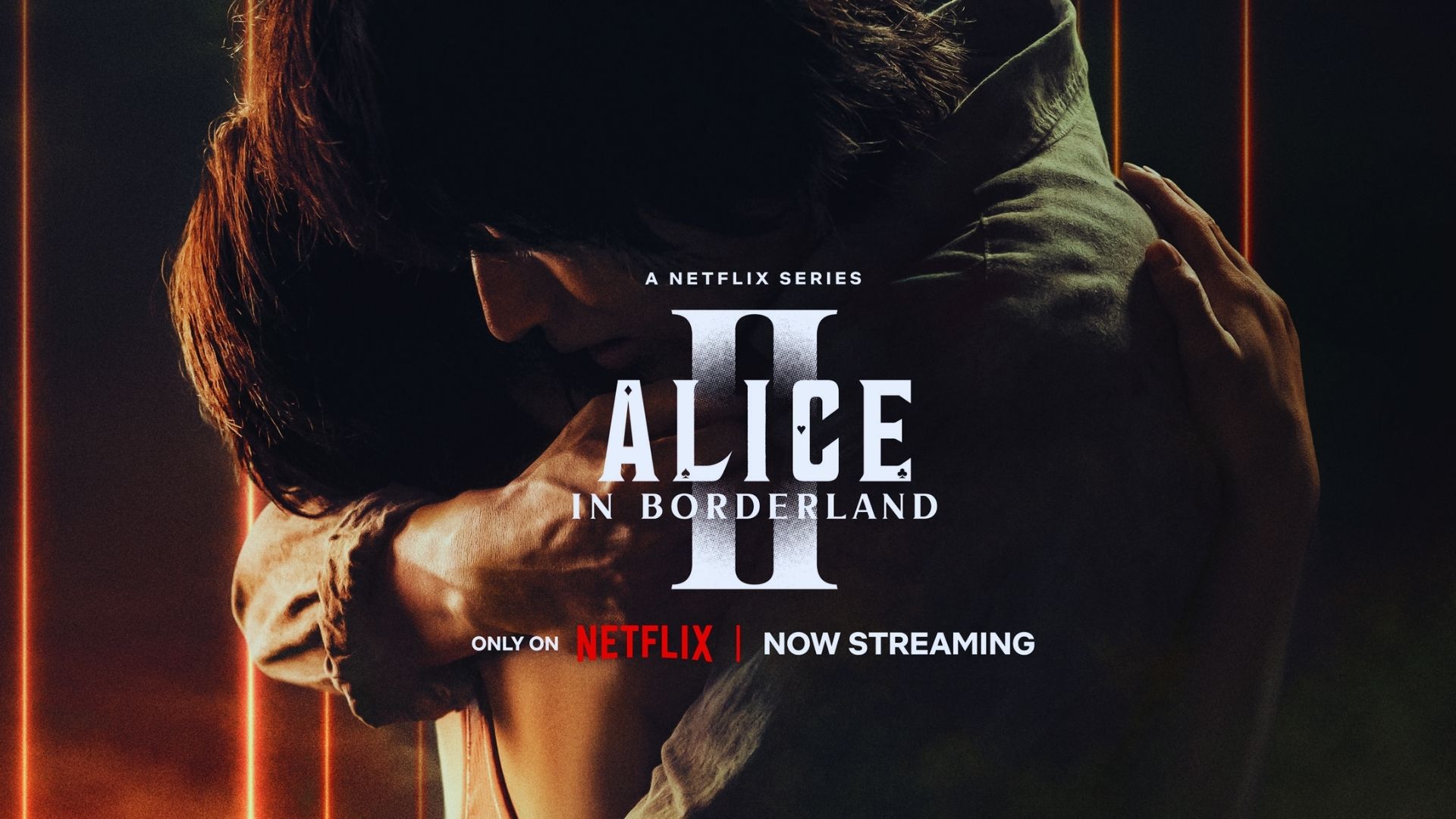
Netflix’s Alice in Borderland is a high-stakes Japanese survival thriller series based on Haro Aso’s manga. Set in an eerie, deserted Tokyo, it forces displaced individuals to compete in deadly playing-card-themed games to extend their visas and stay alive. Balancing physical endurance, logic, teamwork, and psychological torment, the show redefines the modern battle-royale genre.
Core Premise and the Mechanics of the Borderland
The narrative follows Ryohei Arisu, an unmotivated gamer living in Tokyo, alongside his closest friends, Daikichi Karube and Chota Segawa. After ducking into a public bathroom in Shibuya to avoid police, the trio emerges into a total blackout. Tokyo has suddenly transformed into a silent, abandoned wasteland stripped of modern technology and populated only by bewildered survivors.
To remain in this realm—known as the Borderland—players must enter designated "game arenas" illuminated by neon lights at nightfall. Participating in and surviving a game grants players a visa extended by a specific number of days based on the card’s numerical value. If a player's visa expires at midnight, a lethal orbital laser strikes them instantly from the sky.
- Arrival in Borderland
- Enter Game Arena
- Win Game
- Gain Visa Days
- Visa Expires at Midnight: Lethal Elimination
The fundamental goal of the games in the initial stage is to collect every standard suit card in a 52-card deck. As Arisu navigates this dystopian landscape, he encounters Yuzuha Usagi, an agile mountain climber whose physical skills and emotional stability become essential to their mutual survival. Together, they unravel the sinister rules governing the realm while searching for the architects behind the horrifying contest.
Playing Card Suits Explained: Rules, Game Types, and Difficulty
Every game in the Borderland is classified by a playing card suit, which indicates the primary attribute required to survive, and a card rank, which signifies the difficulty level. A 2 card represents an easy challenge, whereas a 10 card represents an extraordinarily lethal encounter.
| Suit | Core Specialty | Primary Survival Requirement | Notable Game Examples |
|---|---|---|---|
| Spades (♠) | Physical / Endurance | Athleticism, speed, martial skills, stamina | "Tag" (Apartment Hunt), "Heavy Metal" |
| Clubs (♣) | Teamwork / Balance | Co-op communication, shared strategy, division of labor | "Target" (Match Deadbolt), "Osmosis" |
| Diamonds (♦) | Intelligence / Logic | Mathematical reasoning, analytical thinking, high IQ | "Light Bulb", "Solitary Confinement", "Beauty Contest" |
| Hearts (♥) | Psychological / Betrayal | Emotional manipulation, trust, willingness to sacrifice | "Hide and Seek", "Checkmate", "Survey" |
Spades (♠): The Physical Test
Spades games test a player’s raw athletic performance, reflexes, and defensive combat capabilities. Strategy is secondary to physical execution. In Spades games like the 5 of Spades ("Tag"), players must outrun armed, masked attackers while maneuvering through complex environments before a bomb detonates.
Clubs (♣): The Cooperative Challenge
Clubs games require balance, group synergy, and mutual trust. While players can theoretically win together, these games often involve competing against another group, as seen in the King of Clubs ("Osmosis"). Success relies on strategic resource management, real-time communication, and tactical asset deployment.
Diamonds (♦): The Analytical Puzzle
Diamonds games pit intellect against intellect. Designed to eliminate those who rely solely on muscle, these games involve probability, deductive logic, and fast problem-solving under extreme time pressure. The 4 of Diamonds ("Light Bulb") requires players to identify which switch turns on a light bulb in a locked room using thermodynamics and deduction before water level immersion electrifies the chamber.
Hearts (♥): The Psychological Torment
Hearts games are universally feared by players. They are explicitly designed to play on human emotion, trust, and despair. These games force participants to betray allies or sacrifice themselves for others. The notorious 3 of Hearts ("Hide and Seek") forces a group of four friends to turn on each other, as only the person designated as the "wolf" at the end of the timer survives while the "sheep" perish.
Key Characters and Survival Strategies
The dynamic cast of Alice in Borderland showcases distinct survival mentalities, ranging from pure logic to physical mastery and philosophical detachment.
Ryohei Arisu (Kento Yamazaki)
Arisu’s background in competitive video gaming provides him with unmatched spatial analysis, pattern recognition, and game-logic comprehension. While initially paralyzed by grief after early losses, his analytical mind allows him to see hidden solutions in complex rules that others miss under pressure.
Yuzuha Usagi (Tao Tsuchiya)
Usagi relies on elite physical conditioning, spatial awareness, and survival instincts passed down by her mountain-climber father. Her mobility makes her a powerhouse in Spades games, while her moral clarity grounds Arisu when psychological stress threatens to overwhelm him.
Shuntaro Chishiya (Nijiro Murakami)
A former medical student, Chishiya is detached, cold, and exceptionally intelligent. He specializes in Diamonds and Hearts games, frequently using psychological manipulation and risk theory to let other players expose danger while he calculates the safest path forward.
Hikari Kuina (Aya Asahina)
Kuina is an expert hand-to-hand martial artist whose background in hand-to-hand combat makes her formidable in physical conflicts. Her loyalty to her allies, combined with her composure during intense combat, makes her one of the most effective survivors in the Borderland.
Ann Rizuna (Ayaka Miyoshi)
A former forensic scientist for the Tokyo Metropolitan Police, Ann brings methodical scientific inquiry to the Borderland. She uses rational deduction, evidence gathering, and calm analysis to solve games and investigate the biological origin of the arena.
Narrative Structure: Stage One to Stage Two and Beyond
The series progresses through distinct stages of game difficulty and narrative revelations, evolving from individual survival into a battle against the "Citizens" who manage the realm.
- STAGE ONE: Number Cards (1-10 of all Suits)
- STAGE TWO: Face Cards (Jacks, Queens, Kings)
- THE BORDERLAND TRUTH Revealed
- STAGE THREE / JOKER
Stage One: The Number Cards
The first stage focuses on establishing the rules of the world and collecting all 1-10 suit cards. Survivors congregate at "The Beach," an organized utopian commune founded by a charismatic leader named Hatter. The Beach operates on a collective agreement: members pool all won cards together so one person can complete the deck and allegedly return to the real world. However, internal power struggles, militarization, and the devastating 10 of Hearts game at the Beach mansion bring Stage One to a chaotic end.
Stage Two: The Face Cards
Once all Number Cards are collected, Stage Two begins. The remaining players must confront the "Citizens" of the Borderland—former players who chose to remain in the realm and act as bosses representing the Jack, Queen, and King of each suit.
- The King of Spades (Isao Shirabi): A heavily armed mercenary who wanders the entire Borderland map, turning the open world into a continuous, lethal Spades game.
- The King of Clubs (Kyuma): A nudist musician who challenges Arisu’s team to "Osmosis," testing teamwork, self-worth, and trust in a points-based game.
- The King of Diamonds (Keiichi Kuzuryu): A former lawyer who engages Chishiya in a mathematical game of equilibrium and human value called "Beauty Contest."
- The Queen of Hearts (Mira Kano): The final obstacle. Mira subjects Arisu and Usagi to a psychological mind game of croquet, attempting to break Arisu's sanity by manipulating his memories of grief and trauma.
The Borderland Truth and the Meteorite Event
Upon defeating the Queen of Hearts, the surviving players are given a choice: remain in the Borderland as permanent Citizens or decline citizenship. Those who decline regain consciousness in the real world.
It is revealed that the Borderland is a limbo between life and death. Every participant was a victim of a devastating meteorite fragment that exploded over Shibuya, causing widespread destruction and cardiac arrest. The time spent battling for survival over weeks in the Borderland occurred within seconds of clinical death in the physical world. Survivors awaken in a hospital with no conscious memory of the Borderland, though emotional bonds and subconscious memories linger.
The final shot of Season 2 reveals a table featuring a single Joker card, hinting at the next layer of existence or potential future trials overseen by the arbiter between life and death.
Manga vs. Netflix Live-Action Adaptation
Director Shinsuke Sato’s live-action adaptation remains faithful to Haro Aso’s original manga while making intentional structural changes to suit a global television audience.
- Pacing and Compression: The TV series condenses several minor manga side-stories and unifies disparate character perspectives to maintain continuous momentum.
- Visual Realism and CGI: The empty streets of Shibuya were recreated using massive open-air sets and green screens at Ashikaga Scramble Studio, producing a realistic sense of isolation that mirrors the manga's panel layouts.
- Game Adjustments: Certain games were modified for enhanced visual impact. For instance, the 4 of Diamonds game ("Light Bulb") was expanded to feature rising, electrified water levels, heightening the physical stakes beyond the original manga's pure dialogue focus.
- Character Trajectories: Characters like Chishiya and Kuina receive earlier introductions and expanded screen time in the television series, establishing them as core fan favorites early in Season 1.
Critical Themes: Purpose, Morality, and Will to Live
At its core, Alice in Borderland is a character study wrapped in a survival thriller. It poses fundamental existential questions: What gives a human life value when societal structures collapse?
- EXISTENTIAL MOTIVATIONS
- Apathy to Purpose (Arisu)
- Survival via Calculus (Chishiya)
- Connection & Empathy (Usagi)
- Apathy vs. Purpose: Arisu begins the story as a societal drop-out who feels useless in modern Tokyo. The deadly games force him to actively choose to live, transforming his shame into an empathetic leadership style.
- The Ethics of Survival: The show consistently forces characters to choose between self-preservation and human compassion. Hearts games demonstrate that surviving by destroying another person's humanity can be a fate worse than physical death.
- The Nature of Limbo: The Borderland serves as an equalizer. Social status, wealth, and employment in the real world carry no weight in the games. Survival depends entirely on adaptability, authentic human connection, and raw willpower.
Viewing Guide and Recommended Survival Thrillers
To fully enjoy Alice in Borderland, viewers should keep several structural and genre considerations in mind.
How to Watch
- Season 1 (8 Episodes): Establishes the world, the suit mechanics, the Beach faction, and the completion of the Number Cards.
- Season 2 (8 Episodes): Covers the high-stakes Face Card battles, the confrontation with the King of Spades, and the definitive revelation of the meteorite event.
- Language Preference: Watching in the original Japanese audio with native subtitles preserves the performance intensity and emotional nuances of the original cast.
Recommended Shows for Fans
- Squid Game (Netflix): A South Korean survival drama focusing on economic inequality through lethal children's games.
- Gantz (Anime / Film): Another intense Japanese sci-fi thriller featuring revived individuals forced to fight alien threats in a black-sphere game system.
- Liar Game (Japanese Drama): A high-concept series focusing entirely on psychological deception, game theory, and logical puzzles.
- Sweet Home (Netflix): A dark Korean apocalyptic thriller centered on isolated survivors fighting monstrous representations of human desire.
- The 8 Show (Netflix): A psychological thriller exploring dark human behavior, social hierarchy, and time-based currency in a closed environment.
Frequently Asked Questions
What does the Joker card mean at the end of Alice in Borderland?
In playing card lore and Haro Aso's source material, the Joker represents the wild card, the ferryman, or the arbiter of limbo. At the end of Season 2, the Joker card signifies that while the players survived the immediate heart-stop boundary and returned to the real world, the Joker remains the ultimate overseer of life, death, and existential uncertainty.
Can you survive a Hearts game without anyone dying?
Most Hearts games are designed to psychologically break players by convincing them that sacrifices are mandatory. While certain Hearts games like the 7 of Hearts ("Hide and Seek") mathematically enforce a single survivor, others—such as the 10 of Hearts ("Witch Hunt") or 2 of Hearts—can be solved with minimal or zero innocent loss of life if participants overcome their panic, suspicion, and deceit.
How do visas work in Alice in Borderland?
When a player completes a game, their visa is extended by the numerical value of the card won (e.g., winning a 6 of Spades adds 6 days to the visa). The visa countdown ticks down daily. If a player lets their visa reach zero without winning another game, a lethal laser fires from the sky at midnight, killing them instantly.
Are the games in the TV series identical to the manga?
Most major games—including the 3 of Hearts, 4 of Diamonds, King of Clubs, King of Diamonds, and Queen of Hearts—are faithfully adapted from the manga. However, the TV show alters certain minor games, condenses side plots, and adjusts game environments (such as adding rising water to the 4 of Diamonds) to maximize visual action for television.
Is the Borderland a virtual reality simulation?
No. The Borderland is not a computer simulation or a video game. It is a collective near-death limbo realm experienced simultaneously by victims of the Shibuya meteorite explosion who suffered cardiac arrest. Winning the games represents a patient fighting through clinical death to regain a heartbeat in the real world.
Recommended Next Actions for Viewers
To get the absolute most out of your Alice in Borderland experience, follow these practical steps:
- Watch with Original Audio: Set your streaming platform audio to Japanese 5.1 with subtitles to experience the full vocal range and emotional tension of the original performances.
- Read the Manga Source Material: Explore Haro Aso’s original manga, Imawa no Kuni no Arisu, along with its spin-off manga (Alice on Borderroad and Alice in Borderland: Retry), to discover extra games and deeper side-character backstories not included in the main TV adaptation.
- Track Game Logic: Pay close attention to the rules stated at the beginning of Diamonds and Clubs games; attempting to solve the logical puzzles alongside Arisu and Chishiya adds an interactive layer to the viewing experience.