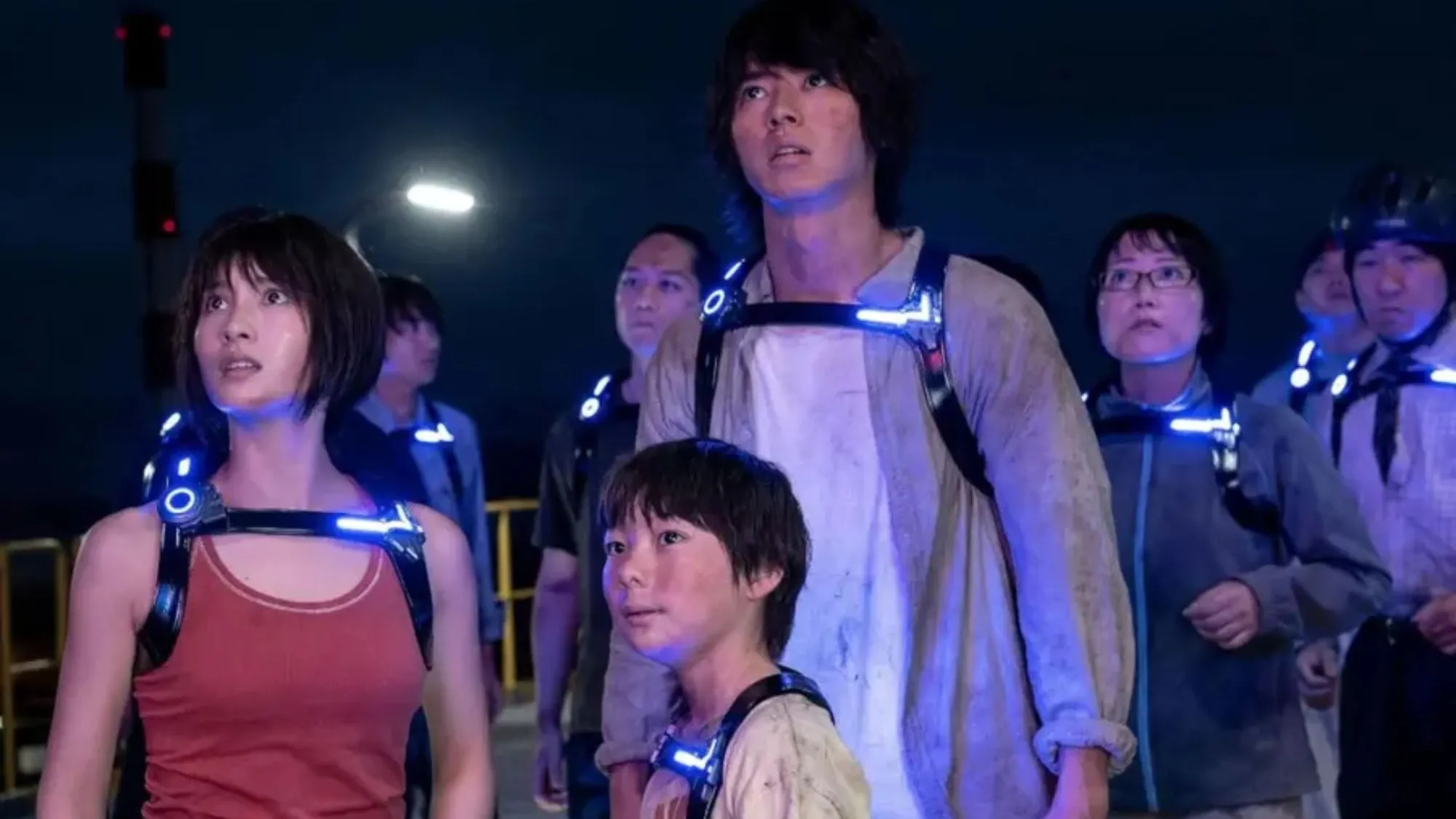
Netflix’s hit live-action Japanese thriller Alice in Borderland (Imawa no Kuni no Arisu), based on the manga by Haro Aso and directed by Shinsuke Sato, presents a deadly, high-stakes version of Tokyo where occupants must survive grueling games to extend their visas. Understanding the complete release timeline alongside the operational mechanics of the games is vital for viewers navigating the show's complex lore.
Season-by-Season Release Timeline and Production History
The release structure of Alice in Borderland on Netflix follows a strategic production cadence designed for expansive visual effects and complex choreography.
| Season | Release Date | Episode Count | Core Narrative Arc |
|---|---|---|---|
| Season 1 | December 10, 2020 | 8 Episodes | Introduction to Borderland & Number Cards |
| Season 2 | December 22, 2022 | 8 Episodes | Next Stage: Face Cards & Citizenship |
| Season 3 | Officially Renewed | Expected TBA | The Joker Arc & Unexplored Manga Canon |
Season 1 (Released December 10, 2020)
The debut season introduced gamer Ryōhei Arisu (Kento Yamazaki) and his friends Chōta and Karube into a deserted Tokyo. Across eight episodes, the narrative established the fundamental rules of the arena: players compete in games of varying suits and numbers to earn visa days. Season 1 concluded with the collapse of the sanctuary known as "The Beach" and the revelation that the numbered cards were merely Stage 1 of a broader trial.
Season 2 (Released December 22, 2022)
Season 2 escalated the danger by launching Stage 2: the Face Card games. In this phase, players were required to defeat the resident "Citizens" of the Borderland—such as the King of Clubs (Ginji Kyūma) and the Queen of Hearts (Mira Kanō). The finale resolved the primary mystery behind the realm, connecting the arena to a catastrophic meteorite strike over Tokyo that caused mass cardiac arrests and collective near-death states among the participants.
Season 3 Status and Production Details
Following global viewership performance, Netflix officially renewed Alice in Borderland for Season 3. Production, helmed once again by director Shinsuke Sato with Kento Yamazaki and Tao Tsuchiya returning as Arisu and Usagi, centers on the enigmatic final card revealed at the end of Season 2: the Joker. Unlike the preceding seasons, which directly adapted Haro Aso's original 87-chapter manga, Season 3 expands into material from side stories (such as Alice in Borderland: Retry) alongside original screen developments to explore the bridge between the real world and the afterlife limbo.
The Four Suit Mechanics: Decoding the Game Classifications
Every game in the Borderland is classified by standard playing card suits, which dictate the physical, mental, or emotional demands placed on the contestants. The numerical value of the card dictates both the difficulty level and the number of visa extension days granted to survivors.
- BORDERLAND CARD SYSTEM
- Spades ♠
- Physical
- Stamina
- Clubs ♣
- Teamwork & Balance
- Diamonds ♦
- Intellectual & Logic
- Hearts ♥
- Psychological & Betrayal
- Spades ♠
Spades (♠): Physical Stamina and Combat
Spades games test raw agility, endurance, hand-to-hand combat, and physical strength. Players who excel in athletics, martial arts, or parkour—such as Yuzuha Usagi—possess a structural advantage.
- Key Example: 5 of Spades ("Tag"), set in a apartment complex where players must evade armed gunners while locating a safe zone.
- Survival Requirement: High cardiovascular fitness, rapid reflexes, and spatial awareness.
Clubs (♣): Teamwork and Balanced Skills
Clubs games require cooperation, squad tactics, and mutual agreement among participants. While physical and intellectual elements are often present, solo survival is generally impossible without coordinated efforts.
- Key Example: King of Clubs ("Osmosis"), a container-yard point-battling system requiring tactical allocation of points, defensive positioning, and trust between teammates.
- Survival Requirement: Clear communication, tactical leadership, and collective risk distribution.
Diamonds (♦): Intellect, Strategy, and Logic
Diamonds games eliminate physical advantage and focus strictly on mathematical problem-solving, probability, game theory, and logical deduction.
- Key Example: King of Diamonds ("Balance Scale"), where five players choose numbers between 0 and 100, aiming to hit four-fifths of the group's calculated average. Incorrect guesses lead to acid penalties.
- Survival Requirement: Advanced numeracy, risk calculation, cold rationality, and predictive psychological profiling.
Hearts (♥): Psychological Warfare and Emotional Betrayal
Hearts games are widely considered the most brutal trials in the Borderland. They exploit human empathy, personal relationships, trust, and survival instincts, frequently forcing players to kill one another to survive.
- Key Example: 7 of Hearts ("Hide and Seek"), where only the person designated as the "Wolf" survives while the "Sheep" perish.
- Survival Requirement: Willingness to endure emotional trauma, capacity to withstand psychological manipulation, or extreme self-sacrifice.
Complete Borderland Rulebook & Visa Mechanics
Surviving in the Borderland requires strict adherence to system-enforced rules. Failure to comply results in immediate execution via automated overhead laser beams.
The Visa System
- Extension Credits: Winning a game awards a visa extension equal to the numerical value of the cleared card (e.g., clearing an 8 of Spades awards an 8-day visa extension).
- Visa Expiration: A player's visa decrements by one day at midnight. If a visa balance reaches zero, a red satellite laser pierces the player's skull instantly.
- No Accumulation Cap: Players can stack days by participating in multiple games, but they cannot opt out of games indefinitely due to the natural expiration of their visa window.
Stage 1 vs. Stage 2 Differences
- Stage 1 (Numbered Cards 1–10): Games are hosted automatically in designated venues across Tokyo. Players enter the arena after sunset when neon lighting activates. Once all 40 numbered cards (10 per suit) are collected, Stage 2 initiates.
- Stage 2 (Face Cards: Jack, Queen, King): Citizens of the Borderland take the field directly as opponents or game masters. To complete Stage 2, players must defeat all 12 Face Card games.
Citizen Choice and The Joker Concept
Upon the defeat of the final Face Card (the Queen of Hearts), all surviving participants are presented with a definitive choice:
- Option A: Accept permanent citizenship in the Borderland, becoming the game masters and arena hosts for the next wave of entrants.
- Option B: Decline citizenship and return to the living world.
The Joker acts as the ferryman between life and death—the entity controlling the threshold. In traditional card games, the Joker is the wild card that disrupts established hierarchies, symbolizing the unpredictability of human fate during cardiac arrest or severe trauma.
Comprehensive Game Matrix & Survival Analysis
The following table synthesizes the primary games encountered across the series, detailing their suit, difficulty, winning conditions, and primary threat vectors.
| Game Name | Card Value | Venue / Setting | Core Objective | Primary Threat Vector | Optimal Survival Strategy |
|---|---|---|---|---|---|
| Dead or Alive | 2 of Hearts | Shibuya Building | Choose the correct door (Dead or Alive) within time limits. | Burning room, false choices, panic. | Deduce building architecture and vehicle dimensions to identify exit paths. |
| Tag | 5 of Spades | Toei Oshima Apartments | Press two buttons simultaneously in a hidden room before time expires. | Submachine-gun-wielding taggers. | Divide search areas, use stairwells for sightline breaks, neutralize taggers via flank attacks. |
| Hide and Seek | 7 of Hearts | Shinjuku Botanical Garden | Maintain the "Wolf" status when the countdown timer reaches zero. | Explosive collars, betrayal among friends. | Calm emotional distress; utilize line-of-sight transfers strategically or accept self-sacrifice. |
| Witch Hunt | 10 of Hearts | The Beach Hotel | Identify the "Witch" who murdered a player and burn them on the bonfire. | Mass hysteria, free-for-all armed combat. | Analyze physical evidence, blood patterns, and weapon trajectory rather than accusations. |
| Osmosis | King of Clubs | Yokohama Container Terminal | Accumulate more points than the opponent team via touching, bases, and items. | Total point wipeout upon touching opponent's base. | Flexible roles, tactical stealth, strategic sacrifices of points for strategic positioning. |
| Solitary Confinement | Jack of Hearts | Teitan Prison | Correctly declare the card suit printed on the back of your collar each round. | Deceitful partners, psychological isolation, hunger. | Secure a provably loyal partner or manipulate key deceivers into self-contradiction. |
| Balance Scale | King of Diamonds | Supreme Court Building | Predict $4/5$ of the numerical average chosen by all remaining players. | Hydrochloric acid dripped upon reaching -10 points. | Apply game theory, monitor cognitive biases of opponents, force tied votes when applicable. |
| Survival | King of Spades | Open City of Tokyo | Defeat the heavy-armored King of Spades roaming the city. | High-caliber snipers, tactical combat gear, infinite ammunition. | Lure the target into confined environments, construct high-yield improvised explosives. |
| Croquet | Queen of Hearts | Open Garden Facility | Complete three sets of croquet without forfeiting or succumbing to mental collapse. | Hallucinogenic tea, severe psychological disorientation. | Maintain focus on personal reality, refuse emotional manipulation, avoid taking life choices under duress. |
Tactical Case Studies: Key Lessons from Borderland Victories
Analyzing how key characters survived critical trials reveals the underlying rules designed into the Borderland framework by Haro Aso.
- TACTICAL VICTORY FRAMEWORK
- DEDUCTION: Strip away fear to identify hidden game logic.
- COOPERATION: Leverage individual specializations (Physical/Mental).
- SACRIFICE: Accept unavoidable losses to secure team survival.
- DECISION-MAKING: Reject emotional paralysis during psychological strain.
Case 1: Deductive Logic in King of Diamonds (Balance Scale)
In the King of Diamonds game, Chishiya utilized mathematical game theory. When players were introduced to the formula—winning number equals four-fifths of the average—initial rounds clustered around high numbers.
As players realized that rational actors would continuously guess lower numbers (reaching Nash equilibrium at zero), Chishiya anticipated the psychological shifts of the remaining players. When facing Kuzuryū (the King of Diamonds), Chishiya exploited Kuzuryū's moral conflict regarding the value of human life, forcing Kuzuryū to choose between his personal philosophy and self-preservation.
Case 2: Emotional De-escalation in Queen of Hearts (Croquet)
Mira Kanō’s game did not require winning the physical sport of croquet; it simply required surviving three rounds without forfeiting. Mira used psychological manipulation, empathy traps, and false narrative reveals (claiming the Borderland was a virtual reality simulation, an alien game, or a psychiatric delusion) to break Arisu’s mind.
Usagi’s self-inflicted injury grounded Arisu back to reality, demonstrating that Hearts games are countered not by superior aggression, but by emotional anchoring and selflessness.
What Lies Ahead: Preparing for Season 3 Narrative Arcs
Because Season 2 concluded at the exact point where the main Alice in Borderland manga ended—with the survivors waking up in a Tokyo hospital following a meteorite strike—Season 3 moves beyond the core source text. Fans preparing for Season 3 should keep several key narrative frameworks in mind:
The Alice in Borderland: Retry Manga Material
Haro Aso wrote a spin-off manga titled Alice in Borderland: Retry, set several years after the main event. In this story, an adult Arisu experiences a cardiac event following an accident and is dragged back to the Borderland for a single, high-stakes game: the Nine of Hearts. Incorporating elements from Retry allows the adaptation to show how former survivors react if pulled back into the purgatory state.
The Mystery of the Joker Card
In the final shot of Season 2, the camera settled on a deck of cards blown away by the wind, leaving only the Joker card on the table. In traditional tarot and playing card mythology, the Joker represents the unwritten path, chaos, and transition. Season 3 is positioned to explore the true controller of the realm—the entity that governs the boundary between life and death—and whether citizens who remained behind (or new victims of tragedy) can challenge the rules of the realm itself.
Essential Viewing and Prep Checklist for Fans
To fully digest the lore before exploring upcoming releases or rewatching the series, follow this structured prep checklist:
- Watch Seasons 1 & 2 in Order: Pay close attention to subtle background details during early episodes, such as fireworks displays and power outages, which foreshadow the meteorite explosion.
- Read the Manga Source Material: Explore Haro Aso’s original work (Imawa no Kuni no Arisu, published by Shogakukan) to examine side games not included in the Netflix adaptation, such as the 4 of Hearts (Runaway) and 6 of Diamonds (Blackjack).
- Analyze Character Arcs: Track how characters represent classic Alice in Wonderland counterparts:
- Arisu: Alice
- Usagi: The White Rabbit (Usagi means rabbit in Japanese)
- Chishiya: The Cheshire Cat
- Kuina: The Caterpillar
- Mira Kanō: The Queen of Hearts
- Review Visual Clues: Notice how the lighting shifts from harsh sodium lights during nocturnal Stage 1 games to wide, bleached daylight during Stage 2 Face Card battles, signaling changes in thematic tone.
Frequently Asked Questions
What is the exact release date for Alice in Borderland Season 3?
Netflix has officially confirmed Season 3 of Alice in Borderland, but an exact global release date remains to be formally scheduled by the streamer. Production details and teaser announcements confirm that the principal cast and directing team have returned to complete the next phase of the live-action story.
Is Alice in Borderland based on a completed manga series?
Yes, Alice in Borderland is based on the manga written and illustrated by Haro Aso, which ran from 2010 to 2016 in Weekly Shōnen Sunday S and Weekly Shōnen Sunday. The main storyline of the manga was fully covered across Seasons 1 and 2 of the Netflix series, while spin-offs such as Alice in Borderland: Retry provide additional canon material.
What does the Joker card mean at the end of Season 2?
In the series lore, the Joker card represents the conductor or ferryman of the Borderland who guides souls between life and death. While the numbered and face cards represented games managed by intermediate hosts and citizens, the Joker symbolizes the ultimate mystery of existence, consciousness, and the boundary line of mortality.
Did the characters actually travel to a real parallel world?
No, the Borderland is a collective near-death limbo environment. When a meteorite struck Tokyo, victims who suffered cardiac arrest or severe physical trauma entered this shared subconscious realm simultaneously. Winning games enabled participants to survive their physical injuries in the real world, waking up in Tokyo hospitals with no conscious memory of the Borderland.
Why do some people choose to become Citizens in the Borderland?
Participants who complete Stage 2 are offered the choice to stay as Citizens. Those who choose citizenship usually do so because their real-life existences were marked by isolation, trauma, or terminal illness, whereas in the Borderland they found purpose, power, or freedom from real-world limitations.
Recommended Next Steps for Viewers
To maximize your understanding of the series and stay current on new release information:
- Track Official Channels: Monitor the official Netflix Media Center and verified social channels for authentic trailer drops, production updates, and release confirmations regarding Season 3.
- Explore Canon Side Stories: Read Alice on Borderroad and Alice in Borderland: Retry for deeper context on how the Borderland affects different groups of people across different time periods.
- Review Key Lore Episodes: Revisit Season 2, Episode 8, to thoroughly understand the hospital reveal and analyze how each character's physical injuries in Tokyo align with the trauma they suffered within the Borderland games.