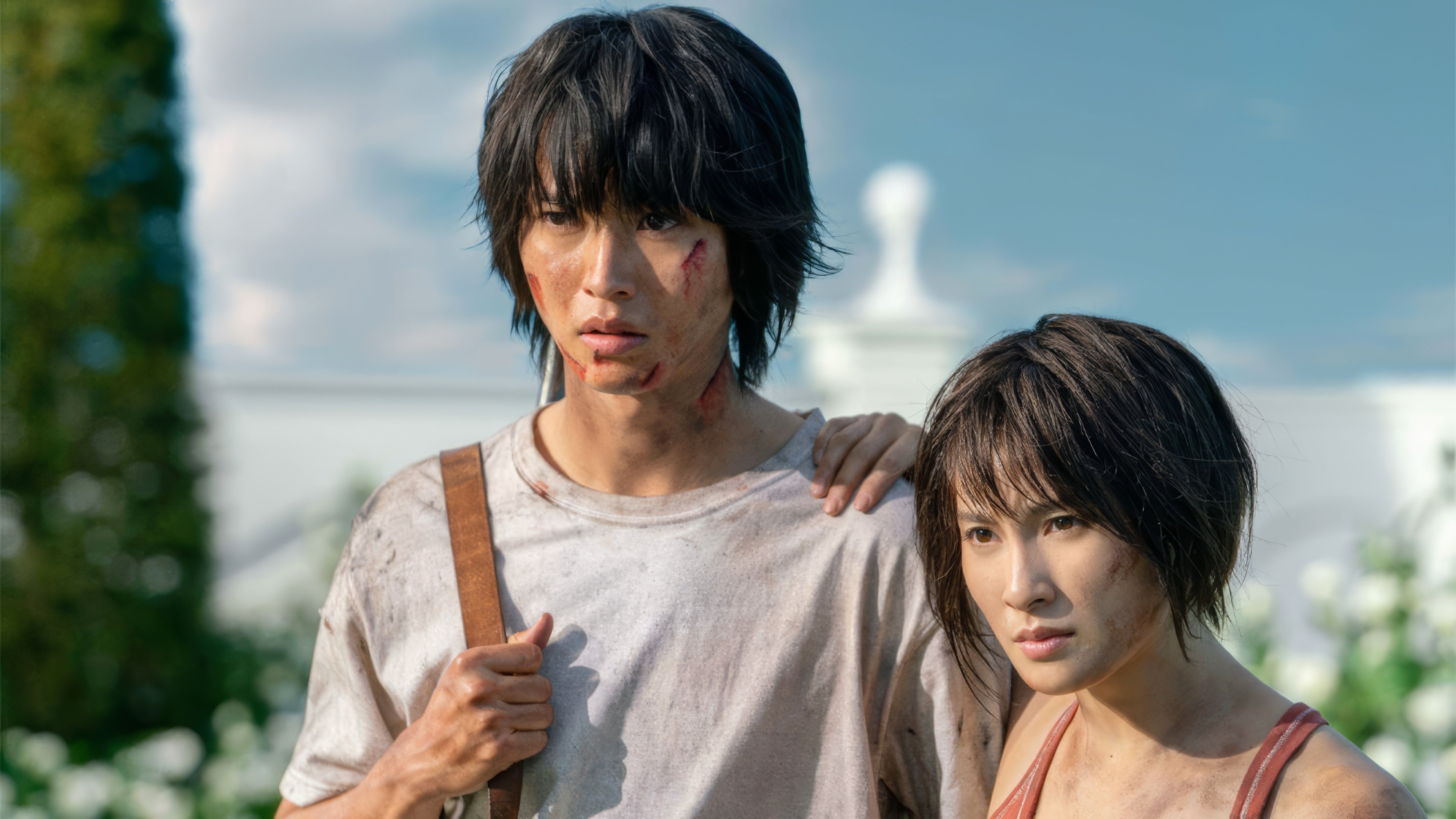
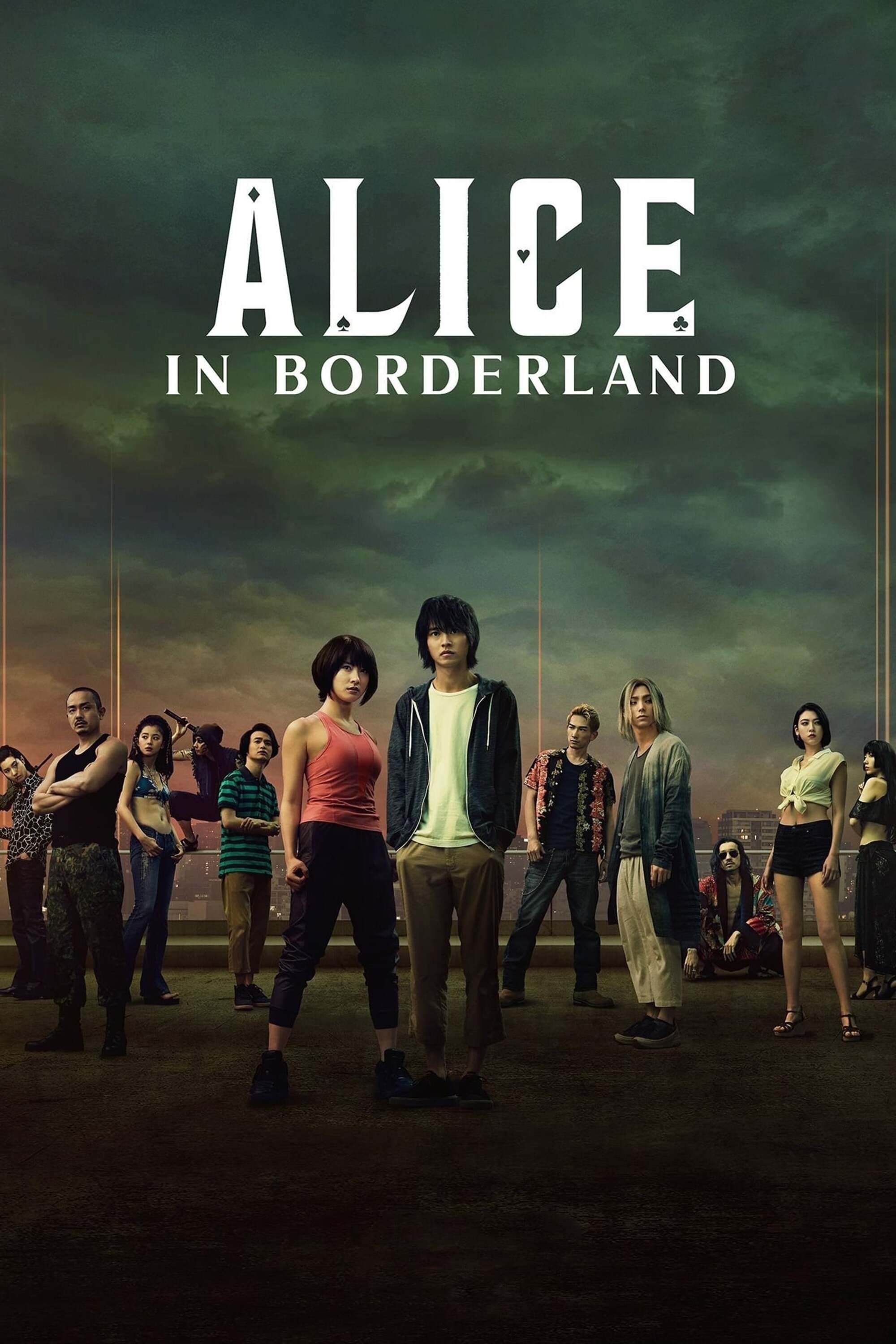
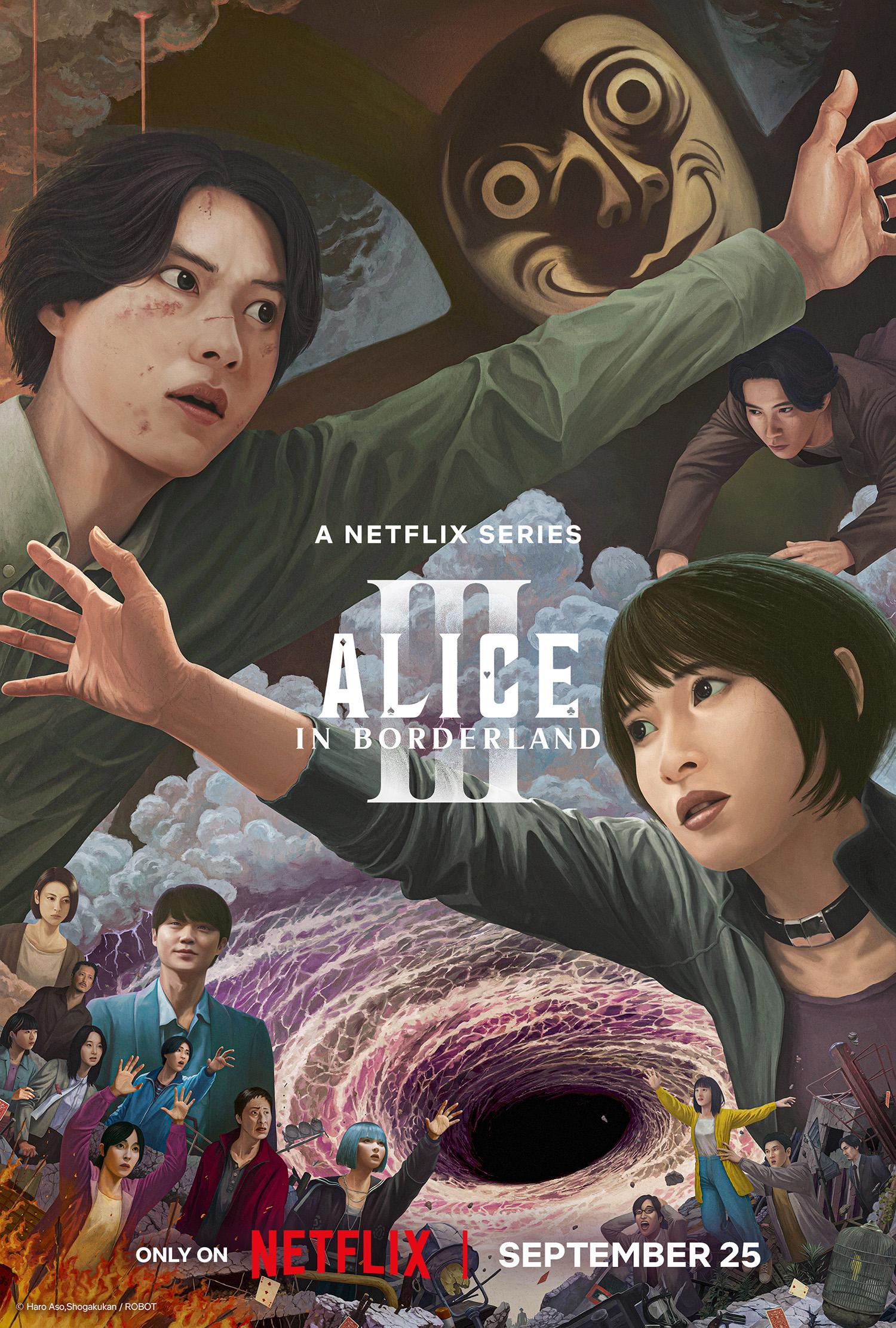
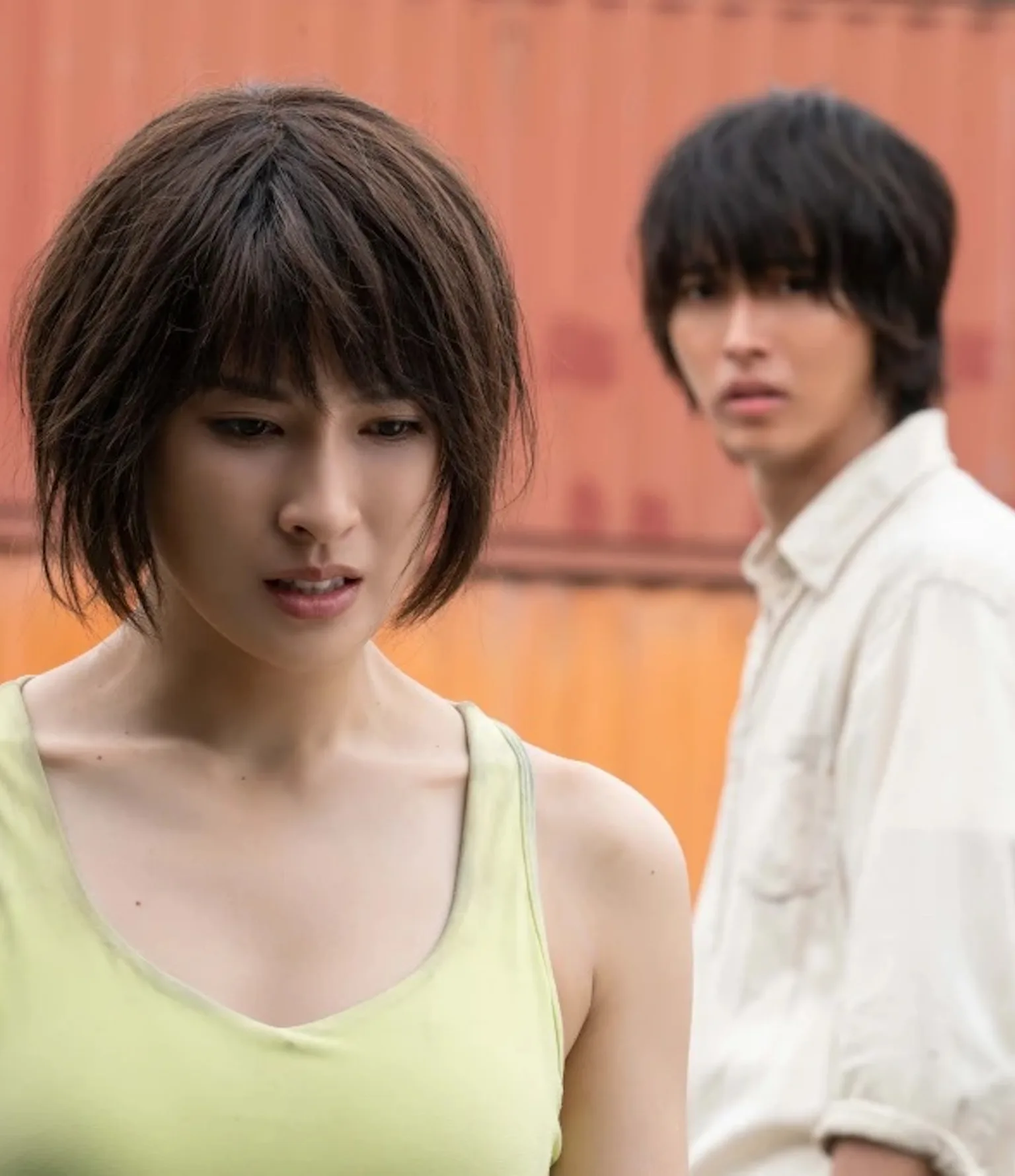
Alice in Borderland (Imawa no Kuni no Arisu) is a Japanese high-concept survival thriller franchise created by manga artist Haro Aso and adapted into a globally acclaimed Netflix live-action series directed by Shinsuke Sato. Displaced into a deserted Tokyo, players must compete in deadly games categorized by playing card suits to earn visa extensions and stay alive.
The Core Premise: Survival in a Deserted Tokyo
The narrative of Alice in Borderland begins when protagonist Ryohei Arisu, an aimless gamer disengaged from his family and career expectations, witnesses a mysterious flash of light while hanging out in Shibuya with his two best friends, Daikichi Karube and Chota Segawa. Within moments, the bustling metropolis of Tokyo transforms into a silent, overgrown wasteland completely devoid of ordinary human activity.
This desolate alternate landscape is known as the "Borderland." To remain in this realm, individuals are forced to participate in life-or-death competitions hosted in abandoned structures, empty highways, and subterranean tunnels across Tokyo. Successfully clearing a game awards the surviving players a visa, granted in days corresponding to the numerical value of the cleared game's playing card.
- Visa Days Issued = Game Card Value
- If Visa Count = 0: Automatic Execution via Sky Laser
If a player's visa expires before they clear another game, an orbital red laser pierces through their head, killing them instantly. This strict mechanism forces continuous participation, preventing players from hiding or waiting out their sentence.
The Card Suit System: Decoding Game Types and Difficulty
Every game in the Borderland is designated by a specific standard playing card, revealed to participants upon entering the game venue. The card's suit dictates the precise nature of the challenge, while the card's numerical value (from 1 to 10, progressing to Jack, Queen, and King) determines the difficulty and lethality of the game.
- BORDERLAND SUITS
- SPADES (Physical)
- CLUBS (Teamwork)
- DIAMONDS (Intelligence)
- HEARTS (Psychological)
Spades (♠): Physical Endurance and Combat
Spades games test a player's physical fitness, agility, raw strength, and combat capabilities. Victory requires high stamina, spatial awareness, and quick reflexes.
- Example: The 5 of Spades game, titled "Tag," takes place in a high-rise apartment complex where players must evade heavily armed masked shooters while searching for a hidden room to press two buttons simultaneously before a bomb detonates.
Clubs (♣): Teamwork and Balanced Attributes
Clubs games require cooperation, strategic division of labor, and shared effort among participants. These games often blend elements of physical stamina and analytical tactics, prioritizing trust and group coordination over individual brilliance.
- Example: The 4 of Clubs game, "Distance," challenges players to run to a designated target distance inside a darkened highway tunnel while surviving environmental hazards, reinforcing the lesson that working together ensures collective survival.
Diamonds (♦): Intelligence, Logic, and Strategy
Diamonds games pit the players' mental faculties against mathematical logic, game theory, and rapid problem-solving under stress. These arenas penalize emotional impulse and reward systematic, cold calculation.
- Example: The 4 of Diamonds game, "Lightbulb," requires players to deduce which of three switches outside a room activates a lightbulb inside, utilizing logical elimination before a rising water level electrocutes them.
Hearts (♥): Psychological Manipulation and Betrayal
Hearts games are universally regarded as the most dangerous and agonizing in the Borderland. They target human emotion, trust, empathy, and instinct, frequently structuring rules so that players must betray or kill one another to survive.
- Example: The 7 of Hearts game, "Hide and Seek," assigns one player the role of the "Wolf" and three players the role of "Sheep." The rules dictate that whichever player holds the Wolf role when the timer expires is the sole survivor, forcing deep psychological trauma as companions battle for survival.
Key Characters and Strategic Dynamics
The overarching plot hinges on how different personality types adapt to the brutal logic of the Borderland. Character survival depends heavily on identifying one's personal strengths and finding complementary allies.
| CHARACTER | PRIMARY STRENGTH | PREFERRED SUIT |
|---|---|---|
| Arisu | Spatial Logic / Empathy | Diamonds / Hearts |
| Usagi | Agility / Mountain Survival | Spades |
| Chishiya | Game Theory / Rationality | Diamonds / Hearts |
| Kuina | Martial Arts / Loyalty | Spades / Clubs |
| Niragi | Firearms / Instinct | Spades |
Ryohei Arisu
Though initially viewed as a slacker in the real world, Arisu possesses exceptional spatial comprehension, memory retention, and deductive intelligence refined through years of immersive video gaming. His empathy, while frequently causing emotional conflict in Hearts games, proves vital in uniting disparate survivors to solve high-difficulty challenges.
Yuzuha Usagi
The daughter of a deceased mountain climber, Usagi brings invaluable physical conditioning, emotional resilience, and outdoor survival skills to the group. Her mastery of high-altitude navigation and physical agility makes her exceptionally adept at Spades games, providing physical power to balance Arisu's analytical intellect.
Shuntaro Chishiya
A former medical student whose calm, detached demeanor conceals an exceptionally sharp mind, Chishiya excels in Diamonds and Hearts games. He approaches games as theoretical puzzles, remaining unswayed by emotional panic or moral distress, often using psychological manipulation to let other players expose fatal traps.
Hikari Kuina
A former martial artist who overcame personal estrangement to embrace her identity, Kuina uses exceptional close-quarters combat skills to navigate physical games. Her close strategic partnership with Chishiya creates a formidable alliance combining raw physical power with high intelligence.
Overview of Major Borderland Games
The following table summarizes prominent games featured throughout the franchise, illustrating how suit types, difficulty tiers, and mechanics function in practice.
| Game Name | Suit & Value | Core Venue & Setting | Key Objective & Mechanics | Strategic Theme |
|---|---|---|---|---|
| Hide and Seek | 7 of Hearts | Shinjuku Botanical Garden | Eye contact transfers the "Wolf" status; only the Wolf survives when time expires. | Cruel self-sacrifice vs. survival instinct. |
| Witch Hunt | 10 of Hearts | The Beach Hotel Resort | Find and burn the "Witch" who murdered Momoka before the resort is completely destroyed. | Controlling mob hysteria and logical deduction. |
| Osmosis | King of Clubs | Tokyo Container Terminal | Point-stealing battle against Kyuma's team using physical contact, base items, and point allocation. | Risk management, trust, and total team strategy. |
| Beauty Contest | King of Diamonds | Supreme Court Building | Select a number from 0 to 100; correct answer is 80% of the calculated average. | Game theory, mathematical iteration, and psychological forecasting. |
| Survival | King of Spades | Entire Tokyo Metropolitan Area | Continuous open-world combat against an armored, heavily armed mercenary roaming the city. | Guerrilla warfare, endurance, and coordinated ambushes. |
Manga vs. Netflix Live-Action Adaptation
While the Netflix adaptation directed by Shinsuke Sato faithfully mirrors the underlying narrative arc of Haro Aso's manga, notable structural and aesthetic differences exist between the source material and the screen adaptation.
| MANGA (2010–2016) | NETFLIX ADAPTATION (2020–PRESENT) |
|---|---|
| • 18 Volumes | • Live-Action Series |
| • Fireworks Entry | • Shibuya Crossing Bathhouse Entry |
| • Detailed Side Tales | • Streamlined Side Characters |
| • Abstract Visuals | • Cinematic Realism & CGI |
Visual Realism and Pacing
The original manga relies on detailed paneling and side stories to develop minor characters and explore speculative philosophies on life. The live-action series streamlines these subplots to focus on rapid pacing and visceral cinematic scale. The entry sequence was also modernized: in the manga, Arisu and his friends witness mysterious fireworks; in the Netflix series, they hide in a public restroom in Shibuya Crossing before emerging into an empty city.
Game Adaptations and Alterations
Several games were adjusted or replaced entirely in the live-action series to optimize visual intensity:
- The First Game: In the manga, the trio enters a game titled the 3 of Clubs involving answered quiz questions under threat of fire. In the Netflix series, this was replaced by the "Dead or Alive" room-selection challenge, creating immediate cinematic tension.
- Streamlined Roster: Certain side characters from the manga were combined or given expanded roles—such as Shiba and Last Boss—to maintain character continuity across the show's seasons.
The Borderland Mystery and Ending Explained
The central mystery of Alice in Borderland revolves around the true nature of the Borderland itself and why its inhabitants were transported there.
The Liminal Reality: A Realm Between Life and Death
During the climax of the narrative, it is revealed that the Borderland is not a virtual reality simulation, an alien game show, or an alternate dimension created by an intelligence agency. Instead, it serves as a collective purgatory state—a liminal space existing on the threshold between life and death.
Every individual present in the Borderland was a victim of a devastating meteorite burst that detonated directly above Tokyo's Shibuya district. The severity of their physical injuries in the real world translates to their survival experience in the Borderland:
- Those who died immediately from the meteorite blast perished in the games or were struck by sky lasers.
- Those fighting for their lives in emergency medical care competed as "Players" in the Borderland.
- Those who suffered cardiac arrest and were resuscitated experienced their survival battle during those critical clinical minutes.
- METEORITE IMPACT IN SHIBUYA
- CLINICAL CARDIAC ARREST
- THE BORDERLAND REALM (Survival Games = Will to Live)
- DECLINE CITIZENSHIP
- Return to Real World (Heart Restored)
- ACCEPT CITIZENSHIP
- Become Game Master / Citizen (Stay in Purgatory)
- DECLINE CITIZENSHIP
Citizens vs. Players
When players defeat all the "Face Card" games (Jacks, Queens, and Kings), they are presented with a final choice:
- Accept Citizenship: Permanently stay in the Borderland as its new permanent residents and future Game Masters for the next wave of victims.
- Decline Citizenship: Reject the realm and attempt to return to the real world.
Those who reject citizenship regain consciousness in real-world Tokyo hospitals, having survived cardiac arrest following the meteorite strike. Although they retain no conscious memories of their time in the Borderland, their underlying emotional growth, psychological resilience, and bonds formed during the ordeal remain intact.
The Joker Card Meaning
In the final moments of Season 2 and the conclusion of the core manga narrative, a central playing card remains: the Joker.
In standard card decks, the Joker sits outside the traditional four-suit hierarchy. In the lore of Haro Aso's universe, the Joker represents the mysterious ferryman—the arbiter of death who navigates souls between the realm of the living and the afterlife. It serves as a stark reminder that while players survived this specific tragedy, mortal existence remains unpredictable and fragile.
Franchise Continuation and Expansion
Following the global success of the adaptation, the franchise has expanded across multiple mediums, providing deeper context to the original narrative.
Manga Spin-offs
- Alice in Borderland: Retry (Imawa no Kuni no Arisu: Retry): A direct sequel manga by Haro Aso in which an adult, married Arisu suffers an accident and is briefly dragged back into the Borderland to play a high-stakes 9 of Hearts game ("Card Gamble") before returning to his pregnant wife.
- Alice on Borderroad (Imawa no Michi no Arisu): A side story featuring a completely different cast, exploring similar survival themes with a female protagonist in an altered, post-apocalyptic Japan.
Netflix Season 3 Context
In late 2023, Netflix officially confirmed the greenlighting of Alice in Borderland Season 3, featuring visual promos centered on the ominous Joker card motif. Because the original manga's main storyline was fully adapted across the first two seasons, Season 3 expands into original narrative territory, drawing elements from Retry while elaborating on the broader role of the Joker and the ongoing mysteries of the liminal universe.
Frequently Asked Questions
What does the suit of Hearts represent in Alice in Borderland?
The Hearts (♥) suit represents psychological games designed to exploit human trust, empathy, and insecurity. They frequently force players into situations where surviving requires sacrificing or betraying their companions.
Did Arisu and Usagi remember each other after waking up in the real world?
They lost their conscious memories of the Borderland upon waking in the hospital, as the experience occurred entirely within their subconscious state during cardiac arrest. However, they felt a strong emotional connection upon meeting near the hospital vending machines, indicating their bond transcended the memory wipe.
What is the difference between Number cards and Face cards?
Number cards (1 through 10) represent the initial trial stage hosted by intermediate game designers within the Borderland. Face cards (Jacks, Queens, and Kings) represent the elite secondary phase where players directly challenge the permanent "Citizens" of the Borderland in their specialized domains.
How do people become Citizens in the Borderland?
Citizens are former players who cleared all Number and Face card games during a previous catastrophic event and chose to remain in the Borderland rather than return to the real world. They design and host games for subsequent waves of trauma victims.
What is the origin of the Borderland realm?
The Borderland is a collective liminal dimension—a purgatory between life and death—created by the shared consciousness of people experiencing near-death trauma simultaneously, such as the Shibuya meteorite explosion.
Recommended Approach for New and Returning Fans
To fully appreciate the narrative construction and detailed world-building of Alice in Borderland, consider the following viewing and reading sequence:
- Watch Netflix Season 1 & 2: Experience director Shinsuke Sato's live-action adaptation to appreciate the high-budget visual setpieces, core game mechanics, and primary character arcs.
- Read the Haro Aso Manga: Read the 18-volume original manga series to gain access to cut game mechanics (such as the King of Diamonds mathematical derivations), deeper philosophical monologues, and distinct side-story chapters.
- Explore Alice in Borderland: Retry: Read the two-volume sequel manga to observe Arisu's adult life and see how his previous experience in the Borderland informs his maturity when faced with a sudden life-or-death crisis as an adult.