Ali MacGraw’s cinematic legacy defined a transformative era in American filmmaking during the late 1960s and 1970s. Through memorable performances in Goodbye, Columbus, Love Story, and The Getaway, along with her candid 1991 autobiography Moving Pictures, MacGraw reshaped Hollywood stardom by pairing raw emotional authenticity with an iconic, effortless aesthetic that continues to influence film and fashion.
The Journey to Screen Stardom: From Fashion Editor to Hollywood Icon
Ali MacGraw did not take a conventional route to Hollywood stardom. Born in Pound Ridge, New York, in 1939, MacGraw pursued art history at Wellesley College, graduating in 1960. Her early career took place within the fast-paced world of high-fashion publishing in New York City. She began as a photographic assistant to Diana Vreeland at Harper’s Bazaar before working as a fashion stylist and editor for Vogue. Her keen visual eye, combined with a natural grace, eventually drew her in front of the camera, leading to a successful career as a high-profile commercial model.
MacGraw’s transition from high-fashion modeling to feature film acting occurred during a major transitional period in American film history. As the classic studio system dissolved in the late 1960s, film directors and casting agents began seeking performers who reflected a more grounded, relatable realism. MacGraw possessed an understated, natural screen presence that contrasted sharply with the stylized glamour of earlier decades.
After making her feature debut with a small role in the 1968 film A Lovely Way to Die, MacGraw quickly caught the attention of producers looking for fresh talent capable of headlining contemporary dramas. Her background in visual media gave her a deep understanding of composition, lighting, and camera movement—skills that allowed her to deliver subtle, controlled performances ideal for intimate close-ups.
- Fashion Styling (Harper's Bazaar / Vogue)
- Commercial Modeling & Screen Testing
- Breakthrough Role: Goodbye, Columbus (1969)
- Global Stardom: Love Story (1970)
Defining Breakthroughs: Goodbye, Columbus and the Love Story Phenomenon
MacGraw’s major acting breakthrough came in 1969 with the film adaptation of Philip Roth’s novella Goodbye, Columbus. Directed by Larry Peerce, the film featured MacGraw as Brenda Patimkin, a wealthy, sharp-witted young woman navigating a summer romance across socio-economic divides opposite Richard Benjamin. Her portrayal captured the humor, defiance, and vulnerability of New Era youth, earning her the Golden Globe Award for Most Promising Newcomer.
- Goodbye, Columbus (1969)
- Love Story (1970)
- Oscar Nomination (Best Actress)
- Golden Globe Win (Best Actress)
- Global Box-Office Record Holder
Building on that success, MacGraw starred in Arthur Hiller’s 1970 romantic drama Love Story, adapted by Erich Segal from his best-selling novel. Playing Jennifer Cavalleri, a quick-witted Radcliffe music student from a working-class background who falls in love with a privileged Harvard athlete played by Ryan O’Neal, MacGraw became an international phenomenon. The film was a massive box-office success, credited with saving Paramount Pictures from financial peril during a tumultuous decade for major studios.
Love Story achieved critical and commercial acclaim, earning seven Academy Award nominations. MacGraw earned a nomination for Best Actress in a Leading Role and won the Golden Globe Award for Best Actress in a Motion Picture – Drama. Her performance established a blueprint for modern romantic cinema, relying on sharp dialogue, tragic intimacy, and genuine chemistry rather than theatrical melodrama.
Key Performances and Cinematic Milestones
Following the worldwide success of Love Story, MacGraw selected her roles carefully, prioritizing projects driven by distinct auteur directors and strong co-stars. In 1972, she starred alongside Steve McQueen in Sam Peckinpah’s gritty crime thriller The Getaway. Playing Carol Ainsley McCoy, MacGraw delivered a tough, pragmatic performance that matched the film’s tense pace. The production marked a major turning point in both her professional career and personal life, leading to her marriage to McQueen in 1973 and a temporary hiatus from major screen acting.
MacGraw returned to feature films in the late 1970s, collaborating again with Peckinpah in the 1978 action drama Convoy, co-starring Kris Kristofferson. She expanded her range into romantic comedies and ensemble pieces with Sidney Lumet’s Just Tell Me What You Want (1980) and later reached broad television audiences in the acclaimed 1983 historical miniseries The Winds of War.
| Film / Project Title | Release Year | Character Role | Key Collaborators | Cinematic & Cultural Significance |
|---|---|---|---|---|
| Goodbye, Columbus | 1969 | Brenda Patimkin | Dir. Larry Peerce, Co-star Richard Benjamin | Breakout performance; won Golden Globe for Most Promising Newcomer. |
| Love Story | 1970 | Jennifer Cavalleri | Dir. Arthur Hiller, Co-star Ryan O'Neal | Global phenomenon; Academy Award nomination for Best Actress; Golden Globe winner. |
| The Getaway | 1972 | Carol Ainsley McCoy | Dir. Sam Peckinpah, Co-star Steve McQueen | Classic action thriller; demonstrated her ability to anchor intense genre roles. |
| Convoy | 1978 | Melissa | Dir. Sam Peckinpah, Co-star Kris Kristofferson | Major action-comedy hit capitalizing on 1970s truck-driver pop culture. |
| Just Tell Me What You Want | 1980 | Bonee Lurie | Dir. Sidney Lumet, Co-star Alan King | Satirical romantic comedy showcasing her timing in sophisticated comedic roles. |
| The Winds of War | 1983 | Natalie Jastrow | Dir. Dan Curtis, Co-star Robert Mitchum | High-profile television miniseries adaptation of Herman Wouk’s epic World War II novel. |
Moving Pictures: Unpacking Her 1991 Autobiography
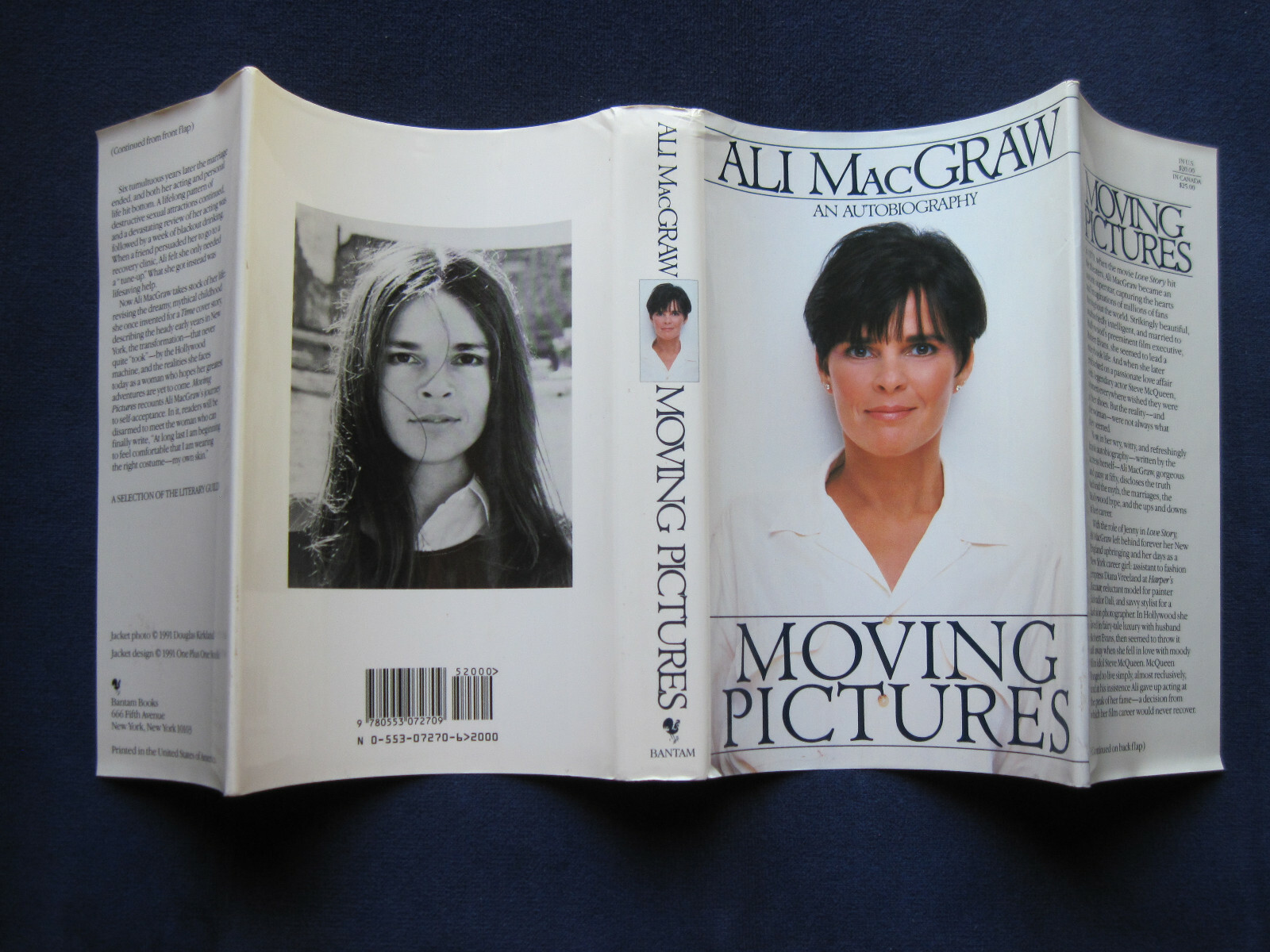
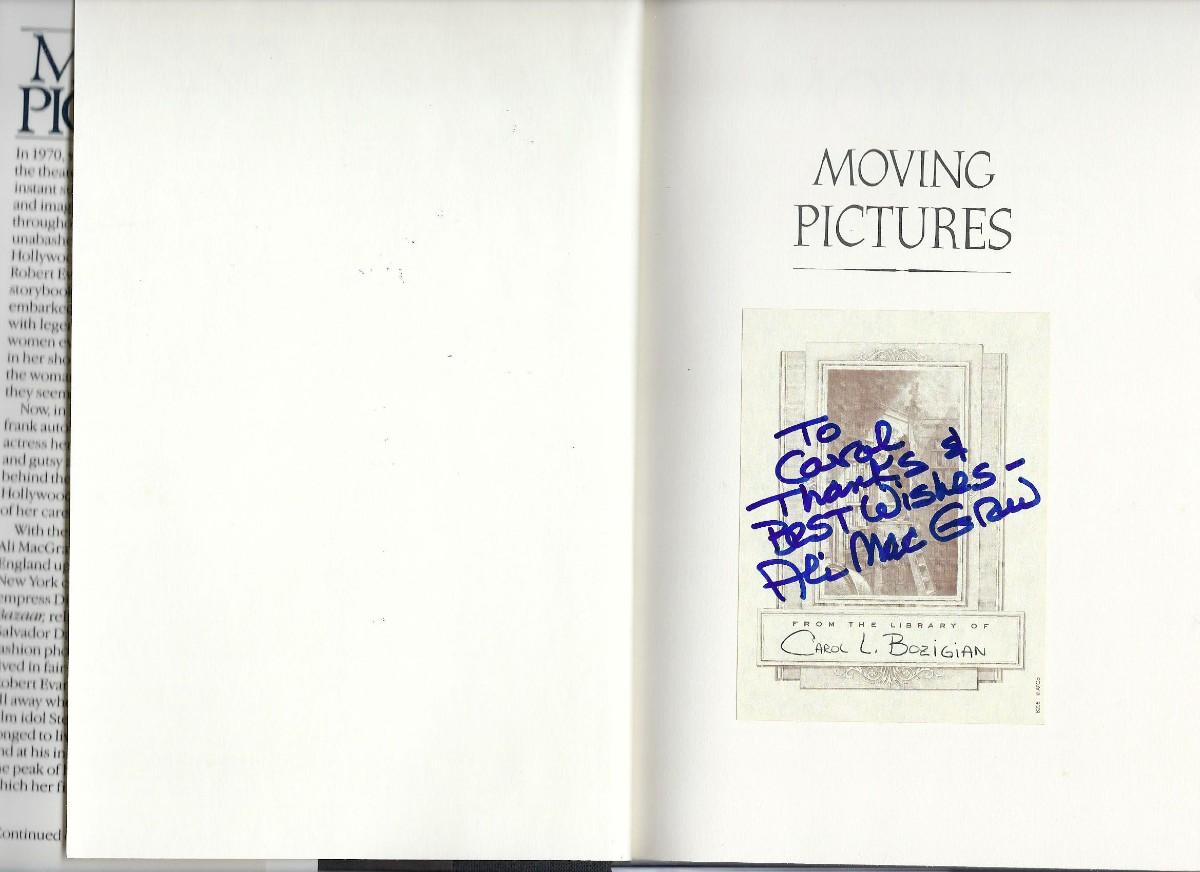
In 1991, Ali MacGraw published her autobiography, titled Moving Pictures: An Autobiography. The book provided readers with an honest look at life behind the scenes of sudden fame, high-profile Hollywood marriages, and personal struggle. Rather than publishing a standard celebrity tell-all, MacGraw offered a reflective examination of the physical and psychological demands imposed on women in the entertainment industry during the 1970s and 1980s.
- Moving Pictures (1991 Memoir)
- Hollywood Fame & Industry Pressures
- Personal Truths & High-Profile Marriages
- Sobriety & Recovery at Betty Ford Center (1986 Onward)
In Moving Pictures, MacGraw chronicled her upbringing, her meteoric rise to global celebrity, and her marriages to high-profile figures, including legendary Paramount studio executive Robert Evans and screen actor Steve McQueen. The autobiography offered a candid look at how the pressures of sudden fame and intense media scrutiny affected her sense of identity and career choices.
A central theme of the memoir is her commitment to personal recovery. MacGraw detailed her battle with alcoholism and dependency, documenting her 1986 stay at the Betty Ford Center. By speaking openly about addiction, mental health, and personal growth at a time when public figures rarely discussed such topics, MacGraw’s memoir served as a valuable resource for individuals navigating similar challenges. The book solidified her reputation as an author of genuine courage and self-awareness.
Aesthetic Impact and the 1970s "All-American" Look
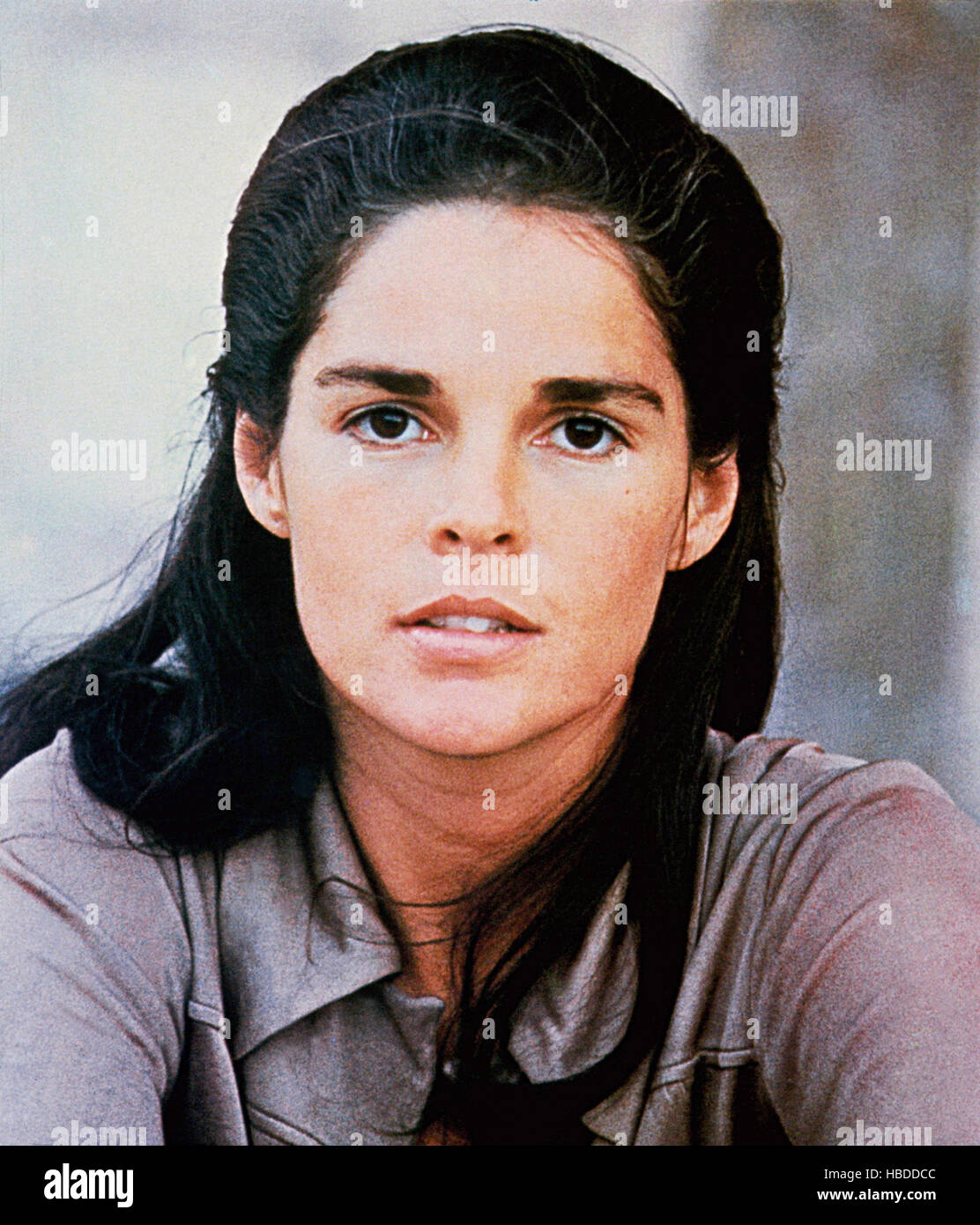
Beyond her dramatic work, Ali MacGraw fundamentally altered beauty standards and American fashion during the 1970s. Her signature aesthetic—centered on minimal makeup, straight dark hair parted down the middle, and tailored preppy attire—offered a stark contrast to the heavily styled, spray-sculpted looks that dominated the 1950s and mid-1960s.
- 1950s–1960s Traditional Hollywood (Heavy Makeup, Elaborate Hairstyling, Formal Glamour)
- Ali MacGraw's 1970s Signature (Minimal Makeup, Center-Part Hair, Natural Preppy Aesthetic)
- Modern Minimalist Fashion & American Sportswear Standards
In Love Story, her wardrobe—featuring trench coats, simple knit sweaters, tailored pea coats, and her famous crochet caps—became a global blueprint for casual sophistication. Fashion historians often credit MacGraw with popularizing modern American sportswear and defining the effortless look of the era.
MacGraw’s visual influence extended far beyond her film roles:
- Minimalist Beauty: She demonstrated that understated natural makeup could captivate audiences on the giant movie screens just as effectively as traditional glamour.
- Fashion Collaborations: Her background as an editor at Vogue helped her champion clean lines and functional design, bridging the gap between high fashion and everyday streetwear.
- Cultural Representation: MacGraw embodied the modern, independent female aesthetic of the 1970s, influencing how women approached personal style, grooming, and self-expression.
Life Beyond Hollywood: Activism, Wellness, and Santa Fe
Following her step back from full-time feature film acting, MacGraw shifted her focus toward personal development, health, and advocacy. Moving to Santa Fe, New Mexico, in the 1990s after losing her Malibu home in a devastating wildfire, she found a creative and peaceful community that aligned with her values.
In Santa Fe, MacGraw became a passionate advocate for animal welfare, partnering with local and national organizations to promote humane treatment, shelter adoption, and wildlife preservation. She also emerged as a pioneer in promoting mind-body wellness. In 1994, she released the widely acclaimed instructional video Ali MacGraw Yoga Mind and Body in collaboration with renowned yoga instructor Erich Schiffmann. Filmed against the scenic backdrop of White Sands, New Mexico, the release introduced yoga to a broader mainstream audience worldwide.
- Transition from Mainstream Hollywood
- Santa Fe Community & Arts Advocacy
- Animal Welfare Advocacy
- Yoga & Mind-Body Pioneering
In her later career, MacGraw selectively returned to the stage, reuniting with her Love Story co-star Ryan O’Neal for a worldwide tour of A.R. Gurney’s play Love Letters between 2015 and 2017. Their onstage reunion drew praise from audiences and critics alike, offering a fitting tribute to their long partnership and shared place in cinema history.
Frequently Asked Questions
What is the primary focus of Ali MacGraw's autobiography Moving Pictures?
Ali MacGraw’s 1991 autobiography Moving Pictures covers her life from childhood through her career as a model, actor, and fashion icon. It candidly explores the pressures of sudden fame, her marriages to producer Robert Evans and actor Steve McQueen, her struggle with alcoholism, and her recovery journey at the Betty Ford Center.
How did Love Story impact Ali MacGraw's career and Hollywood history?
Love Story (1970) elevated MacGraw to global stardom, earning her a Golden Globe Award and an Academy Award nomination for Best Actress. The film broke box-office records, helped save Paramount Pictures from financial distress, and defined the cinematic romantic drama for generations.
Which film directors did Ali MacGraw collaborate with during her peak career?
MacGraw worked with several major film directors, including Larry Peerce (Goodbye, Columbus), Arthur Hiller (Love Story), Sam Peckinpah (The Getaway, Convoy), and Sidney Lumet (Just Tell Me What You Want).
Why is Ali MacGraw considered an icon of 1970s fashion?
MacGraw popularized a clean, natural "All-American" aesthetic characterized by minimal makeup, middle-parted straight hair, and preppy, functional clothing. Her look in Love Story helped establish American sportswear and modern minimalism as mainstream global trends.
Did Ali MacGraw continue acting after the 1980s?
While MacGraw reduced her feature film appearances after the 1980s, she remained active in selective projects, including television roles such as Dynasty, stage productions like Broadway's Festen, and the 2015–2017 national tour of the play Love Letters opposite Ryan O'Neal.
Preserving and Exploring Ali MacGraw’s Cultural Impact
To fully appreciate Ali MacGraw’s lasting legacy in cinema, fashion, and literature, film enthusiasts and historians can engage with her work through several avenues:
- Watch Her Defining Films: Stream restored editions of Goodbye, Columbus (1969), Love Story (1970), and The Getaway (1972) to study her subtle screen technique and natural chemistry with co-stars.
- Read Moving Pictures: Locate a copy of her 1991 memoir Moving Pictures: An Autobiography for a firsthand perspective on 1970s Hollywood culture, studio dynamics, personal resilience, and recovery.
- Examine 1970s Fashion and Media History: Study visual archives from Harper’s Bazaar and Vogue from the late 1960s and early 1970s to observe how MacGraw’s personal style helped re-orient international fashion trends away from complex glamour toward natural, accessible elegance.