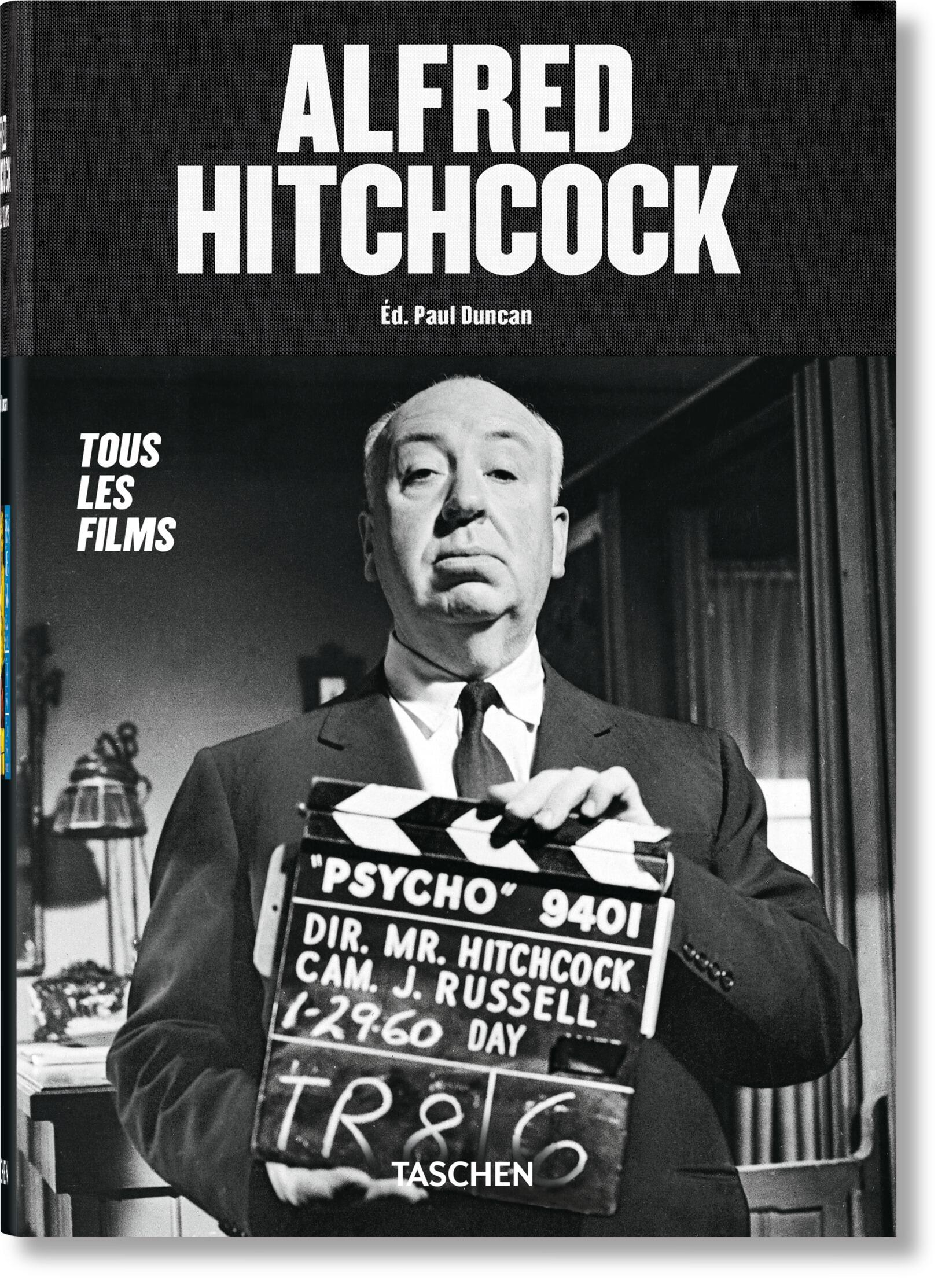
Sir Alfred Joseph Hitchcock remains one of the most influential and studied filmmakers in the history of cinema. Across a career spanning more than five decades, the British-born director redefined visual storytelling by pioneering techniques that manipulated audience psychology, transformed suspense into high art, and established the director as a recognizable public auteur. From his silent film beginnings in London to his golden era of Hollywood psychological thrillers, Hitchcock constructed a cinematic vocabulary built on subjective camera angles, meticulous framing, and deep explorations of guilt, paranoia, and voyeurism.
Formative Years and Early British Cinema Career
Born in Leytonstone, London, on August 13, 1899, Alfred Hitchcock grew up in a strict Catholic household that profoundly influenced his lifelong fascination with guilt, surveillance, and wrongful accusation. He entered the film industry in 1920 as an intertitle designer for the London branch of Famous Players-Lasky, quickly learning various facets of production including scriptwriting, art direction, and assistant directing. His breakthrough as a director came with The Lodger: A Story of the London Fog (1927), a silent thriller frequently cited as the first true "Hitchcockian" film. The picture established his trademark theme of the innocent man wrongly accused of a crime and demonstrated his mastery of visual style, German Expressionist lighting, and rapid editing.
During the 1930s, Hitchcock cemented his international reputation with a string of sophisticated British thrillers that balanced dark humor with high-stakes tension. Films such as The Man Who Knew Too Much (1934), The 39 Steps (1935), and The Lady Vanishers (1938) showcased his signature "McGuffin"—an arbitrary plot device that motivates the characters while remaining largely secondary to the emotional and suspenseful core of the narrative. These commercial and critical successes caught the attention of American producer David O. Selznick, who lured Hitchcock to Hollywood in 1939, setting the stage for his most ambitious cinematic achievements.
Transition to Hollywood and the Studio System
Hitchcock’s move to the United States introduced him to the vast resources of the Hollywood studio system, though it also required him to navigate complex relationships with powerful producers. His American directorial debut, Rebecca (1940), won the Academy Award for Best Picture, marking the only time one of his films received the industry's highest honor. Despite this early triumph, Hitchcock frequently chafed under the creative interference of producers like Selznick, eventually leading him to favor creative independence and work with various major studios and independent production arrangements.
The 1940s and early 1950s saw Hitchcock refine his technical experimentation and explore darker, morally ambiguous territory. Shadow of a Doubt (1943), which Hitchcock often cited as his personal favorite among his American films, explored the infiltration of evil into an idyllic American small town. Films like Notorious (1946) blended romance with espionage, utilizing innovative camera movements and extended tracking shots to heighten tension. During this period, he also experimented with narrative constraints, such as filming Rope (1948) in seemingly continuous, long takes that mimicked a stage play, and creating the visual mastery of Strangers on a Train (1951), where two men discuss swapping murders.
The Masterpiece Decade and Visual Style
Between the mid-1950s and early 1960s, Hitchcock reached the artistic zenith of his career, releasing a succession of masterworks that defined modern cinematic grammar. Collaborating with top-tier cinematographers, costume designers like Edith Head, and composer Bernard Herrmann—whose searing scores became integral to his films' emotional architecture—Hitchcock crafted complex psychological portraits disguised as mainstream entertainment. Rear Window (1954) turned the cinematic apparatus inward, examining the ethics of voyeurism through a photographer confined to a wheelchair. Vertigo (1958), initially met with mixed reviews, has since been frequently ranked by critics in polls like the British Film Institute's Sight & Sound as one of the greatest films ever made, utilizing pioneering camera techniques—most notably the "dolly zoom" or "Hitchcock zoom"—to visually represent acrophobia and psychological disorientation.
| Film Title | Release Year | Primary Theme | Key Technical Innovation |
|---|---|---|---|
| The 39 Steps | 1935 | Wrongful accusation, espionage | Rapid editing, transitional match cuts |
| Shadow of a Doubt | 1943 | Duality, the familiar made uncanny | Deep focus, psychological staging |
| Rear Window | 1954 | Voyeurism, isolation | Massive interior courtyard set, subjective framing |
| Vertigo | 1958 | Obsession, guilt, identity | The "dolly zoom" perspective distortion effect |
| Psycho | 1960 | Repression, maternal fixation | Non-linear structure, rapid editing in the shower sequence |
North by Northwest (1959) perfected the "wrong man" chase thriller, blending witty dialogue with iconic set pieces such as the crop-dusting attack. In 1960, Hitchcock bypassed traditional studio conventions by independently financing and producing Psycho. Shot on a modest television budget with low-risk distribution, the film shocked audiences by killing off its primary star early in the narrative and breaking new ground in cinematic depictions of violence, sexuality, and psychological disturbance. The Birds (1963) followed, utilizing early electronic sound design and groundbreaking visual effects to portray an unexplained, apocalyptic assault by nature.
Television, Public Persona, and Auteur Recognition
Beyond feature films, Hitchcock expanded his cultural footprint through television and self-branding. From 1955 to 1965, he hosted the anthology television series Alfred Hitchcock Presents and The Alfred Hitchcock Hour. His dry, deadpan introductions, gallows humor, and stylized caricature profile turned him into one of the most recognizable pop-culture icons in the world. This public persona helped cement his status as an "auteur"—a director whose personal vision, recurring motifs, and stylistic signatures permeate every frame of his work.
This auteur theory found its most vocal champions among the young critics of the French film journal Cahiers du Cinéma, including François Truffaut and Jean-Luc Godard. In 1962, Truffaut conducted a week-long, in-depth interview with Hitchcock that was later published as the seminal book Hitchcock/Truffaut. This critical reassessment shifted public and academic perception of Hitchcock from a mere master of popcorn thrills to a profound cinematic artist and visual philosopher whose films engaged deeply with Catholic guilt, Freudian psychoanalysis, and the mechanics of cinematic illusion.
Later Career, Honors, and Enduring Legacy
As his career progressed into the late 1960s and 1970s, Hitchcock's later films experienced mixed commercial and critical reception as changing cinematic trends favored the gritty realism of the New Hollywood movement. Films such as Torn Curtain (1966) and Topaz (1969) navigated Cold War espionage, while Frenzy (1972) marked a return to his British roots and darker thriller subjects. His final film, Family Plot (1976), was a lighthearted crime comedy that closed his filmography on a graceful note.
Throughout his life, Hitchcock received numerous accolades, including the Irving G. Thalberg Memorial Award in 1967 and a knighthood from Queen Elizabeth II shortly before his death on April 29, 1980. His influence persists across generations of filmmakers, inspiring directors such as Martin Scorsese, Brian De Palma, Steven Spielberg, David Fincher, and M. Night Shyamalan. By treating the camera not merely as a recording device, but as an active participant that shapes viewer empathy, fear, and desire, Alfred Hitchcock permanently altered the way humanity experiences narrative art.
Frequently Asked Questions
What was Alfred Hitchcock’s signature cinematic technique?
Hitchcock is most famous for perfecting subjective camera movement and "pure cinema," a method of storytelling through visual composition rather than dialogue. He pioneered techniques like the "dolly zoom" in Vertigo and used rigorous montage editing—such as in the famous Psycho shower sequence—to manipulate audience emotions and create visceral suspense.
Why is Alfred Hitchcock called the Master of Suspense?
He earned the moniker through his unique mastery of dramatic irony, where the audience is given vital information that the characters do not possess. This technique creates prolonged anticipation and dread, which Hitchcock distinguished sharply from mere shock or surprise.
What was the McGuffin in Hitchcock's films?
A McGuffin is an object, document, or secret that drives the plot forward, motivating the characters' actions without holding intrinsic importance to the thematic core of the story. Examples include the stolen money in Psycho or the government secrets in North by Northwest.
Which Alfred Hitchcock film won Best Picture at the Academy Awards?
Rebecca (1940), his first American directorial project produced by David O. Selznick, won the Academy Award for Best Picture at the 13th Academy Awards. Despite multiple nominations throughout his career, it remains the only one of his films to win the top prize.
Where can I watch Alfred Hitchcock’s classic films today?
Most of Hitchcock's major studio films, including his Universal and Warner Bros. catalogs, are widely available across major digital video-on-demand platforms, physical media box sets (such as 4K Ultra HD and Blu-ray collections), and rotating streaming services specializing in classic cinema.
Essential Next Steps for Film Study
To deepen your understanding of Alfred Hitchcock's cinematic contributions, explore primary source materials such as the Hitchcock/Truffaut interview transcripts, examine frame-by-frame visual analyses of his set design and editing choices, and watch his comprehensive filmography in chronological order to observe the technical evolution of his style from the silent era to the dawn of modern Hollywood blockbusters.