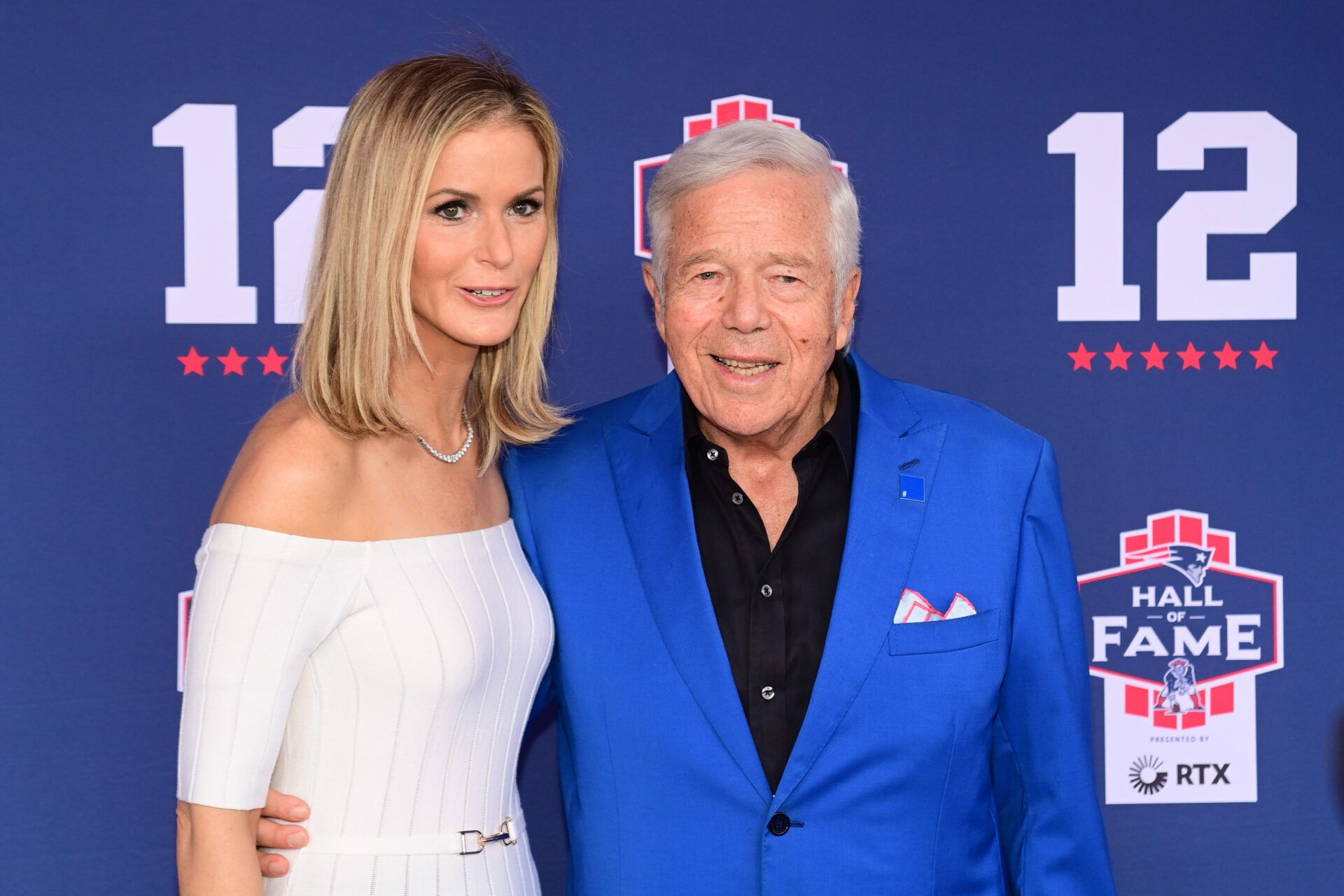
While exact, real-time private net worth figures for academic innovators and co-founders like Alf Inge Wang are rarely published in official public wealth registries, his financial standing is closely tied to his foundational role in creating Kahoot!, the globally ubiquitous game-based learning platform. Rather than holding a billionaire executive status like major corporate venture capitalists, Wang’s financial footprint stems from early academic research grants, intellectual property contributions, and his historical co-founding stake in a venture that scaled into a multi-million-dollar tech giant acquired by Goldman Sachs.
Evaluating individual wealth in the context of academic entrepreneurship requires looking beyond simple stock ticker calculations. Alf Inge Wang is primarily known as a professor at the Norwegian University of Science and Technology (NTNU) rather than a full-time corporate billionaire. To understand how much the academic co-founder of Kahoot! is worth, it is necessary to examine the valuation milestones of the platform, the dynamics of academic spin-offs in Norway, and the mechanics of his equity dilution through successive funding rounds.
The Academic Origins of Kahoot! and Intellectual Property
Long before schools worldwide adopted gamified quizzes, Alf Inge Wang spent years researching game-based learning and classroom response systems at NTNU. Together with co-founders Morten Forsvik, Johan Brand, Jamie Brooker, and Åsmund Furuseth, Wang helped transform academic theories on pedagogical engagement into an interactive software prototype initially known as LectureQuiz.
In academic and technical environments, intellectual property rights are often split between the inventing researchers and the host university under specific national frameworks, such as the Norwegian Employee Inventions Act. While exact royalty agreements and initial founding equity splits for Kahoot! remain private, academic researchers typically secure founder shares or licensing agreements when a university-incubated project commercializes. Wang's early contributions established the foundational algorithms and user-interaction concepts that allowed the platform to scale rapidly after its official commercial launch in 2013.
Venture Funding, Equity Dilution, and Market Valuations
To evaluate Alf Inge Wang net worth estimations, analysts must look at how Kahoot! evolved from an academic experiment into a commercial powerhouse funded by venture capital. As the company raised successive rounds of capital from prominent investors—including Creandum, Northzone, Microsoft Ventures, and eventually SoftBank—the equity percentages held by early academic co-founders experienced significant dilution.
During its peak on the Oslo Stock Exchange (OSL: KAHOOT), the company boasted a market capitalization exceeding $5 billion USD. However, because early-stage founders and academic contributors usually hold minority stakes compared to institutional venture funds and later-stage investors, an individual's paper wealth fluctuates dramatically with public market corrections and private share sales.
| Funding Phase / Milestone | Approximate Timeline | Market Context & Valuation Impact |
|---|---|---|
| Academic Incubation | 2006–2012 | Research phase at NTNU; development of LectureQuiz prototype. |
| Commercial Launch & Seed | 2012–2014 | Initial private investments; formation of the commercial entity. |
| Rapid Global Scaling | 2015–2019 | Massive adoption in K-12 education; multi-million-dollar venture injections. |
| Public Market Peak | 2020–2021 | Traded on Euronext Growth / Oslo Stock Exchange; peak valuations over $5B. |
| Goldman Sachs Take-Private | 2023 | Acquired by a investor consortium led by Goldman Sachs at a ~$1.7B valuation. |
The 2023 Goldman Sachs Acquisition and Liquidity Events
A major turning point for any remaining private shareholder equity in Kahoot! occurred in late 2023. A consortium led by funds managed by Goldman Sachs Asset Management, alongside investors such as Kirkbi, Glitrafjord, and Newcastle Ocean, completed a voluntary cash tender offer to take Kahoot! completely private at a valuation of approximately $1.7 billion USD (17.2 billion Norwegian Krone).
This take-private transaction provided a definitive liquidity event for remaining shareholders, including early backers, executives, and academic founders who retained stock. While public filings do not itemize the exact cash payout received by Alf Inge Wang during this buyout, the transaction converted illiquid equity into realized capital at a guaranteed cash price per share, cementing a substantial portion of his lifetime earnings derived from the platform.
Professor Alf Inge Wang’s Primary Professional Focus
Unlike executive CEOs who monetize their ventures through high-salary corporate management positions, Alf Inge Wang returned his primary focus to academia and computer science education. As a professor at NTNU's Department of Computer Science, his professional life centers on software architecture, game development, mobile applications, and empirical software engineering.
Academic salaries in Norway are regulated by public sector pay scales, meaning that day-to-day professorial income does not account for major wealth accumulation. Consequently, any significant net worth attributed to Wang is strictly tied to historical equity, intellectual property realization from the Kahoot! venture, and ongoing consulting or speaking engagements related to educational technology.
Comparing Academic Founders vs. Corporate Venture Owners
When discussing wealth in the tech sector, casual observers often mistake academic inventors for primary venture capitalists or corporate majority owners. The financial trajectory of an academic innovator differs drastically from that of venture capitalists who deploy millions in capital or executive managers hired to scale a business.
| Dimension | Academic Innovator (e.g., Alf Inge Wang) | Corporate Venture Capitalist / CEO |
|---|---|---|
| Primary Role | Researcher, inventor, professor | Capital allocation, executive leadership, scaling |
| Initial Capital Risk | Low financial capital; high intellectual contribution | High financial capital deployment |
| Equity Retention | Typically minor stake post-institutional funding rounds | Substantial equity or performance-based share options |
| Primary Income Source | Academic institution salary, research grants, royalties | Board fees, executive compensation, large-scale exits |
Frequently Asked Questions About Alf Inge Wang and Kahoot!
Who actually owns Kahoot! now?
Kahoot! is owned by a private investor consortium led by Goldman Sachs Asset Management, alongside institutional partners like Kirkbi (the investment arm of the LEGO family), after being taken private from the Oslo Stock Exchange in late 2023.
Is Alf Inge Wang a billionaire?
No, there is no public financial evidence or reporting indicating that Alf Inge Wang is a billionaire. While he benefited from early-stage equity and the 2023 Goldman Sachs buyout, his stake as an academic co-founder was heavily diluted across multiple venture capital funding rounds.
What is Alf Inge Wang's current job?
Alf Inge Wang works as a professor of computer science at the Norwegian University of Science and Technology (NTNU), where he continues to teach, research game development, and study software engineering.
How did Alf Inge Wang contribute to Kahoot!?
He co-created the foundational concepts and game-based learning mechanics derived from his academic research at NTNU, initially building the academic prototype that evolved into the commercial platform alongside his co-founders.
Did NTNU retain rights to Kahoot!?
Norwegian universities frequently hold rights or royalty agreements regarding employee inventions through technology transfer offices (TTOs). While exact licensing details are private, university-backed incubators generally share in early spin-off milestones.
Navigating Tech Wealth Estimates and Public Data
When researching individual net worth figures for academic figures and inventors, readers should maintain a healthy skepticism toward unverified internet biographies. Financial tabloids frequently exaggerate wealth by multiplying initial market capitalization figures by estimated founding percentages, ignoring dilution, taxes, and secondary market transactions. For Alf Inge Wang, financial success is best understood not as a flashy billionaire portfolio, but as the rare intersection of successful academic research resulting in a globally transformative educational tool followed by a structured private equity exit.