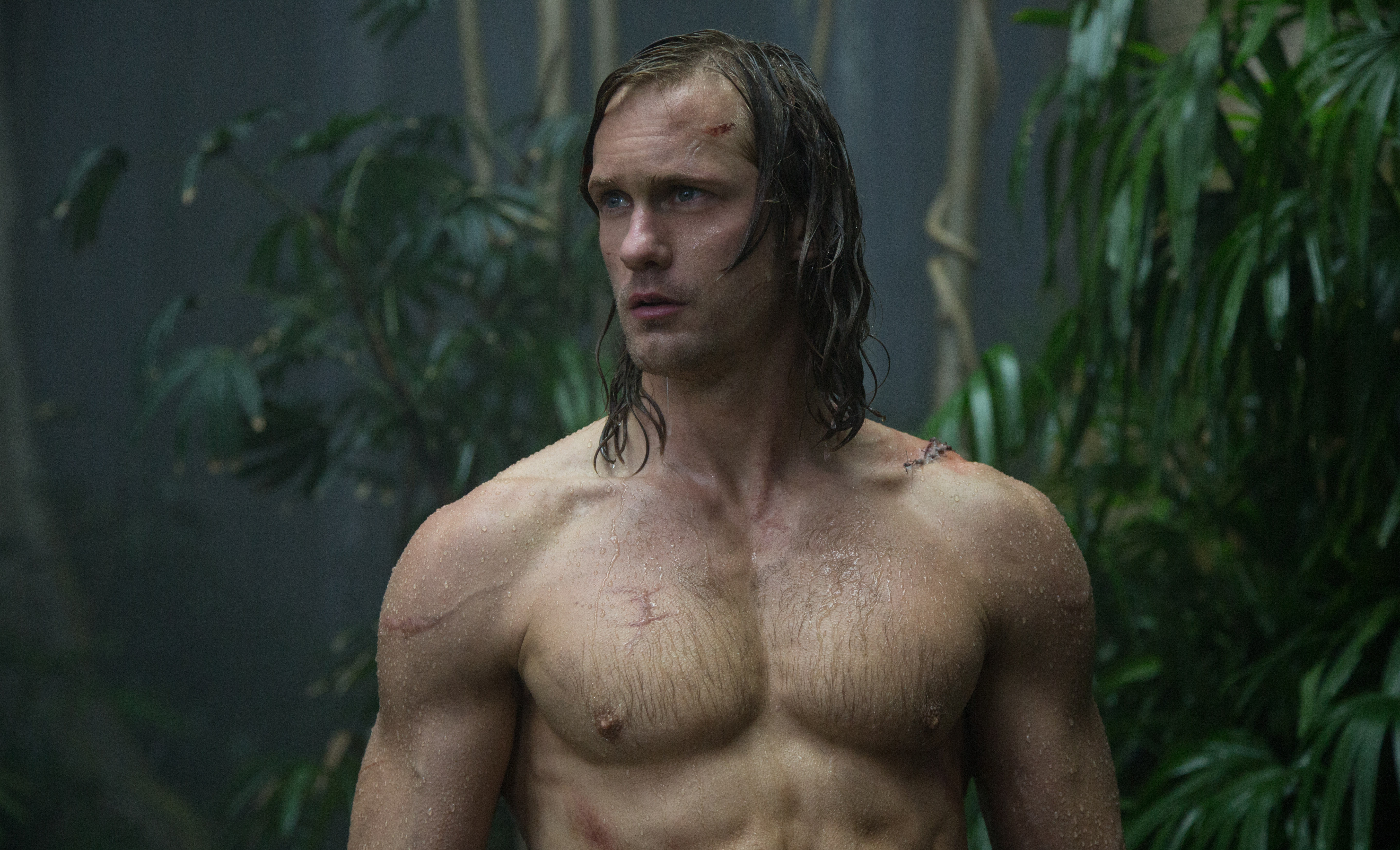
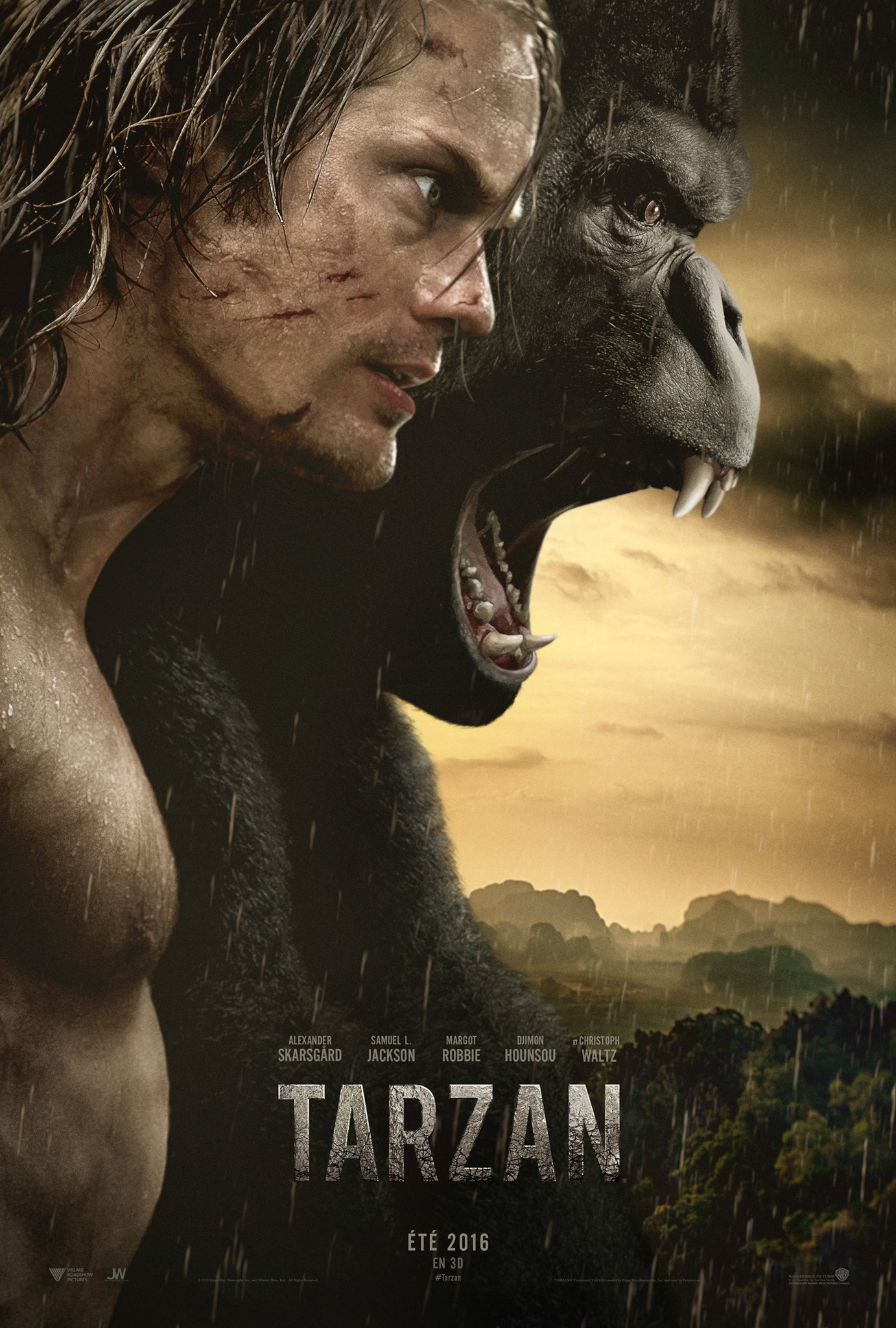
Alexander Skarsgård’s portrayal of John Clayton III (Tarzan) in the 2016 Warner Bros. blockbuster The Legend of Tarzan represented a pivotal turning point in his acting career. Shifting from television fame to leading a $180 million studio spectacle, Skarsgård combined intense physical conditioning with a subdued, psychological approach to the iconic pulp character.
Reimagining a Classic Icon: The Narrative Setup of The Legend of Tarzan
When director David Yates took on The Legend of Tarzan (2016), the primary creative challenge was updating Edgar Rice Burroughs’ 1912 character for contemporary audiences without discarding the foundational mythology. Rather than retelling the origin story of an orphaned boy raised by apes in the African jungle, the film begins with John Clayton III already integrated into Victorian London elite society as the Lord Greystoke. Married to Jane Porter (Margot Robbie), Clayton has suppressed his wild past, adopting the rigid etiquette, tailored suits, and political responsibilities of English nobility.
The narrative inciting incident occurs when American envoy George Washington Williams (Samuel L. Jackson) convinces Lord Greystoke to accept an invitation from King Leopold II of Belgium to visit the Congo Free State. Unbeknownst to Clayton, the trip is a trap engineered by the ruthless envoy Captain Léon Rom (Christoph Waltz), who intends to trade Tarzan to a vengeful tribal chief in exchange for diamonds needed to fund Leopold's mercenary army.
This structural choice fundamentally altered the performance demands placed on Alexander Skarsgård. Instead of portraying a wild man gradually discovering humanity, Skarsgård had to perform a reverse transformation: an aristocratic gentleman suppressing latent animal instincts, forced to shed his civilization layer by layer to protect his home and wife.
Anatomy of a Physical Transformation: Skarsgård's Training and Movement Coaching
Achieving the physical silhouette of Tarzan required one of the most grueling preparation regimens in modern action cinema. Skarsgård worked closely with Swedish celebrity trainer Magnus Lygdbäck to build an athletic, lean physique rather than the hyper-bulked frame common in modern superhero films. The objective was to create a body that looked capable of swinging through the jungle canopy and moving with feline agility.
Training & Conditioning Plan Summary: - Phase 1: Heavy strength building & caloric surplus (4 months) - Phase 2: Strict cutting regimen, calorie reduction & core focus (3 months) - Phase 3: Daily maintenance & mobility work during shooting (4 months)
Skarsgård’s regimen was divided into distinct phases over several months prior to and during principal photography:
- Nutritional Restrictions: The actor adhered to a strict, sodium-controlled diet completely free of refined sugar, gluten, dairy, and alcohol, consuming up to six precisely measured meals a day to fuel high-intensity workouts while dropping body fat to single-digit percentages.
- Hypertrophy and Core Stability: Weight sessions emphasized back, shoulder, and core strength to support the hanging, pulling, and climbing sequences required on set. Exercises included heavy pull-ups, deadlifts, and functional core stabilization.
- Movement and Agility Training: Beyond traditional weightlifting, Skarsgård collaborated with renowned choreographer Wayne McGregor. This partnership focused on posture, flexibility, and spatial awareness, training Skarsgård to move fluidly like a apex predator rather than a standard bodybuilder.
The resulting performance relied heavily on body language. Skarsgård adjusted his posture throughout the film—starting with stiff, compressed shoulders in London to signify the constraints of civilization, expanding into an elongated, grounded stance as his character re-entered the African jungle.
Analyzing Skarsgård’s Performance: Subtlety, Aristocracy, and Feral Intensity
Skarsgård’s interpretation of Tarzan diverged significantly from previous cinematic portrayals, such as Johnny Weissmuller’s monosyllabic hero or Christopher Lambert’s brooding aristocrat in Greystoke (1984). Skarsgård brought a minimalist, internal intensity to the role, relying on micro-expressions and physical control rather than heavy dialogue.
In the film’s first act, Skarsgård plays John Clayton as a deeply uncomfortable man trapped inside high society. His voice is quiet, his movements controlled, and his eyes reflect a lingering trauma from his upbringing in the wild. This muted demeanor provides a sharp contrast once the action shifts to Africa. As Clayton stripped off his Western attire, Skarsgård shifted his performance key, allowing primal kinetics to take over.
The chemistry between Skarsgård and Margot Robbie grounded the narrative’s emotional stakes. Rather than presenting Jane as a helpless damsel, the dynamic relied on mutual respect and shared history. Skarsgård played Clayton’s devotion to Jane not as a romantic trope, but as an anchoring tether to his human identity. When separated from her, his behavior grew increasingly feral, highlighting the internal struggle between Lord Greystoke's restraint and Tarzan's violence.
Critics noted that while the script occasionally sidelined deep emotional exploration in favor of visual effects and digital action sequences, Skarsgård’s physical commitment provided an authentic center to an otherwise CGI-heavy production.
Box Office Impact and Critical Reception of the 2016 Blockbuster
The Legend of Tarzan launched into a competitive summer theatrical window in July 2016. Produced on an estimated budget of $180 million—excluding substantial global marketing costs—the film carried heavy financial expectations for Warner Bros., serving as a test of whether early 20th-century pulp intellectual property could still drive a modern franchise.
Global Box Office Breakdown: - Domestic (North America): ~$126.6 Million - International Territories: ~$230.2 Million - Total Worldwide Gross: ~$356.8 Million
The film achieved moderate financial success, generating over $356 million globally. While these numbers demonstrated solid audience interest—particularly in international markets—the high production costs limited its net profitability, effectively putting plans for direct sequels on hold.
Critical response was divided. Reviewers praised the film’s visual grandeur, period production design, and the physical commitment of Skarsgård and his co-stars. However, several critics questioned the pacing and the narrative reliance on computer-generated animals and environments. Despite mixed reviews for the overall film, Skarsgård’s performance was widely recognized as a dedicated, respectful, and earnest attempt to modernize a challenging literary figure.
Comparative Analysis: Skarsgård’s Key Roles Across Film and Television
To fully appreciate Skarsgård’s performance in The Legend of Tarzan, it is helpful to examine how the role fits alongside his major film and television projects before and after 2016.
| Project Title | Year | Primary Role / Character | Production Scale / Genre | Key Performance Attributes |
|---|---|---|---|---|
| Generation Kill | 2008 | Sgt. Brad 'Iceman' Colbert | HBO Miniseries / War Drama | Stoic leadership, tactical precision, controlled emotional expression |
| True Blood | 2008–2014 | Eric Northman | HBO Series / Supernatural Fantasy | Suave menace, dark humor, physically imposing presence |
| The Legend of Tarzan | 2016 | John Clayton III / Tarzan | Studio Tentpole / Action-Adventure | Extreme physical conditioning, dual-nature internal conflict, physical grace |
| Big Little Lies | 2017–2019 | Perry Wright | HBO Limited Series / Prestige Drama | Unsettling complexity, charm masking volatile domestic abuse |
| The Northman | 2022 | Amleth | Focus Features / Historical Epic | Raw, brutal physical intensity, mythic rage, deep psychological obsession |
| Succession | 2021–2023 | Lukas Matsson | HBO Series / Satirical Drama | Erratic tech-billionaire energy, psychological manipulation, casual arrogance |
Strategic Pivot: How Tarzan Reshaped Skarsgård’s Career Trajectory
Before landing The Legend of Tarzan, Alexander Skarsgård was best known to international audiences as the centuries-old vampire Eric Northman on HBO's hit series True Blood. While that role established him as a television star and sex symbol, breaking into leading roles in studio feature films remained a difficult transition.
The Legend of Tarzan served as Skarsgård’s primary test as a Hollywood leading man capable of anchoring a massive commercial property. The project proved he could handle physically demanding action work, manage complex VFX shooting environments, and carry global publicity campaigns.
Interestingly, the years immediately following The Legend of Tarzan saw Skarsgård pivot away from standard studio action blockbusters toward complex, character-driven projects:
- Prestige Television Acclaim: In 2017, just one year after Tarzan, Skarsgård starred as Perry Wright in HBO’s Big Little Lies. His disturbing, subtle portrayal of domestic abuse earned him an Primetime Emmy Award, a Golden Globe, and a Screen Actors Guild Award, cementing his reputation as an actor of remarkable dramatic depth.
- Auteur-Driven Cinema: Rather than pursuing generic superhero leads, Skarsgård leveraged his star power to work with visionary directors. This trajectory culminated in Robert Eggers' Viking epic The Northman (2022), where Skarsgård returned to an extreme physical transformation—this time playing a vengeful warrior in a gritty, historically grounded narrative that drew direct artistic parallels to his work in Tarzan.
- Modern Antagonists: His critically acclaimed arc as eccentric tech mogul Lukas Matsson in HBO’s Succession highlighted his range, contrasting the quiet physical stoicism of his Tarzan era with unpredictable, dialogue-dense psychological games.
Ultimately, The Legend of Tarzan demonstrated Skarsgård’s capacity for total physical and artistic commitment, establishing a foundation that allowed him to seamlessly navigate between indie cinema, high-budget epics, and award-winning television.
Frequently Asked Questions
What specific training program did Alexander Skarsgård follow for The Legend of Tarzan?
Alexander Skarsgård trained for roughly eight months under Swedish fitness coach Magnus Lygdbäck. The program combined heavy strength training to build muscle mass on his back, chest, and core with functional mobility routines. Skarsgård also worked with movement director Wayne McGregor to incorporate movement concepts from ballet and animal choreography into his physical performance.
Did Alexander Skarsgård perform his own stunts in the movie?
Skarsgård performed a significant portion of his own practical stunts, including physical combat scenes, running sequences, and low-altitude wirework. For high-risk, complex aerial maneuvers—such as swinging at high speeds through the jungle canopy—the production used professional gymnasts, stunt doubles, and CGI enhancements to ensure actor safety.
How does Skarsgård’s physical transformation compare to his role in The Northman?
While both roles required incredible physical conditioning, his Tarzan physique focused on extreme lean muscle definition, flexibility, and agility to portray a character who moves through trees. In contrast, his role as Amleth in The Northman (2022) focused on heavier, bulkier muscle mass to portray a violent Viking berserker whose fighting style relies on raw, bear-like force.
Was The Legend of Tarzan considered a success at the box office?
The film grossed approximately $356.8 million worldwide against a production budget of $180 million. While it performed decently in theaters—especially internationally—the massive production and marketing expenses meant it earned modest returns, preventing Warner Bros. from pursuing immediate sequels.
Essential Viewing Order for Exploring Skarsgård’s Career Evolution
To understand how Alexander Skarsgård built his career around intense physical roles and dramatic character studies, follow this chronological viewing pathway:
- Start with True Blood (Seasons 1–4): Watch his breakout performance as Eric Northman to see his command of screen presence and dark charismatic charm.
- Watch The Legend of Tarzan (2016): Study his peak physical transformation and his ability to balance quiet nobility with feral, non-verbal performance choices.
- Transition to Big Little Lies (Season 1): Experience his award-winning dramatic turn, analyzing how he uses his imposing physical presence to create unsettling tension in an intimate drama.
- Conclude with The Northman (2022): Compare his Tarzan work with his full-realized vision of a mythic warrior, showcasing his mature capabilities in brutal action filmmaking.